Writer Wednesday: David Cornue

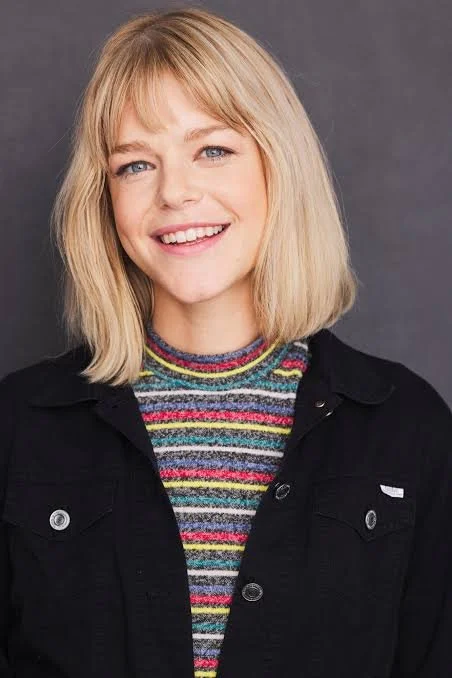
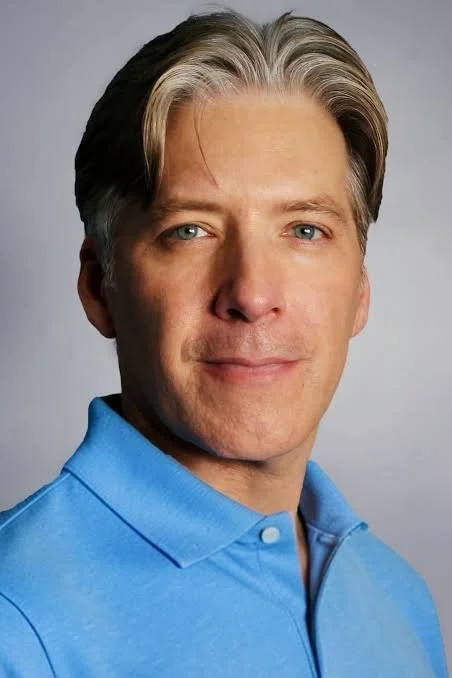
Today Writer Wednesday welcomes composer, writer, producer, and writing coach David Cornue. I’ve had teh pleasure of knowing David for … well, more years than either of us probably wants to admit to. I proudly call him “brother.”

David Cornue is an author, screenwriter, composer, and writing coach, and the founder and CEO of Every Story LLC. David created, wrote, and executive produced ABC's Triage, executive produced Coach with Bill Belichick for ESPN+, and is adapting Stephen King's Insomnia with Rideback. He wrote, produced, and scored the short film Unspeakable, which premiered at SXSW and won Best Pilot at multiple festivals. Through his production company, New Core Productions, he’s made three indie features, including #Lucky Number with Tom Pelphrey and Method Man. He was in the first class of Ron Howard and Brian Grazer’s Imagine Impact, which inspired him to start a script development service for other writers. After years of private coaching and dozens of ten-week courses, he distilled what he teaches into a book, Stop Writing! (out now), and launched Every Story to help every artist get their story into the world.
Hi David, thanks for taking some time to chat!

Thanks for having me, Anthony! And for giving the book such a thoughtful read.

Let’s start at the very beginning: when did you first realize you had a passion for writing?

At five, I wrote songs for my mother while she cooked dinner. Those are my first memories as a storyteller. My eventual training as a composer shaped how I think about stories. A melody creates an expectation. The next phrase can fulfill it, postpone it, or make you hear the opening in a new way. That’s a useful education for a writer: the audience brings everything they’ve experienced so far into the next moment. A scene that works at the beginning may mean something else at the end. I love that we can change what an audience feels about an event without changing the event itself.

For readers of mine who aren’t familiar with you, walk us through your creative history.

I came through music and theater in New York before moving to Los Angeles for film and television. I’ve written plays and musicals, produced independent features through New Core Productions, and developed television projects as a writer and producer.

If you want the list my mom brags about at church, here it is. #Lucky Number with Tom Pelphrey and Method Man. Triage, the medical drama I created for ABC. Unspeakable, a pilot I wrote, produced, and scored. And Coach for ESPN+, where as executive producer I got a front-row seat to how Bill Belichick thinks. At the moment, I’m developing a crime drama for NBC and adapting a Stephen King novel for television. With any luck, Mom will have new material for church soon.

Producing changes how you look at a script. A scene that doesn’t work on the page may become a day of shooting, a location, and a roomful of people trying to solve the problem. You develop an interest in catching it sooner. That’s one reason I care about development. A choice you postpone still has to be made, often when more people and more money depend on it.

When did you start mentoring other writers?

A decade ago, I shared my development process with other writers, and that grew into Chapter, an invitation-only write club. We worked from an idea toward a finished script over ten weeks. As members began selling and staffing, more writers asked for help, and the coaching took off from there.

Teaching forces you to examine the parts of your process you take for granted. An instinct can serve you for years without your knowing how to explain it. Then someone asks, “Why did you make that choice?” To answer, you have to slow down and take your own process apart. You come out of it understanding your craft better than you did going in.

The challenge is to teach those parts until they become another writer’s instinct. I can suggest a solution to a scene, but I’d rather help them understand why the scene fails. They may find a better solution than mine. And they’ll know what to look for in the next scene.
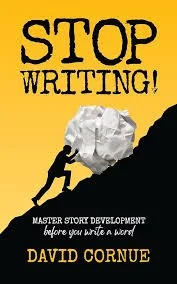
Normally this is where I would ask questions about your creative process. But you literally just released Stop Writing!: Master Story Development Before You Write a Word which describes that very process. Can you give us a taste of the process and what’s at the core of it?

In my years of coaching writers, most problems come down to the same thing: writing too soon. You can make a draft longer without understanding your story any better. It’s a hard bargain, and most of us have made it. You’ve worked hard, you have pages to prove it, and then you hit a problem that better dialogue can’t solve.

Say your protagonist stops making choices halfway through. Polishing the scenes won’t give that character a reason to act. You need to work out what they want, what stands in their way, and what they’re prepared to do about it. Those are story decisions. The sentences come after.

You start by testing whether an idea deserves a year of your life. Once it does, you build the world and the people in it, and from there you map the plot so each beat causes the next. You evaluate the work along the way, while a change can still be a conversation instead of a month of rewriting.

Working this way pays off emotionally, too. Once you’ve spent a weekend polishing a scene, it’s hard to admit it doesn’t belong. You start defending the time you spent. Finding the problem earlier gives you a chance to make the choice the story needs before your attachment to the pages makes it for you.

When did you decide to turn the Stop Writing process into a book and website?

There wasn’t a specific day when I decided to write Stop Writing! For years, writers in Chapter kept encouraging me to put the ideas into a book. I struggled with whether the book and its companion software deserved the years I could otherwise spend writing another film or television project. So I did what I teach writers to do when they choose a project. I weighed it against everything else I wanted to write, and the book came out on top.

I was fortunate to workshop the book with my coaching clients to hone my concepts. These sessions gave me the luxury of noticing when an explanation landed or missed the mark. I could ask questions, try other examples, and test the logic to make sure the book could help a writer I’d never met with a story I couldn’t read.

That’s why the book has a companion app: it gives those writers a place to apply the tools to their own projects. Reading about a tool shows you how it works. Using it on your own story is how you learn it.

Writers tend to identify as “plotters” (plan out the whole story before writing a word) or “pantsers” (discovering the story as you write). Your process is ideal for “plotters.” Can “pantsers” use your process without feeling like they’re giving up their preferred way of writing?

It’s a false choice. If you call yourself a plotter, think more like a pantser. If you call yourself a pantser, think more like a plotter. Knowing what unfolds is different from knowing how it unfolds. To me, that’s the difference between an outline and a draft.

Say two characters need to break up. You know why the relationship has to end and what that will change in the story. You still don’t know which one reaches for the other’s hand the moment before they say it. That small choice may reveal more about them than the argument you planned. Knowing the purpose of the scene gives you a way to recognize the value of that discovery.

And if the discovery changes the story, let it. Look at what it changes before you write another fifty pages that depend on the old choice. An outline helps you understand the consequences. A draft is where you discover why it matters.

There are probably as many “writing advice” books available as there are writers. What advice do you have for writers who might feel burned out on reading advice books?

I’d advise against taking advice on writing-advice books from someone who wrote one. But since you asked, I’ll take a crack at it.

The burnout doesn’t come from the books. It comes from reading them as a passive participant. Read with a point of view instead. Know your strengths and weaknesses before you open the book, and know that leaning on your strengths to hide your weaknesses is itself a crutch. That self-awareness tells you which concepts you need. Each of Snyder’s Save the Cat!, McKee’s Story, Vogler’s The Writer’s Journey, and King’s On Writing gave me something the others didn’t, because I came to each one with a different need.

No craft book has every answer, mine included, so take what resonates and discard the rest.

Where can people who are interested in following you find you online?

Go to stopwriting.com for the book, the audiobook, the free workbook, and the companion app. At davidcornue.com, you’ll find my film and television work, coaching, and my weekly letter on story development. And I’m @davidcornue on all the socials.

And my traditional final question: what is your all-time favorite book?

I could never choose one. My favorite book depends on my mood, my life at the time, and what I’m writing. If I named one today, I’d wish I’d named another the moment my mood changed.

So today, the book that’s been in my head is John Irving’s A Prayer for Owen Meany. Irving both prewrites and discovers on the page. He starts with his final sentence, and the whole book leads to that line. He knows where he’s going, so he’s free to discover everything on the way there.
Writer Wednesday: Alma Alexander

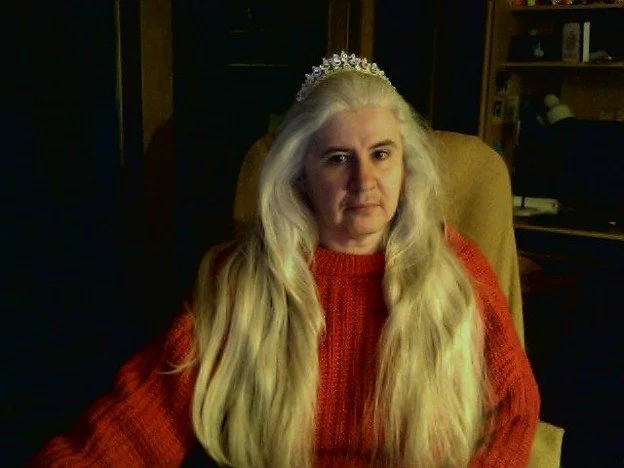
Today, Writer Wednesday welcomes fantasy author Alma Alexander!

Alma Alexander's life so far has prepared her very well for her chosen career. She was born in a country which no longer exists on the maps, has lived and worked in seven countries on four continents (and in cyberspace!), has climbed mountains, dived in coral reefs, flown small planes, swum with dolphins, touched two-thousand-year-old tiles in a gate out of Babylon. She is a novelist, anthologist and short story writer who currently shares her life between the Pacific Northwest of the USA (where she lives with  two obligatory writer's cats) and the wonderful fantasy worlds of her own imagination. You can find out more about Alma and her books on her website (www.AlmaAlexander.org), at her Amazon author page (https://amzn.to/2N6xE9u), on Bluesky (@almaalexander.bsky.social), on Facebook (https://www.facebook.com/alma.alexander/) or at her Patreon page (https://www.patreon.com/AlmaAlexander)

Hi Alma, thanks for joining me for this Writer Wednesday! Let’s start with the big news: you have a new novel coming out in November! What’s it about?

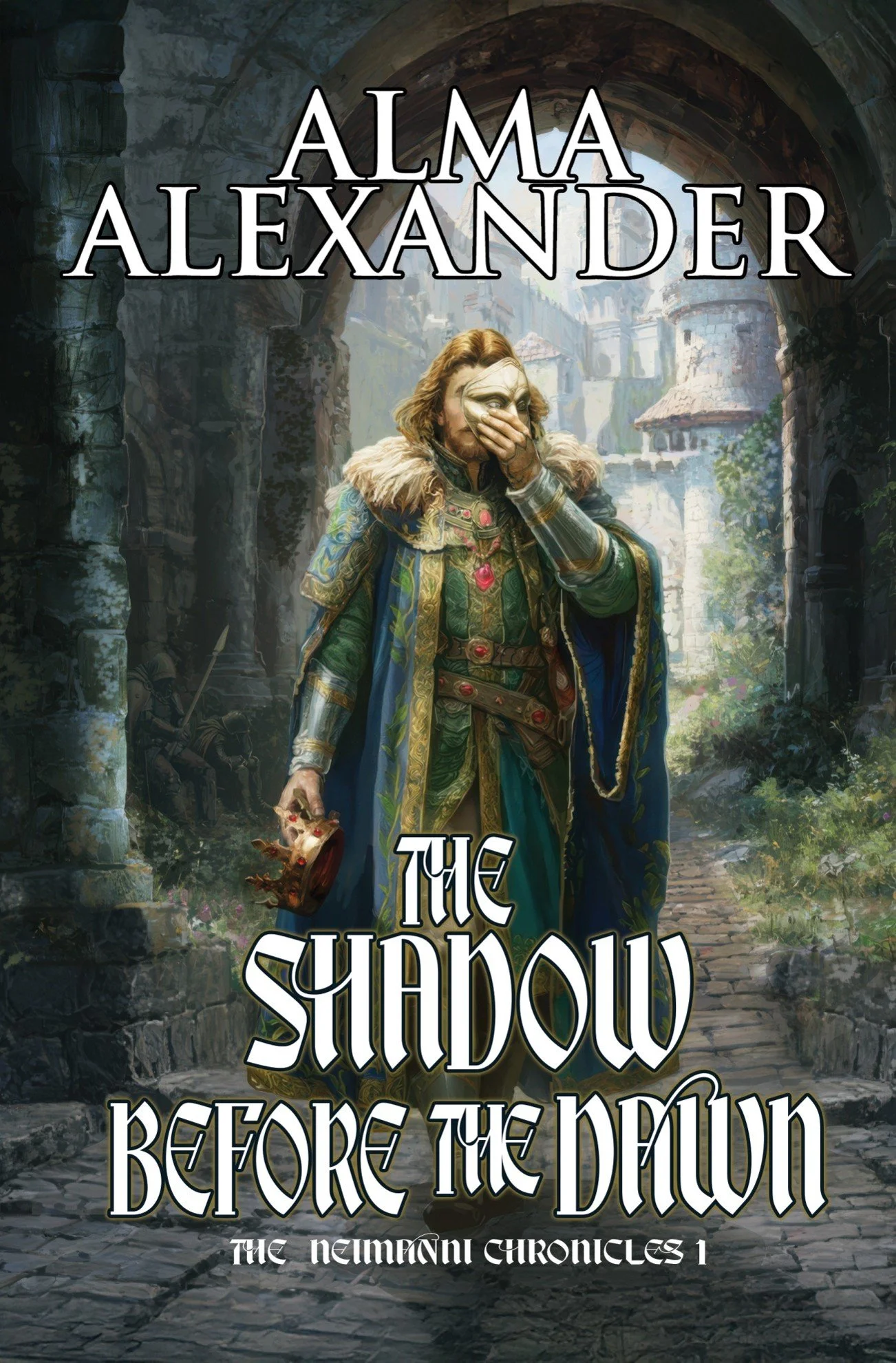
I have written a number of historical fantasies which form a loose alternate history parallel to our own. This book turns a new page, as it were – we are still in that alternate history world but this time I am going back to my own cultural roots and we are in 13th/14th century Balkans. The Neimanni Chronicles follows an arc – “The Shadow Before the Dawn” (out November 24, 2026) tells the story of a Prince whose life… was not easy. It lays the groundwork. The next book…


While this is the start of a new trilogy, it does tie into your previous historical fantasy work, correct?

…continues on from that (“The Sun In High Heaven”, projected for late 2027 or early 2028), and is the story of the son of that Prince, of Shadow, a king who became known under the sobriquet “the Great” and created a golden age, an empire, out of his inherited kingdom. But the curse that was placed on his father’s line, having skipped his son, lands squarely of the aftermath. The son of the king known as The Great also had a name – he became known to history as “The Weak”, and he lost everything that his father had built in only a handful of years. It was a bad time to do it, too, because another empire was rising in the east, on a collision course… and then came the reckoning. “Against the Fall of Night” is the third book, and it is the story of that reckoning (probably 2029).

And yes, these stories tie into the historical and geographical arc built by the previous works. The empire of Visant, as featured in the novel “Empress”, plays a big part in these new novels… but it is centuries since the events of “Empress”, and Visant is old, and starting to crumble.

I have a complicated geopolitical and cultural story on my hands, and my work is cut out for me to make these books extraordinary.


You’ve told me that you’ve mined your own cultural history for this book, which makes it intensely personal. Can you tell us about that thought process, how you choose which aspects of medieval Balkan history to use, embellish, and so on?


I seem to keep on answering your questions by preempting them.  But here’s a bit more on the process.

You see, I started a novel along these lines more than six years ago, and I had some 20,000 words of it written… and then Life descended in a mudslide and I’ve been digging myself out from under that ever since. After six years of losses and of grieving in which I did very little writing at all I returned to those 20K words earlier this year and looked at them. And realized that what I thought was the “prequel” to the book which I really wanted to write, which was the “Against the Fall of Night” story, was actually the first part of a much larger story, and would really need to be two books. And so, there we were. A trilogy. I really did not intend this. But that’s what arose, and that is what I am going with.

There is so much raw material here that I am simplifying things and rearranging them quite a bit so that I can whack my way through the historical jungles in a way that is going to make sense to someone who is NOT as steeped in the material as I am. But there are aspects of this which I am not tweaking over much because they are intensely powerful in and of themselves and all I have to do is provide them with a proper outlet.

These are very important books to me. I don’t think I have ever written any book that was this close to my heart. I am going to do a lot of hard work to make sure that I convey what they mean to me, how important this story is for me to tell, and I hope that I am going to be able to carry the readers with me.


You grew up in Africa, and I would love to hear about how the varied cultures and traditions of the countries there influenced the way you both respond to stories and write them, and how those influences interact (or not) with the European tradition you’re mining for the new book.

Well, Africa has very little to do with this particular new novel because I am going back to a much earlier iteration of myself than the one that accreted the African overlay. But having been thrown into such a very different cultural and geographical milieu when I was so young and so impressionable has left its mark, of course. There are things about Africa that I will carry with me to my grave. And what it has taught me, and it’s something that does affect my storytelling in general, is how to be open to listening to the things that are important to people very different from  myself, respecting those things, treating them with the reverence that is clearly due to them. A part of me will always be The Other, because I grew up as The Other in so many places and I understand that from the inside. And I understand the beauty of voices that are Other to me. Africa taught me that.


I know you’ve described your writing process as “chaotic.” But I’m going to ask you to describe it anyway, since that’s part of what Writer Wednesdays is all about. Does it change at all when you’re working on short fiction versus novels?

Mostly my writing is a question of sitting down, shutting up, and taking dictation. I’ve told people before that my Muse is not some ethereal maiden clad in diaphanous veils and being all coy about things – no, my Muse is a Sergeant Major screaming at me to drop down and give him twenty literary pushups RIGHT NOW. I get what I call my “attack stories” which sometimes turn up out of the clear blue and are often strong enough to derail works in actual progress until I detour in their direction and write them; one such recent thing wrapped itself into the shape of “The Wind’s Four Quarters” which was a grouped-together collection of four stories which I eventually ended up releasing as a slim volume in the fall of 2025 (look it up!) – that one just came up and smote me upside the head and would not let go until it was done – and it was persnickety because one of the stories that I had in mind was quite simply the Wrong Story and I had to come to terms with that and find a new one for that slot because it was clear that it wasn’t working as intended and required closer attention. But this arrived while I was at work on “Shadow Before the Dawn”, and I had to share the writing liminal spaces with both things until I could put the Wind stories to bed.

My current chaos is creating a decent timeline for the second book in the Neimanni Chronicles because I KEEP ON FINDING THINGS TO ADD TO THE ONE I HAVE and what it means is that I keep on having to re-do it because it gets too complicated and bescribbled to be useful so I have to start again. I am on my third timeline as we speak. I’ll get it right. The trouble is I can’t really move forward with the book UNTIL I get it right, so I just have to keep at this until I have properly channeled the river of time into a course that I want to follow…

Short fiction… is less of a native form for me than longer-form stuff, but I’ve sold a handful of short stories in the last couple of years (two published in Beneath Ceaseless Skies, one in Abyss&Apex, at least one in a forthcoming anthology…) so it isn’t a foreign country, entirely. But my shorter fiction tends to marinate in my head in its first six drafts so when I write it down it is in its final form and ready to go somewhere to seek a home. I actually have another waiting in the wings for a market I am interested in to open to subs again, so we’ll see. But for now, it’s the novels that are holding my attention.


Where can people interested in the new book find you online for announcements about the release?

My website at www.AlmaALexander.org has info – if you go to my blog on that site right now you can actually find an announcement of the new book a few posts back and you can also find a way in which you can preorder the book, or even subscribe to the entire series. Go take a look and see if that is something you’d be interested in. And there is always my Patreon (where patrons can even expect early glimpses of new covers or excerpts of the WIP…) Other than that, I will make announcements on my socials (FaceBook, BlueSky), so keep an eye on those.


And my usual closing question: what is your favorite book (and why, if you feel like sharing)?

…I have THOUSANDS of books in my library. My favorites include those written by Tolkien, Guy Gavriel Kay, Ursula le Guin, Alix Harrow, Ada Palmer, Matt Ruff, Joanne Harris, Sharon Kay Penman, Marie Brennan, and oh SO MANY OTHERS. Yes, I re-read books. I will go back to an old love and it will be a sweet reunion every time. And my favorite book – in that moment – is the one I am holding.

Writer Wednesday: Jeffrey J. Mariotte

Today, Writer Wednesday welcomes Jeffrey J. Mariotte. Jeff is a writer whose work I’ve long admired. We’ve become social media acquaintances and we have quite a few mutual friends, but I’ve never had the chance to meet him in person. I’m very happy to have the chance to chat with him.

During his decades-long career in the world of books and publishing, Jeffrey J. Mariotte has written more than sixty novels, nearly 200 comic books and graphic novels, dozens of short stories, magazine articles, and much more. He has received multiple awards for his writing, including four Scribe Awards for Best Original Novel, presented by the International Association of Media Tie-In Writers. He’s also won the Inkpot Award from the San Diego Comic-Con for his career contributions to science fiction and fantasy, the Spur Award from the Western Writers of America for editing and publishing,  is a co-winner of the Raven Award from the Mystery Writers of America, and he has been a finalist for the Peacemaker Award from the Western Fictioneers, the Bram Stoker Award from the Horror Writers Association, and the International Horror Guild Award, among others. He has owned and managed independent bookstores and has worked in publishing as the vice president of marketing for WildStorm Productions/Image Comics, a senior editor for DC Comics, and the editor-in-chief for IDW Publications.

Jeffrey works in multiple genres, including thrillers, mysteries, horror, westerns, and science fiction and fantasy, for adult and young adult audiences. He’s been entrusted with world-famous intellectual properties including CSI: Crime Scene Investigation, NCIS, Narcos, Star Trek, Buffy the Vampire Slayer and Angel, Tarzan, and many more.

He lives in the Arizona desert with his family, pets, and a massive collection of books.

Hi Jeff. Thanks for joining me for today’s Writer Wednesday!

It’s my pleasure, Anthony!

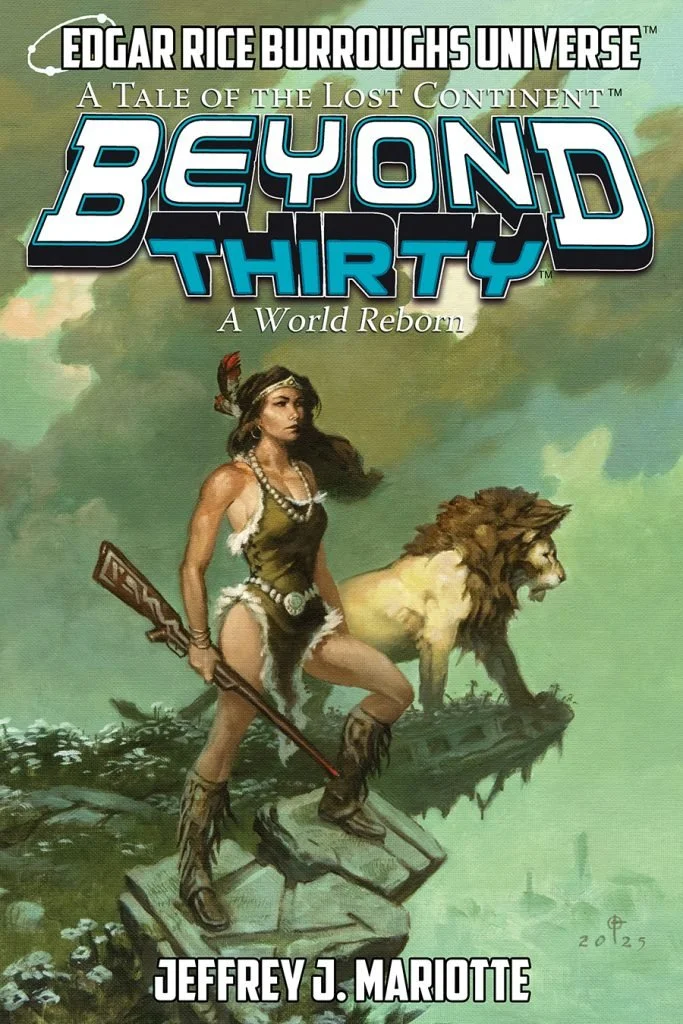
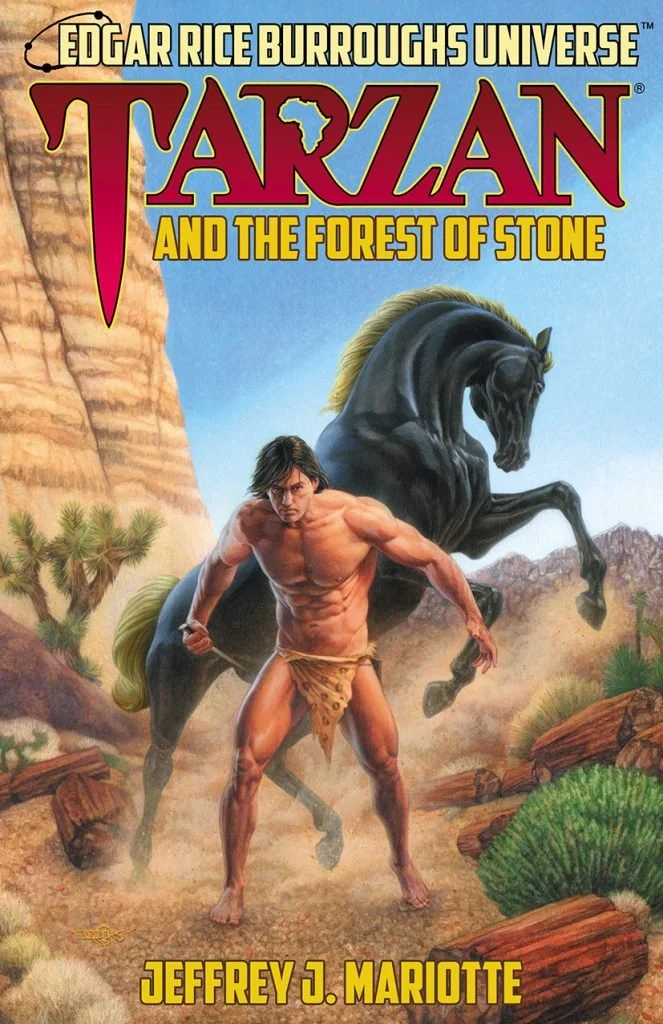
You’ve written two novels for Edgar Rice Burroughs Inc as part of the “Edgar Rice Burroughs Universe” (Tarzan and the Forest of Stone and Beyond Thirty: A World Reborn). What was your first encounter with Burroughs as a reader, and how has he influenced your writing?

I don’t have a specific memory of my first Burroughs book. I was introduced to Tarzan early, thanks to the Johnny Weissmuller movies playing frequently on daytime TV in the late 1950s/early 60s. At some point I discovered that there were books (it’s possible that I discovered him in comics first). In the mid-to-late 60s there was a boom in fantasy/adventure/sf paperbacks, and I was constantly reading ERB, Robert E Howard, and their literary kin. That continued through the 1970s, and in 1980 I became a bookseller at Books Inc. in San Jose, CA, a general bookstore that had the best sf/fantasy/horror section of any bookstore in the southern Bay Area. That was when I became acquainted with the fandom community, started meeting authors regularly, and started writing semi-seriously myself.

I can’t say that Burroughs has specifically influenced my writing per se, but he influenced the direction of my life, along with the many other writers that I read obsessively in those days. And, obviously, my life influences my writing all the time.

Who were your other early writing influences?

I’ve read so widely, and in so many different genres, that it’s hard to pin down specific influences. I don’t really recognize anybody else’s work in mine, and I’m not sure that mine reads like that of anyone else—unless, as in the case of a Burroughs book, I’m trying not to imitate his work, but to suggest it.


The Burroughs characters are not the only licensed properties you’ve worked on. What is your process like when approaching licensed work?

First, I want to be very familiar with the underlying property. I’ve read a lot of Burroughs over the decades, but before digging into a work of my own, I re-read some (specifically ones related to the project, like Tarzan books before writing Tarzan, and obviously Beyond Thirty for the new one). In the case of Burroughs, I also read what others have written about the works, because they can usually point out specific aspects of it that I might not pick up on my re-read. One of my bibles for that is Edgar Rice Burroughs: Master of Adventure by my old friend Dick Lupoff.

If it’s a work based on a TV series, I’ll watch as much of the series as possible and read things about the series. I want to know what the fans respond to, how they think about the characters, etc.


Does your writing process differ at all when working on your own original characters? Do you approach writing novels differently than short stories?

When writing original stuff, I still do research for locations, professions, anything the characters would have to know or do, etc., but I don’t have to read particular authors or watch particular TV series—the research is more focused based on who my characters are and what their setting is. Those things, I have to know for licensed work as well, but for my own characters I don’t have to know all the details of their previous adventures, because I’ll be inventing any of that.

When I’m writing a short story, I’m more likely to just dive in and do any necessary research as it comes up, rather than before I start work. Beyond that, my process is pretty much the same for both formats.


It feels like you have worked in almost every genre. What is your favorite, or most “comfortable” genre to write in? And is there any genre you haven’t worked in yet that you’d like to?

I guess I’m most “comfortable” with thrillers or novels of suspense. Even when I’m writing in other genres, I tend to include elements found in thrillers. Tarzan and the Forest of Stone, for example, was a Tarzan adventure but also a crime novella with a prolonged chase scene. Many of my horror novels are really supernatural thrillers, as well. I like writing plots that keep the reader turning pages to see what’ll happen next.

I think I’ve written in every genre that I’m truly interested in. I’ve written sword-and-sorcery, science fiction, horror, adventure, mystery, thriller, western…maybe others I’m not thinking of right now. I’m not particularly interested in writing romance or romantasy (although I wouldn’t entirely rule out cozy romantic mystery). I think mainly I want to stick with the genres I know, but to do new things within them.


Beyond Thirty: A World Reborn comes out later this year from ERB, Inc.. What else do you have coming out in the near future?

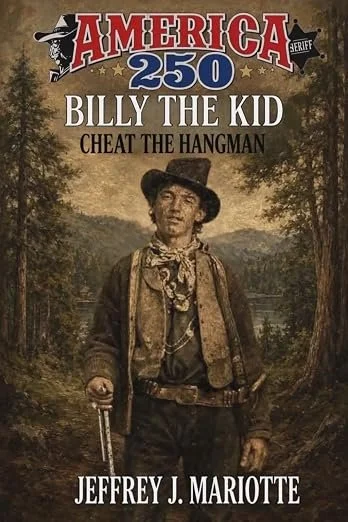
Nothing in the immediate future. I had two book releases in August—Billy the Kid: Cheat the Hangman, an “untold tale” of Billy the Kid in the last weeks of his life, and Flesh of All Sorrows, a fairly epic thriller that’s earning some of the best reviews of my career. The Burroughs book will be the last of this oddly busy season—three books in three different genres from three different publishers. I do have a horror novel finished that’s out with an agent. I’ve been working without one for years, but this particular agent is someone I know and would like to work with, but I’m still waiting to hear if she wants to rep it. I’m pretty sure everything else that I’ve placed is already published.


Where can you be found online?

My website is jeffmariotte.com, and I try to keep it up-to-date. There’s a blog there where I write about what’s happening in my professional life. I also have a Substack (https://substack.com/@jeffreyjmariotte), which is a substitute for the autobiography that people have been bugging me for years to write. It’s occasionally about my writing projects but more often about other aspects of my life and my long career in the world of books and publishing. Facebook is the social media site I use most, but all of my socials (and more) are on my Linktree.


And my standard final question: what is your favorite book?

This is the world’s hardest question, because there are so many books that I love. Our library comprises thousands and thousands of volumes, on thirty-some bookcases spread throughout just about every room of the house (with more books boxed in the garage because there’s no room for them). My sentimental favorite is probably Wallace Stegner’s Angle of Repose, a historical novel set largely in California’s Bay Area, where I lived for ten years and still love. Stegner’s work resonated with me when I was getting to know the American West, and he was a brilliant writer, a faithful activist, and a wonderful man with whom I was privileged to spend most of a day once.

On different days, though, I could just as easily pick books by William Goldman or Joan Vinge or Ross Macdonald or James Lee Burke or…well, it’s a long list. Books have been the most constant feature of my life, and I’ll never stop reading them.

Interview: Callie Schuttera

Today is a special “weekend edition” of “Writer Wednesday” with actress and writer Callie Schuttera.


Callie Schuttera is an American-born actress and producer who grew up in Cincinnati Ohio. Callie is known for her iconic role in Zach Cregger's 'Weapons' and her appearances on shows like 'The Rookie' and 'On Call'. Callie earned international acclaim on the festival circuit for her performance in 'Blue', which took home a slew of awards including multiple wins for Best Picture and Best Actress. Callie can also be seen in the family comedy 'The Last Conception' and voices Vivian Lobdow, on the popular Darkest Night podcast. Callie earned a B.F.A. in Acting from the College-Conservatory of Music (CCM). After moving to Los Angeles, she co-created Poison Pictures Film House with her wife, Gabriela Ledesma. Poison Pictures is a leading indie producer of feature films, music videos, and documentaries.


Hi, Callie! Thanks for taking some time to chat with me.

Thanks for reaching out :)


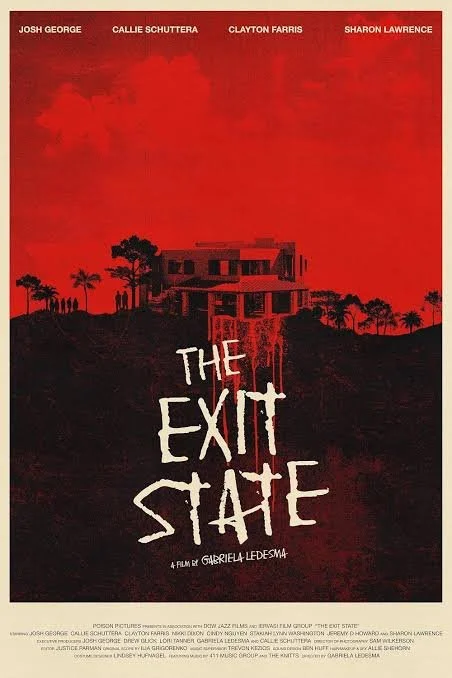
Your new film The Exit State premieres at Screamfest in Los Angeles this month (Tuesday, October 13th, for those in the LA area who may want to catch it). Tell us a bit about the film.

The film is political thriller/horror about a group of American citizens who attempt to illegally flee the United States to Mexico, to escape an authoritarian regime. They arrive at shelter they believe is safe in politically neutral territory but their ‘safe house’ becomes a dystopian nightmare.


Will it be showing at other film festivals or be coming to streaming or on DVD?

Screamfest will be our major film screening before moving to streaming a couple of weeks later!


When did you first know you wanted to pursue acting? How did you get started in the industry?

I knew from a really young age, maybe six or seven. I got as much training as my parents would allow me to. Classes, camps, and then a BFA in Acting from a conservatory program.

When I moved to LA I was lucky to land an agent right away, and I learned a LOT from those first few years of auditioning.


Your most recent screen appearance was as “Alex’s Mom” in Weapons. What was working on that film like?

That was a very cool experience. I was a huge fan of Zach’s previous film Barbarian so I was thrilled to audition for the project even before I knew the details.

Being on set was surreal - not only was everyone so talented (cast + crew), the scale of the project was massive. So the feeling that something iconic was being made was palpable.


You’re the co-writer of both The Exit State (with Josh George and director Gabriela Ledesma) and Blue (also with Ledesma, who directed both films). I would love to hear about the writing process for those films.

Writing is a passion that kind of bloomed for me in late twenties. I had always enjoyed it but the older I get, the more obsessed I am with writing scripts.

My writing process with Gabby is usually quite harmonious. We always say she can ‘see’ the film and I can ‘hear’ it. She’s very in tune with the camera’s trajectory and I’m more drawn to dialogue.

Adding Josh into the mix was a ton of fun. He brought a great perspective to our process and was crucial in world-building and creating the plot’s landscape.


Also regarding the creative process: as an actress, how do you usually work on crafting your performance? And does that process differ when it comes to scripts you wrote versus characters in movies or shows you didn’t have a hand in writing?

Each role feels like a new puzzle, so the process is never exactly the same. That said, I do always keep a little character notebook that contains some of a character’s backstory, their key thought patterns, and their astrology (whether you believe in astrology’s validity or not, it’s a great way to explore a character).

The main difference in playing a role you’ve helped craft is that there’s a lot of subliminal character work being done as you write and rewrite. When you go to prep the acting, you realize that a lot of the character’s nuance is already engrained in you.


Who are some of your strongest influences, both as a writer and as an actor?

As a writer, I’m heavily influenced by Adam McKay, and Jesse Armstrong - they’re both writers who unabashedly comment on real world politics, and some of society’s most dire current circumstances. Their lenses always includes humor without sacrificing the severity of their subject matter.

As an actor, I’m a massive Hannah Einbinder fan right now. I love how much joy translates from her work. I think she’s fearless yet lighthearted and an incredible human being.  Her work in Hacks and Camp Miasma (Jane Schoenbrun is another fantastic writer!) were some of my favorite performances of the past couple years.


You and Gabriela co-founded Poison Pictures, which produced both Blue and The Exit State. Your website states your mission to “collaborate with the best up-and-coming filmmakers in LA and around the world to create high-quality products from start to finish.” What’s coming from Poison Pictures in the near future, in addition to The Exit State?

We are feeling very at home in the horror/thriller genre so we’re putting a lot of our energy behind two other narrative scripts in the same wheelhouse. What I love about both of them is that, like The Exit State, they boldly venture into contentious subject matter, not just to agitate, but for the sake of progress.

In addition we are working on a very special documentary about an organization called The School of Sexuality Project. They teach science-based, fun, shame-free sex-ed to K-college kids and hold community events for adults. We’re very proud to be a part of their cause and helping to take their mission world-wide.


And my usual final question: What is your favorite book, and why (if you feel like sharing)?

The Social Animal by David Brooks. I love all of his work but this one is very special. It blends economics and psychology while drifting in and out (seamlessly) of narrative storytelling to illustrate its points. It left me understanding my own human nature, perhaps more than anything I’ve ever read.


Check out Poison Pictures website for more about the company, and of course the ScreamFest page for the full roster of movies and talks.  Callie can also be found on Instagram and IMDB.

Writer Wednesday: Zig Zag Claybourne

Today, Writer Wednesday welcomes the great Zig Zag Claybourne. I had the pleasure of meeting Zig in person a few years ago at ReaderCon, where we both participated in a play test of C.S.E. Cooney and Carlos Hernandez’s wonderful card-based RPG Game Negocios Infernales.

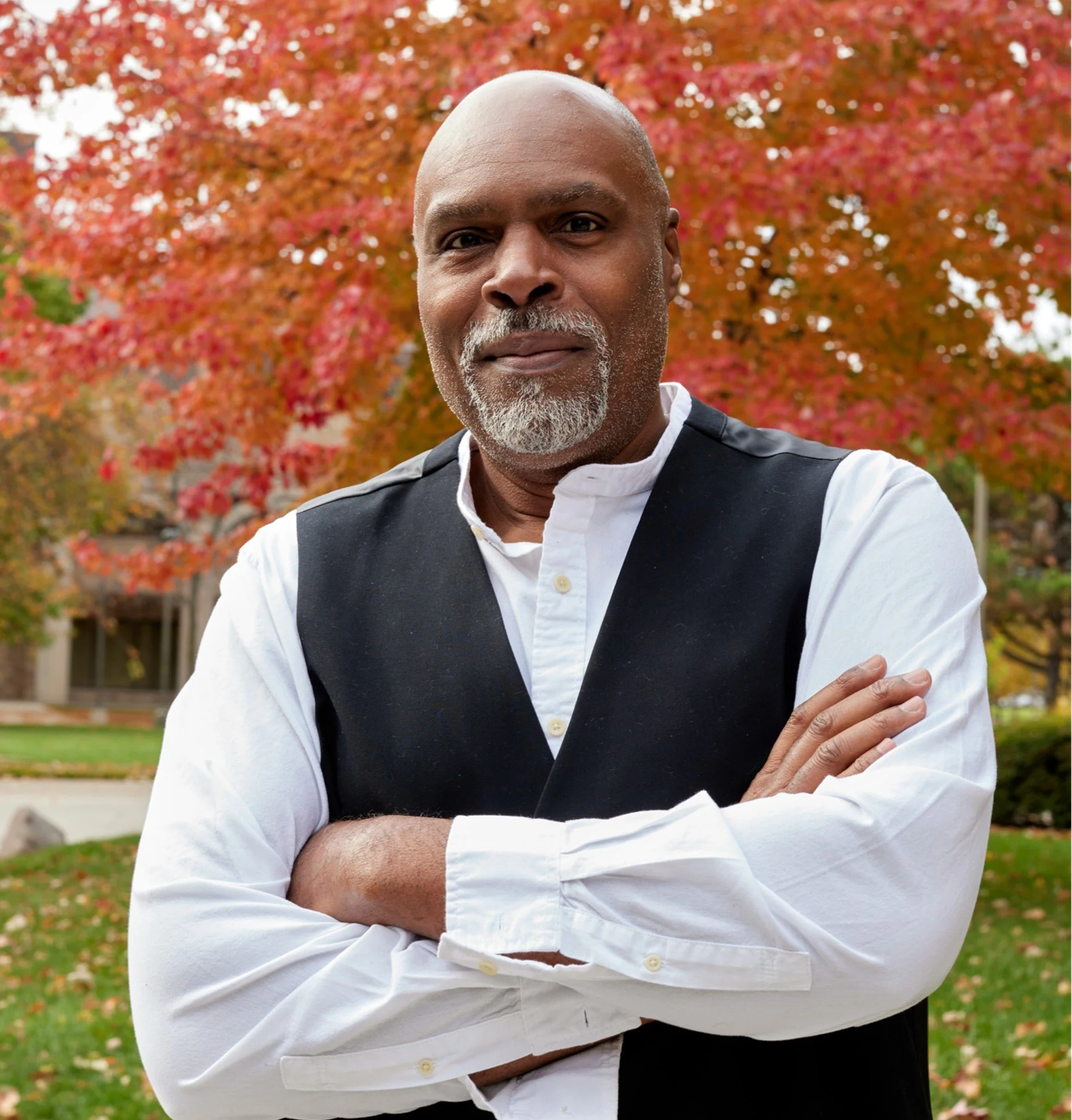
photo by Al Bogdan

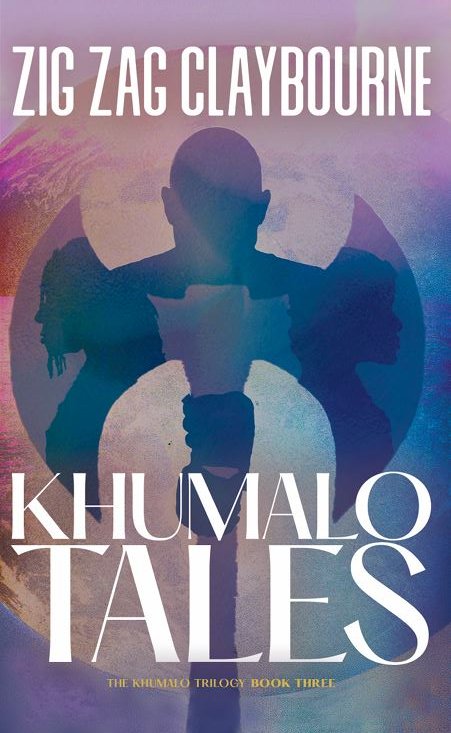
Named one of the “6 Best Black Indie Science Fiction and Fantasy Writers You Should Be Reading” by Book Riot (2021), Zig Zag Claybourne is the author of the upcoming fantasy Khumalo Tales and its prequels Breath, Warmth, and Dream and Amnandi Sails. Other novels include The Brothers Jetstream: Leviathan, Afro Puffs Are the Antennae of the Universe, and By All Our Violent Guides. His stories and essays have appeared in The Magazine of Fantasy & Science Fiction, Apex, Realm (formerly Serial Box), Galaxy’s Edge, Strange Horizons, GigaNotosaurus, and numerous anthologies. Claybourne is a frequent speaker at libraries, conventions, and learning institutions. zzclaybourne.com


Hi Zig Zag! Thanks for taking part in today’s Writer Wednesday chat.

Thank you for making space on the interview sofa for me!

You’ve recently launched a Kickstarter for the final book in your Mother Khumalo trilogy, Khumalo Tales. Tell us about the characters and trajectory of the trilogy.

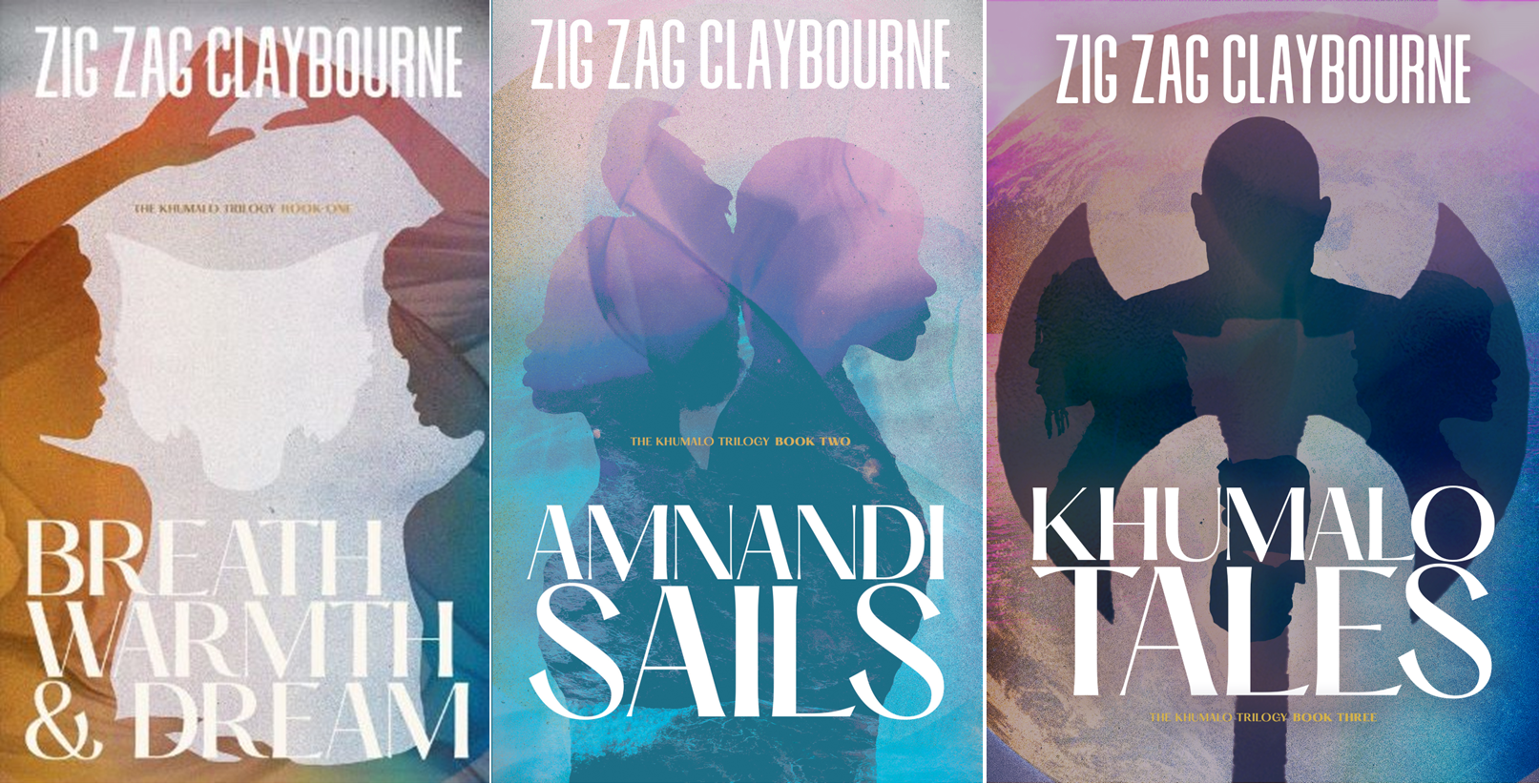
I wanted to write a grand adventure focusing on the people having the adventures, not so much the adventures themselves. I’ve done a book a year on these characters, a first for me, as well as my first strictly fantasy outing. What started as a short story in 2020 (published at GigaNotosaurus by LaShawn Wanak) evolved into a separate novel in 2024 that I immediately knew was going to be a trilogy. Ayanda Khumalo and her daughter Amnandi are the primary characters throughout. Ayanda is better known to her world of Erah as Unina (Mother) Khumalo, not that she actually seeks to be known. Amnandi Khumalo, in book one, is a sometimes lonely ten-year-old but incredibly aware of herself and what she can do. As a family, their thrust is travel. Who doesn’t want to give their child access to the entire world? And Mother Khumalo does, heading overseas on a whim. As witches, though (my version of witches), certain rules are a given, prime being never allow harm to come to innocents. There’s never a shortage of harm to be found. BREATH WARMTH & DREAM sees them squared off against a thief mage and his cohort of a wraith and a demon.

By AMNANDI SAILS, book two, mother is off on her own adventure while 17-year-old Amnandi sails with a beloved family friend, Captain Maab Pinyasama, on Maab’s fabulous ship. We know what Amnandi is capable of from book one. The question she has for herself is not simply can she push herself, but which directions she should do so, a question shared by everybody in the book regarding themselves. The book concerns itself with power. Coming into one’s own power—and how that affects others—should never have a single definition.

By trilogy’s end, Amnandi’s in her forties, her mother her seventies. We know the witches have grown into legends despite their best efforts to ignore that status. KHUMALO TALES hints at adventures we haven’t seen, and presents the grand duo with one they’re not entirely sure how to face, despite their advanced years.

What was the initial inspiration for this world and characters? How have the world or characters changed from your initial conception to the finished books?

Inspiration came 100% from an offhand remark a good friend made. We were messaging each other and she said she’d baked so much “the air in my house tastes like sugar.” Instant amazing title. Instant story. I wanted to do a riff of Hansel & Gretel. I wanted a storyworld that had the feel of a fairy tale told in an uncertain woods, a story full of magick (on Erah it gets the added ‘k’) but not about the magick. Mob-thought and ignorance are staples of ancient tales, so the story would revolve around that. How would a magickal Black woman and her daughter have molded the typical olde English fantasy world to comport itself in their presence? Particularly when they had no interest in proving themselves to anyone; it was more “prove yourselves to me, otherwise I have better concerns.”

That’s a thread that stayed with them throughout the series. They know their power. Nothing comes between them. Nothing occurs between them but love. By the time we get to KHUMALO TALES, the world of Erah is solidified in the reader’s mind. They know its tastes, its waters, there’s even a map in book 2 (is it even fantasy if there’s not a map?). Readers know that Amnandi in any given situation is going to be a person a reader wants in that situation. They know Mother Khumalo has addressed the situation before the situation ever has a chance to come up and is waiting for the inevitable to catch up to her. But they also know that these are two magickal beings among a world of magickal beings (and non-magickal ones) who love being thrown a curve! And by the time Mother Khumalo has hit seventy, Erah is a lot more peaceful in more ways than one.

covers by Anansi+Hayes 

Was this always intended as a trilogy? And, if you can answer without spoiling the events of Khumalo Tales, is it possible we’ll see more with these characters or this world in the future?

Maybe some part of me decided I was going to sink a buzzer shot from the 3-point line, but as sure as Tolkien sent Bilbo traveling, I knew that this would be a trilogy covering their entire lives as concisely as possible. And I like to think all my books, no matter the genre, are interconnected. It might not be likely we’ll see these characters in the future; ain’t exactly unlikely either.

You write across a number of genres under various pen names. Is there a genre (or sub-genre) you haven’t tried yet that you’d like to?

I’ve dabbled with horror shorts. I’d like to do a horror novel. Except I’m a horror weenie. Especially paranormal stuff. Splatter and gore? Barely registers. Jump scares are easy and don’t stick. But the stuff that gets inside the mind? The feeling of your reflection watching you walk from the bathroom after you turn out the light? Or you hearing a chair pull out when you know you live alone? Nerp. As much as I want to write a horror novel, I’d need several months in a beachside yurt to recover.

What is your writing process like? And does it change based on genre or story length?

I write from a place of feeling. If I can’t feel the soul of a story, my pen doesn’t move. I write everything longhand, then type it up, then print it, then revise with red pen, sticky notes, or taped bits of paper. This means I might take forever to get a story out. Sometimes I tell that to new writers and they panic. They think of ideas as Pokémon; gotta catch em all. Since I think of ideas as tribbles, I can take my time making sure the one I’m working with is what it wants to be, because if I lose one, no big deal. I’ve gotten to the point where I know that no idea I ever have is so precious as to get in the way of me having another. This allows for freedom of expression in prose and exploration of form, which leads to your question of does my process change based on genre or length. It does not. I’m not a perfectionist or absolute completist, which is why if I do take on a project, I have to love it. Pen, paper, soul. If anything, I’m a literary tuning fork. A line, page, or book is only finished when it vibes right.

I’ve heard the term “Afrofuturism” used to describe your work, as well as current writers such as Maurice Broaddus, Rob Cameron, Nnedi Okorafor, Nisi Shawl, and SF grand masters like Octavia E. Butler and Samuel R. Delany. I only recently learned that the term dates to the early 1990s. I’d like to ask what your thoughts are regarding the history of the label, its applicability to your work across genres, and use as a marketing tool. I know it has helped me find authors I haven’t read before.

Short history: the publishing industry found a new means to sequester Black writers under a new label, same as the music industry had to invent “race music” then “roots music”, “R&B”, “world music” and on and on. Whiteness always says “What we do is the thing, what you do is something akin.” Never matters if we invented the thing or not. Black writers have been doing futurism since the Dogon described Sirius B.

Longer, more rooted, contemporary history: there are so many definitions for Afrofuturism; there are so many offshoots, so many refutations, so many dismissals, and conscious mutations. For me, an afrofuturist is a time traveler delivering ways to improve human affairs. It’s not solely “Black people are in the future.” It’s a creative mindset of actively healing the future. We take the past, present, and future as one body. We imagine fictions that tend to that body. I do speculative fiction. I don’t mind if anyone labels what I do as afrofuturist, as long as they’re using that term to embody exploration, not sequestration. Afrofuturism is not interested in the status quo. Stagnancy is infection. Even in my fantasy novels, there’s inherent pushback against the notion that fantasy is the province of white people, with everyone else in the world just tourists in it. I recently watched a documentary about the fantasy genre’s huge dominance in pop culture. Lord of Narnia’s Potter Rings basically. You can guess how white it was except for a 2-second flash of NK Jemisin’s name toward the end of the entire hour. If a documentary wants to do that, then call it Eurofantasy, not Fantasy with a hard F. I’m sure any documentary on the Khumalo Trilogy would call it Afrofantasy so fast my pen would spin. Marketing-wise, terms can help readers who are curious break out of their defaults, but the industry generally keeps a Black writer’s discoverability small within the traditional channels. I’m primarily indie. People that want to go somewhere cool already know where to find me. Zig Zag Claybourne is a speakeasy.

Who are your biggest influences?

Toni Morrison and Dr. Seuss. Seuss enabled me to have fun with words, Morrison sharpened their inner workings. You can imagine “combines the best of Toni Morrison and Dr. Seuss” is not the most comp-ready buzz among the traditional publishing industry. Works for me tho.

What’s next for you, after the Khumalo Tales Kickstarter ends and you put the finishing touches on the project?

Gonna get intimate with the TBR pile. Gonna drink so many leaf squeezins (tea, for the heathens out there). I’m not the fastest writer in the world but I’ve literally done five books since Covid covered the world. Afro Puffs Are the Antennae of the World, Conversations with Idras, Breath Warmth & Dream, Amnandi Sails, and now Khumalo Tales. And it’s not a matter of cranking. I don’t crank. A scifi, a satire, and a fantasy. Sometimes the words flow. I jump in my innertube whenever that happens. Once KHUMALO TALES is in the hands of backers I’m going to give my brain time to get its elasticity under control. Right now it’s Mr. Fantastic after three rounds with the Hulk.

And my usual final question: What is your favorite book, and why?

My favorite book of all time is McElligot’s Pool [by Dr. Suess], because it was the first book to teach me how to expand the universe from any small unlikely place, crucial knowledge which is not only valuable but fun.

covers by Anansi+Hayes 

Writer Wednesday: Russell W. Dickson

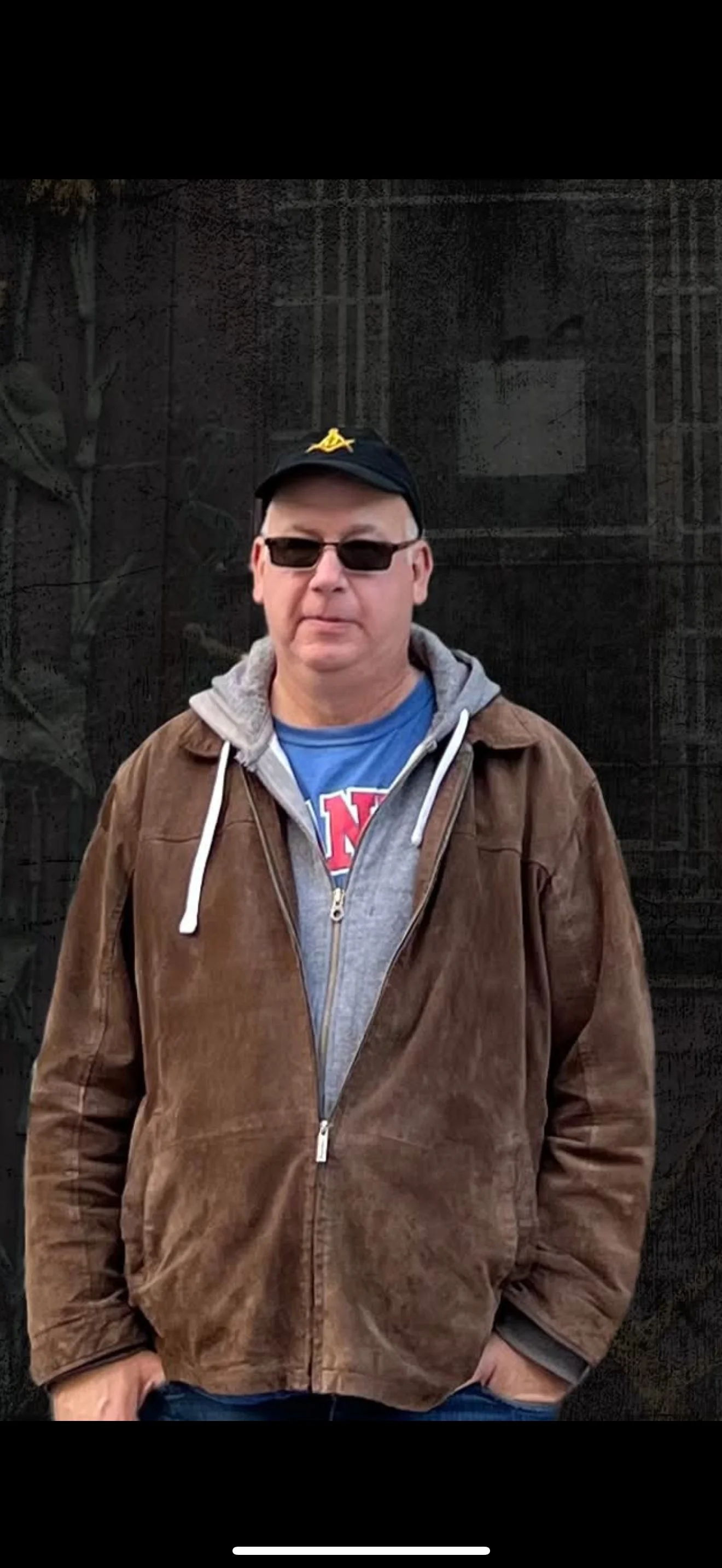
Today I welcome my childhood friend and neighbor Russell W. Dickson to chat about his books and writing process. Russell and I grew up in the same section of Mahopac, NY and our mothers were good friends. We haven’t seen each other in person in way too long, so it was fun to “catch up” as it were.

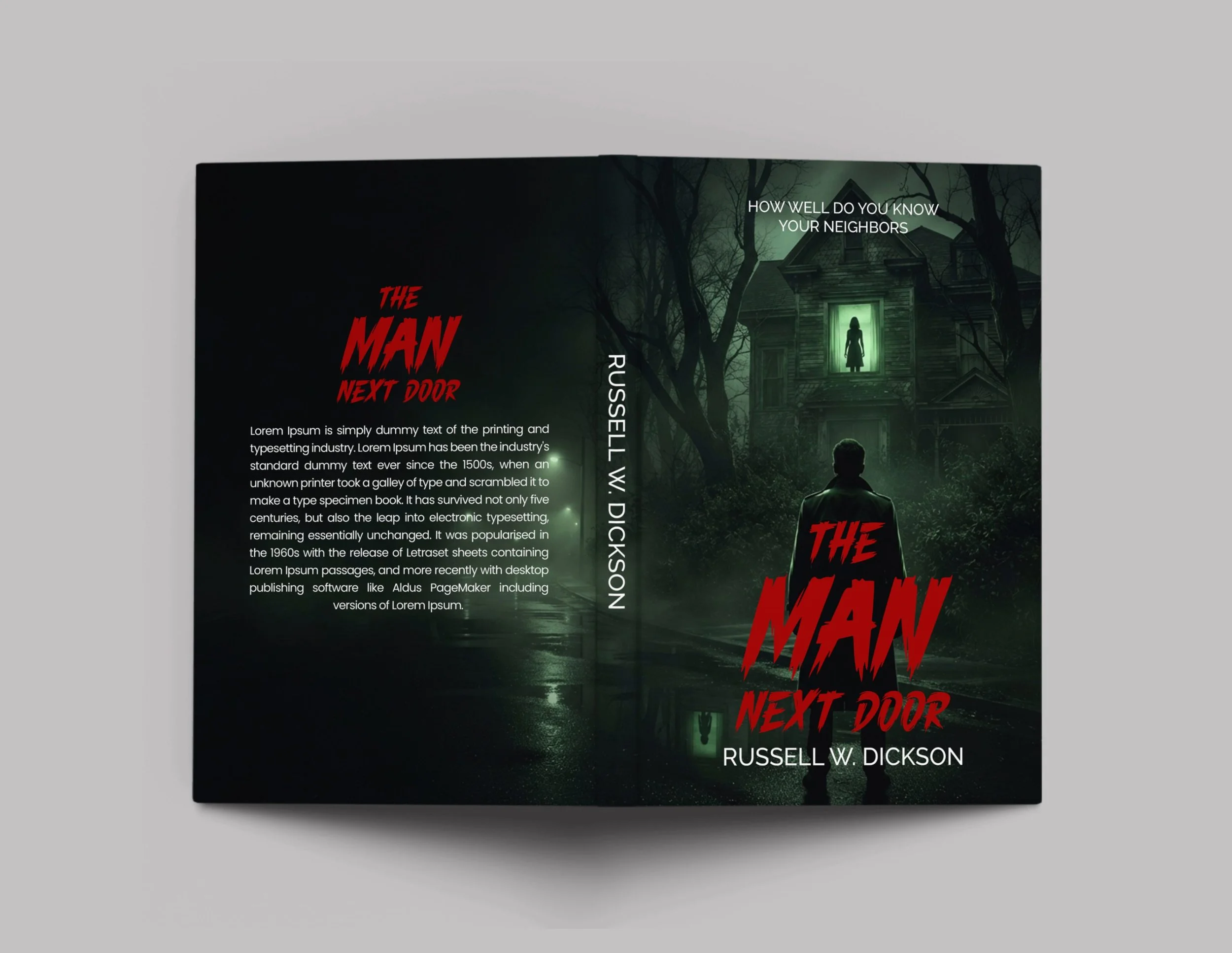
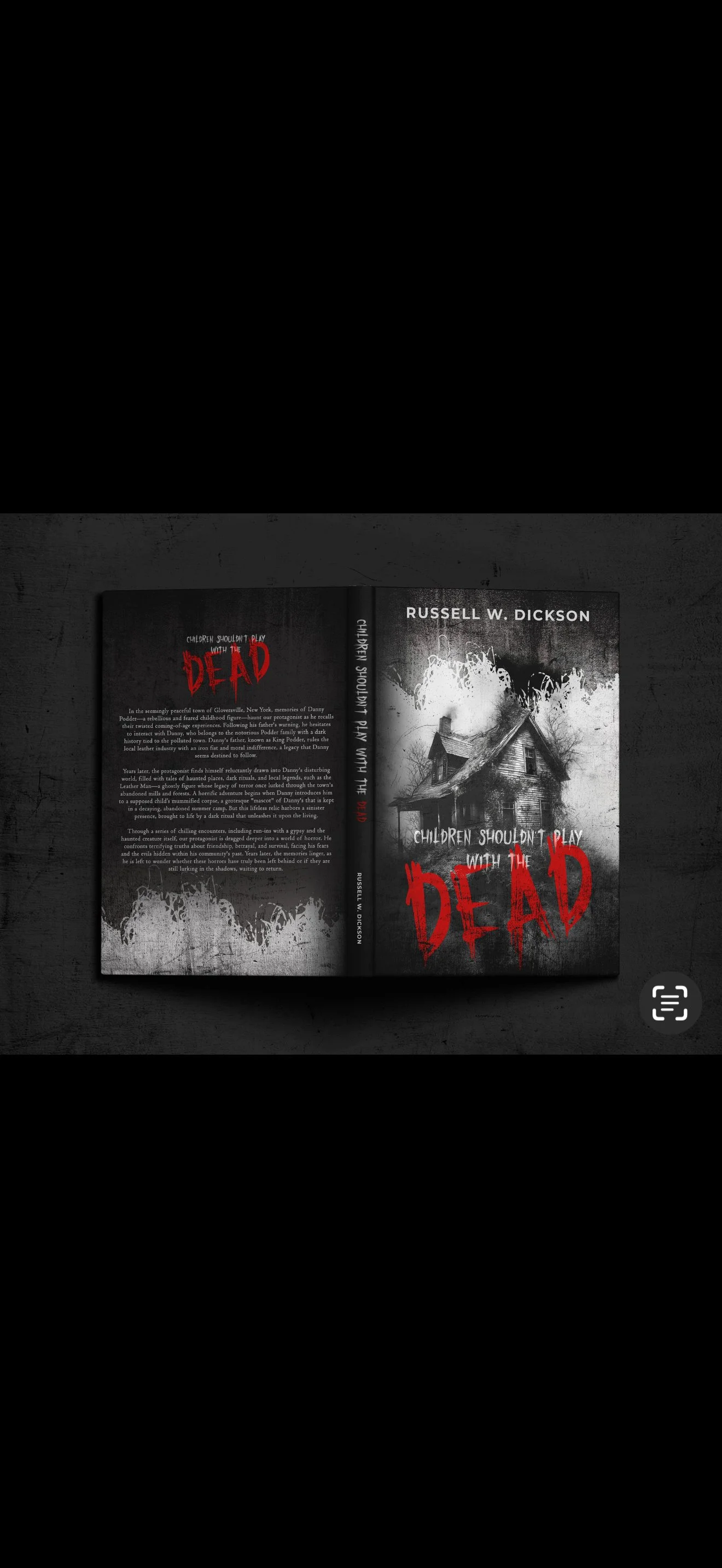
Russell W. Dickson is a horror novelist and longtime journalist based in Upstate New York. He holds a Bachelor of Arts in English/Writing with a minor in Journalism and has written for NewsBlaze Daily News for more than 26 years. His books include The Man Next Door, Children Shouldn’t Play with the Dead, and The Leather Man’s Curse. Drawing inspiration from the communities, folklore, and dark corners of his home region, he creates interconnected stories where familiar places conceal unsettling secrets. He connects with a combined social media following of approximately 110,000 fans across Facebook, Instagram, X, and TikTok.

Hi Russell. Thanks for joining me on this Writer Wednesday!

Thanks so much for having me! I’m really happy to be here. It’s especially fun doing this interview with someone who grew up in the same hometown—and even the same part of town—as I did. I’m looking forward to talking about my books, my writing, and maybe revisiting a few ghosts from our old neighborhood along the way.


Your recent books and upcoming novella are all in the horror genre. Is it safe to assume you’re a lifelong horror fan?

Absolutely. I’ve been a horror fan for as long as I can remember. Even as a kid, I was fascinated by movies like The Exorcist, The Amityville Horror, and Halloween. There was something about being scared—while knowing you were safe—that hooked me early on.

As I got older, that fascination grew beyond movies. I became interested in ghost stories, local legends, haunted places, and the darker side of folklore and history. I think that naturally found its way into my writing. Horror has always been the genre that lets my imagination run the wildest, so looking back, it probably makes perfect sense that I ended up writing horror stories of my own.


We grew up in the same small lower Hudson Valley town, and in fact the same part of town. I’ve noticed a few nods to Lake Secor in your work. How did growing up where we did influence your writing?

Growing up there had a huge effect on my writing, probably more than I realized at the time. Camp Henry on Lake Secor in Mahopac and the woods behind my childhood home are featured prominently in Children Shouldn’t Play with the Dead. Those were places I knew intimately as a kid, so when I began creating that story's world, they naturally became part of it.

Even the group of kids in the book was inspired in part by the kids I grew up with in our neighborhood—the friendships, personalities, adventures, and trouble we managed to find.

If you read more of my books, you’ll find other connections to our hometown scattered throughout them. I like leaving those little nuggets behind—places, memories, and details that might not mean anything unusual to most readers, but that old friends like you might recognize immediately. In a way, pieces of where we grew up keep finding their way into the fictional worlds I create.


Who were your major influences (literary or otherwise)?

As a child, I was an avid reader. I loved mystery and adventure books, especially The Hardy Boys and Nancy Drew. Those books gave me an early appreciation for mystery, suspense, and the idea that something unexpected might always be waiting around the corner.

As I got older, I discovered writers like Stephen King and Dean Koontz, who showed me just how powerful horror could be when it was grounded in believable people and places. I was also fascinated by Washington Irving and Hudson Valley folklore. Stories like The Legend of Sleepy Hollow and Rip Van Winkle mattered to me because they blended fiction, history, folklore, and recognizable places. That strongly influenced my decision to incorporate local legends, history, and real locations into my own books.

My education broadened those influences considerably. I earned a B.A. in English/Writing with a minor in Journalism, where I learned the discipline and mechanics of writing professionally. In college, I was inspired by a wide range of writers, including Edgar Allan Poe, Charles Dickens, Louisa May Alcott, Ralph Waldo Emerson, Fyodor Dostoevsky, and Leo Tolstoy. I was drawn to Poe's darkness and atmosphere, Dickens's memorable characters, and the harsh realities and psychological depth found in the great Russian writers.

I was also fascinated by vivid firsthand wartime accounts and historical writing, because they demonstrated how powerful specific, honest details can be. Journalism reinforced that lesson: observe, research the facts, and make the reader feel as though they are actually there.

All of those influences eventually came together in my own work. Horror may be the genre I write most often, but underneath it you'll usually find history, folklore, real places, human nature, and little pieces of the world I grew up in.


What is your writing process like? Are you a “plotter,” a “pantser,” somewhere in between? And does that process change based on the length of the work (novels, novellas, short stories)?

I would definitely say I lean more toward being a “pantser,” although there is some plotting involved. Most of my stories begin with an idea, an image, a place, a piece of history, or sometimes just a frightening “what if?” I usually know where I want the story to go in general, but I don’t necessarily know every turn it will take to get there.

I like giving my characters room to develop and letting the story surprise me. Some of my favorite ideas have come while I was actually writing rather than during the planning stage. There are times when a character or situation takes the story somewhere I hadn’t originally intended, and I think that spontaneity gives my work some of its energy.

The longer the work becomes, though, the more organized I have to be. With a novel, especially when I’m weaving together history, local legends, multiple characters, and connections to my other books, I’ll keep notes and map out important events so everything eventually comes together. With novellas, I tend to work from a looser framework. Short stories are probably where I’m the closest to being a pure pantser. I can start with one disturbing idea and follow it to wherever it takes me.

So I suppose I’m somewhere in between, but I always want to leave the door open for the story to surprise me. For me, discovering what happens is part of the fun of writing.


You’re also a journalist. How does your process differ between fiction and non-fiction, if at all?

For me, fiction and journalism actually have a lot in common. Whether I’m writing a novel, a short story, or a news article, it has to be something I have a genuine interest in. I write from both my heart and my mind. If I’m not interested in the subject myself, I can’t expect the reader to be interested either.

Research is also crucial to everything I write. I believe you have to become as much of an expert on your subject as possible. Readers are smart, and if you don’t understand what you’re writing about, it will eventually show, and you’ll lose credibility.

The biggest difference is what I do with that research. As a journalist, the facts are the story. My responsibility is to be accurate, fair, and truthful. In fiction, research becomes the foundation that lets my imagination take over. When I write about a historical event, a local legend, or a real place, I want the details to feel authentic even when I introduce something supernatural.

Journalism taught me discipline, accuracy, research, and how to tell a story clearly. Fiction gives me the freedom to take those same skills and ask, “What if?” I think the two sides of my writing have influenced each other tremendously.


What projects do you have coming up that people should be on the lookout for?

This is a really exciting time for me. Publishers, literary agents, film producers, and actors have expressed interest in my work, so several possibilities are developing behind the scenes.

My first three books—The Man Next Door, Children Shouldn’t Play with the Dead, and The Leather Man’s Curse—along with my upcoming The Witch’s Road, really only scratch the surface of the fictional world I’ve been creating around Gloversville and the surrounding region. The stories are connected through local history, folklore, characters, and supernatural threads, and I currently have three more books planned that will expand that universe considerably.

I’m also writing shorter pieces from the Leather Man world. Readers can find me on Substack at RussellWDickson, where subscribers get multiple creepy short stories and other material that allows me to explore corners of that universe that might not fit into the novels.

Outside of fiction, I continue my journalism work for NewsBlaze.com, and I stay very active on social media, particularly Instagram, where I’ve built a large following and can interact directly with readers.

A lot is happening right now, and I feel like I’m only getting started. If readers enjoy the world they’ve encountered in the books so far, there is a great deal more coming.


Where can interested readers find you or your work online?

Readers can find me all over the place online. The easiest way is to search for Journalist Russell W. Dickson on Google, Facebook, Instagram, TikTok, and X. I’m very active on social media, where I share updates about my books, upcoming releases, appearances, horror stories, and other projects.

You can also find my journalism at NewsBlaze.com. Readers looking for more horror can find me on Substack as RussellWDickson, where I publish creepy short fiction, including stories that expand my Leather Man universe.

My books are available through Amazon, Barnes & Noble.com, and other major online booksellers and distribution channels worldwide, as well as through select independent brick-and-mortar bookstores.

And if your local bookstore doesn’t carry my books, tell them they should! Independent bookstores are incredibly important to authors. Booksellers interested in carrying my work can reach out to me directly through Instagram for ordering and distribution information.

Most of all, I enjoy hearing from readers. Whether you find me through my books, journalism, Substack, or social media, feel free to reach out and say hello.


And my standard final question: what is your favorite book?

That’s a tough question for someone who has been an avid reader his entire life, but if I had to choose one, I’d probably say Washington Irving’s The Legend of Sleepy Hollow. I know it’s technically a short story rather than a novel, but it influenced me so deeply that I have to pick it.

Growing up in the Hudson Valley made Irving’s story feel different to me. These weren’t just imaginary places somewhere far away—they were part of the history and folklore of the region I called home. I loved the atmosphere, the mystery surrounding the Headless Horseman, and especially the way Irving blurred the line between history, legend, and the supernatural.

Looking at my own books today, I can see that influence very clearly. I’m constantly digging into local history and legends and then asking myself what might be lurking beneath the stories we think we already know.

Of course, ask me again tomorrow, and I might say Edgar Allan Poe, Stephen King, Dostoevsky, or Dickens. That’s the problem with asking a writer to name only one favorite!

Writer Wednesday: Don Simpson

Starting up my series of interviews with creative folks again, and branding it “Writer Wednesday,” although it won’t always be writers who are featured.

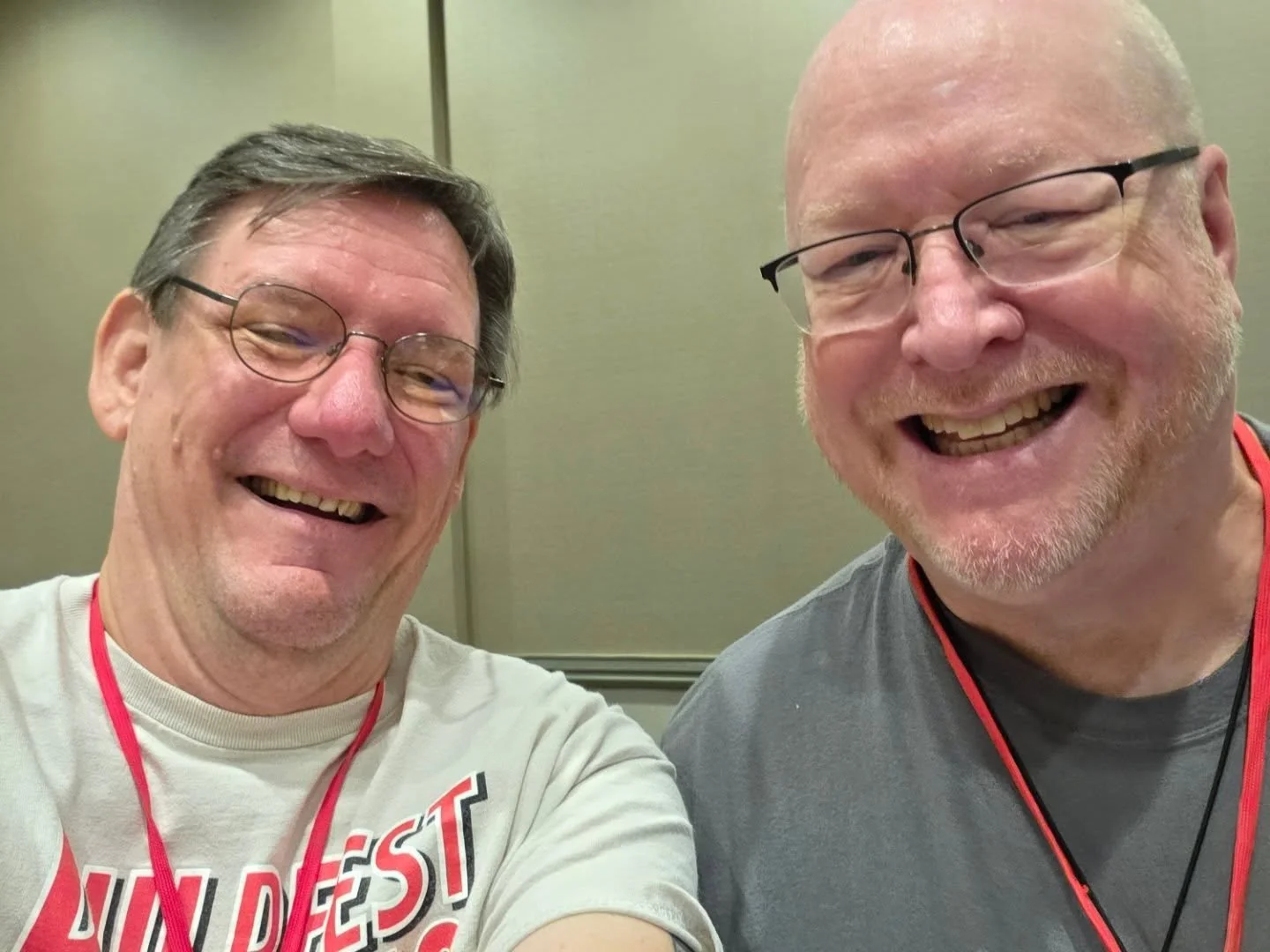
Today, I welcome my friend Don Simpson to the blog. After seeing Don’s work in comics dating back to the 80s, I got to know him in person through PulpFest, the annual pulp magazine and vintage paperback show held in Cranberry, PA each August (the 2027 show will be August 5-8). Over the past few years we’ve had plenty of great conversations about comics, creativity, and King Kong and so it felt right to re-inaugurate this series with a chat with Don.

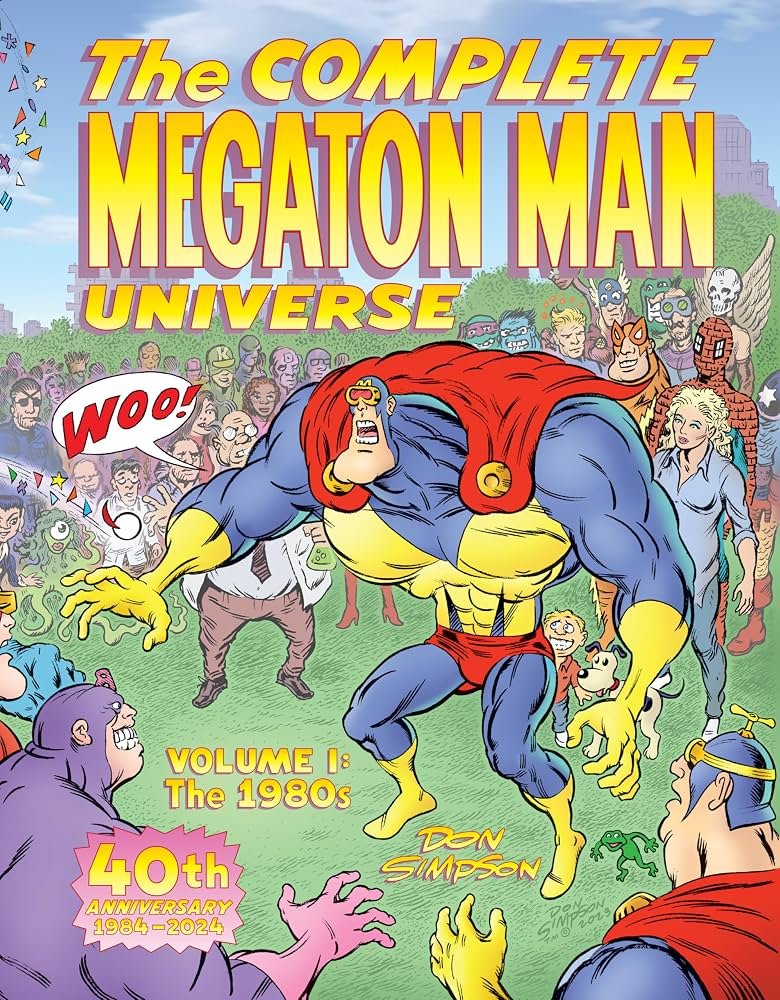
Don is probably most well known as the creator of Megaton Man, Border Worlds, and Bizarre Heroes. He also drew an adaptation of the original King Kong, and provided illustrations for Al Franken’s book Lies And The Lying Liars Who Tell Them. His recent releases include The Complete Megaton Man Universe Volume 1: The 1980s, Megaton Man; Microbus, The Lost Art of Don Simpson and X-Amount of Comics 1963: (When Else?!") Annual. Don can be found on Facebook, Instagram, his blog, Substack, and Bluesky.

Q: Hi Don! Thanks for taking some time to “chat” with me.

A: My pleasure, Anthony.

Q: I’m sure you’ve answered this question a million times, but for any of my readers who may not be familiar: how did Megaton Man come to be?

I was preparing to be a “serious” superhero penciler from the time I first started reading comics in the spring of 1972, at the age of ten. I read mostly Marvels at the time, and gravitated to undergrounds and Heavy Metal and European bandes dessinées by the time I was in the late teens and early twenties. Of course, I also always read the daily comic strips in The Detroit News and Peanuts and Funky Winkerbean, and of course Mad magazine and later National Lampoon and so on, so I was always a fan of humor as well. I would always draw funny comic strips for my school newspaper from time to time, and was featured on the choir bulletin board in high school. So I always had a sense of humor, I like to think.

So, like I say, I was submitting stories to Heavy Metal and getting rejection slips from (art director) John Workman, which were still encouraging, and rejections from Jim Shooter at Marvel and Dean Mullaney at Eclipse Comics. I wasn’t giving up on science fiction or superheroes, dramatic comics, as it were, but I also roomed with Mike Kazaleh, an aspiring humor cartoonists and animator—he later had success working for everyone from Ralph Bakshi on a Mighty Mouse revival to Matt Groening on the early Simpsons when it was on the Tracey Ullman show to John Kricfalusi on Ren and Stimpy. He would draw Ren and Stimpy for quite a long run at Marvel. Anyway, we were a couple of undiscovered geniuses getting nowhere in Detroit, and we shared an apartment where our drawing boards were in the kitchen.

One day we got to arguing about the relative difficulty of doing drama versus humor in cartooning, which is an absurd discussion to have—many of the greats were facile with both—Crumb, Kurtzman, Wally Wood, and so on. So we made this kind of friendly bet to try the opposite genre. Mike tried serious superheroes and gave up within a matter of hours; I tried doing funny stuff and it was just awful, but I kept at it. Finally, I drew the over-muscled beach bum with bikini-clad chicks draped all over his massive arms. I showed it to Mike and it was the first thing that got a laugh from him. I thought maybe I had something.

I kept at it and gave him a costume with a big “M” on his torso. I tossed around names with my other roommate, Brian Gabel, and one of us tossed out “Megaton Man,” and it just clicked. The whole concept sprang from that and it has really been a process of elaborating on it ever since.

Q: I’m always interested in the creative process. How do you approach page layout, lettering, etc. for a given project?

A: In the old days, I would start with a scribble in a sketchbook, a thumbnail rough, or maybe I would draw directly on 11" x 17" Bristol board. Today, I’m much more likely to type out a full script on a word processor. But I still can go back and forth. If it is a cover or a one-pager, and I can draw it all out in one sitting, I may just go with the inspiration. If it is a longer story, I’m going to type out plot notes, then start to hear dialogue, then add scenic (visual) descriptions. My full scripts can be quite elaborate—who is in the foreground, who is in the background, who is entering from the left side of the panel, and so on. I include psychological notes about the characters’ states of mind, if necessary.

I’m much more comfortable writing out my thoughts fully because I’ve learned if I have to set a project aside for any length of time, I can read back what I’ve written and recall my state of mind and what it is I want to draw. If I just make a scribble and then set it aside, if I don’t get to it right away, I have no idea how to decipher it later. And an unfinished drawing runs the risk of going stale. I used to draw every day so I ran into that less often. But as I’ve gotten older and life is more complicated, I find writing it out is better in case life intervenes and I can’t finish it all in a few days or weeks.

Sometimes the full-script approach leads to wordy dialogue, but it’s easier to cut dialogue at the drawing board—the fact that I still hand-letter is a big inducement to trim! And if a scene goes stale or no longer serves a purpose, I find it easier to cut writing than to cut finished art. It can be painful to have to cut finished comics pages that no longer serve any purpose in the story.

Q: What are your preferred tools for each step of your process (pencils, inks, letters, colors)? And have those preferences changed over the course of your career?

A: I’m still blue pencil—light blue Col-Erase, although they’ve discontinued them, the bastards—and graphite pencil, Hunt #102 crowquill and sable brush, Rapidographs for lettering, although pigment markers are more convenient nowadays. I scan my art into the computer and color in Photoshop. We used to use Cel-Vinyl colors on greylines—state-of-the art in the 1980s, but that is very primitive now.

Q: As a lifelong King Kong fan, I am particularly interested in how you came to work on the comic book adaptation and what that process was like.

A: I grew up with the movie on TV, of course. It was thrilling. It’s still thrilling today. The artistry really hasn’t been surpassed. The acting was atrocious, but the artistic vision, what is conveyed through stop-motion animation and set design and so on still holds tremendous power.

Fantagraphics approached me. I had done In Pictopia (from a script by Alan Moore) and Gary Groth was always fond of Border Worlds. I also know Tom Powers, a young guy from Detroit who became an assistant editor with Fantagraphics. Gary had been after the Kong license for quite some time—I’m sure you know the ownership of the Kong trademark and copyright—the film versus the screenplay and novelization—has long been a tangled mess.

They lined up six superstar covers by Dave Stevens, Al Williamson, Mark Schultz, William Stout, and Ken Steacy, and they needed someone cheap to do the adaptation and artwork. I was one-stop shopping, I suppose, and we agreed upon a page rate that wasn’t exactly Marvel or DC, but it compared favorably to Kitchen Sink Press, with whom I had just severed ties. So I got a used paperback copy of the Delos W. Lovelace novel—we didn’t have rights to use the RKO imagery, and I cartooned away.

It’s not a job I would have asked for or tried out for. I never thought I was doing the definitive interpretation of King Kong—just a workmanlike effort. I certainly put a lot into it. We were able to restore the giant spider scene and add a few other touches—I have a kid reading a Doc Savage novel in 1931, which is slightly anachronistic, but there you go. At the time it came out, my version didn’t get much love, but I think it has aged rather well. It has a fairly avid following now, especially at a venue like Pulpfest. I’ve sold several comics and a few pieces of original art there.

(Illustrator) Joe DeVito has had the Kong rights tied up for a long time and has refused to collect mine. I think Kong collectors would like to see the six issues collected into a mass-market graphic novel. I numbered all the pages from 1 to 130 for that purpose. Someday, Joe will be out of the picture and not be in a position to hold up the show anymore. I look forward to that.

Q: You’ve got two successful Kickstarters under your belt. Any advice for people looking to do a Kickstarter project? Things to do, and things to avoid?

A: Don’t cheat yourself on foreign postage. Not only are there customs—thank Emperor Tariff—but also filling out the forms is time-consuming. The big thing is not to overpromise and to fulfill promptly. Have your project already in the can and ready to send to the printer before you launch your campaign, and give yourself an extra three months. Also, don’t post pictures of the boxes being delivered, because then your backers will want to know why you haven’t mailed it out already, three days later. You’re not Amazon, so give yourself ample time.

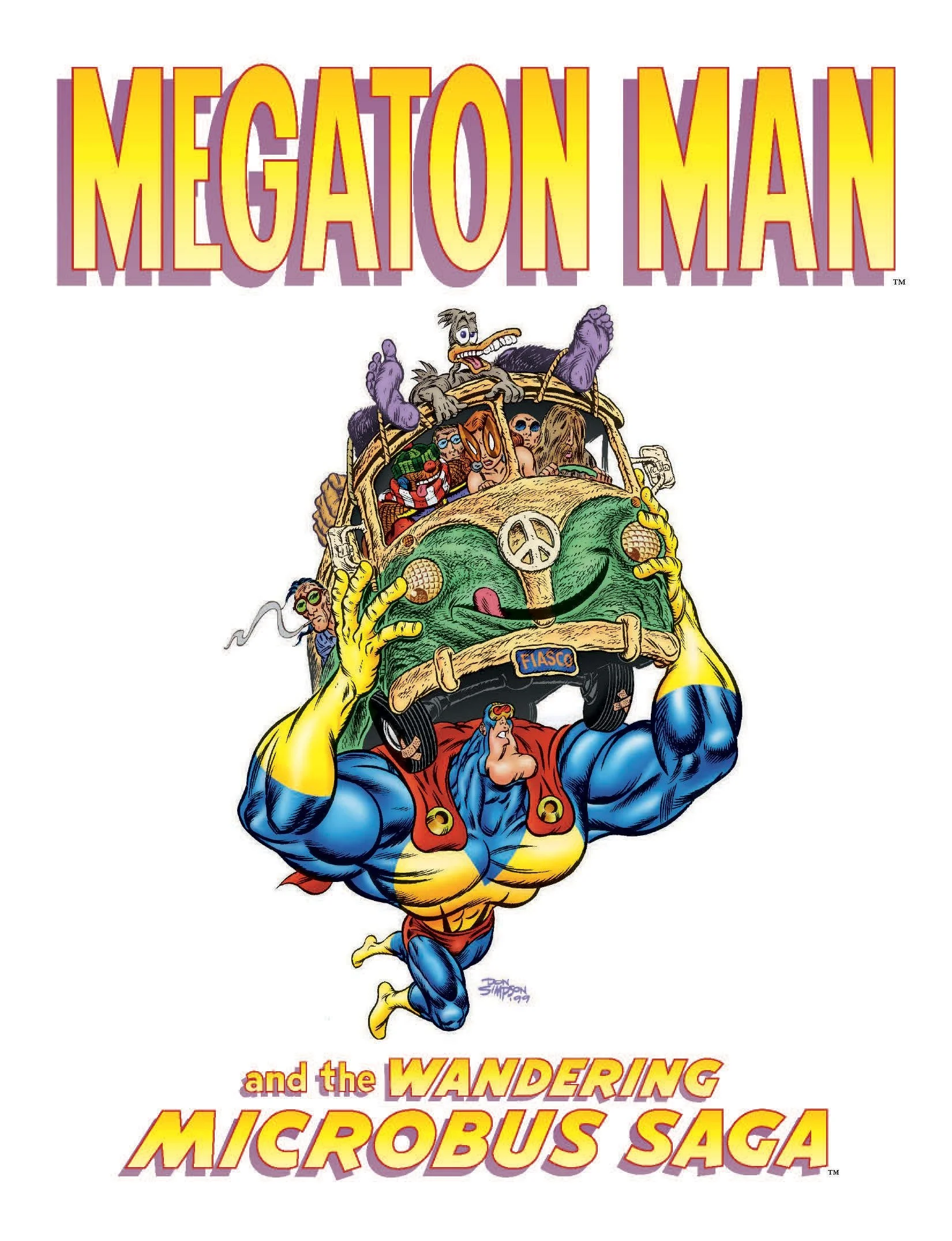
Q: Your most recent successful Kickstarter was for the Megaton Man: Microbus collection, which brought together all of the weekly Megaton Man serials from 1996 to 2001, plus some other material. And before that, you funded The Lost Art of Don Simpson. What’s your next Kickstarter project, and when does it launch?

A: I’ve been working on Megaton Man: Megatropolis, my “9/11” graphic novel, for twenty-five years. I’m finishing the coloring. I’m preparing to launch very shortly, I hope. Watch the skies!

Q: And my standard final question: What is your favorite book?

A: I prefer a lot of nonfiction. I’m not a voracious reader. I think I’ve read maybe twenty Doc Savages, back when I was a teenager. I’ve read one or two since, and they are tough sledding. But I’ve read the opening chapters to Doc Savage: His Apocalyptic Life, by Philip José Farmer, any number of times. For a while there, every spring I’d read the opening chapters, where he summarized the supersagas and talk about Henry Miller and E.E. “Doc” Eddison, and William S. Burroughs, and talk about telling a “rattling good story” and driving the literati up a wall. I found it thrilling and inspirational. More recently, I discovered the Barsoom trilogy of Edgar Rice Burroughs, which I think I prefer to Tarzan. There’s just something magical about A Princess of Mars—I bought the Library of America edition at Pulpfest this past summer. It’s just uncanny. It’s just words on paper, but I feel transported. I know people who are voracious readers and more widely read than I’ll ever be, but I’d rather read a few good examples of writing more than once. I’ve read Another Roadside Attraction by Tom Robbins twice, and it holds up. Henry Miller’s Tropic of Capricorn does not hold up, but the excerpts Farmer mentions in Apocalyptic Life are still thrilling.

A Catcher in the Rye is terribly dated now, and Wicked has to the most over-rated book in the past century.