Today, Writer Wednesday welcomes the great Zig Zag Claybourne. I had the pleasure of meeting Zig in person a few years ago at ReaderCon, where we both participated in a play test of C.S.E. Cooney and Carlos Hernandez’s wonderful card-based RPG Game Negocios Infernales.
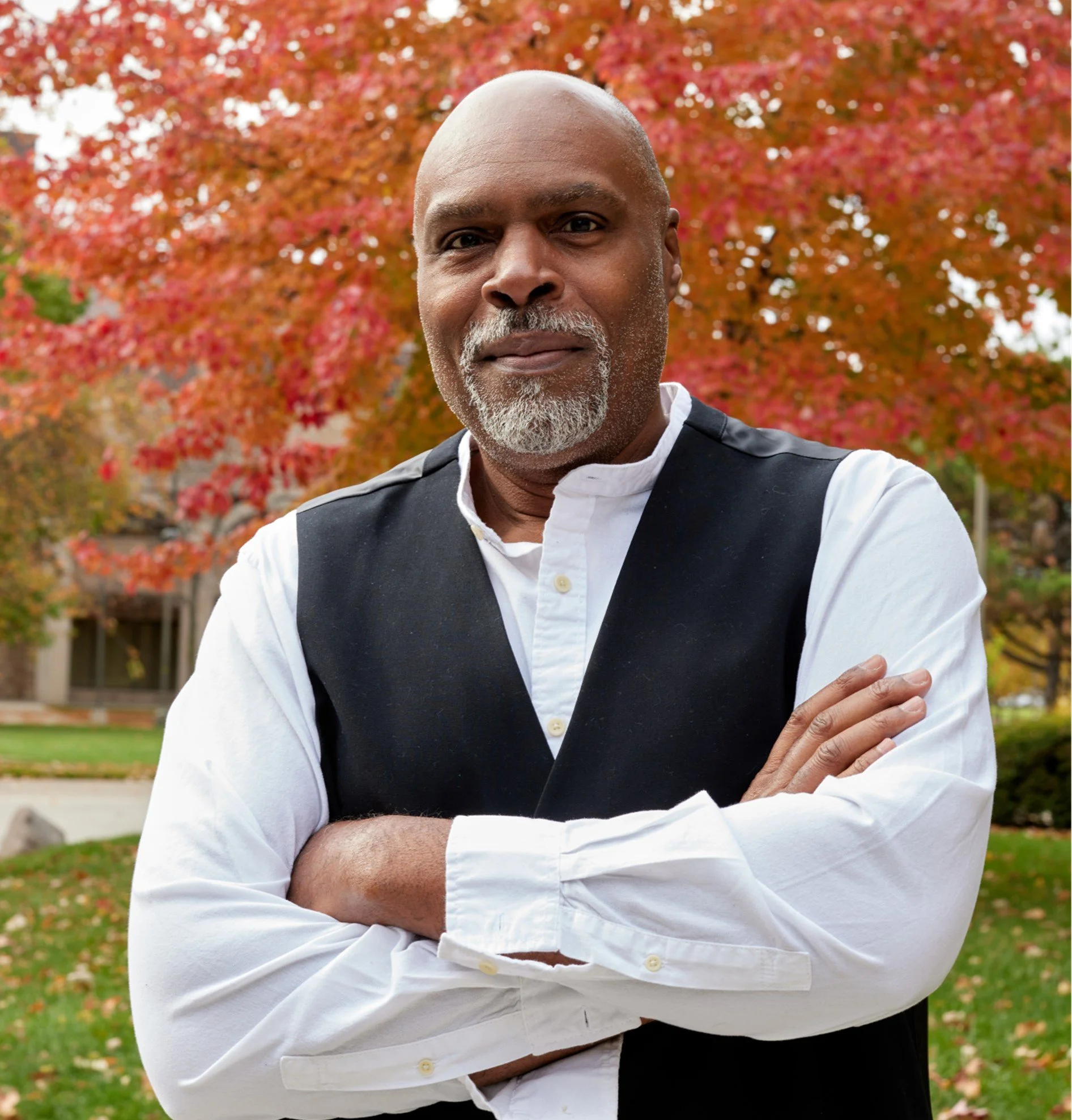
photo by Al Bogdan
Named one of the “6 Best Black Indie Science Fiction and Fantasy Writers You Should Be Reading” by Book Riot (2021), Zig Zag Claybourne is the author of the upcoming fantasy Khumalo Tales and its prequels Breath, Warmth, and Dream and Amnandi Sails. Other novels include The Brothers Jetstream: Leviathan, Afro Puffs Are the Antennae of the Universe, and By All Our Violent Guides. His stories and essays have appeared in The Magazine of Fantasy & Science Fiction, Apex, Realm (formerly Serial Box), Galaxy’s Edge, Strange Horizons, GigaNotosaurus, and numerous anthologies. Claybourne is a frequent speaker at libraries, conventions, and learning institutions. zzclaybourne.com
Hi Zig Zag! Thanks for taking part in today’s Writer Wednesday chat.
Thank you for making space on the interview sofa for me!
You’ve recently launched a Kickstarter for the final book in your Mother Khumalo trilogy, Khumalo Tales. Tell us about the characters and trajectory of the trilogy.
I wanted to write a grand adventure focusing on the people having the adventures, not so much the adventures themselves. I’ve done a book a year on these characters, a first for me, as well as my first strictly fantasy outing. What started as a short story in 2020 (published at GigaNotosaurus by LaShawn Wanak) evolved into a separate novel in 2024 that I immediately knew was going to be a trilogy. Ayanda Khumalo and her daughter Amnandi are the primary characters throughout. Ayanda is better known to her world of Erah as Unina (Mother) Khumalo, not that she actually seeks to be known. Amnandi Khumalo, in book one, is a sometimes lonely ten-year-old but incredibly aware of herself and what she can do. As a family, their thrust is travel. Who doesn’t want to give their child access to the entire world? And Mother Khumalo does, heading overseas on a whim. As witches, though (my version of witches), certain rules are a given, prime being never allow harm to come to innocents. There’s never a shortage of harm to be found. BREATH WARMTH & DREAM sees them squared off against a thief mage and his cohort of a wraith and a demon.
By AMNANDI SAILS, book two, mother is off on her own adventure while 17-year-old Amnandi sails with a beloved family friend, Captain Maab Pinyasama, on Maab’s fabulous ship. We know what Amnandi is capable of from book one. The question she has for herself is not simply can she push herself, but which directions she should do so, a question shared by everybody in the book regarding themselves. The book concerns itself with power. Coming into one’s own power—and how that affects others—should never have a single definition.
By trilogy’s end, Amnandi’s in her forties, her mother her seventies. We know the witches have grown into legends despite their best efforts to ignore that status. KHUMALO TALES hints at adventures we haven’t seen, and presents the grand duo with one they’re not entirely sure how to face, despite their advanced years.
What was the initial inspiration for this world and characters? How have the world or characters changed from your initial conception to the finished books?
Inspiration came 100% from an offhand remark a good friend made. We were messaging each other and she said she’d baked so much “the air in my house tastes like sugar.” Instant amazing title. Instant story. I wanted to do a riff of Hansel & Gretel. I wanted a storyworld that had the feel of a fairy tale told in an uncertain woods, a story full of magick (on Erah it gets the added ‘k’) but not about the magick. Mob-thought and ignorance are staples of ancient tales, so the story would revolve around that. How would a magickal Black woman and her daughter have molded the typical olde English fantasy world to comport itself in their presence? Particularly when they had no interest in proving themselves to anyone; it was more “prove yourselves to me, otherwise I have better concerns.”
That’s a thread that stayed with them throughout the series. They know their power. Nothing comes between them. Nothing occurs between them but love. By the time we get to KHUMALO TALES, the world of Erah is solidified in the reader’s mind. They know its tastes, its waters, there’s even a map in book 2 (is it even fantasy if there’s not a map?). Readers know that Amnandi in any given situation is going to be a person a reader wants in that situation. They know Mother Khumalo has addressed the situation before the situation ever has a chance to come up and is waiting for the inevitable to catch up to her. But they also know that these are two magickal beings among a world of magickal beings (and non-magickal ones) who love being thrown a curve! And by the time Mother Khumalo has hit seventy, Erah is a lot more peaceful in more ways than one.
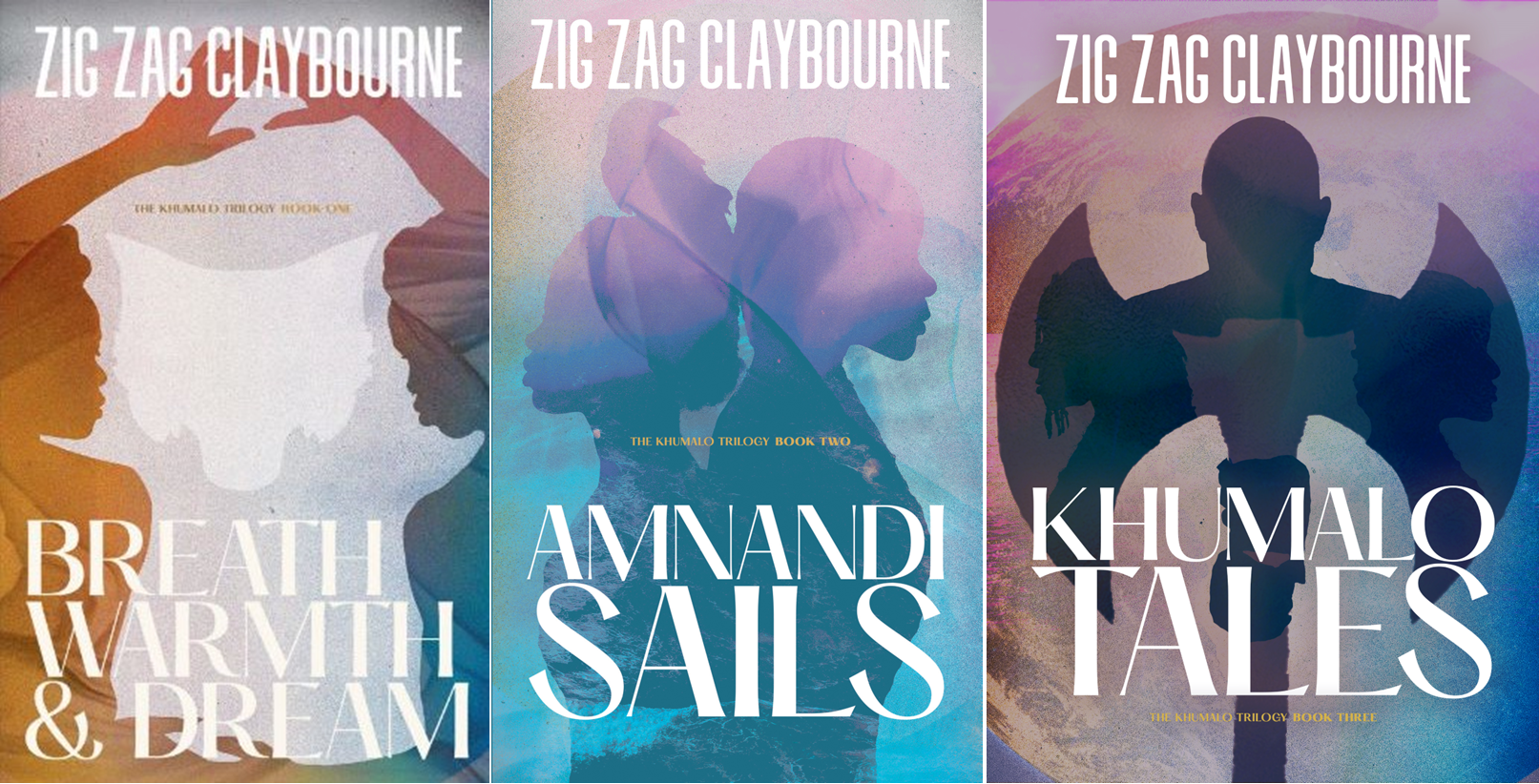
covers by Anansi+Hayes
Was this always intended as a trilogy? And, if you can answer without spoiling the events of Khumalo Tales, is it possible we’ll see more with these characters or this world in the future?
Maybe some part of me decided I was going to sink a buzzer shot from the 3-point line, but as sure as Tolkien sent Bilbo traveling, I knew that this would be a trilogy covering their entire lives as concisely as possible. And I like to think all my books, no matter the genre, are interconnected. It might not be likely we’ll see these characters in the future; ain’t exactly unlikely either.
You write across a number of genres under various pen names. Is there a genre (or sub-genre) you haven’t tried yet that you’d like to?
I’ve dabbled with horror shorts. I’d like to do a horror novel. Except I’m a horror weenie. Especially paranormal stuff. Splatter and gore? Barely registers. Jump scares are easy and don’t stick. But the stuff that gets inside the mind? The feeling of your reflection watching you walk from the bathroom after you turn out the light? Or you hearing a chair pull out when you know you live alone? Nerp. As much as I want to write a horror novel, I’d need several months in a beachside yurt to recover.
What is your writing process like? And does it change based on genre or story length?
I write from a place of feeling. If I can’t feel the soul of a story, my pen doesn’t move. I write everything longhand, then type it up, then print it, then revise with red pen, sticky notes, or taped bits of paper. This means I might take forever to get a story out. Sometimes I tell that to new writers and they panic. They think of ideas as Pokémon; gotta catch em all. Since I think of ideas as tribbles, I can take my time making sure the one I’m working with is what it wants to be, because if I lose one, no big deal. I’ve gotten to the point where I know that no idea I ever have is so precious as to get in the way of me having another. This allows for freedom of expression in prose and exploration of form, which leads to your question of does my process change based on genre or length. It does not. I’m not a perfectionist or absolute completist, which is why if I do take on a project, I have to love it. Pen, paper, soul. If anything, I’m a literary tuning fork. A line, page, or book is only finished when it vibes right.
I’ve heard the term “Afrofuturism” used to describe your work, as well as current writers such as Maurice Broaddus, Rob Cameron, Nnedi Okorafor, Nisi Shawl, and SF grand masters like Octavia E. Butler and Samuel R. Delany. I only recently learned that the term dates to the early 1990s. I’d like to ask what your thoughts are regarding the history of the label, its applicability to your work across genres, and use as a marketing tool. I know it has helped me find authors I haven’t read before.
Short history: the publishing industry found a new means to sequester Black writers under a new label, same as the music industry had to invent “race music” then “roots music”, “R&B”, “world music” and on and on. Whiteness always says “What we do is the thing, what you do is something akin.” Never matters if we invented the thing or not. Black writers have been doing futurism since the Dogon described Sirius B.
Longer, more rooted, contemporary history: there are so many definitions for Afrofuturism; there are so many offshoots, so many refutations, so many dismissals, and conscious mutations. For me, an afrofuturist is a time traveler delivering ways to improve human affairs. It’s not solely “Black people are in the future.” It’s a creative mindset of actively healing the future. We take the past, present, and future as one body. We imagine fictions that tend to that body. I do speculative fiction. I don’t mind if anyone labels what I do as afrofuturist, as long as they’re using that term to embody exploration, not sequestration. Afrofuturism is not interested in the status quo. Stagnancy is infection. Even in my fantasy novels, there’s inherent pushback against the notion that fantasy is the province of white people, with everyone else in the world just tourists in it. I recently watched a documentary about the fantasy genre’s huge dominance in pop culture. Lord of Narnia’s Potter Rings basically. You can guess how white it was except for a 2-second flash of NK Jemisin’s name toward the end of the entire hour. If a documentary wants to do that, then call it Eurofantasy, not Fantasy with a hard F. I’m sure any documentary on the Khumalo Trilogy would call it Afrofantasy so fast my pen would spin. Marketing-wise, terms can help readers who are curious break out of their defaults, but the industry generally keeps a Black writer’s discoverability small within the traditional channels. I’m primarily indie. People that want to go somewhere cool already know where to find me. Zig Zag Claybourne is a speakeasy.
Who are your biggest influences?
Toni Morrison and Dr. Seuss. Seuss enabled me to have fun with words, Morrison sharpened their inner workings. You can imagine “combines the best of Toni Morrison and Dr. Seuss” is not the most comp-ready buzz among the traditional publishing industry. Works for me tho.
What’s next for you, after the Khumalo Tales Kickstarter ends and you put the finishing touches on the project?
Gonna get intimate with the TBR pile. Gonna drink so many leaf squeezins (tea, for the heathens out there). I’m not the fastest writer in the world but I’ve literally done five books since Covid covered the world. Afro Puffs Are the Antennae of the World, Conversations with Idras, Breath Warmth & Dream, Amnandi Sails, and now Khumalo Tales. And it’s not a matter of cranking. I don’t crank. A scifi, a satire, and a fantasy. Sometimes the words flow. I jump in my innertube whenever that happens. Once KHUMALO TALES is in the hands of backers I’m going to give my brain time to get its elasticity under control. Right now it’s Mr. Fantastic after three rounds with the Hulk.
And my usual final question: What is your favorite book, and why?
My favorite book of all time is McElligot’s Pool [by Dr. Suess], because it was the first book to teach me how to expand the universe from any small unlikely place, crucial knowledge which is not only valuable but fun.
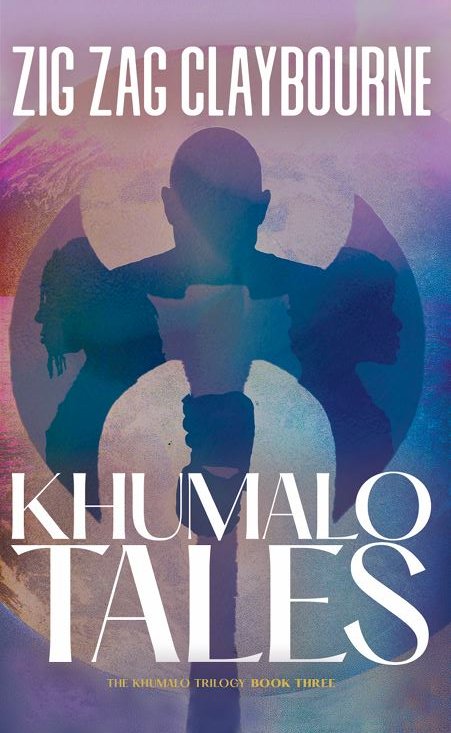
covers by Anansi+Hayes
