Today I welcome my childhood friend and neighbor Russell W. Dickson to chat about his books and writing process. Russell and I grew up in the same section of Mahopac, NY and our mothers were good friends. We haven’t seen each other in person in way too long, so it was fun to “catch up” as it were.
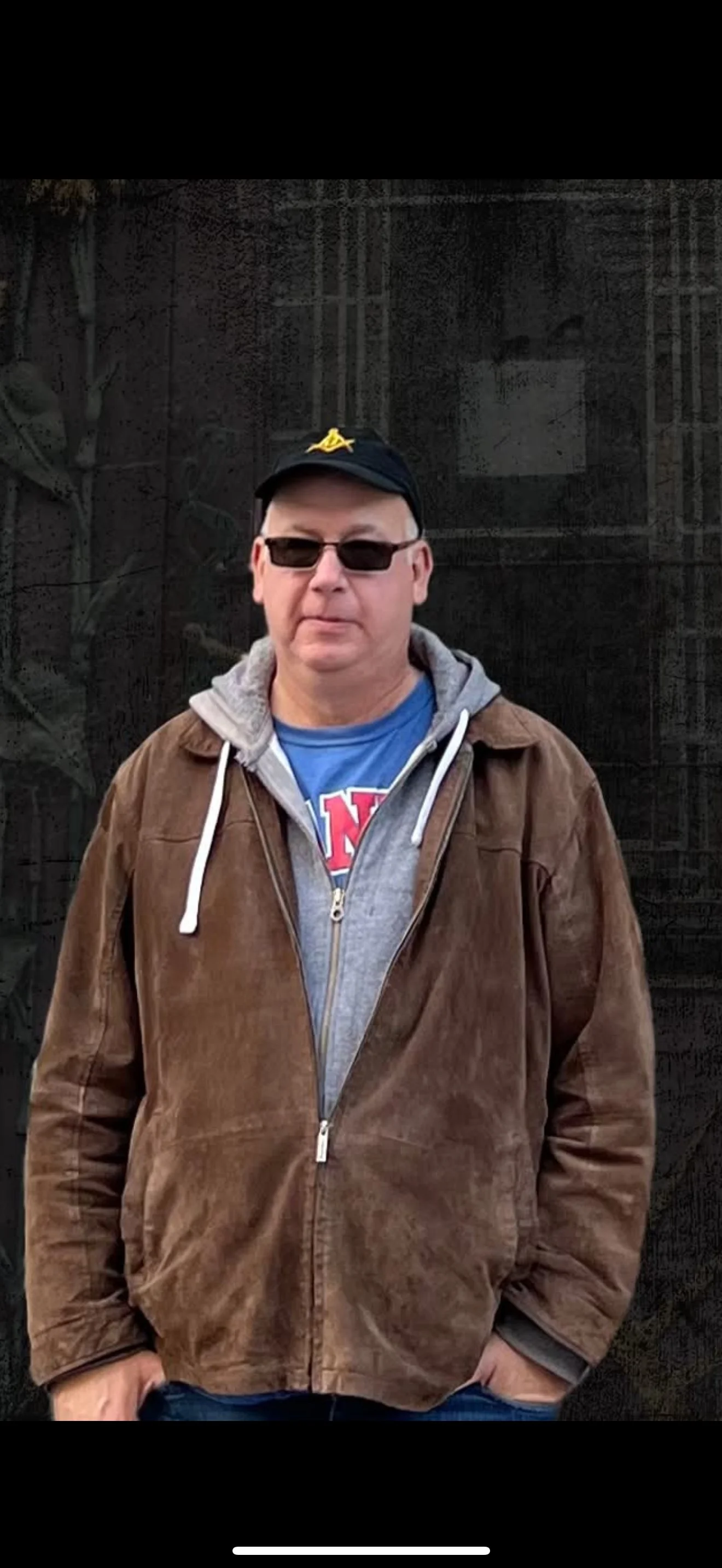
Russell W. Dickson is a horror novelist and longtime journalist based in Upstate New York. He holds a Bachelor of Arts in English/Writing with a minor in Journalism and has written for NewsBlaze Daily News for more than 26 years. His books include The Man Next Door, Children Shouldn’t Play with the Dead, and The Leather Man’s Curse. Drawing inspiration from the communities, folklore, and dark corners of his home region, he creates interconnected stories where familiar places conceal unsettling secrets. He connects with a combined social media following of approximately 110,000 fans across Facebook, Instagram, X, and TikTok.
Hi Russell. Thanks for joining me on this Writer Wednesday!
Thanks so much for having me! I’m really happy to be here. It’s especially fun doing this interview with someone who grew up in the same hometown—and even the same part of town—as I did. I’m looking forward to talking about my books, my writing, and maybe revisiting a few ghosts from our old neighborhood along the way.
Your recent books and upcoming novella are all in the horror genre. Is it safe to assume you’re a lifelong horror fan?
Absolutely. I’ve been a horror fan for as long as I can remember. Even as a kid, I was fascinated by movies like The Exorcist, The Amityville Horror, and Halloween. There was something about being scared—while knowing you were safe—that hooked me early on.
As I got older, that fascination grew beyond movies. I became interested in ghost stories, local legends, haunted places, and the darker side of folklore and history. I think that naturally found its way into my writing. Horror has always been the genre that lets my imagination run the wildest, so looking back, it probably makes perfect sense that I ended up writing horror stories of my own.
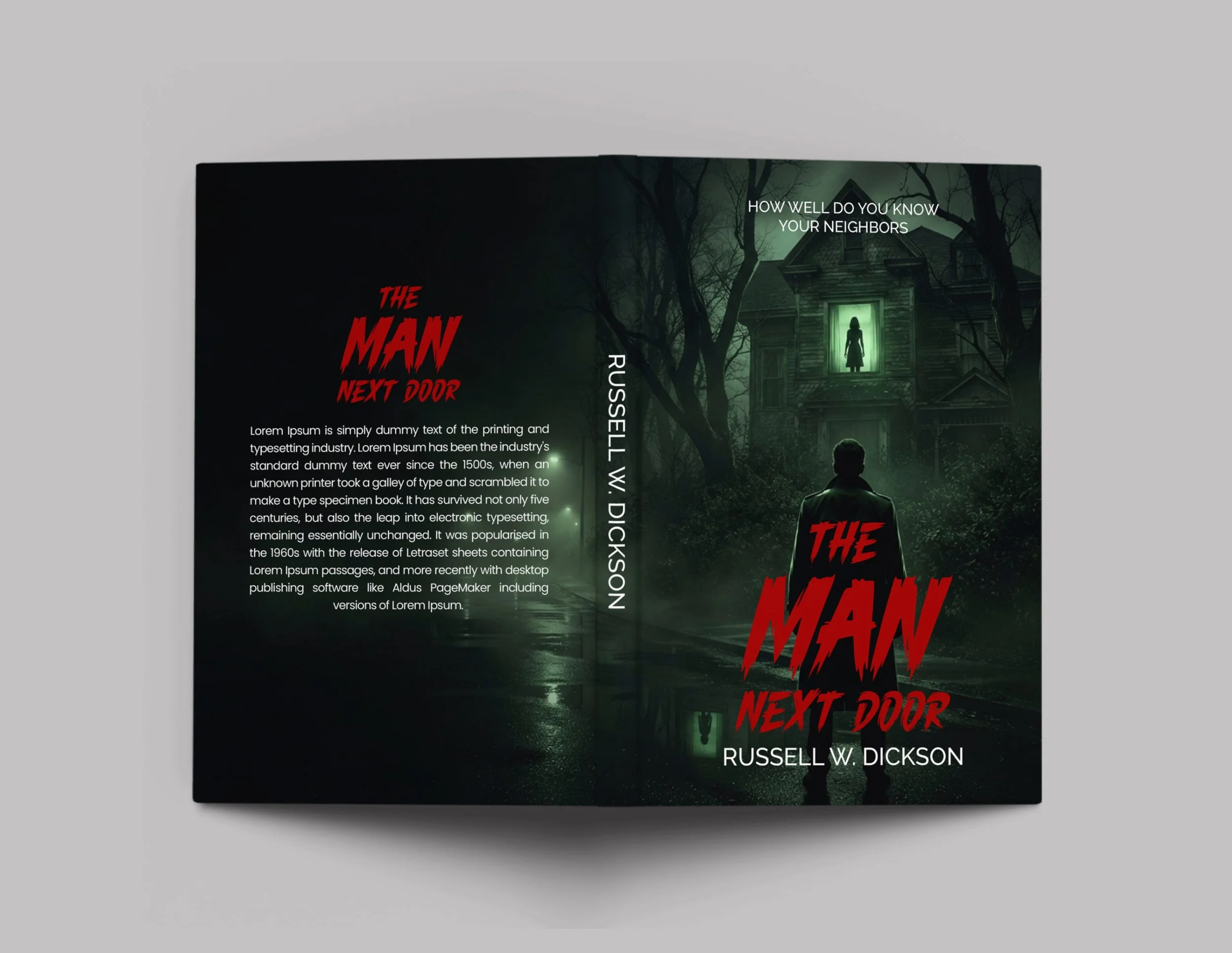
We grew up in the same small lower Hudson Valley town, and in fact the same part of town. I’ve noticed a few nods to Lake Secor in your work. How did growing up where we did influence your writing?
Growing up there had a huge effect on my writing, probably more than I realized at the time. Camp Henry on Lake Secor in Mahopac and the woods behind my childhood home are featured prominently in Children Shouldn’t Play with the Dead. Those were places I knew intimately as a kid, so when I began creating that story's world, they naturally became part of it.
Even the group of kids in the book was inspired in part by the kids I grew up with in our neighborhood—the friendships, personalities, adventures, and trouble we managed to find.
If you read more of my books, you’ll find other connections to our hometown scattered throughout them. I like leaving those little nuggets behind—places, memories, and details that might not mean anything unusual to most readers, but that old friends like you might recognize immediately. In a way, pieces of where we grew up keep finding their way into the fictional worlds I create.
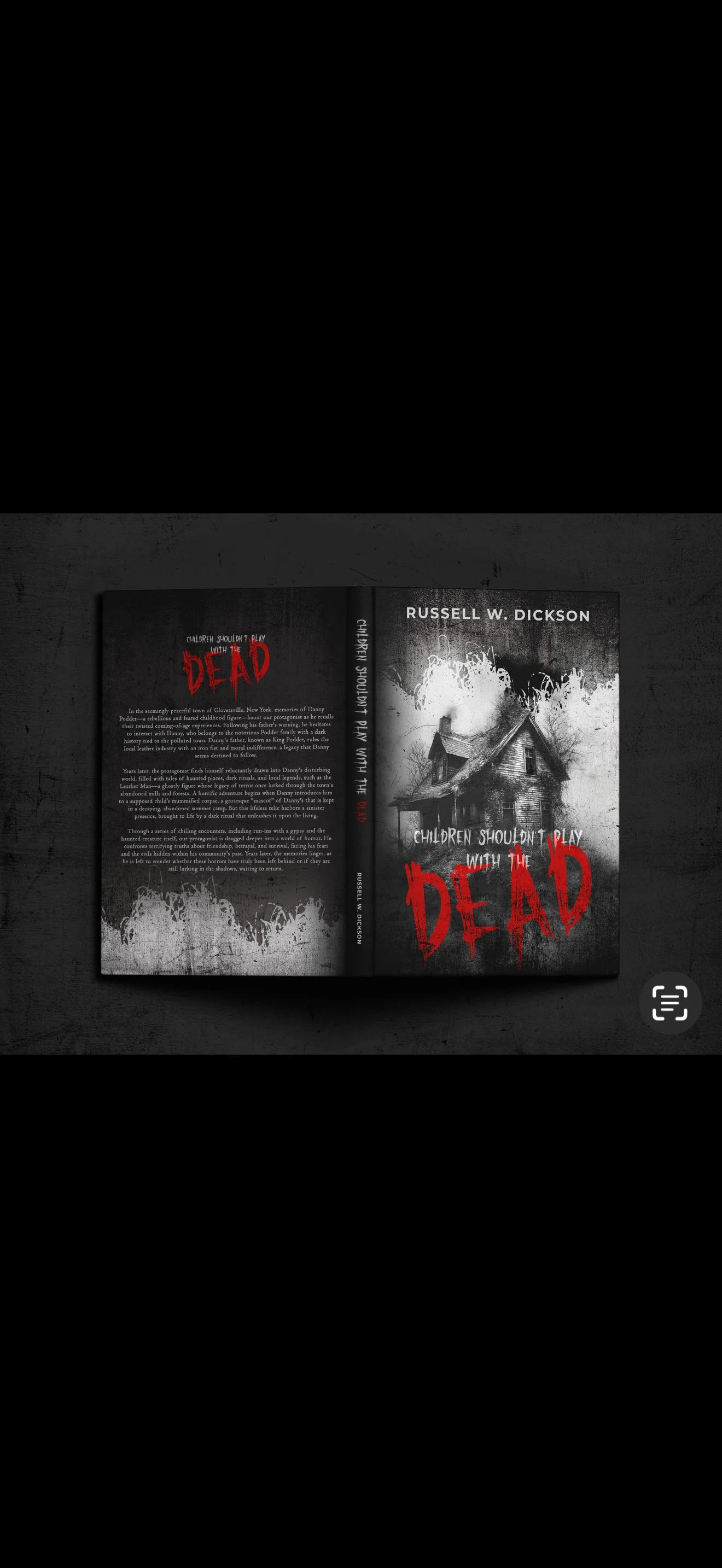
Who were your major influences (literary or otherwise)?
As a child, I was an avid reader. I loved mystery and adventure books, especially The Hardy Boys and Nancy Drew. Those books gave me an early appreciation for mystery, suspense, and the idea that something unexpected might always be waiting around the corner.
As I got older, I discovered writers like Stephen King and Dean Koontz, who showed me just how powerful horror could be when it was grounded in believable people and places. I was also fascinated by Washington Irving and Hudson Valley folklore. Stories like The Legend of Sleepy Hollow and Rip Van Winkle mattered to me because they blended fiction, history, folklore, and recognizable places. That strongly influenced my decision to incorporate local legends, history, and real locations into my own books.
My education broadened those influences considerably. I earned a B.A. in English/Writing with a minor in Journalism, where I learned the discipline and mechanics of writing professionally. In college, I was inspired by a wide range of writers, including Edgar Allan Poe, Charles Dickens, Louisa May Alcott, Ralph Waldo Emerson, Fyodor Dostoevsky, and Leo Tolstoy. I was drawn to Poe's darkness and atmosphere, Dickens's memorable characters, and the harsh realities and psychological depth found in the great Russian writers.
I was also fascinated by vivid firsthand wartime accounts and historical writing, because they demonstrated how powerful specific, honest details can be. Journalism reinforced that lesson: observe, research the facts, and make the reader feel as though they are actually there.
All of those influences eventually came together in my own work. Horror may be the genre I write most often, but underneath it you'll usually find history, folklore, real places, human nature, and little pieces of the world I grew up in.
What is your writing process like? Are you a “plotter,” a “pantser,” somewhere in between? And does that process change based on the length of the work (novels, novellas, short stories)?
I would definitely say I lean more toward being a “pantser,” although there is some plotting involved. Most of my stories begin with an idea, an image, a place, a piece of history, or sometimes just a frightening “what if?” I usually know where I want the story to go in general, but I don’t necessarily know every turn it will take to get there.
I like giving my characters room to develop and letting the story surprise me. Some of my favorite ideas have come while I was actually writing rather than during the planning stage. There are times when a character or situation takes the story somewhere I hadn’t originally intended, and I think that spontaneity gives my work some of its energy.
The longer the work becomes, though, the more organized I have to be. With a novel, especially when I’m weaving together history, local legends, multiple characters, and connections to my other books, I’ll keep notes and map out important events so everything eventually comes together. With novellas, I tend to work from a looser framework. Short stories are probably where I’m the closest to being a pure pantser. I can start with one disturbing idea and follow it to wherever it takes me.
So I suppose I’m somewhere in between, but I always want to leave the door open for the story to surprise me. For me, discovering what happens is part of the fun of writing.
You’re also a journalist. How does your process differ between fiction and non-fiction, if at all?
For me, fiction and journalism actually have a lot in common. Whether I’m writing a novel, a short story, or a news article, it has to be something I have a genuine interest in. I write from both my heart and my mind. If I’m not interested in the subject myself, I can’t expect the reader to be interested either.
Research is also crucial to everything I write. I believe you have to become as much of an expert on your subject as possible. Readers are smart, and if you don’t understand what you’re writing about, it will eventually show, and you’ll lose credibility.
The biggest difference is what I do with that research. As a journalist, the facts are the story. My responsibility is to be accurate, fair, and truthful. In fiction, research becomes the foundation that lets my imagination take over. When I write about a historical event, a local legend, or a real place, I want the details to feel authentic even when I introduce something supernatural.
Journalism taught me discipline, accuracy, research, and how to tell a story clearly. Fiction gives me the freedom to take those same skills and ask, “What if?” I think the two sides of my writing have influenced each other tremendously.
What projects do you have coming up that people should be on the lookout for?
This is a really exciting time for me. Publishers, literary agents, film producers, and actors have expressed interest in my work, so several possibilities are developing behind the scenes.
My first three books—The Man Next Door, Children Shouldn’t Play with the Dead, and The Leather Man’s Curse—along with my upcoming The Witch’s Road, really only scratch the surface of the fictional world I’ve been creating around Gloversville and the surrounding region. The stories are connected through local history, folklore, characters, and supernatural threads, and I currently have three more books planned that will expand that universe considerably.
I’m also writing shorter pieces from the Leather Man world. Readers can find me on Substack at RussellWDickson, where subscribers get multiple creepy short stories and other material that allows me to explore corners of that universe that might not fit into the novels.
Outside of fiction, I continue my journalism work for NewsBlaze.com, and I stay very active on social media, particularly Instagram, where I’ve built a large following and can interact directly with readers.
A lot is happening right now, and I feel like I’m only getting started. If readers enjoy the world they’ve encountered in the books so far, there is a great deal more coming.
Where can interested readers find you or your work online?
Readers can find me all over the place online. The easiest way is to search for Journalist Russell W. Dickson on Google, Facebook, Instagram, TikTok, and X. I’m very active on social media, where I share updates about my books, upcoming releases, appearances, horror stories, and other projects.
You can also find my journalism at NewsBlaze.com. Readers looking for more horror can find me on Substack as RussellWDickson, where I publish creepy short fiction, including stories that expand my Leather Man universe.
My books are available through Amazon, Barnes & Noble.com, and other major online booksellers and distribution channels worldwide, as well as through select independent brick-and-mortar bookstores.
And if your local bookstore doesn’t carry my books, tell them they should! Independent bookstores are incredibly important to authors. Booksellers interested in carrying my work can reach out to me directly through Instagram for ordering and distribution information.
Most of all, I enjoy hearing from readers. Whether you find me through my books, journalism, Substack, or social media, feel free to reach out and say hello.
And my standard final question: what is your favorite book?
That’s a tough question for someone who has been an avid reader his entire life, but if I had to choose one, I’d probably say Washington Irving’s The Legend of Sleepy Hollow. I know it’s technically a short story rather than a novel, but it influenced me so deeply that I have to pick it.
Growing up in the Hudson Valley made Irving’s story feel different to me. These weren’t just imaginary places somewhere far away—they were part of the history and folklore of the region I called home. I loved the atmosphere, the mystery surrounding the Headless Horseman, and especially the way Irving blurred the line between history, legend, and the supernatural.
Looking at my own books today, I can see that influence very clearly. I’m constantly digging into local history and legends and then asking myself what might be lurking beneath the stories we think we already know.
Of course, ask me again tomorrow, and I might say Edgar Allan Poe, Stephen King, Dostoevsky, or Dickens. That’s the problem with asking a writer to name only one favorite!
Quisque iaculis facilisis lacinia. Mauris euismod pellentesque tellus sit amet mollis.