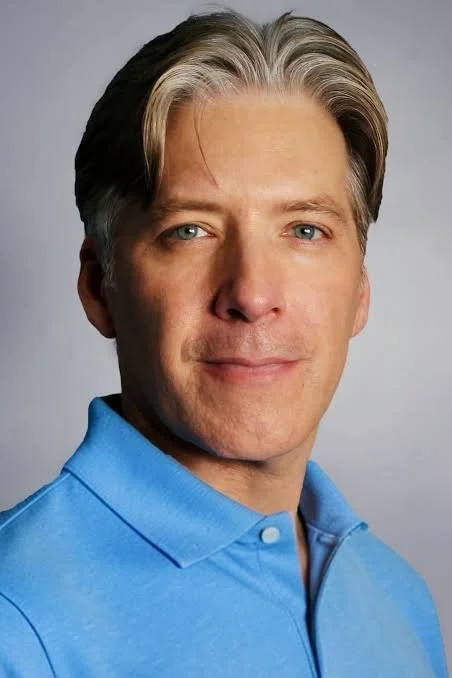
Today Writer Wednesday welcomes composer, writer, producer, and writing coach David Cornue. I’ve had teh pleasure of knowing David for … well, more years than either of us probably wants to admit to. I proudly call him “brother.”
David Cornue is an author, screenwriter, composer, and writing coach, and the founder and CEO of Every Story LLC. David created, wrote, and executive produced ABC's Triage, executive produced Coach with Bill Belichick for ESPN+, and is adapting Stephen King's Insomnia with Rideback. He wrote, produced, and scored the short film Unspeakable, which premiered at SXSW and won Best Pilot at multiple festivals. Through his production company, New Core Productions, he’s made three indie features, including #Lucky Number with Tom Pelphrey and Method Man. He was in the first class of Ron Howard and Brian Grazer’s Imagine Impact, which inspired him to start a script development service for other writers. After years of private coaching and dozens of ten-week courses, he distilled what he teaches into a book, Stop Writing! (out now), and launched Every Story to help every artist get their story into the world.
Hi David, thanks for taking some time to chat!
Thanks for having me, Anthony! And for giving the book such a thoughtful read.
Let’s start at the very beginning: when did you first realize you had a passion for writing?
At five, I wrote songs for my mother while she cooked dinner. Those are my first memories as a storyteller. My eventual training as a composer shaped how I think about stories. A melody creates an expectation. The next phrase can fulfill it, postpone it, or make you hear the opening in a new way. That’s a useful education for a writer: the audience brings everything they’ve experienced so far into the next moment. A scene that works at the beginning may mean something else at the end. I love that we can change what an audience feels about an event without changing the event itself.
For readers of mine who aren’t familiar with you, walk us through your creative history.
I came through music and theater in New York before moving to Los Angeles for film and television. I’ve written plays and musicals, produced independent features through New Core Productions, and developed television projects as a writer and producer.
If you want the list my mom brags about at church, here it is. #Lucky Number with Tom Pelphrey and Method Man. Triage, the medical drama I created for ABC. Unspeakable, a pilot I wrote, produced, and scored. And Coach for ESPN+, where as executive producer I got a front-row seat to how Bill Belichick thinks. At the moment, I’m developing a crime drama for NBC and adapting a Stephen King novel for television. With any luck, Mom will have new material for church soon.
Producing changes how you look at a script. A scene that doesn’t work on the page may become a day of shooting, a location, and a roomful of people trying to solve the problem. You develop an interest in catching it sooner. That’s one reason I care about development. A choice you postpone still has to be made, often when more people and more money depend on it.
When did you start mentoring other writers?
A decade ago, I shared my development process with other writers, and that grew into Chapter, an invitation-only write club. We worked from an idea toward a finished script over ten weeks. As members began selling and staffing, more writers asked for help, and the coaching took off from there.
Teaching forces you to examine the parts of your process you take for granted. An instinct can serve you for years without your knowing how to explain it. Then someone asks, “Why did you make that choice?” To answer, you have to slow down and take your own process apart. You come out of it understanding your craft better than you did going in.
The challenge is to teach those parts until they become another writer’s instinct. I can suggest a solution to a scene, but I’d rather help them understand why the scene fails. They may find a better solution than mine. And they’ll know what to look for in the next scene.
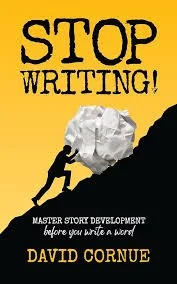
Normally this is where I would ask questions about your creative process. But you literally just released Stop Writing!: Master Story Development Before You Write a Word which describes that very process. Can you give us a taste of the process and what’s at the core of it?
In my years of coaching writers, most problems come down to the same thing: writing too soon. You can make a draft longer without understanding your story any better. It’s a hard bargain, and most of us have made it. You’ve worked hard, you have pages to prove it, and then you hit a problem that better dialogue can’t solve.
Say your protagonist stops making choices halfway through. Polishing the scenes won’t give that character a reason to act. You need to work out what they want, what stands in their way, and what they’re prepared to do about it. Those are story decisions. The sentences come after.
You start by testing whether an idea deserves a year of your life. Once it does, you build the world and the people in it, and from there you map the plot so each beat causes the next. You evaluate the work along the way, while a change can still be a conversation instead of a month of rewriting.
Working this way pays off emotionally, too. Once you’ve spent a weekend polishing a scene, it’s hard to admit it doesn’t belong. You start defending the time you spent. Finding the problem earlier gives you a chance to make the choice the story needs before your attachment to the pages makes it for you.
When did you decide to turn the Stop Writing process into a book and website?
There wasn’t a specific day when I decided to write Stop Writing! For years, writers in Chapter kept encouraging me to put the ideas into a book. I struggled with whether the book and its companion software deserved the years I could otherwise spend writing another film or television project. So I did what I teach writers to do when they choose a project. I weighed it against everything else I wanted to write, and the book came out on top.
I was fortunate to workshop the book with my coaching clients to hone my concepts. These sessions gave me the luxury of noticing when an explanation landed or missed the mark. I could ask questions, try other examples, and test the logic to make sure the book could help a writer I’d never met with a story I couldn’t read.
That’s why the book has a companion app: it gives those writers a place to apply the tools to their own projects. Reading about a tool shows you how it works. Using it on your own story is how you learn it.
Writers tend to identify as “plotters” (plan out the whole story before writing a word) or “pantsers” (discovering the story as you write). Your process is ideal for “plotters.” Can “pantsers” use your process without feeling like they’re giving up their preferred way of writing?
It’s a false choice. If you call yourself a plotter, think more like a pantser. If you call yourself a pantser, think more like a plotter. Knowing what unfolds is different from knowing how it unfolds. To me, that’s the difference between an outline and a draft.
Say two characters need to break up. You know why the relationship has to end and what that will change in the story. You still don’t know which one reaches for the other’s hand the moment before they say it. That small choice may reveal more about them than the argument you planned. Knowing the purpose of the scene gives you a way to recognize the value of that discovery.
And if the discovery changes the story, let it. Look at what it changes before you write another fifty pages that depend on the old choice. An outline helps you understand the consequences. A draft is where you discover why it matters.
There are probably as many “writing advice” books available as there are writers. What advice do you have for writers who might feel burned out on reading advice books?
I’d advise against taking advice on writing-advice books from someone who wrote one. But since you asked, I’ll take a crack at it.
The burnout doesn’t come from the books. It comes from reading them as a passive participant. Read with a point of view instead. Know your strengths and weaknesses before you open the book, and know that leaning on your strengths to hide your weaknesses is itself a crutch. That self-awareness tells you which concepts you need. Each of Snyder’s Save the Cat!, McKee’s Story, Vogler’s The Writer’s Journey, and King’s On Writing gave me something the others didn’t, because I came to each one with a different need.
No craft book has every answer, mine included, so take what resonates and discard the rest.
Where can people who are interested in following you find you online?
Go to stopwriting.com for the book, the audiobook, the free workbook, and the companion app. At davidcornue.com, you’ll find my film and television work, coaching, and my weekly letter on story development. And I’m @davidcornue on all the socials.
And my traditional final question: what is your all-time favorite book?
I could never choose one. My favorite book depends on my mood, my life at the time, and what I’m writing. If I named one today, I’d wish I’d named another the moment my mood changed.
So today, the book that’s been in my head is John Irving’s A Prayer for Owen Meany. Irving both prewrites and discovers on the page. He starts with his final sentence, and the whole book leads to that line. He knows where he’s going, so he’s free to discover everything on the way there.
Quisque iaculis facilisis lacinia. Mauris euismod pellentesque tellus sit amet mollis.