2025 Reading Roundup: By The Numbers

Time for my annual round-up of what I read and watched in 2025. Because I dropped the ball on doing monthly Round-Up reports, I’m going to run a few more detailed posts over the next week or two listing everything I’ve read or watched. Today’s post is mostly a “by the numbers” thing.


BOOKS

I did manage to read 123 books in 2025: 13 hardcovers, 49 softcover/paperbacks, 35 e-books, and 23 audiobooks. 19 of those titles were rereads, the rest books I read for the first time in 2025.


Monthly distribution: 7 in January; 9 in February; 9 in March; 6 in April; 5 in May; 11 in June; 9 in July; 10 in August; 13 in September; 5 in October; 13 in November; and 26 in December.


I read work from approximately 110 different creators (authors and anthology editors mostly; I did not track graphic novels editorial staff, colorists, and letterers this year).


17 of these books were for book clubs at Sparta Books in Sparta NJ and Stanza Books in Beacon NY. 12 of them were Advanced Review Copies (either print or from NetGalley). 3 of them were for my “Reread My Favorites” project (hopefully debuting on the blog soon.)


The shortest book I read was 41 pages long (Jeffrey Ricker’s short story collection Lies I Tell Myself: Stories), the longest 609 (Suzanne Finstad’s Natalie Wood: The Complete Biography).


Genre Breakdown:

·       Adventure: 1

·       Biography: 1

·       Crime: 1

·       Pop culture analysis: 2

·       Fantasy: 20

·       Historical fiction: 2

·       History: 2

·       Horror: 28

·       Memoirs: 25

·       Mimetic/current day fiction: 3

·       Mixed genre short story collections: 2

·       Mystery: 12

·       Mythology: 1

·       Romance: 7

·       Science: 3

·       Science Fiction: 11

·       Superhero: 2

·       Thriller: 1

·       True Crime: 1


These were my own rough classifications, and in hindsight I’m not sure why I broke crime fiction and mysteries into separate categories. I was surprised to realize I once again read a lot more horror than I thought. I didn’t read any playscripts this year for the first time in a while. And also, for the second year in a row, not a single poetry collection. I am not a big poetry reader, but I usually like to at least try to read a collection or two during National Poetry Month.


STORIES

I did manage to read 366 short stories in 2025 by 243 different authors (this includes translators).


The monthly distribution: 35 in January; 38 in February; 36 in March; 8 in April; 24 in May; 31 in June; 17 in July; 16 in August; 39 in September; 14 in October; 12 in November, and 96 in December. (Clearly, I was way behind my 1-per-day pace by the time I hit December, but a few anthologies and single-author collections helped me catch up.)


These stories came from 23 anthologies and single-author collections, 15 different magazines, 1 author Patreon site, 1 author website, 1 stand-alone e-book independently published, 3 printed chapbooks, and 2 novels (as back-matter). Last year, I calculated exactly how many stories came from each format, but as I’m running behind on this post, I’m going to skip that this year. In previous years I’ve also counted how many different editors were involved, but I neglected to accurately track that this year as well.


Genre breakdown:

·       Adventure: 3

·       Comedy: 3

·       Crime: 3

·       Fantasy: 102

·       Horror: 134

·       Mimetic/modern-day: 4

·       Mystery: 9

·       Science Fiction: 104

·       Super-Heroes: 4


Again, I’m surprised that I read a bit more horror than I thought I did. And I’m still not sure why I separated crime, mystery, and thrillers into distinct subcategories.


MOVIES

I didn’t even come close on my “watch 52 movies” challenge. I watched 3 whole movies in 2025.

I had challenged myself to watch more of the several hundred DVDs I own (split between movies and television series). 1 of the 3 movies watched was on DVD. The other two were in actual movie theaters.


Genre breakdown:

·       Horror (kind of): 1 (The Life of Chuck, a movie that is hard to categorize)

·       Super-Heroes: 2 (Superman and Fantastic Four: First Steps)


These 3 movies were the work of 3 different directors.


TELEVISION

I only managed to watch 63 distinct episodes across 9 series, so nowhere near the “1 episode for every day” goal.


Genre breakdown:

·       Comedy: 2 series

·       Science Fiction: 2 series

·       Super-Heroes: 1 series

·       Horror: 1 series

·       Crime: 1 series

·       Variety/Comedy Specials: 2


LIVE THEATER

I saw 11 live theatrical productions in 2025, so I missed my “average one per month” goal by 1! I attended these shows in 11 different theaters, 9 of which were in New York City. One was in the Los Angeles area, and 1 was a local high school production. 8 were musicals, 3 were dramas. One was a new production of a show I’ve seen live before (Guys and Dolls), and two were shows I’ve seen movie or filmed stage versions of (Moulin Rouge and Pirates of Penzance).


OTHER LIVE EVENTS

I also tracked what other live events I went to. I attended:

·       one college graduation (my goddaughter’s, from the University of Pittsburgh),

·       1 baseball game (our local minor league team, The Sussex Miners)

·       1 work convention

·       2 book conventions/festivals (PulpFest; Milford Readers and Writers)

·       1 antiquarian book fair (in NYC)

·       1 annual birthday bookstore crawl (in NYC)

·       4 In-Person Author Events (1 at Kew and Willow in NYC, 3 at Stanza Books in Beacon)

·       6 online author events (mostly on C.S.E. Cooney and Carlos Hernandez’s Twitch channel)

·       16 book club meetings (6 at Sparta Books in Sparta NJ, 10 at Stanza Books in Beacon NY)


PODCASTS

I only really started listening to podcasts late this year (other than about a decade ago when I used to listen to the New Yorker’s short story podcast, back when I still had an iPod Nano). So of course I decided to track my listening: 54 individual episodes across 5 different podcasts. All of them were comic book-related with the exception of 2 episodes:

·       The Borgo Pass podcast (Universal Monsters): 2 episodes

·       World on Fire: the All-Star Squadron podcast: 3 episodes

·       The Boxing Glove Arrow podcast (Green Arrow): 5 episodes

·       JSA Presents (various Justice Society related shows): 16 episodes

·       The History of Comic Books in 500 Issues: 24 episodes


COMIC BOOKS

I also decided to track how many individual comic books (single monthly issues, or “floppies”) I read in 2025. The total was 467. 30 of those were rereads, the other 437 were new (and mostly newly published). These issues were stretched across approximately 112 different titles from 10 different publishers.


The monthly distribution: 32 in January; 55 in February; 15 in March; 34 in April; 45 in May; 42 in June; 35 in July; 29 in August; 31 in September; 66 in October; 29 in November, and 54 in December.


The genre breakdown:

·       Comedy: 2

·       Fantasy: 25

·       Horror: 44

·       Mystery: 7

·       Sports: 2

·       Science Fiction: 2

·       War: 2

·       Super-Heroes: 383


Summary of Challenges:

366 Short Stories Challenge: 366 of 365 read.

Goodreads Challenge: 123 of 120 read.

Movie Challenge: 3 of 52 watched.

Television Challenge: 63 of 365 watched.

Live Theater Challenge: 11 of 12 shows attended.

2026 Reading Challenges!

HAPPY NEW YEAR! Here’s hoping for a healthy book-and-story-filled 2026.

I always set myself more than one reading/viewing challenge per year. Some goals carry over from year to year, and some are new. Some are broad and some are themed. And in many cases, books read will help me meet more than one challenge. In 2024 I also started making some formal movies, television, and live theatre viewing challenges.

On the reading side of things, in 2025, I hit my overall book and short story goals but on the viewing side of things, I only got close to my goal for live theater, and majorly dropped the ball on my television and movie viewing goals. Instead of one large annual wrap-up post, I’m going to make a series of shorter posts: one for overall numbers (probably tomorrow), one for books, two for short stories (the first of which will go up on Sunday January 4), one for comic books, one for live theater and other live events (Thursday, January 8), and one for television/movies.

Once again, this year, I’m sticking mostly to the basic challenges:


365 SHORT STORIES CHALLENGE

Every year, I challenge myself to read one short story per day. Some years I keep the pace well, and some years I fall behind and then scramble to catch up (and some years, I catch up and fall behind again, and some years I blow past the goal handily). I’m defining “short story” as anything from flash fiction to novella-length. I am going to once again make an effort to review one or two stories every Sunday in my “Sunday Shorts” feature.


GOODREADS CHALLENGE

Goodreads allows members to set a challenge. In previous years, I’ve set goals ranging from 125 to 150 books. For 2025, I’m setting a goal of 120 to start with (10 books per month), and we’ll see what happens.


MOVIE CHALLENGE

I own a lot of DVDs. (I know, you’re shocked. Shocked!) Every year I say, “This is the year I’m going to make an effort to watch them!” And then, somehow, I … don’t. One year, I did a list of 12 and two alternates as I used to do for the ToBeRead Challenge, called it the ToBeWatched Challenge … and failed it miserably. In 2024, I got about halfway to the goal of 52 movies (an average of one per week). In 2025, not so much. So this year, I’m setting myself the same challenge. This includes movies on DVD, streaming services, and any trips to an actual movie theater (which have become rare for me).


TELEVISION CHALLENGE

Did I mention I own a lot of DVDs? And that I’m subscribed to a lot of streaming services? I did? Well, you won’t be shocked to know that it’s not all about the movies. So I’m setting myself a “TV Series Watch” challenge akin to my Short Story Challenge: an average of one full episode of a television series (regardless of length) for each day in the year, which this year means 365 episodes.


LIVE THEATRE CHALLENGE

I did pretty well with this one in 2025, even though I didn’t manage to post reviews of everything. So I’m continuing the goal for 2026: I want to see at least 1 live theatrical performance per month. Most of them will be in New York City, but I’ll count any play, musical, opera, ballet, or staged reading I see anywhere, regardless of whether it’s fully professional productions, college, community theatre, whatever. (Music concerts, author signings, and conferences/conventions do not count towards this but will be tracked separately.)


COMIC BOOK CHALLENGE

I also own a lot of comic books. I went “cold turkey” on buying new comics about 20 years ago for budget and space reasons. But then in 2018 Seanan McGuire and Saladin Ahmed, two authors whose work I love, started writing various comics for Marvel and thought brought me back into buying monthly comics. And I keep buying more. 2025 was the first year I actually tracked every individual comic book issue (“floppies,” as some people call them) I read, so I’m going to make this an official Challenge for 2026: as with the short stories and the television episodes, I plan to read at least one comic book (new or back issue) for every day of the year … so again, 365 total.


ALPHABET CHALLENGE

I saw at the beginning of 2025 several book bloggers posting about various alphabet challenges: one book title for each letter of the alphabet, one author for each letter of the alphabet. I made a good run at both in 2025 without necessarily making reading decisions based on either, so I think I’m going to do them again in 2026.

 NOVELLA NOVEMBER

I’ve made NovellaNovember (or, as another book blogger on Bluesky coined it, Novellavember) a thing for the past few years. My goal is to promote and discuss novellas and short novels (and even novelettes) throughout the month, including publisher, author and editor interviews. I say every year I’m going to shoot for a novella day, but I think I’ll make that a novella every two days for 2026.

OTHER UNOFFICIAL CHALLENGES

There are a few ongoing (in some cases, sort of life-long, or at least second-half-of-my-life long) challenges that I don’t think I’ve ever written about here. For instance, I’m well on my way to having read everything Bram Stoker ever wrote. Here are those challenges, and I’m going to do my best to create dedicated posts early in the year showing what I’ve already read/watched for each challenge and then update as I go along. Again, these are multi-year challenges:

·       The Complete Bram Stoker Read-Through

·       The Complete Seanan McGuire Read-Through

·       The Complete Silvia Moreno-Garcia Read-Through

·       The Complete Philip Jose Farmer Read-Through

·       The Complete Edgar Rice Burroughs Read-Through

·       The Complete Maurice Broaddus Read-Through

  • The Complete Perry Rhodan Read-Through

·       The Complete Dark Shadows Rewatch

·       The Complete Doctor Who Rewatch

·       The Complete Star Trek Rewatch

·       The Complete Planet of the Apes Rewatch

·       The Complete Brother Cadfael Read-Through and Rewatch

·       The Complete A.A. Fair (Cool and Lam series) Read-Through

·       The Complete Marvel Comics 1970s Novels Reread

·       The Complete Hard Case Crime Read-Through

·       The Complete Radium Age of Science Fiction Read-Through

·       The Complete American Mystery Classics Read-Through

·       The Complete Doc Savage Read-Through

·       The Complete Three Investigators Read-Through

·       The Complete Man From U.N.C.L.E. and Girl From U.N.C.L.E. Read-Through and Rewatch

·       The Complete All-Star Squadron Reread

·       The Complete The Invaders (Marvel Comics) Reread

·       The Complete Starman (2000’s DC) Reread

·       The Complete Tomb of Dracula Reread

·       The Complete Micronauts and ROM Reread

·       The Complete Shakespeare Watch (either Live theater or filmed)

·       Read A Book or Story From Every Nation in the World

·       Read a Book From Every State and US Territory

·       Read a Book from Every Canadian Province/Territory


And one of these days I would really like to finish creating a list of every book I remember reading in my life.


ACCOUNTABILITY

So how am I going to hold myself accountable? I’m planning to bring back my monthly Reading RoundUps. (I know, I know … I said this in the 2025 Challenge post and failed miserably at actually doing it. Second time’s the charm?) I’m not going to rename/rebrand because I like the alliterative title (which falls well in line with Series Saturday, Sunday Shorts, and a few other blog series I’m hoping to make regular features again in 2026), but those posts will also track the Viewing challenges.


I would love to hear what YOUR Reading, Writing, or Viewing Challenges are for 2024. Let me know in the comments!

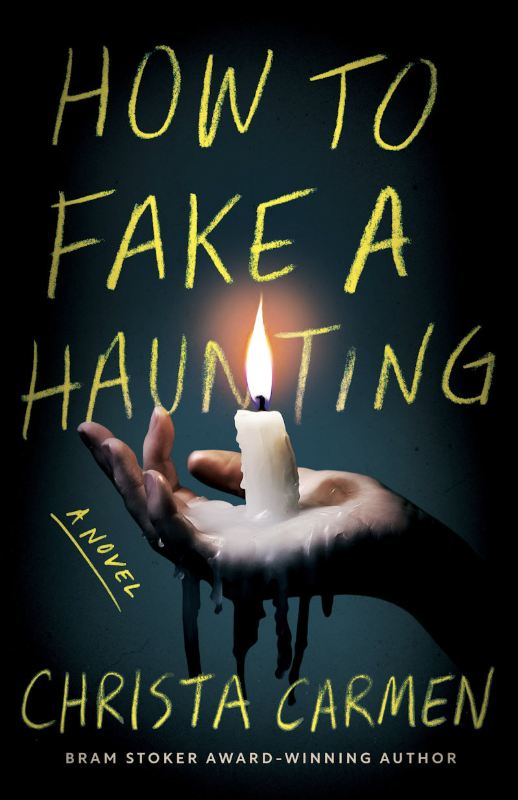
Interview: Christa Carmen

Today for Writer Wednesday, I chat with author Christa Carmen.

Christa Carmen lives in Rhode Island. She is the Bram Stoker Award-winning and two-time Shirley Jackson Award-nominated author of The Daughters of Block IslandBeneath the Poet's House, and How to Fake a Haunting, as well as the Indie Horror Book Award-winning Something Borrowed, Something Blood-Soaked, the Bram Stoker Award-nominated "Through the Looking Glass and Straight into Hell" (Orphans of Bliss: Tales of Addiction Horror), and co-editor of the Aurealis Award-nominated We Are Providence and the Australiasian Shadow Award-nominated Monsters in the Mills. She has a BA from the University of Pennsylvania, an MA from Boston College, and an MFA from the University of Southern Maine.

When she’s not writing, she keeps chickens; uses a Ouija board to ghost-hug her dear, departed beagle; and sets out on adventures with her husband, daughter, and bloodhound–golden retriever mix. Most of her work comes from gazing upon the ghosts of the past or else into the dark corners of nature, those places where whorls of bark become owl eyes, and deer step through tunnels of hanging leaves and creeping briars only to disappear.


Hi Christa! Thanks for taking some time to chat.

Thank you so much for having me, Anthony!

How To Fake A Haunting, which released on October 7th, is your third book in three years. That’s consistent output! Tell us a bit about the plot.

Lainey Taylor is being pushed to the brink by her alcoholic husband, Callum. However, without any DUIs or missed work days for a judge to point to, Lainey knows she won’t win against Callum–and his influential family–in divorce proceedings or an attempt to gain full custody of their daughter, Beatrix. She’s trapped, angry, and completely helpless. 

Her best friend Adelaide has a wild solution. They’ll stage a haunting so convincing it will drive Callum out of Lainey’s life for good. They start small, with strange smells, noises in the walls, and flies unleashed along the windowsills (I had to insert at least a little Amityville-esque influence!). But with each stage of their plan (and a little help from Callum’s alcohol-induced night terrors), Lainey is closer to seeing the haunting through to its bitter, freeing end.

Without giving anything away, I’ll just say that there’s far too much rage, resentment, and fear for Lainey and Adelaide’s plan not to go horribly wrong. As their fake haunting spirals into something no one can control, Lainey discovers that the only way out is to join forces with Callum, or die trying.

What inspired or influenced How To Fake A Haunting?

There was a very specific moment of inception for this book. My husband and I have been married for nine years this October, and like all married couples (or maybe just like all people once they reach a certain age), we tend to occasionally (ahem, often) spend so much time choosing a movie to watch, that by the time we turn it on, one or both of us falls asleep. On this particular evening, my husband swore he wasn’t tired; we chose a movie, and not five minutes later, I heard heaving breathing coming from the couch. 

Annoyed, I decided to head in and get ready for bed. But before I could, an idea–BAM–hit me like a horror movie jump scare. I grabbed his cell phone, and took a picture of him sleeping on the couch. I think maybe I was planning to show him the picture in the morning, like, “I told you you’d be the one to fall asleep!” Instead, I texted the picture to myself, walked into the kitchen, and then stormed back into the living room loud enough to wake him. “Why did you just text me a picture of yourself sleeping?” I asked. Disoriented, he replied, “What? Why would I text you a picture of myself sleeping?” But I doubled down, narrowed my eyes, and said, really cryptically, “You mean, you didn’t just text me this picture of you sleeping from your phone?” Needless to say, he was suitably freaked out, and eventually, I caved and admitted to the prank. When the time came to get working on a new novel, I thought of the playfulness of scaring your spouse, and how the idea of faking a haunting could be really fun, which morphed into questions of why someone would want to commit to a fake haunting, and then things just took off from there!

It seems like you did quite a bit of research into the paranormal investigation field, and particularly in regards to faking a haunting. Can you tell us a bit about that research?

I think the research for this book might have been some of the most bonkers research I’ve ever conducted. Around two-thirds of the way through the book, in chapter 32, Lainey and Adelaide have returned to Lainey’s house under cover of darkness to orchestrate the mother of all fake hauntings, a terrifying spectacle that will finally send Callum packing for good. In order to pull off what is essentially an elaborate theatrical production, the women dig deep into their arsenal, acquired through extensive horror movie research and a meeting with a husband-wife team of paranormal investigators. Without spoiling anything, I’ll say that, in order to write the scene, I had to rely on my own knowledge of horror films, titles like Let’s Scare Jessica to Death, The Conjuring, The Amityville Horror, Poltergeist, Carrie, The Changeling, and Malevolent, as well as deep dives into smart speaker and television programming capabilities, magnetized candles, recordable teddy bears, and how much pig’s blood might be required to recreate an abattoir inside a bathroom.

Having read and loved all three of your novels, I feel like it’s safe to say you have slowly increased the supernatural quotient in each book. Daughters of Block Island was more classically Gothic, with mostly eerie vibes; Beneath the Poet’s House had some moments that could have been supernatural or could have had mundane explanations but were left up to the reader to decide, and now, without spoilers, it appears the fake haunting turns real. Has this slow increase in the supernatural been a conscious decision on your part?

So, short answer… yes? But one that was met with a fair amount of reluctance on my part and lots of encouragement from writer friends and beta readers.

I recently took part in a wonderful event an An Unlikely Story in Plainville, MA with fantastic thriller writers Vanessa Lillie and Tracy Sierra, and Tracy said that she thinks one of the most difficult things in writing horror is coming up with a ‘system’ of the supernatural—or monsters, or killers, or whatever frightening thing the author is working with—that is unique but also makes sense in the world of the story, and she stated that she felt I’d done a good job with it in How to Fake a Haunting (for which I’m eternally grateful). She then asked if I had any advice on how to invent a ‘horror world’ that is also logical, and my answer was that I start by getting something onto the page that serves the story, but that ultimately, I don’t want the supernatural in my work to be, as the kids say, “cringe.” 

I think I shied away from the supernatural on the page in the past because I was worried I would do it in a way that would be hokey or take readers out of the story. I should have trusted myself more, however, because I was happy with how the final third of How to Fake a Haunting played out.

I’m always interested to know what an author’s creative process is like. Are you a plotter, a pantser, somewhere in between? Has your process changed over the years you’ve been writing?

I am neither, I suppose. I’m a writer who tends to know where she wants a story to begin, where she wants it to end, and the major beats in between. The details, though, how I get from beginning to beat one, beat one to beat two, etc., those are apt to surprise me. I do tend to—if I stumble on an idea I want to include somewhere in a manuscript—get nervous that I’ll forget it, so I text myself little “breadcrumbs,” as I call them, so I can go back over the text thread at the end of each draft and make sure I’ve incorporated everything I wanted to include. So…I’m a ‘Hansel-and-Greteler?’

I love that term! Let’s make it a thing. You also write short stories and have edited some anthologies of local Rhode Island writers’ work. What do you look for as an editor?

First and foremost, adherence to submission guidelines! It may sound nitpicky, but this shows an editor that you respect their process and their time, and helps you put the right foot forward from first glance. As for content, I look for work that keeps me guessing, keeps me uneasy, has me questioning everything I thought I knew in the world of the story. I love a well-done ambiguous ending, a jump-scare-on-paper, and both quiet and cinematic horror, as long as it’s well done. Most importantly, I want to be thinking about the story long after I read it, turning over lines and plot points in my mind. I’m currently editing an unannounced project right now, and it’s been a delight to discover some new voices and be told some amazing, get-under-your-skin stories from writer’s I’ve come to admire.

I’m already eagerly anticipating your next book, as you probably have guessed. Can you tease us at all about your next project and when we might expect it?

Well, thank you! That’s so nice to hear. I’m indeed hard at work finishing up my fourth novel, as well as putting a second short story collection together. The novel will NOT be set in Rhode Island, which is pretty wild for me, but in London, Geneva, and Rome, and is a sort of body horror/sci-fi/artifact chase mashup. I’m having lots of fun with it and am looking forward to getting back to work on the project post-release of How to Fake a Haunting.

 In the meantime, my short story, “The Clearing,” is part of Lindy Ryan and Stephanie M. Wytovich’s HOWL: An Anthology of Werewolves from Women-in-Horror, out November 4th. I also have a story, “Comeback Kid,” in The Rack II: More Stories Inspired by Vintage Horror Paperbacks, edited by Tom Deady, that came out October 14th, and several other stories in anthologies, as well as an editing project, that I can’t announce just yet.  

Anyone interested in updates can find me online, at Facebook (https://www.facebook.com/christaqua/), Instagram (@christaqua), and Bluesky (‪@christaqua.bsky.social), as well as on my website, www.christacarmen.com.

And my traditional final question: What is your all-time favorite book?

I’m going to be such a downer on this question, because my favorite book is A Little Life by Hanya Yanigahara. I’ve never read something beyond this book in which the characters felt realer to me than some of the real people I know. Yanigahara’s ability to immerse you in the story, in the world she’s created, is unparalleled. Jude’s plight also helped me understand more about how trauma can follow and shape a person than some of my experiences working at an actual inpatient psychiatric hospital ward; I worked to get into patients’ heads, to help them, but one can never quite reach through someone’s barriers the way you can into a well-rendered character’s head, and this was Jude St. Francis all the way.

Thanks, Christa!

Thank you, Anthony! This was a blast!

You can find my review of Christa’s second novel, Beneath the Poet’s House HERE.

INTERVIEW: BETH CATO

Today, I’m chatting with author Beth Cato. Beth Cato hails from Hanford, California, but currently writes and bakes cookies in Red Wing, Minnesota. She usually has one or two cats in close orbit. A 2015 Nebula finalist, she is the author of the cozy mystery CHEDDAR LUCK NEXT TIME as well as fantasy like A THOUSAND RECIPES FOR REVENGE. Her short stories can be found in publications ranging from Beneath Ceaseless Skies to Uncanny Magazine. In 2019 and 2022, she won the Rhysling Award for short speculative poetry. Her website BethCato.com includes not only a vast bibliography, but a treasure trove of recipes for delectable goodies. Find her on BlueSky as @BethCato and Instagram as @catocatsandcheese.

Photo Credit: Corey Ralston Photography (2013)

ANTHONY: Hi Beth! Thanks for taking some time to chat. Your latest release, which was an Amazon First Reads pick for September, is A House Between Sea and Sky. Tell us a bit about the plot.

BETH: It’s a cozy standalone set in 1926 Carmel-by-the-Sea in California. A grieving writer and a secretive silent film star are adopted by a sentient cottage with a dark past.

What inspired you to write A House Between Sea and Sky?

After I wrapped up my Chefs of the Five Gods series, I asked my then-editor what she’d like to see next. She said she wanted historical fantasy set in the real world. From there, I started mulling. I’m a native Californian, so exploring that setting feels right.

House is historical fantasy, much like your Blood of Earth trilogy. How much research did you have to do into the time period this book takes place in, and how did you go about that? (I loved all the details you incorporated about the Silent Film industry of the time, even the unsavory aspects of it.)

I spent a solid three months on research before I could even finish a synopsis, and then I kept researching through the writing and revision process. For me, worldbuilding really needs to come before fleshed-our characters or plot. Our world shapes everything. I was truly blessed to find a wealth of scanned Carmel 1920s newspapers on Archive.org, plus a tourism book that was published in 1925. There is a very special famous person cameo appearance in the book, and that person’s involvement determined the exact days of the plot. As for the silent film elements... I actually have a trunked novel I wrote a few years ago that I think is one of the best things I’ve ever written, but my agent wasn’t able to sell it. My main character in that book was a scenarist in 1923 Hollywood. I had kept the most interesting research books and had tons of information on my computer, so I was able to repurpose that material, which felt wonderful!

I would love to see that trunked novel be published some day! Without spoiling anything, I think it’s safe to say that Russian folklore plays a large role in the book. Was this folklore that you grew up with?

In my teens, I collected a number of century-old Andrew Lang Color Fairy Tale books and other mythology tomes that were discarded from my local library. (There’s a reason those Lang books get a mention in A House Between Sea and Sky!) I still have them all, too. That’s really the first place I encountered a broader variety of stories that were identified with their places of origin, and I was then able to connect creatures and elements to the AD&D books I was also reading at the time.

While I don’t think it’s ever explicitly stated in the text, I got the very strong feeling that Fayette is asexual/aromantic (although those terms probably didn’t exist in the 1920s), and thus her relationship with Rex is one of mutual respect and quickly-developing friendship, but nothing more. I think we still don’t see enough of this in historical fantasy (the lack of a romance between leads). I’m not sure I have a question here, other than “is my understanding of the character correct?” But would you like to talk a bit about how you approach representation in your books (which always have diverse casts)?

You’re 100% right. I wrote Fayette to be ace. I love a good main character romance, but I don’t think that should be a requirement even if it appeals to the big trend. People CAN just be friends. I want my books to be realistic, and for me, that means diversity is natural. That includes a spectrum of queer rep as well as different skin tones and ethnic backgrounds. By the way, the racism shown in this book was directly inspired by reading Jack London’s book The Valley of the Moon, which is partly set in Carmel, and is also horrendously racist with very particular ideas on who is a “real American.” So I guess my approach to representation is sometimes inspired by active defiance against a book that is over 100 years old!

I would love to know what your writing process is like, and if it varies when you delve into different genres (you know how much I loved your foray into cozy mystery/thriller territory, Cheddar Luck Next Time) or different story lengths (novels vs. novellas vs. short stories for instance).

I’m a hardcore outliner and researcher. Even for a flash fic, which is normally about a thousand words, it’s not uncommon for me to have a few sentences of outline to guide me! Poetry is the only thing I write spontaneously. So many of my recent fantasy books have been historical, and the research has been immersive. A Feast for Starving Stone had a 25,000-word outline, but that was also long because my characters were talking a lot in my head, and that dialogue was sketched in. Cheddar Luck Next Time was nowhere near as intense, but I still had to research details on running a cheese board business. The details on the many cheeses included were largely drawn from my own personal cheese log, which is over 200,000 words and is nearing 2,000 cheeses. Bird’s taste note on cheese are pulled from my own experiences.


Speaking of Cheddar Luck Next Time (which I reviewed HERE … is there any word on whether we’ll get to see more adventures of Bird and company?

I hate to be a tease, but I hope to be able to talk more about that soon!

I’ll take whatever teases I can get! What do you have in the pipeline/coming out next?

I do have one contract signed that I can’t talk about yet, and I’m in a very early research stage for something else. I’ve been very busy recently!

And my traditional final question … what is your all-time favorite book?

There is one recent stand-out for me, and that is The Wishing Game by Meg Shaffer. It’s really a suspenseful love letter to the power of children’s fantasy novels and how they can save lives. I recently read it again because I proposed it to a local book club, and the other members loved it so much that they all immediately picked up her second book, The Lost Story, which is also excellent. It’s a queer take on Narnia-style portal fantasies. Really, you can’t go wrong with Meg Shaffer’s books! Her third one will be out next year, and I can’t wait.

I am adding Meg Shaffer to my To Be Read list as soon as I finish posting this interview. Thanks again Beth!

TOP TEN(ISH) MOMENTS FROM PULPFEST 2025

PulpFest 2025 is officially in the books. Which means so are FarmerCon XX, ERBFest 2025, and DocCon 2025. I had a phenomenal time hanging out with old friends, making new friends, spending too much money, staying up too late, and driving to/from Cranberry PA … but it was all worth it. There were way more than 10 Top Moments of the Con(s), but here are a bunch of them:


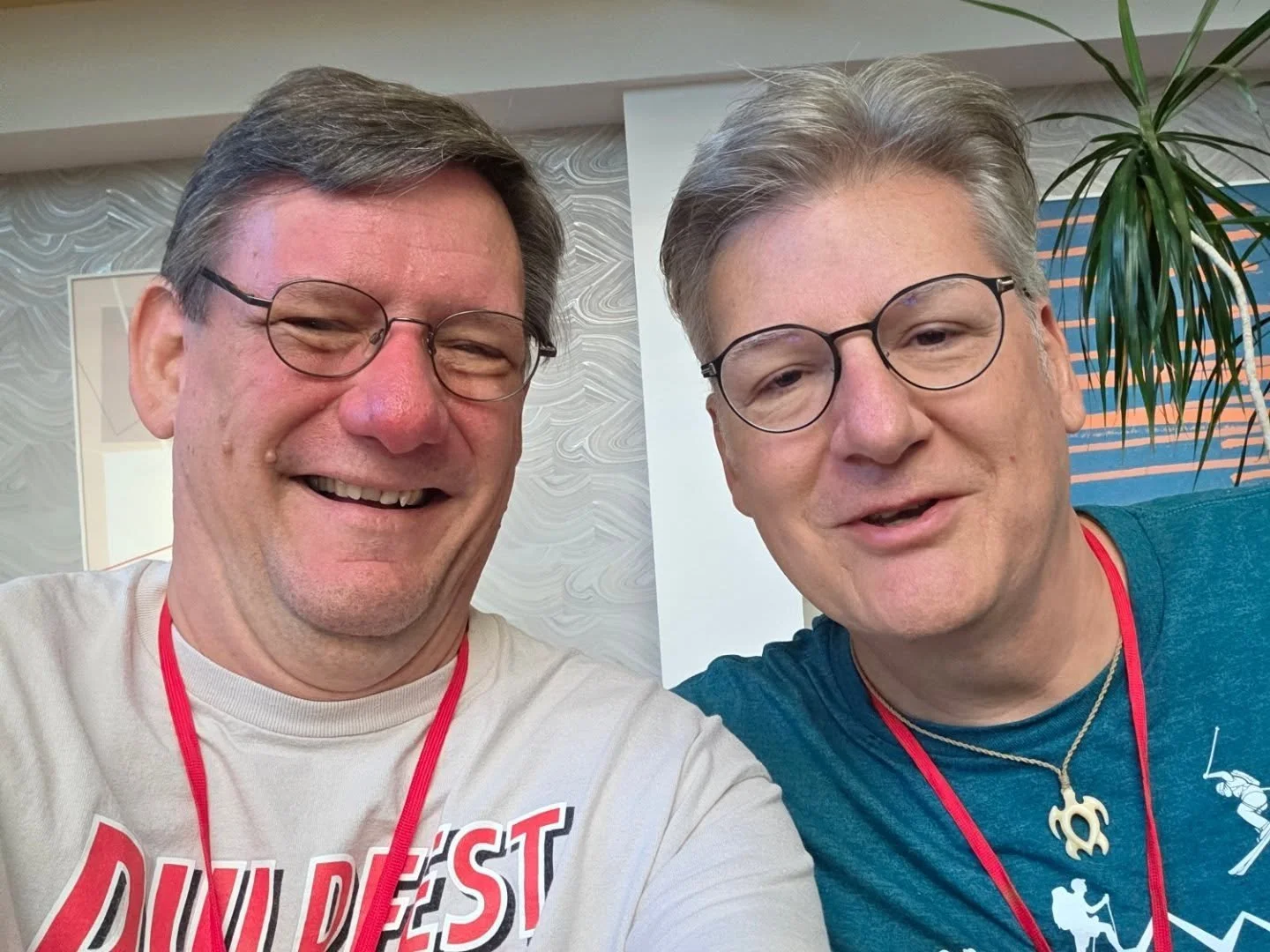
BEING MISTAKEN FOR WIN ECKERT’S BROTHER

Win and I have known each other a good few years now. But this is the first time anyone seeing us next to each other has sincerely asked “are you guys brothers?” (In this case, our waitress at Primanti Brothers during our Wednesday night Pre-Con dinner). I, for one, took the question as a compliment. Check out my interviews with Win HERE and HERE to get a sense of why I consider it a compliment.

“Twins” Anthony R. Cardno and Win Scott Eckert


BEING A (SMALL) PART OF THE RETURN OF DOCCON

DocCon (the convention dedicated to all things related to Doc Savage) has a venerable history but has taken a few years off … until Jen DiGiacomo had the idea to revive it as the latest “mini-con” to happen under the PulpFest banner. I was a (very small) part of the planning committee (being perhaps the Least Knowledgeable Doc Savage Fan Ever), my main contribution being a marketing idea (that didn’t happen for this year but may be considered for 2026, so I don’t want to spoil it) and then being the “sub-in” guy at the DocCon tables when the other folks, mainly Ron Hill (who I interviewed HERE), needed to be on panels or introducing the film.

DocCon crew, L to R: Anthony R. Cardno, Anthony Rais, Bill Lampkin, Ron Hill, Scott Cranford


THE EDGAR RICE BURROUGHS INC PANEL

Okay, most of what Cathy Mann Willbanks (ERB Inc’s Vice President of Operations) and Christopher Paul Carey (Vice President of Publishing) announced on this panel had already been announced at San Diego Comic Con … but that didn’t stop me from being excited to hear the details in person. They announced upcoming novels (the next ERB Universe novel from the aforementioned Win Scott Eckert; a new Barsoom novel from Chris L. Adams under the “Wild Adventures” banner; new ERBU novels in the Land That Time Forgot and Monster Men series); a new John Carter and Woola action figure set from Frazetta Girls; and several new animation projects including a Victory Harben ERBU animated series in development! (My Interviews with Christopher Paul Carey HERE and HERE.)

Most of the ERB Inc panel. L to R: Christopher Paul Carey, Henry G. Franke III, Win Scott Eckert, Chris L. Adams, Douglas Klauba. Missing because my phone is a jerk: Cathy Wilbanks. SORRY, Cathy!


THE WICKER MAN

During a conversation with Craig McDonald during which I bought his used copy of the novelization of The Wicker Man, I discovered that not only is there a novelization of the film … the film was also based on a long out-of-print novel called Ritual by David Pinner (and that novel has a sequel, The Wicca Woman)! How out of print is it? So out of print that there’s no English language paperback edition (only a Spanish language version) and the original hardcover is going for over $1,000 on the secondary market. But there IS a reasonably priced e-book version of both of Pinner’s books. Which you know I’ve already ordered. (Interview with Craig McDonald HERE).

L to R: The copy of The Wicker Man novelization I bought from Craig McDonald, the cover to the e-book of Ritual, the cover to the e-book of Wicca Woman.


FLINCH-FEST

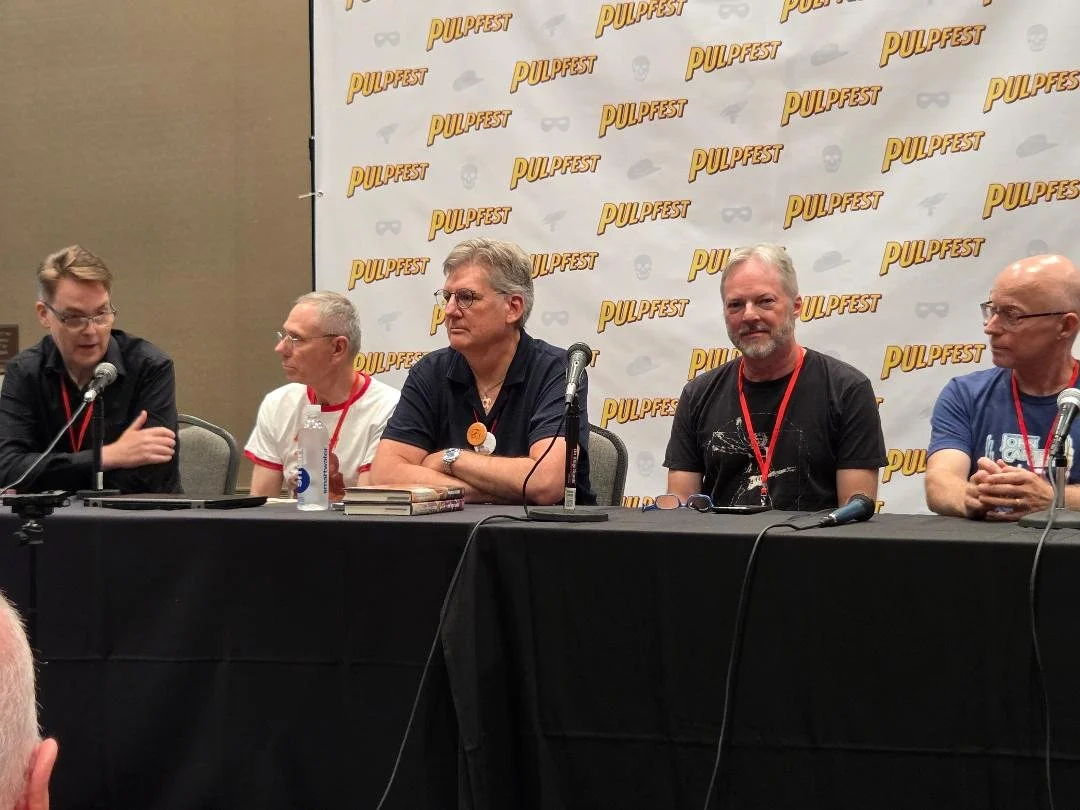
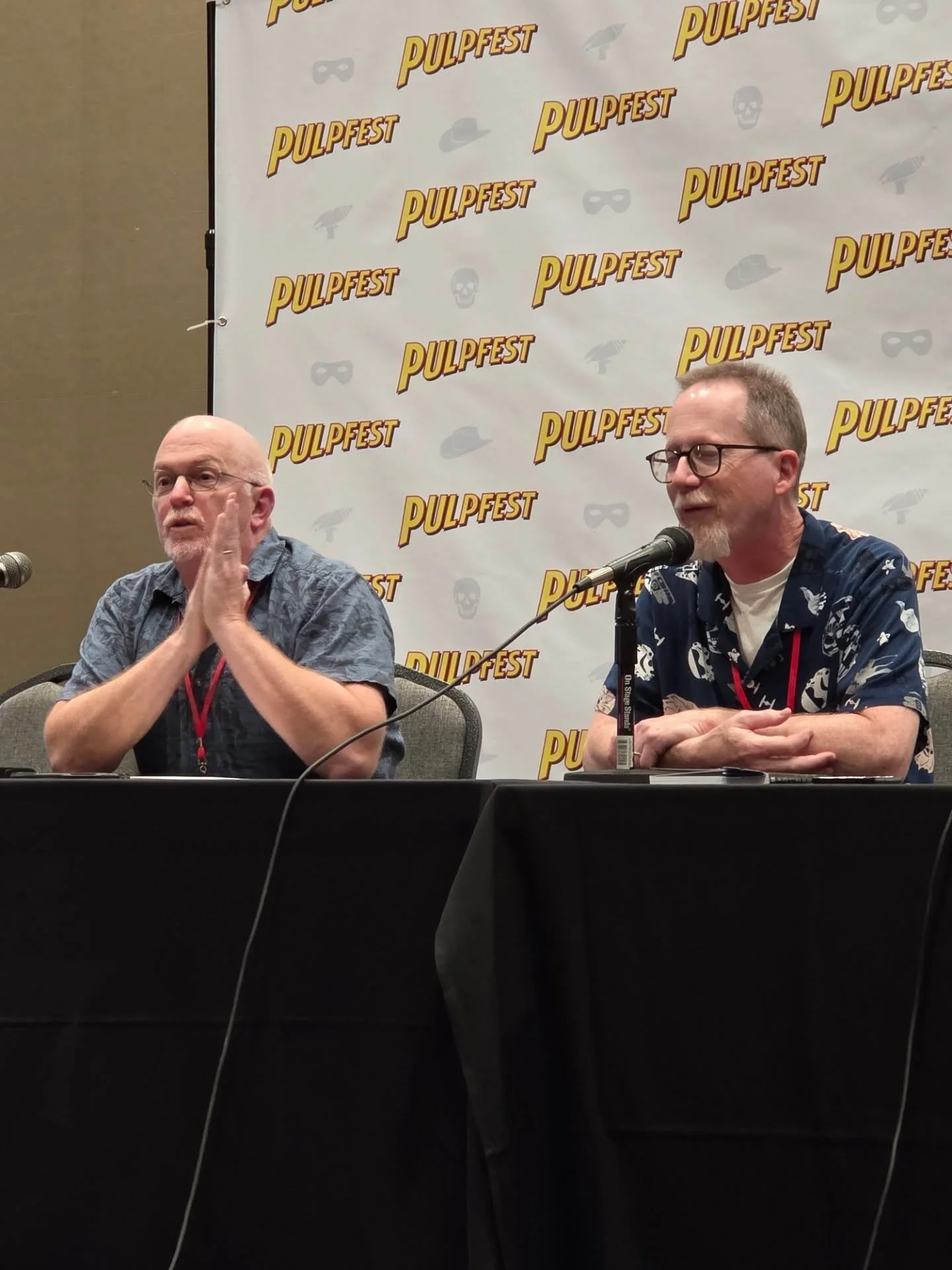
To say that I think highly of Jim Beard and John C. Bruening, co-founders of Flinch! Books, is an understatement. (And no, it’s not just because Jim included my essay on Jack Kirby’s short-lived 1970s DC Comics series The Sandman in his book Jack of All Comics! a few months ago. But why pass up a chance at a shameless plug? Also, HERE’s the Interview about the book with Jim.) Flinch! started ten years ago, and their panel at PulpFest talked a little about that history and featured reading from their new and upcoming releases (Jim’s fourth Sgt. Janus book, and John’s upcoming fourth Midnight Guardian book). These two have such an easy, funny, rapport. They are also great dinner companions and conversationalists. I also probably spent way too much time chatting with them at their table and lost them a few sales. (Kidding.)

L to R: Flinch! Books co-founders John C. Bruening and Jim Beard.


CHRISTOPHER LEE

During that conversation with Craig McDonald about The Wicker Man, our friend Kim Turk mentioned having seen some anthologies with Christopher Lee’s name on the cover as Editor, and I went to check out them out. Kim patiently waited for me to notice the real prize she’d already seen … a hardcover copy of Lee’s memoir … signed by the man himself! Reader, you know I bought it immediately.


MARK WHEATLEY AND DOUG KLAUBA

It is incredibly fun to sit in a room and watch two amazing artists, both of whom have drawn Tarzan and other Edgar Rice Burroughs characters, talk about all the great artists who have drawn the Lord of The Jungle over the years, including what they admire about those artists’ work. (Click on their names to find my interviews with Mark Wheatley and Doug Klauba.)

L to R: Mark Wheatley, Douglas Klauba


DOC SAVAGE, THE JLA, AND THE JSA

Did I mention that I spent too much money? I’m not going to post pictures of every book, magazine, and print I bought … but along with the Christopher Lee book, the other Most Pricey purchases including six original Doc Savage pulps (I’ll post 1 or 2 of their covers below) and four Silver Age Justice League issues featuring the annual crossovers with the Justice Society. (I was also eye-ing a Golden Age issue of The Black Knight, but it was way outside my price range.)


FARMERCON DINNER AND LOBBY HANGOUTS/CHATTING AT DEALER AND AUTHOR TABLES

The reason I started attending this convention was to meet in person my fellow Philip Jose Farmer fan friends, who had been so welcoming to me in various online forums, and hanging out with them at dinner(s) and in the lobby after even programming ends is always one of, if not THE, highlight of the weekend. It was no different this time, even though our numbers were slightly smaller than usual thanks to scheduling conflicts and other things. There is such a big overlap between PJF, ERB, and Doc Savage fans at this convention that most of the people I’ve mentioned above, and many I haven’t, were present at all times. And visiting with authors like Glen Held, Brian K. Morris and Charles F. Millhouse and artists like Don Simpson and folks like Henry Franke of the Burroughs Bibliophiles at their tables is always fun as well. (Interviews with Glen, Henry, Brian and Charles at the links; interview with Don coming soon!)

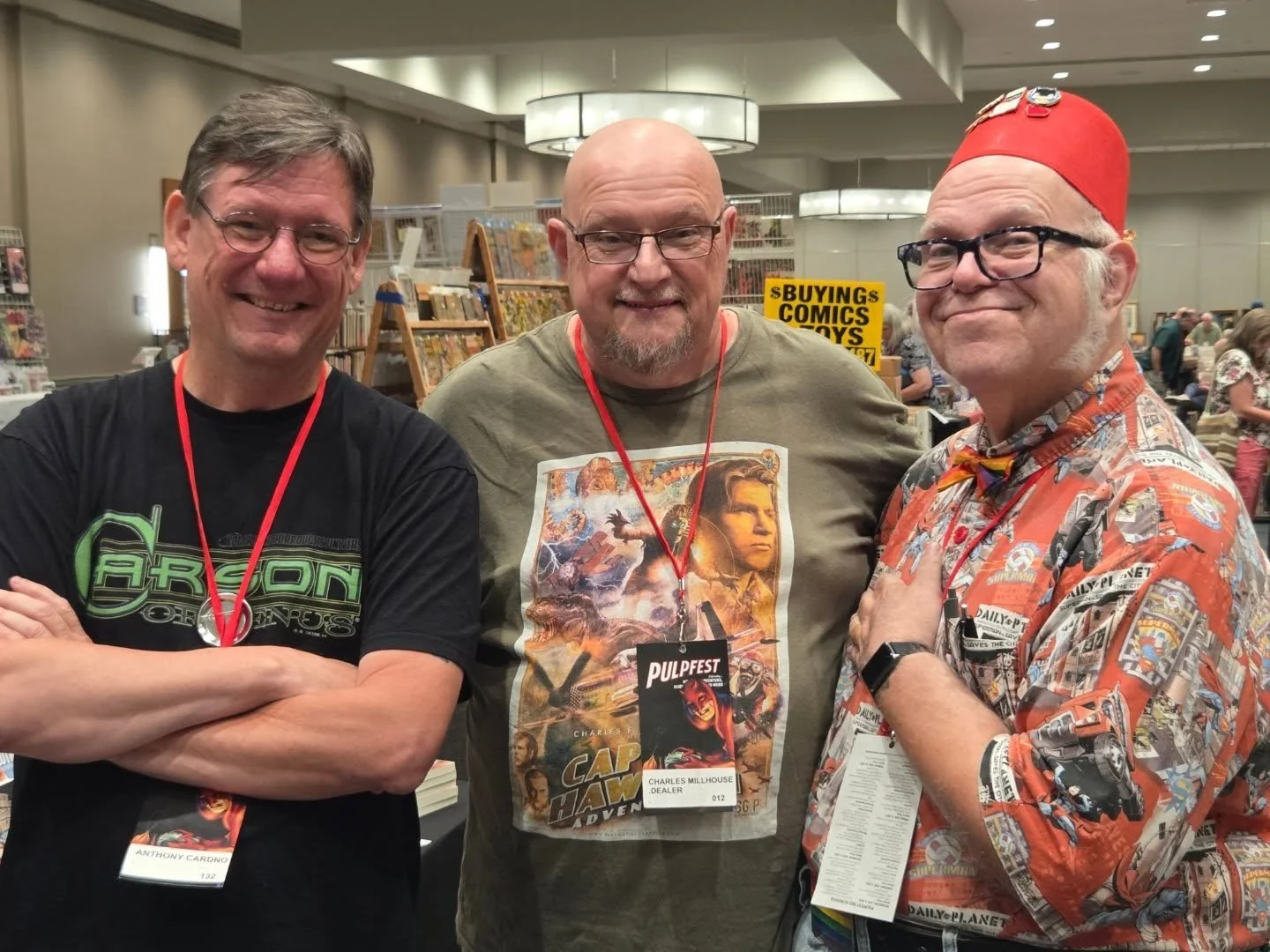
L to R: Anthony R. Cardno, Brian K. Morris, Charles F. Millhouse (The “Middle Initial Squad”)

For those interested, my report on PulpFest 2024 can be found HERE. And my interview with Mike Chomko of the PulpFest committee can be found HERE.

Interview: BRIAN K. MORRIS

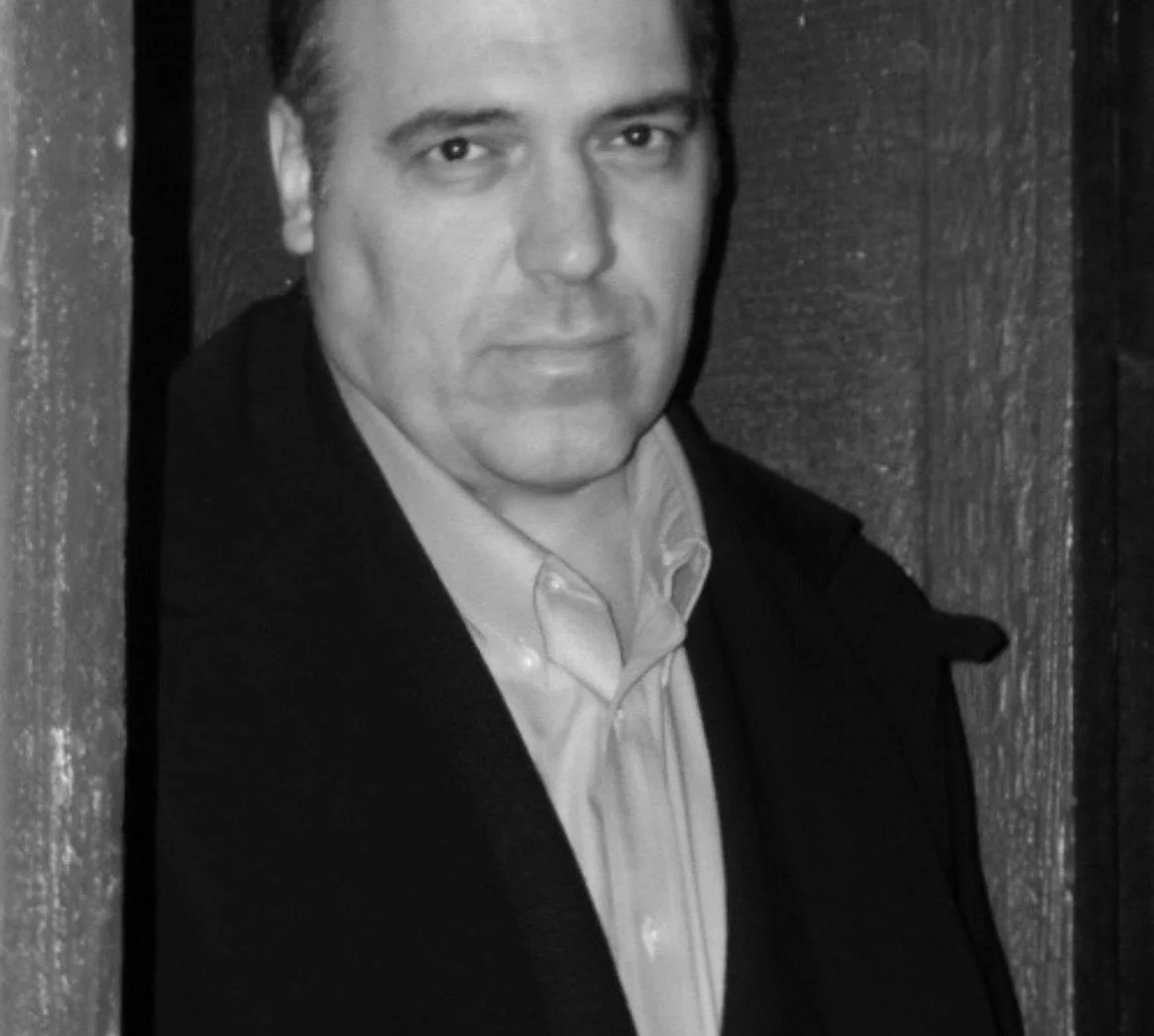
Today, as part of on-going but soon-to-end series of interviews with various creative types attending PulpFest 2025, I chat with author Brian K. Morris.

Brian K. Morris is a freelance writer, independent publisher, occasional actor on stage and film, as well as a former mortician’s assistant. Originally from Illinois, Brian now lives in Central Indiana with his wife, no children, no pets, and too many comic books.

Adept in multiple genres of fiction and nonfiction, Brian’s work has been published by Stormgate Press, Flinch Books, Pro Se Press, BEN Books, Blue Planet Press, TwoMorrows Publishing, and Atomic Stories, among others.

Brian won the 2022 Pulp Factory Award for Best Short Story for “Snow Ambition” (BEN Books) and his novel, The Terrors, earned Jeffrey Hayes/Plasmafire Graphics the 2024 Pulp Factory Award. Brian also received a playwriting award in 1997 for not murdering his director.

You can find all things BKM at www.RisingTide.pub where you can sign up for his monthly Insider Information email and from there, join his Patreon account where you can read his twice-weekly blog, Every Blog Deserves a Name.


Hi Brian! Thanks for taking some time to chat.

Goodness! Thank YOU!

Be warned… I tend to talk at sixty miles per hour with gusts of 75. You ask me for the time, I’ll give you the history of clockmaking. Brace yourself…

Since this interview is intended for my series focusing on the creative folks attending PulpFest, let’s start there: what is your first memory of the Pulps or the characters that debuted in them?

I had no idea the pulps existed before I saw the early Doc Savage reprints in a local bookstore, which was also a tobacconist. I recall they had about four or five of them in a row on their shelves. I knew nothing about Doc and the Amazing Five, but I saw the cover of Curse of the Werewolf and I just about fell to my knees, begging my mother to let me buy it.

I started in on the book that night. The next day, I persuaded—if kicking and screaming and begging counts as persuasion—my mother to take me back to that store so I could buy all the others on the shelves.

Then I read the first volume of Jim Steranko’s History of Comics where I learned more about the pulps. Comics and pulps have become a passion that’s enriched most of my life.

And what influence did these characters/books have on you as a reader?

BKM: I loved these episodic adventures because they were like the comic books I loved, but I had to mentally supply the images. These carried me up to the early adventure series of the Seventies and Eighties: Mack Bolan, Remo Williams, The Penetrator, The Chameleon, The Death Merchant, Edge, etc. In a way, I saw these new series as successors to the old pulps. And I still love those books to this day, just as I do the pulps.

I have a reasonable background in reading many pieces of classic literature, mostly because my parents made that a condition to continue reading the material I genuinely loved.

I’m always interested in hearing about people’s creative process. What is yours like? And does it differ between short stories and novels, or when you’re working on your own characters versus somebody else’s?

My process is ever-evolving. Mine begins with the germ of an idea which becomes an “elevator pitch” of two sentences, along with a sentence of a potential plot. If I can boil a story down to that, I’m halfway home with coming up with a decent story.

Then I apply the Lester Dent Master Plot to the process to flesh out an outline. After that, I dive into researching what I need for the story, or I just make it all up out of my head and hope I don’t need to use any real history or science.

Then I take my outline, look at it before I start writing, and then ignore it as I type to allow sudden inspiration to take hold. Every now and then, If I get bored with my outline, I’ll toss a spanner into the works to make the protagonist’s life more hellish. It keeps things fresh for the reader, I hope, and definitely for me.

My process is pretty consistent across multiple word limits except I might add steps to my outline for a large novel or delete an incident or two for a shorter story, depending on the word count I’m allowed. And make no mistake, you give me a word count, I will push it until it whimpers.

As for working on characters for other publishers, I love when I’m asked. I love being told that my work sounds like the creator’s voice. I’ve had a great deal of fun doing the CNI: Classified stories for Robert J. Mendenhall. For those stories, I purposely selected the so-called “minor” characters because I didn’t have to worry about other writers’ ideas conflicting with my own. Plus, don’t those characters deserve some time in the spotlight?

I’m keenly aware that I have to use what Stan Lee called “the illusion of change.” I must leave the characters I’ve been given, pretty much in the shape they were given to me by the end of my story, no better nor no worse. I can’t make Captain Hawklin a cyborg, or force Conrad von Honig to undergo an amputation, or allow Abraham Snow to become the King of the Venusians. In fact, I tend to add secondary characters to whoever loans me their brainchildren, so my benefactors can have new toys to play with. Then they can abuse my brainchildren to their hearts’ content.

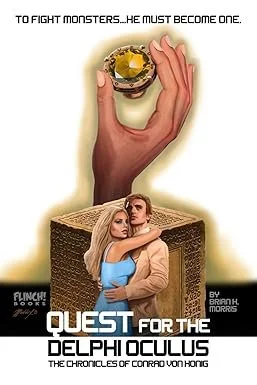
Last year at PulpFest, you debuted Quest for the Delphi Oculus: The Chronicles of Conrad von Honig, published by Flinch! Books and featuring a character created by Flinch publishers Jim Beard and John C. Breuning who had previously appeared in a short story anthology (Quest for the Space Gods: The Chronicles of Conrad von Honig). What was that process like in particular? And will you be penning more of Conrad’s adventures?

I want to go on record that this book was quite an adventure for Jim, John, and myself. They’d never worked on a full-length novel with a writer that wasn’t either of them. I couldn’t have asked for two more helpful, encouraging, and challenging editors than those two. I’m so very proud of the book and would love to see some comments on Amazon for it.

I want to say it took about three years to get that book into print because we were all kinda feeling our way in the dark thought the process. They’d never handled a full-length novel from an outside writer—i.e., not Jim or John. Also, I’ll take responsibility for any delays because at the time, I’d overcommitted myself to other publishers at several points in our timeline. But thanks to their patience and skill, the book was written and I’m very proud of what the three of us put together. And what about that Mark Maddox cover, huh?

But I loved, and still love, Conrad von Honig. Jim ‘n’ John were fantastic to work with and yeah, I might have another CvH book in me. So if you want to see it, call Jim and John at… let me get their home phone numbers for you, okay?

I might already have them. (Kidding, John and Jim! Kidding!)

You also last year released The Terrors, an update of a classic Golden Age comics character (The Black Terror). What inspired you to write the book and what changes did you make to the character (who is in the public domain)?

I am so proud of The Terrors. It started by letting my mind roam, which can prove hazardous to those around me. I’d just finished a book that mentioned the U.S. Government approached the various comic publishers to portray members of the Axis powers as less human, even sub-human, in order to destroy any empathy a comic reader might have for them. And given that a LOT of comics were sold in P.X.s at the time, this dehumanized our foes and made them easier for the soldiers to kill.

Not long after that, I sought an idea to write about for what proved to be my first novel for my Rising Tide Publications imprint in too many years. For whatever reason, I asked myself what if the heroes with the word “Black” as part of their name—Black Hood, Black Bat, Black Condor, etc.—were actually African American? How would that have influenced their acceptance by the public they first appeared in? How would that affect their relationship with the authorities? I started taking notes.

I loved the original Black Terror and thought he’d make a good subject for a novel. Then the idea of a clandestine government organization, based on my earlier reading, popped into my head. I applied the idea of a World War 2-based minority hero in my fictional Raceway City, and the rest just fell into place. The book practically wrote itself, and I’ve gotten some great reviews as a result.

And this hero’s “The Terror” because referring to his “blackness” would be as redundant as calling another hero “The White Green Lantern” or “The Orange Thing.”

Bob Benton and Tim Rowland—previously “Roland” in the original comics—were unaltered in personality, but I gave each of them a backstory and Tim got a mom. Jean Starr’s paramour was killed in his second appearance in the comics, but he was too good a villain to not use in these stories.

I also used a version of the Fox Comics public domain version of the Blue Beetle that I renamed The Cobalt Scarab. I also snuck in an appearance from the pulps’ Black Bat. All of this is wrapped up in the notion that the comic adventures DID happen, just not as they were portrayed in government-encouraged propaganda, namely the comic books that you and I know.

I kinda upped the Terror Twins’ power levels and gave the Scarab a means of flight that amused me, based on the old E.B. Stoner illustrations. Then everything fell together, I’m happy to say.

I believe you’ve been working on the sequel. What can you tell us about that?

OOOH! I’m quite excited about the sequel, tentatively titled From Dust ‘Til Dawn. I up the threat level and pretty much destroy any limits this series might have.

In a nutshell, an ancient sarcophagus holds wrappings that will soon prove to be a deadly threat not only to the Terror Twins, but to the world. Let’s just say today, Raceway City… tomorrow, everywhere.

And there will also be two spin-offs from this book that I’m having fun writing. All of them will have GORGEOUS covers by Jeffrey Hayes of Plasmafire Graphics. Jeffrey’s become one of my most enthusiastic cheerleaders for the series, I’m tickled to report.

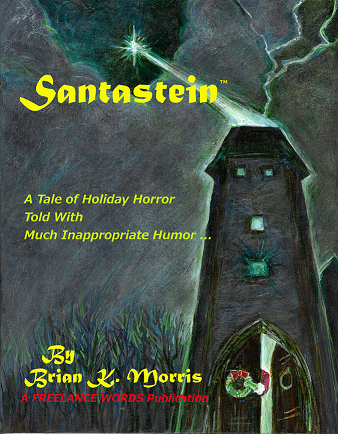
I am a fan of fiction related to Christmas, especially genre stories connected to the holiday. Tell us about your short novel Santastein: Or, the Post-Holiday Prometheus.

BKM: Santastein, The Post-Holiday Prometheus, is my biggest selling book and probably was the most fun to write. My wife just shakes her head at what I think is amusing, but it’s sold on eight continents, and file-shared out of Russia and China. It does my ego good to know I’m worth stealing from.

Santastein was originally a ten-minute holiday play that I couldn’t convince any of my theatre peeps to produce. They loved it but found it a bit irreverent for the holiday. Can you imagine that? Irreverent? From ME???

This book came early in my full-time writing career. I wanted to put out something fairly quickly after a serious downturn in my daily employment, so I expanded on the script from the original play and it’s become my all-time best seller. This means a lot to me because Mary Shelley’s Frankenstein was the first “grown-up” book I ever read and it might just be my favorite of all time.

And yes, I have plots for two more sequels.

You’ve also written a lot of essays for books and magazines about pop culture history, especially comic books. In fact, we just shared a table of contents, in Jack of All Comics! A Fan Conversation about the King of Comics. What is your process like for researching and writing these non-fiction pieces in general, and the piece on Jack Kirby’s run on DC’s Our Fighting Forces in the 1970s in particular?

BKM: I have so much fun working on this kind of book. It gives me legitimacy, at least in my own mind, when I tell my wife my “work” will involve reading my favorite comic books and watching classic television shows. It’s tough work, but someone’s gotta do it.

First of all, I keep my ears open for anthologies that explore subjects I’m reasonably familiar with, and passionate about. After I make my pitch for an article, and it’s accepted, I dive into the subject, whether it’s Batman ’66 or a specific run of a comic book. While doing the research, I find the “hook” that will make the article interesting to me, at least. It might be a creator’s approach to the material, or it might be a breakdown of what made me interested in the work initially, and to share WHY all this made me happy and why it was important to the medium in which it was presented.

The REAL reason why I enjoy doing articles on old TV shows, comic books, and other media of my misspent youth: I get to watch/listen/read material that makes me happy, then share that joy with the editor of the book.

And before you ask, YES, I do write with the reader in mind. But first and foremost, I write for the EDITOR. I figure it’s his/her job to know what their readers want, so I need the editor’s guidance to please their “customers.” I make the editor happy, the editor pleases the readers. It’s a kind of literary “trickle-down” theory.

What do you have coming up that readers should keep an eye out for?

Well, I’ve finally got a plot for the sequel to Vulcana: Rebirth of the Champion, so that’s in the queue. The following year, I hope to get the final Vulcana novel out, but you have to ask me about the title in person. It’s a bit irreverent…

I’m also working on the aforementioned The Terrors 2: From Dust ‘Til Dawn, as well as the REAL stories behind the Twin Terrors’ and Cobalt Scarab’s original four-color adventures.

I’ve been sitting on an anthology featuring my character Doc Saga, who appeared in Pulp Reality #2 from Stormgate Press. My anthology contributors have exercised superhuman patience with me, so I plan to get that out soon.

I’m also planning out a new version of an anthology that I recently got the rights to, but that’ll have to stay under my fez for now.

Thanks again, Brian! By the time this posts on my website, we’ll both be knee-deep in all things PulpFest!

Aw, thank YOU for letting me overshare my love of all things New Pulp.


Readers, as you read this, it is probably Day Two of PulpFest 2025. It’s still not too late to register for and attend the remaining two days of THE pulp magazine-focused convention in the Northeast and the other three conventions it hosts: FarmerCon (dedicated to the works of Philip Jose Farmer), ERBFest (dedicated to the works of Edgar Rice Burroughs) and DocCon (dedicated to all things Doc Savage related). Check out the PulpFest website for registration and hotel information!

Interview: CRAIG MCDONALD

For the first day of PulpFest, I’m happy to have a chance to chat with author Craig McDonald.

Craig McDonald is an award-winning journalist, communications specialist, and author of the acclaimed Hector Lassiter series. His debut novel, Head Games, was nominated for the Edgar, Anthony, Gumshoe, and Sélection du prix polar Saint-Maur en Poche in France for best first novel. More recently, Craig launched his Zana O’Savin series of literary thrillers in which classic pulp magazine heroes literally come to life. Craig serves as PulpFest’s assistant director of marketing. His primary responsibility is the PulpFest YouTube Channel. You can learn more about Craig’s Zana O’Savin, Hector Lassiter, and other novels on his website.


Hi Craig! Thanks for taking some time to chat.

Truly my privilege, Anthony. Thank you for the opportunity.

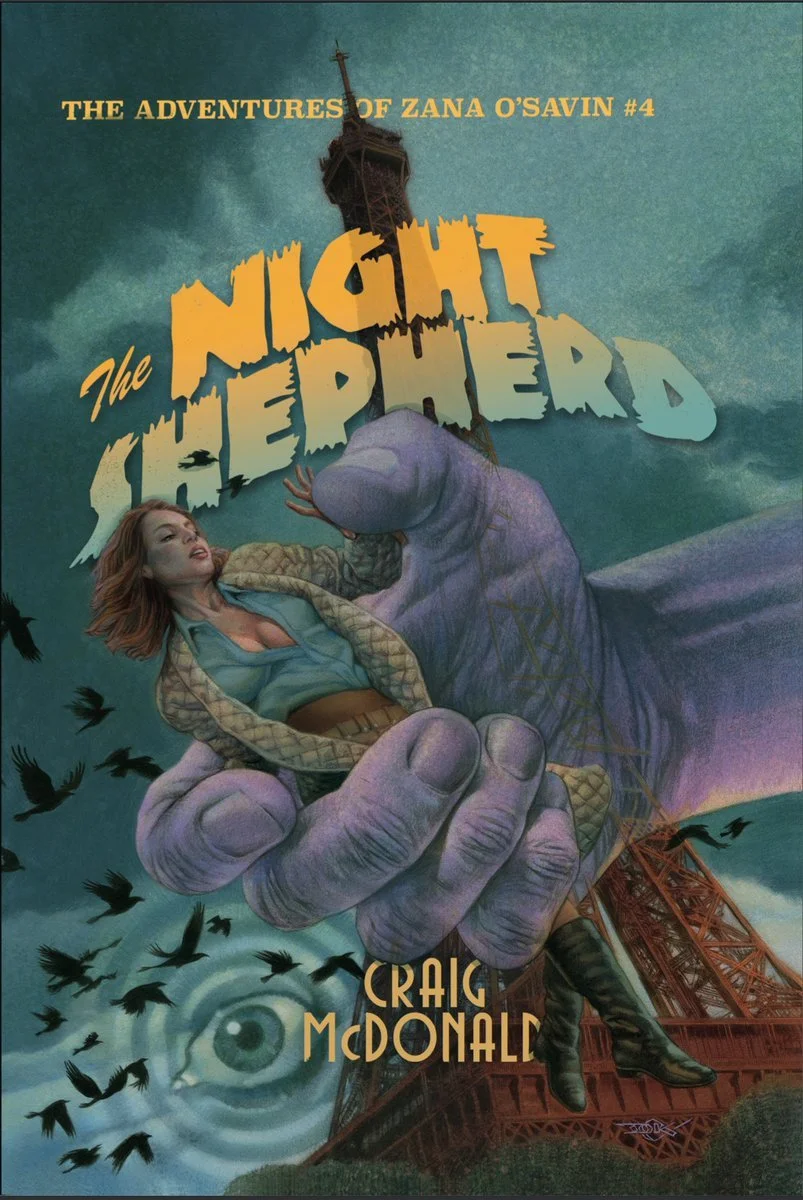
At Pulpfest this week, you’re debuting your fourth Zana O’Savin novel, The Night Shepherd. Tell us about who Zana is and what the series is all about.

Zana is a pastiche version of Doc Savage’s cousin Patricia Savage. The Zana O’Savin series is a kind of pulp magazine version of the Justice League Unlimited cartoon series in which pastiche versions of Pat and Doc, his aides, The Shadow, The Avenger, and public domain characters like the Domino Lady join forces. The distinction between this series and most other pulp pastiches is these classic heroes, in recognizable form, are moving in our time and world, and confronting many of the same challenges and threats we face. In the manner of much of my earlier fiction, there is also often a historical element or event informing each book.

What adventure is Zana embarking on in The Night Shepherd, if you can tell us anything without spoilers?

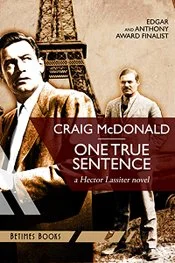
This novel involves a kind of suicide-murder cult called Nada, first introduced in my Hector Lassiter historical thriller, One True Sentence. That novel was set in 1924, when Paris was preparing to host the Summer Olympics. The new Zana is set in summer, 2024, when Paris is deep in the throes of hosting another series of Summer Games. Zana becomes the target of Nada’s cult-like leader, a sadistic hypnotist of considerable skill, with hidden ties to my pastiche version of The Shadow. There’s actually been considerable overlap of my two series, with Lester Dent and Walter B. Gibson featuring in various Lassiter novels and short stories, and Lassiter as on-page character in the first Zana, The Blood Ogre.

Obviously, you have a love of Doc Savage. What are your first memories of encountering Doc or other Pulp characters or magazines?

My grandfather was an iron worker in New York City during the Great Depression and an avid reader. He had a basement bookcase stuffed with men’s adventure paperbacks, and magazines. He knew Doc from back-when and gave me a paperback reprint of the second Doc Savage pulp, The Land of Terror. I was maybe seven or eight. It hooked me, and I skipped The Hardy Boys and similar fiction, leaping straight to pulp reprints and Ian Fleming’s James Bond novels. Doc paperback collecting was quickly followed by those featuring The Shadow and The Avenger. That Street & Smith trinity remains my favorite and primary pulp fascinations.

Who are some of your other literary/creative influences?

My master is Ernest Hemingway. Ian Fleming is another profound influence. I’ve also learned much from reading and interviewing a number of more contemporary authors, including James Crumley, James Sallis, James Ellroy, and the recently passed Ken Bruen, who connected me with my first agent and the eventual publisher of many of the Lassiters via Betimes Books, based in Ireland.

I would love to hear about your creative process. Are you a plotter, a pantser, a mix? How many drafts do you go through before bringing a book out?

I don’t think I really fit comfortably in either camp. I’m devoted to characterization and feel story should ideally advance through a kind of double-helix propulsion in which character drives plot and plot simultaneously evokes character. I always have an opening line, a character arc in mind, a closing line, and probably a few set pieces in between. I think what also makes it hard for me to declare an allegiance to either of the 2 “P’s” is that so much of what I write is historical fiction. That means I have certain historical mile markers I’m obligated to navigate toward, whether it be details or events tied to the Black Dahlia murder, or Orson Welles’ so-called “Panic Broadcast.” A certain amount of plotting is baked in, in that sense. I also embrace the Hemingway concept of reading everything previously written before resuming writing, so there is a perpetual revision process underway that ensures the first draft and final draft aren’t very far apart. I also typically use a method Kinky Friedman sold me on in which you write about three quarters of the book in sequence, jump to the end and compose the last chapter or two, then go back and fill in the gap.

You are also known for your Hector Lassiter series. Tell us about how you created Hector and about the series as a whole.

The Lassiter series consists of historical thrillers about a pulp novelist and Black Mask Magazine writer who becomes involved in historical crimes and menaces, while also interacting with notable people—most of them fellow authors or filmmakers—including Ernest Hemingway, Ian Fleming, and Orson Welles, among many others. Hector was created for a Mississippi Review short story contest called “High Pulp,” seeking a mixture of pulp-style writing with a literary undertow, which pretty well describes the dozen-plus novels and short stories about Hector that ensued, all of which have a certain literary and meta-textual edge, which is also true of the Zana O’Savin novels. The first novel was a finalist for The Edgar and Anthony awards and adapted as a graphic novel. The Lassiters have been published in about a dozen languages.

I’m curious about the level of research you did for the Lassiter books, since they are set in a very specific timeframe and include so many real people. What was that research process like, and did you learn anything surprising about the people you researched that affected the way you portrayed them?

All my novels are written to preoccupations with crimes or historical personages I’ve studied deeply and so I don’t really require much research; it’s more a matter of memory checking. With some “characters” who had a very distinctive speaking voice, say Orson Welles, or John Huston, I’d sometimes go back and watch old interviews to kind of pick up their cadence, word choices, etc. My version of Hemingway comes mostly from his letters, where his personality and “voice” were the most unguarded and so illuminating to me in shaping his very complex character.

Will there be further Hector Lassiter books, or is the series over?

Hector has made the odd cameo since the series ended (that first Zana novel, for instance), but it’s probably over. The idea was to have Hector age in real time, coming in with the twentieth century and more or less departing with it, in between making a study of an artist moving through so many stages and phases of fiction, film, and culture. I feel like I accomplished that, and the series stands as something very unusual and cohesive and so would hate to write a book that risks weakening or damaging the larger series in some way.

What do you have coming up after the release of The Night Shepherd? Any projects you can tease or talk about?

There will be at least a fifth Zana, which is coming together very quickly, currently called The Invisible Crusade. I’ve also had some discussions with the publisher of the Hector Lassiter series about another novel that was nearly published by Macmillan about 2009, when it was stalled by a novel covering similar territory by a certain sitcom actress turned author that ended up strangling my publishing deal. I’m prolific, and publishers tend to limit you to a book a year, so as a guy who has sometimes written three novels in a calendar year, I’ve got a lot of novels in dry dock, including a couple of trilogies.

You’re at Pulpfest this week. Will you be attending any other conventions where readers can chat with you in the near future?

I do a few here and there as I can fit them in. I hope to do many more this coming year.

Thanks again Craig!

Thank you, Anthony; it’s been a blast!


Readers, even though PulpFest started today, it is not too late to register and attend THE pulp magazine-focused convention in the Northeast and the other three conventions it hosts: FarmerCon (dedicated to the works of Philip Jose Farmer), ERBFest (dedicated to the works of Edgar Rice Burroughs) and DocCon (dedicated to all things Doc Savage related). Check out the Pulpfest website for registration and hotel information! Join us in Cranberry, PA this weekend, and meet Craig and most of the other folks I’ve interviewed in person.

Interview: HENRY G. FRANKE III

Today I chat with Henry Franke, organizer for this year’s Edgar Rice Burroughs Fest (ERBFest), one of the mini-cons that are a part of PulpFest this year.

Henry Franke (standing, right) with Marvel Comics’ Stan Lee, Awesome Con, 2017

 Henry G. Franke III is a longstanding Edgar Rice Burroughs fan who has written about Burroughs and his works with book introductions, forewords, afterwords, articles, and interviews.  He has also spoken about Burroughs at numerous conventions and fan gatherings.  He has served three times as the Official Editor of the Edgar Rice Burroughs Amateur Press Association and since 2010 has been the Editor of The Burroughs Bibliophiles, the nonprofit literary and educational society devoted to ERB and his works, and which publishes The Burroughs Bulletin journal and The Gridley Wave newsletter.  (Henry served in the U.S. Army for over 31 years, then for 10 years as a U.S. Army government civilian.)


Hi Henry!  Thanks for taking some time to chat!

Thanks, Anthony.  I am always happy to talk about Edgar Rice Burroughs and The Burroughs Bibliophiles.

This year, ERBFest is returning to be a part of PulpFest.  Can you tell me how ERBFest came to be associated with PulpFest, and how (or if) it differs at all from various other Edgar Rice Burroughs fan events throughout the year?

Edgar Rice Burroughs Fest (ERBFest for short) was originally meant to be a one-shot “sub-convention” in 2021 to fill a void for ERB fans who might want to gather in-person that year.  As we were starting to emerge from the COVID-19 pandemic, PulpFest was back as an in-person convention in 2021, but neither of the regular ERB fan get-togethers was scheduled.  These were The Burroughs Bibliophiles’ Dum-Dum convention and the ERB Chain of Friendship (ECOF) Gathering.

So Mike Chomko, who programs PulpFest, approached me with the idea of an ERB fan component to PulpFest.  The general model was FarmerCon, the annual convention for the author Philip José Farmer, which had aligned itself with PulpFest several years earlier.  Ironically, because of the pandemic, FarmerCon was virtual-only in 2021.

I got with some key ERB fans on what to name this event.  The final decision was “ERBFest” for “Edgar Rice Burroughs Fest.”  We worked out already-planned and new panels and presentations that would be aligned with ERBFest.  ERB, Inc. was now participating in PulpFest, so they were incorporated in ERBFest.  I had hosted an ERB art show at PulpFest in 2019, and had offered to host another one for ERBFest.  In order to reduce the chance of infection with people gathering in confined spaces, however, we decided against it.

I created an ERBFest program booklet as a giveaway, since there was no registration fee for this “sub-convention.”  Artist Mark Wheatley had worked up a logo for the event, and that general design has inspired subsequent logos.

It is fitting that the convention hotel is located in the Borough of Mars.

In 2023, perhaps, Mike Chomko asked me again about hosting another ERBFest – or at least a number of Burroughs fans who had attended the 2022 PulpFest suggested another ERBFest.  This was in part because no regular ERB fan convention had been held in the East for a number of years.  First, I asked key FarmerCon people if they would be okay with another ERBFest and the possible competition between sub-conventions.  They said they had no issue with this.  I also spoke face-to-face with two members of the Board of Directors of The Burroughs Bibliophiles the last day of that PulpFest, and they thought it was a good idea.  So I gave Mike Chomko my okay to host another ERBFest, with the caveat that I would not host an ERBFest any time that a regular ERB convention was held in the East, in order to avoid competition.

      So I have hosted an ERBFest in 2023 and 2024 and will do so again in 2025.  Each of these has had a theme, along with a special item created as part of PulpFest and linked to themes.

2023 – (1) centennial of the establishment of ERB, Inc; (2) 100th anniversary of the first publication of Edgar Rice Burroughs’ The Moon Maid (in Argosy All-Story starting with the weekly issue cover-dated 5 May 1923).  A special envelope was created, which was then postmarked by the Moon, VA, Post Office on 5 May 2023.  I also hosted an ERB Art Show.

2024 – centennial of the first-edition hardcover book, The Land That Time Forgot.  A special envelope was created, then postmarked by the Dinosaur, CO, Post Office on 14 June 2024, 100 years after the official release of the first-edition book.

2025 – (1) ERB’s 150th birthday (1 September 1875); (2) the centennial of the first-edition hardcover book, The Cave Girl.

Over the years, even before the focus of ERBFest, many PulpFest attendees joined The Burroughs Bibliophiles, so that today a significant portion of our membership has come from PulpFest.

What can Burroughs fans expect in terms of programming at this year’s ERBFest at PulpFest?

Panels and presentations on Thursday, Friday, and Saturday.  In fact, the first programming is an ERBFest panel Thursday evening.  I am also hoping that ERB fans with meet up with me on Thursday afternoon and late Saturday evening for informal bull sessions (I hope to give out a few door prizes).  And there will be another ERB Art Show, set for Friday and Saturday. 

Come by the ERBFest table, which will be next to the PulpFest registration tables outside the dealers room, sign in, and pick up a free ERBFest packet that will include a program booklet and six Venus art prints signed by artist Richard Cox.  Here is the full ERBFest schedule; note that all programming outside of the dealers room is FREE and does not require a PulpFest registration fee.

Thursday, 7 August

4:00 – 6:45 pm — “ERB Palaver and Pizza at ERBFest” in the DoubleTree hotel lounge.  ERB fans meet at 4:00 pm to talk.  Expect door prizes.  Note that PulpFest has pizza served free at the Ember & Vine for PulpFest attendees, starting at 5:00 pm.

6:55 – 7:40 pm — ERBFest panel, “Edgar Rice Burroughs and the Male Ideal” (Bernice Jones and Cathy Wilbanks)

9:25 – 10:10 pm — ERBFest presentation, “Tarzan: Lord of the Merchandising Jungle” (Jim Beard)

Friday, 8 August

11:30 am – 1:30 pm — Art Show, “Edgar Rice Burroughs, Master of Adventure,” with works inspired by Edgar Rice Burroughs (hosted by Henry G. Franke III in the Chestnut Room)

2:30 – 3:25 pm — ERBFest panel, “The Universe According to Edgar Rice Burroughs” (Christopher Paul Carey, Cathy Wilbanks, Chris L. Adams, Win Scott Eckert, and Henry Franke)

8:35 – 9:20 pm — ERBFest panel, “The Masters of Tarzan Illustration” (Mark Wheatley and Douglas Klauba)

Saturday, 9 August

11:30 am – 1:30 pm — Art Show, “Edgar Rice Burroughs, Master of Adventure,” with works inspired by Edgar Rice Burroughs (hosted by Henry G. Franke III in the Chestnut Room)

7:40 – 8:25 pm — ERBFest presentation, “Ray Bradbury, Burroughs’ Disciple” (Garyn Roberts)

11:35 pm – ?? am — ERBFest:  “Barsoomian Bull Session” — Socialize and discuss ERB in the hotel lounge by the Ember &       Vine.  Expect door prizes.

You are a lifelong Burroughs fan, I know.  When did you first encounter Burroughs’ work, and how did it affect/influence you?

While I had probably seen some Tarzan movies when I was very young, what made a real impression on me were the Dell Comics and then Gold Key Comics’ “Tarzan” comic books, which I saw when we were in Germany in the early 1960s (my father was in the U.S. Army).  I even read the three-part “John Carter of Mars” mini-series reprinted by Gold Key.  I then read a number of the Whitman hardcover editions of Tarzan novels.  At the time the name “Edgar Rice Burroughs” on the covers of the comic books and Whitman books did not click.  I finally realized that there was a writer named Edgar Rice Burroughs who had not only created of Tarzan of the Apes but also a long list of stories set on Mars and other worlds when I saw a full-page order form for Ballantine Books in a Gold Key “Tarzan” comic book in 1969 while we were in Okinawa.  My father placed an order, and those books with covers by Dick Powers and Bob Abbett were my 1969 Christmas present.  I read two a day during the holiday break.  We moved to Copperas Cove, TX, in 1971, where the family went to a local bookstore every Saturday.  This was when the second ERB paperback boom kicked in, and I acquired nearly every book published by Ballantine and Ace Books.  Those were good years.  I got to know ERB the man with Irwin Porges’ authorized biography, published in 1975 and given to me for Christmas that year.  Over the years, ERB’s story and his creations became windows into 20th-century American popular culture media, including pulps, newspaper serializations, radio shows, and more.  ERB gave me a personal focus outside of the long hours of Army service.  I became the Official Editor of the ERB Amateur Press Association in 1994, which prompted me to attend my first ERB fan convention.

You are also on the Board of Directors of The Burroughs Bibliophiles, which publishes a wonderful magazine dedicated to all things ERB.  Tell me about the history of the organization and your involvement in it.

Edgar Rice Burroughs approved Vern Coriell’s request to publish an ERB fanzine in 1947.  This was titled The Burroughs Bulletin, and it has been in print ever since.  ERB had also approved the idea of an official fan organization, although it was not formed until September 1960.  Called The Burroughs Bibliophiles, it adopted The Burroughs Bulletin, plus the new newsletter, The Gridley Wave, both edited by Coriell.  In the early years, the Bibliophiles met for a luncheon or banquet called the Dum-Dum (the name ERB gave to gatherings of the Mangani great apes in the Tarzan novels) during the World Science Fiction Convention.  Later, a multi-day annual convention separate from the WorldCon was adopted.  Last year the name of the convention was changed to the “Edgar Rice Burroughs Convention” (ERBCon).  George T. McWhorter took over as Editor for the Bibliophiles.  The Bibliophiles was incorporated in the Commonwealth of Kentucky, and then as a literary and education society was designated a 501(c)(3) nonprofit organization by the Internal Revenue Service.

When George McWhorter wanted to retire as Editor and Treasurer, I wound up being selected as Editor and Treasurer as his replacement.  When George decided not to continue serving as a Board Director, I was elected to fill his position.


How does one go about joining The Burroughs Bibliophiles?

Anyone interested in learning more about us or joining straightaway can go to our website (http://www.BurroughsBibliophiles.com) and download the membership form, or contact me at BurroughsBibliophiles@gmail.com and request a copy of the membership form in pdf or Word formats.  The current regular membership period is two years.  A member living in the U.S. pays $35 for dues, with the benefits of four issues of the Bulletin (only published) in paper and 24 digital issues of our monthly newsletter, The Gridley Wave, in pdf format.  Paper copies of The Gridley Wave require an additional charge of $20 for the two-year period.  Members living in Canada pay a higher dues amount, as do members living outside the U.S. and Canada.  Dues payments can be made by check, money order, or PayPal/

If you join during PulpFest, you will receive a free back issue of The Burroughs Bulletin.

 Note that besides our webpage we have a Facebook page and a YouTube channel.  We plan on releasing more special publications under our House of Greystoke imprint.

Enquiring minds want to know: What would your dream ERB-related project be, if you could choose one book/movie/TV project to happen?

For some time now I have championed an adaptation of Tarzan at the Earth’s Core as a theatrical film or a streaming miniseries.  Unfortunately, we may be too late because of the recent Godzilla/King Kong movies.  Another approach with adapting this novel would be partnering with another franchise, notably the Predator, in line with the 1990s Dark Horse Comics miniseries, Tarzan vs Predator at the Earth’s Core.  Unfortunately, we may be too late because of the new Predator movie.  Even a pairing with King Kong has to deal with the preemption of the Godzilla/King Kong mashups.

What other ERB fan events do you have coming up in 2025?

Since 2025 is the 150th anniversary of ERB’s birth, there have been a number of events this year.  Two significant events coming up are:

-- The British ERB Society’s (BERBS) visit to Greystoke Castle in the United Kingdom on 1 September, ERB’s 150th birthday.

-- The 2025 ERB Chain of Friendship (ECOF) Gathering in Willcox, Arizona, from 25 to 28 September, at the Willcox Elks Lodge.  The formal dedication of the ERB 7th Cavalry Historical Monument at the Willcox Southern Pacific Railroad Depot is set for 27 September.

Thanks again, Henry, for taking some time to chat! See you at PulpFest shortly!


Readers, it is not too late to register for and attend Pulpfest 2025 (THE pulp magazine-focused convention in the Northeast) and the other three conventions it hosts: FarmerCon (dedicated to the works of Philip Jose Farmer), ERBFest (dedicated to the works of Edgar Rice Burroughs) and DocCon (dedicated to all things Doc Savage related). Check out the Pulpfest website for registration and hotel information!

Interview: RON HILL

Today, I chat with artist Ron Hill, who is also one of the architects behind the revival of DocCon, which will be a part of Pulpfest later this week.

Ron Hill has been an editorial cartoonist, humorous illustrator, graphic designer, educator, author, armchair theologian, and video documentarian (not all at the same time, of course!) for over 40 years. Born in Cleveland, he graduated from the Art Institute of Pittsburgh and immediately returned to Northeast Ohio to begin working in advertising.

In the 1980s–90s, as part of the illustration team of Lombardo & Hill, Ron drew countless interior illustrations for role-playing games published by TSR, West End Games, Iron Crown Enterprises, and Chaosium, many licensed from The Lord of the Rings, Indiana Jones, and Star Wars. An accomplished quick-sketch caricature artist, he has drawn (to date) probably a quarter-million faces at thousands of private and public events from Chicago to New York. His editorial cartoons have appeared in the Chagrin Valley Times, Solon Times, Geauga Times Courier, and West Life since 1999. In 2000, he started illustrating the popular “Armchair Theologian” book series for Westminster John-Knox; these 15 volumes have been translated into German, Japanese, Korean, Portuguese, and Italian.

From 2002–2015, he taught an Interactive Media College Tech Prep program at Alliance High School and has always conducted workshops at area art centers (including the Valley Art Center) since 1990. After co-founding Act 3 in 2016, a media company and indie book publisher in Cleveland, he has recently embarked (once again) on his solo career as a freelance artist, and has completed two personal documentary projects,

“Go-Kart Therapy” and “We Are Doc Savage: A Documentary on Fandom.” He has always lived in the Chagrin Valley of Northeast Ohio, and you can learn more at www.RonHillArtist.com.


Hi, Ron. Thanks for taking some time to chat!

You bet, Anthony!

Last year at Pulpfest (2024), you premiered your short documentary We Are Doc Savage, which is all about the influence this classic character has had since his debut in the pulp magazine that bore his name, in 1933. What is it about Doc Savage that first caught your interest, and what effect did that have on you?

The covers, hands down! In May of 1975, I was a geeky sci-fi kid, in seventh grade when I first saw a Doc Savage book. I was on an overnight school trip, and we stopped at a mall for lunch. I went to a bookstore and saw #74, The Derrick Devil, with Fred Pfeiffer’s funky artwork. That logo and the illustration and the back cover intrigued me – but I didn’t buy it! Instead, I went with a safer buy: James Blish’s Start Trek 9 and The Science Fiction Hall of Fame. But when I got home, there was a package of Bantam Books (I would order from the ads in the back pages with my lawn-mowing dough) and inside was a Bantam catalog. Inside was that awesome logo and the available books. I immediately ordered the first four books, and when they arrived a few weeks later, I was hooked. I think I read all four in one week. And the Man of Bronze was the movie edition, which is another story!

Can you talk about the history of the documentary project, its genesis and road to completion?

Hah! That’s a long and winding road. After art school, the first act of my professional career was working in advertising as an art director, illustrator, and graphic designer, and I also did caricatures and cartoons on the side, for ten years. When I turned 31, I quit the day job and went freelance, mostly doing caricature gigs and drawing for RPG publishers with a friend. We did dozens of books for D&D, West End Games, Chaosium and Iron Crown Enterprises. I was also trying to sell comic strip concepts to the newspaper syndicates; that was act two for me. Then at 40 I fell into a position as a high school career and technical Interactive Media teacher, while freelancing editorial cartoons, illustrating theology books and still doing caricature entertainment summers and weekends; I suppose this was my third work act. Anyway, since I like to do something new every decade or so, after 13 years I quit teaching and helped start a media company with an old friend (the RPG illustrator) and new friend: Act 3, LLC. Act 3 was formed in 2016, and we did websites, illustration, and video production. That is where I learned about video editing. We created lots of short films for non-profits, helping them tell their story. Well, we always wanted to do a documentary, something for ourselves. So, in December of 2021, I pitched the idea of “We Are Doc Savage: A Documentary on Fandom.” My partners greenlit the project in January. I was always a
Doc Savage fan. When the internet exploded in the 90s, I got to know the Doc Savage works of WWW fans Chuck Welch, Frozencat, Chris Kalb, Scott Cranford, Win Scott Eckert, Rick Lai, Will Murray… and contribute artwork, articles, and research of my own. But I never made time to go to the conventions. I would get the invites to the Doc Cons and say to my wife, “If only I didn’t have bills, or school, or work…” So I never dove into the con scene. But I had just turned 60 and suddenly wanted to see what it was all about. And why not document it? So I went to my first convention in spring of 2022, which was Windy City. That was going to be the test to see what kind of footage and assets we could gather. Well, by the end of 2022, Act 3 was doing OK, but not great, you know? The Pandemic really slowed us down. Again, I was 60, and not really that excited about the business side of owning a business, so I removed myself from my own company and went freelance again. My partners are all still my best friends. Part of my separation agreement was that I could take all the footage and documentary assets and finish it on my own. I bought a new computer system at home and spent the next almost two years finishing it.

Was there anything that surprised you as you compiled interviews and pulled the documentary into its final form?

I think the biggest thing that surprised me was that everybody in Doc Savage fandom is so nice, and generous and giving of themselves to each other —Doc fans really do take the Doc Savage Code to heart.

This year sees the return of DocCon, as one of several conventions that are hosted by Pulpfest. How did the return of this venerable fan gathering come about?

Jen DiGiacomo, who I got to know from two previous PulpFests and was a real cheerleader for the documentary project, said last year at PulpFest she was starting Doc Con again for 2025 PulpFest, and did I want to be on her committee? I said sure, I could certainly help with design. Jen is a powerhouse of energy and passion when she takes something on, and it is really infectious; I didn’t want to let her down. It’s too bad she ran into a conflict with her one-woman show when it got accepted overseas, so she won’t be here – this year! We will be talking about 2026 plans real soon. So, after never attending a Doc Con, I find myself right in the thick of things, with super-generous fans, like yourself. And I am told that of the three Mini-Cons at PulpFest, this year Doc Con has generated the most interest, according to a survey of PulpFest members responding. That is gratifying and a little scary – we want this Min-Con to be special!

What can anyone attending Pulpfest expect in terms of DocCon programming?

Mike Chomko was very enthusiastic from the start. When Jen told him she wanted to do this, he said yes, and she pretty much had the programming ideas – of course, the 50th anniversary of the George Pal’s “Doc Savage: The Man of Bronze” was a perfect theme to explore. Jen had recently acquired various ephemera from the movie production, and Chris Kalb had some other stuff, so one panel will cover that. And the Bantam Revival panel was Jen and Will’s idea, and I was happy to help flesh that out since that was my passion for 50 years – Bantam and illustration. I am really looking forward to sharing the stage with Will and Chris as moderator.

Let’s talk about your other creative endeavors for a moment. You recently provided the amazing cover art for Jack of All Comics! edited by Jim Beard and published by Becky Books (in which, full disclosure for readers, I have an essay). What was the process of creating that cover?

That was pretty much a straight illustration commission. Jim Beard is so much fun to work with. He hired me two years ago to do a cover of one of his Grown-Up Kids Remember books, about Start Trek TOS. So when he said he wanted to emulate the first issue of Fantastic Four, I saw the image in my mind’s eye immediately. Presto- bango and it’s done, Jim is happy. That’s always cool when that works out.

Does your process change at all from project to project? What is your favorite artistic medium to work in?

My favorite medium is pencil and ink. Old-school. But I do all my editorial cartoons on my iPad Pro. It is still drawing with the Apple Pencil. I even “pencil” the cartoons in a blue layer, and then “ink” over it in another layer. Then below that I do a “watercolor” layer. It is easier to edit, and when it’s done you don’t have to scan it. Of course there are no originals, but as many as I do, at least I save on art materials – pixels are free.

You’re also a caricaturist. How did your interest in that develop, and what’s your process like when doing caricatures at events?

I did not go to college. I did go to night school when I was 40, to get my Ohio Career- Tech teaching certificate, but I only have an associate’s degree from the Art Institute of Pittsburgh. In 1980, AIP was a tech school, just commercial art skills. No math, science, humanities, whatever… build a portfolio and hit the streets as a commercial artist. Well, I took a 3-hour extracurricular class in caricature quick-sketch from an amazing artist named John Johns. He taught that a caricature is simply an “exaggerated likeness.” At the end of the afternoon, he engaged a dozen of us to draw at the Three Rivers Art Festival. That was a ten-day festival. We drew ten hours a day producing caricatures at

$2 a pop. It was so fun and immediate. In those ten days, I lived it up at night, six-packs and steak from the corner store, up the next morning and at it again. I earned enough to pay for the last quarter of school, my supplies for that last quarter, and an engagement ring! True story: a week after that first festival, when I was home for a couple weeks that summer, I said to my then-girlfriend, Margie, let’s go to the mall. And I bought a $1000 engagement diamond ring with crumpled up dollar bills. How cool is that? I thought to


myself this is how it feels to be a rock star on the road. Some musicians like studio work, some like being on the road. To me, one feeds the other. I go to a wedding and come home with $800 after drawing for a few hours, and everyone is happy. A couple gigs a weekend, adding up to 60 gigs a year means I can afford to work at home during the week, finding illustration his, creating editorial cartoons, illustrating books… and producing documentaries, hah ha. So ever since 1982, I kept doing caricatures at all kinds of events, eventually being able to go freelance because of my gig work. Almost 45 years later I still get that rush drawing for people. My process? After so many years and thousands of gigs and maybe a quarter million faces, it’s really all muscle memory at this stage. I mean, I see faces and immediately know how I would exaggerate those features, and how much. Oh, and Margie and I will celebrate our 43rd wedding anniversary this October. So yeah, caricatures have been very, very good to me.

Do you have any other projects coming up that you’d like people to know about?

Not really. I just kind of grab what comes along and looks interesting. Something always comes along. I don’t think I would do another documentary unless I get a chance to do one about the history of comic strips in Cleveland. I just hope to keep drawing for another 25 years or so… and I hope that includes more cool pulp illustration projects!

Thanks again, Ron! See you in a few days at Pulpfest!

You’re welcome, Anthony! Can’t wait to see you.

Readers, it is not too late to register for and attend Pulpfest 2025 (THE pulp magazine-focused convention in the Northeast) and the other three conventions it hosts: FarmerCon (dedicated to the works of Philip Jose Farmer), ERBFest (dedicated to the works of Edgar Rice Burroughs) and DocCon (dedicated to all things Doc Savage related). Check out the Pulpfest website for registration and hotel information!