• HOME
  • ABOUT
  • BIBLIOGRAPHY
    • INVISIBLE ME
    • CANOPUS
    • PARADISE FEARS
  • BLOG
  • CONTACT
Menu

ANTHONY R. CARDNO

Street Address
City, State, Zip
Phone Number
Anthony R. Cardno is an American novelist, playwright, and short story writer.

Your Custom Text Here

ANTHONY R. CARDNO

  • HOME
  • ABOUT
  • BIBLIOGRAPHY
  • FREE STORIES
    • INVISIBLE ME
    • CANOPUS
    • PARADISE FEARS
  • BLOG
  • CONTACT

SERIES SATURDAY: Pellucidar: Across Savage Seas

May 14, 2022 Anthony Cardno

Cover art by Miriana Puglia and Arthur Hesli.

This is a blog series about … well, series. I love stories that continue across volumes, in whatever form: linked short stories, novels, novellas, television, movies, comics. It’s been on hiatus for a while, but returns this week with the first of two posts about new content from Edgar Rice Burroughs, Inc.


Pellucidar: Across Savage Seas,

Publisher: American Mythology, 2022 (in conjunction with Edgar Rice Burroughs, Inc.)

Story: Christopher Paul Carey

Writer/Editor: Mike Wolfer

Pencils and Inks: Miriana Puglia

Colors: Periya Pillai

Letters: Natalie Jane


In Pellucidar: Across Savage Seas, Gretchen von Harben (all grown up her from last appearance as a twelve-year-old girl in Edgar Rice Burroughs’ Tarzan and the Tarzan Twins) narrates to an unseen audience her first visit to Pellucidar, the hidden world at the Earth’s core. Accompanying adventurer Jason Gridley on the airship Favonia as a college student, Gretchen is knocked loose when the Favonia is attacked by a flock of pterosaurs. She parachutes to a remote, uncharted island with only a pistol and limited ammo. There she encounters beings fans of the Pellucidar books will recognize (human Gilaks and ape-like Sagoths) as well as entirely new races that this series adds to the official Burroughs canon (Kratalaks and Azlaks). Gretchen faces a lot of peril over the course of four issues, and in the tradition of the strong female Burroughs characters who have preceded her (Jane Porter-Clayton, Dejah Thoris, Duare, and more), she more than rises to the occasion. This may be Gretchen’s first recorded adventure as an adult, but I certainly hope it’s not the last. She’s an engaging and dynamic character who deserves to be featured (along with the supporting cast that’s been built around her) in many more stories.

Christopher Paul Carey crafted the general story of Gretchen’s first adventure in Pellucidar, originally intending it to be a novel. Writer Mike Wolfer did a wonderful job converting the story to comic book form, pacing the story perfectly across four issues. Fewer issues would have rushed the story too much, and I think five or six issues would have padded the story out too much. Reading the series as it was issued in monthly (or as close to monthly as the publisher could get given various supply chain issues plaguing small independent publishers these days), I was very satisfied with where each issue left off – cliffhangers, of course, as befits a story that could easily have been told as a classic 1940s movie serial – and never felt like the drama of the end of a chapter was unearned. Carey is a Burroughsian scholar of the highest level, and Wolfer matches him well in creating a story that Burroughs would be proud of. For instance, I have no idea how much of the dialogue was in Carey’s original plot, how much the writers crafted together, and how much is purely Wolfer – but regardless, each character’s voice is distinctive and clear while still being perfectly Burroughsian in style.

Complimenting the writing, Miriana Puglia’s artwork is wonderful. Her clean lines and fluid body language convey action and emotion with equal clarity. Fight scenes have a flow and symmetry that makes them easy to follow, and upon multiple reads tiny details stand out. And when it’s time to go creepy (as one almost inevitably must when adventuring in Pellucidar), Puglia absolutely rises to the occasion. There’s one particular page in issue 4, for example, which made me a bit nauseous (trust me, this is a compliment.). Colorist Periya Pillai keeps the action well-lit with a mix of bold and quiet colors as appropriate to the scene; even moments in dark caves or underwater are easy to follow because Pillai’s colors don’t go so dark that they subsume Puglia’s art.

In recent years, Edgar Rice Burroughs Inc. has made a concerted effort to expand the official canon of the ERB Universe with new novels and comics series like this one, that bear the “Edgar Rice Burroughs Universe” banner across the top of the cover as well as an “Official ERB Universe Canon” stamp and hew as closely to Burroughs’ original interconnectedness universe as possible. In the novels of the current “Swords of Eternity” Super-Arc, readers have been introduced to an intrepid young woman traversing time and space named Victory Harben. Yes, there’s a direct connection between the Gretchen von Harben of Pellucidar: Across Savage Seas and the Victory Harben who has been appearing in those novels: it’s not a spoiler to reveal here that Victory is Gretchen’s daughter and is the person to whom Gretchen is narrating this story. Along with appearing in the novels/novellas already released, Victory will take center stage in her own novel later this year – but before that, she’s also been the star of another American Mythology / ERB Universe comic book mini-series: Beyond the Farthest Star: Warriors of Zandar, which will be the subject of next week’s Series Saturday post.

In READING, RAMBLINGS, BOOK REVIEWS Tags Series Saturday, edgar rice burroughs universe, pellucidar, pulp adventure, Christopher Paul Carey, Mike Wolfer
Comment

SUNDAY SHORTS: Two from The Deadlands

May 8, 2022 Anthony Cardno

I love short fiction, and Sunday Shorts is the feature where I get to blog about it. Posts will range from flash to novellas. At some point, I might delve into individual stories/episodes of anthology formats in other media, like television and comics, but for the time being, I’m sticking to prose in print and audio.


I don’t think I’ve yet done a Sunday Shorts about The Deadlands, a relatively new (just a year old) online speculative fiction magazine focused on the Afterlife – or afterlives, more accurately. Stories, poems, and non-fiction about grieving, about ghosts, about what happens after, or sometimes as, we are shuffling off this mortal coil, plane of existence, etc. The Deadlands is published by Sean Markey and E. Catherine Tobler is the editor-in-chief. Here are my thoughts on the two fiction pieces in the latest issue.


In KT Bryski’s “This is I,” Elaine, the Lady of Shalott, crosses paths via a magic mirror with a woman she comes to know as “Gug,” but who is really poet/artist Elizabeth Siddal, wife of Dante Gabriel Rosetti. In a story that blurs not only the lines of reality but also of narrative voice (with sections alternating between first, second, and third person points-of-view), Bryski delves into the ways in which men control women and alter the courses of their lives. Elaine has the curse on her that if she stops weaving in her high tower and looks out over Camelot, Camelot will fall, and she will be cursed. “Gug” has been used as a muse, been manipulated into marriage, and told her womanly nature means she can’t create art the same way a man can. Bryski also plays with the various versions of “The Lady of Shalott” that Tennyson wrote, plus interpretations by others. It took me a page or so to understand what the author was doing with the alternating POVs, but then I settled in, and the story flowed towards a perfect ending.


Maria Haskins’ “The Morthouse” focuses on a mother who has lost her teenage son to a horrific winter illness and who is so distraught she cannot do anything but haunt the village “morthouse,” where the bodies of those who die during winter are held until the ground is soft enough to dig graves, with occasional trips to the church she might no longer believe in, and the fields around the village. She regrets not asking the midwife who brought her child into the world during a problematic birth for help in keeping him alive, and eventually goes to ask for help in bringing him back to life. The midwife sets the grieving mother three tasks to gather items that might help. The mother’s grief is palpable throughout, as is her estrangement from her church and from her husband. The author also nicely explicates the traditional distrust in religious communities for anyone who works with nature to cure illness instead of just relying on God, without going the traditional route of showing the midwife (in this case) being abused by other members of the community. The story takes its time before coming to a satisfying, emotional, conclusion.

In READING, BOOK REVIEWS Tags sunday shorts, The Deadlands, KT Bryski, Maria Haskins, fantasy, horror, short stories, Short Fiction
Comment

SUNDAY SHORTS: Three From Giving The Devil His Due

March 27, 2022 Anthony Cardno

Header art by Scott Witt

I love short fiction, and Sunday Shorts is the feature where I get to blog about it. I’ve considered promising to review a short story every day, but that’s a lot of pressure. And while no one will fault me if I miss days, I’ll feel guilty, which will lead to not posting at all. So better to stick to a weekly post highlighting a couple/three stories, as I’ve done in the past.


Three From GIVING THE DEVIL HIS DUE

Giving The Devil His Due, edited by Rebecca Brewer, is a charity anthology published by the Pixel Project comprised of stories in which the men who abuse and kill women and girls get their just desserts, usually through supernatural means. There are 16 stories in the anthology. Here are my thoughts on a few of them:

Nisi Shawl’s “The Tawny Bitch” is an epistolary story with endnotes, one of my favorite types of stories to read. Belle is imprisoned by her paternal cousin John after she has “inappropriate liaisons” with a female classmate at school. She writes letters she knows her lost lover may never see, telling of her abuse, neglect, and sexual assault by her cousin and the married couple he hires to mind her. A tawny-colored female dog plays a key role in the story. The “end-notes” are those of a later historian trying to piece together the true identities of the people Belle mentions. This is a classically Gothic story: lost love, a woman locked in a dark tower room, a slight supernatural vibe. Shawl pulls all those elements together with a narratorial voice that is warm and inviting and which never makes us doubt the experiences the narrator is relating. (I also enjoyed the mention of a visiting doctor named Hesselius and the implication that someone is impersonating the “real” man by that name whose adventures were made famous by author Sheridan Le Fanu.)

In Kelley Armstrong’s “Happy Birthday Baby,” Lisette meets her friend Roger for dinner to celebrate the birthday of Lisette’s late sister. The sister has been dead for three years and the police have not been able to prove that her estranged abusive husband was the one who killed her. Lisette tells Reggie she’s hired a private investigator, has uncovered the truth of that night, and is ready to murder her sister’s killer since the police can’t seem to catch him. Of course, there are more twists to the story – and it’s a fair-play type of story in that the clues to what’s really going on are well planted from the very beginning. The story is wonderfully paced, moves very fast, and hits all the right “revenge on the killer who got away” vibes and notes. It’s one of the few stories in the anthology in which the supernatural element is almost non-existent until the key moment, which also makes it stand out from the crowd.


“The Moon Goddess’s Daughter” by Lee Murray is described by the author as a “prose poem.” The language used is poetic; I’m inclined to describe it as ethereal. Even concrete details are given a certain weightlessness, or perhaps dreaminess is a better descriptor, by the way the words are used. This makes this story of a young woman in an abusive marriage different from the more direct and detailed looks at surviving abuse that surround it in the anthology – but no less, and perhaps even more, powerful. Stories that are ethereal/dream-like are not necessarily lacking in impact, as this story clearly demonstrates. Also interesting is the structure of the story, using the phases of the moon as a chart for the protagonist’s journey. The story is based on a legend of the Chinese moon goddess Princess Chang’e, and thus leans more into the fantasy side of the supernatural than the horror side that the previous two stories dwell in.


Giving The Devil His Due is still available as an e-book. Other authors featured in the anthology include Kaaron Warren, Stephen Graham Jones, Angela Yuriko Smith, Jason Sanford, Linda D. Addison, and Christina Henry.

In BOOK REVIEWS, READING Tags sunday shorts, horror, fantasy, short story challenge
Comment

READING ROUND-UP: January 2022

February 24, 2022 Anthony Cardno

The first monthly summary of what I’ve been reading and listening to in 2022!


BOOKS

I read 9 books in January: 4 in print, 5 in e-book format, and 0 in audio format. They were:

1.       The Autumnal by Daniel Kraus, Chris Sheehan, Jason Wordie, Jim Campbell. Trade paperback collecting an 8-issue comic series I missed in monthly format. Following the death of her estranged mother, Kat Somerville returns to her childhood home in Comfort Notch NH with her young daughter. She remembers being sent away, but not why. Kraus crafts an intriguing slow burn of a story, made all the moodier by Sheehan’s artwork and Wordie’s nuanced use of autumn colors. Excellent folk horror. (PRINT)

2.       Giving The Devil His Due edited by Rebecca Brewer. An anthology of genre stories in which abusers of women actually pay for their crimes, usually through some supernatural means. Authors include Linda D. Addison, Stephen Graham Jones, Nisi Shawl, Christina Henry, and more. (E-BOOK ARC)

3.       Servant Mage by Kate Elliott. Brilliant novella about a society in which mages are an oppressed class and the main character is conscripted into a rescue mission that puts her life and safety at risk. FULL REVIEW HERE. (E-BOOK ARC)

4.       Lightspeed Magazine #140 (January 2022 issue), edited by John Joseph Adams. The usual great mix of science fiction and fantasy short stories, author spotlights, and book reviews. Favorite stories this month included N.K. Jemisin’s “Give Me Cornbread or Give Me Death,” Aimee Ogden’s “Dissent: A Five Course Meal (With Suggested Pairings),” Leah Cypess’ “On the Ship,” and Vanessa Fogg’s “An Address to the Newest Disciples of the Lost Words.” (E-BOOK)

5.       Black Panther and the Agents of Wakanda by Jim Zub, Lan Medina, Scot Eaton, Craig Yeung, Sean Parsons, Marcio Menyz, Federico Blee, Erick Arciniega, Joe Sabino, Jorge Molina, David Nakayama, Sara Brunstad, and Wil Moss. Collected issues 1-6 of the monthly comic run. A pair of characters I love (Ka-Zar! Gorilla-Man!) are shown on the cover and barely appear in the story within. On the other hand, Man-Wolf isn’t on the cover and plays a significant role in the first story. The stories were decent and did nice work with the characters that did appear. (PRINT)

6.       Spelunking Through Hell: A Visitor’s Guide to the Underworld (InCryptid #11) by Seanan McGuire. It’s time for the Price family matriarch, Alice Price-Healy, to take center stage and tell us what she’s been up to while her family save Cryptids and fights the Covenant. I really loved hearing Alice’s story in her own words and really getting a look into how trauma has shaped her. There’s lots of fight scenes and other dimensions to explore as well. FULL REVIEW HERE (E-BOOK ARC)

7.       Dark Breakers by C.S.E. Cooney. Cooney returns to the world of her novella Desdemona and the Deep to explore other aspects of the “thrice-wrapped worlds” of Athe (humans), the Valwode (Gentry/fae), and Bana the Bone Kingdom (goblinkind) through the eyes of a painter, a writer, a sculptor, and an investigative reporter. Such beautiful language. FULL REVIEW HERE (PRINT ARC)

8.       Death Follows by Cullen Bunn, A.C. Zamudio, Carolos Nicolas Zamudio, Simon Bisley. Collects an online comic originally published as “Remains.” Combines folk horror with body horror to tell the tale of two sisters on a farm and the new farmhand who has a deadly secret. Great pacing, perfect art for the story being told. Also includes the original short story by Bunn that the comic was based on. (PRINT)

9.       The Route of Ice and Salt by José Luis Zárate. We all know I’m a major fan of Bram Stoker’s Dracula and will read just about anything connected to it. This novella was originally published in Mexico in Spanish, unavailable in English until this translation by David Bowles was published. It focuses on the Captain of the Varna, the ship that unknowingly brings Dracula to England. The Captain’s loneliness, his attraction to his crew, and his internal conflict over childhood sexual encounters are stunningly captured. (E-BOOK)


STORIES

I have a goal of reading 365 short stories (1 per day, essentially, although it doesn’t always work out that way) this year. Here’s what I read this month and where you can find them if you’re interested in reading them too. If no source is noted, the story is from the same magazine or book as the story(ies) that precede(s) it.

1.       “Dissent: A Five Course Meal (With Suggested Pairings)” by Aimee Ogden, from Lightspeed Magazine #140 (January 2022 issue), edited by John Joseph Adams

2.       “Up Falling” by Jendayi Brooks-Flemister

3.       “On the Ship” by Leah Cypess

4.       “Cale and Stardust Battle the Mud Goblins of Hudson Valley” by Lincoln Michel

5.       “In the Beginning of Me, I Was a Bird” by Maria Dong

6.       “In the Cold, Dark Sea” by Jenny Rae Rappaport

7.       “An Address to the Newest Disciples of the Lost Words” by Vanessa Fogg

8.       “Give Me Cornbread or Give Me Death” by N.K. Jemisin

9.       “The Mirror Test” by Moses Ose Utoni, from Fantasy Magazine #75 (January 2022), edited by Christie Yant and Arley Sorg

10.   “Markets: A Beginner's Guide” by Shalini Srinivasan

11.   “Pest Control” by Saswati Chatterjee

12.   “Free Coffin” by Corey Flintoff

13.    “Long Way from Home” by Seanan McGuire, on the author’s Patreon page.

14.   “The Moon Goddess's Granddaughter” by Lee Murray, from Giving the Devil His Due Special Edition, edited by Rebecca Brewer

15.   “The Kindly Sea” by Dana Cameron

16.   “Just Us League” by Angela Yuriko Smith

17.   “American Murder” by Peter Tieryas

18.   “As We Stand and Pray” by Jason Sanford

19.   “Finding Water to Catch Fire” by Linda D. Addison

20.   “Escape From Pleasant Point (An Evelyn Northe-Stewart Origin Story)” by Leanna Renee Hieber

21.   “Daughter of Echidna” by Nicholas Kaufman

22.   “The Devil's Pocket Change” by Hillary Monahan

23.   “The Tawny Bitch” by Nisi Shawl

24.   “Happy Birthday Baby” by Kelley Armstrong

25.   “Devil's Hollow” by Errick Nunnally

26.   “The Little Thing” by Christina Henry

27.   “A Better Way of Saying” by Sarah Pinsker, from Tor.com website, edited by Ellen Datlow

28.   “And Behold, It Was Very Good” by Scott Edelman, from Kaliedotrope Winter 2022 issue, edited by Fred Coppersmith

29.   “The Skin Inside” by Richard E. Gropp

30.   “Thermophile” by Jack Klausner, from The Dark #80, edited by Sean Wallace

31.   “Intrusions” by Margot McGovern

32.   “Funny Faces” by Seán Padraic Birne

33.   “The Lending Library of Final Lines” by Octavia Cade

34.   “The Breaker Queen” by C.S.E. Cooney, from Dark Breakers, edited by Mike Allen

35.   “The Two Paupers” by C.S.E. Cooney

36.   “Salissay's Laundries” by C.S.E. Cooney

37.   “Longergreen” by C.S.E. Cooney

38.   “Susurra to the Moon” by C.S.E. Cooney

39.   “And Sweep Up the Wood...” by Seanan McGuire, novella included in the paperback of her InCryptid novel Spelunking Through Hell

40.   “Remains” by Cullen Bunn, short story included at the back of the graphic novel Death Follows


So that’s 40 short stories in January. A bit more than “1 per day.” (January 31st was, of course, the 31st day of 2022.)


Summary of Reading Challenges:

“To Be Read” Challenge: This month: 0 read; YTD: 0 of 24 main titles read.

RoofbeamReader To Be Read Challenge: This month: 0 read. YTD: 0 of 12 main titles (0 of 2 alternates)

366 Short Stories Challenge: This month:  40 read; YTD: 40 of 365 read.

Graphic Novels Challenge:  This month: 3 read; YTD: 3 of 52 read.

Goodreads Challenge: This month: 9 read; YTD: 9 of 125 read.

Non-Fiction Challenge: This month: 0 read; YTD: 0 of 24 read.

Read the Book / Watch the Movie Challenge: This month: 0; YTD: 0 read/watched.

Complete the Series Challenge: This month: 0 book read; YTD: 0 of 9 read.

                                                          Series fully completed: 0 of 3 planned

Monthly Special Challenge:  I haven’t set a specific “mini challenge” for January, other than to work on staying on track or getting ahead on the yearly challenges. I didn’t really get ahead but made partial progress on the graphic novel challenge while getting ahead on the 365 Short Stories and keeping pace on the Goodreads Challenges.


February is Black History Month and Women in Horror Month, so my challenge, as usual, is to read as many Black authors as I can and as many women horror writers as I can, and hopefully a few who overlap.

In READING, BOOK REVIEWS Tags book review, reading round-up, reading challenge
Comment

SUNDAY SHORTS: Three From The Year's Best African Speculative Fiction 2021

February 20, 2022 Anthony Cardno

Header art by Scott Witt

I love short fiction, and Sunday Shorts is the feature where I get to blog about it. I’ve considered promising to review a short story every day, but that’s a lot of pressure. And while no one will fault me if I miss days, I’ll feel guilty, which will lead to not posting at all. So better to stick to a weekly post highlighting a couple/three stories, as I’ve done in the past.


2021 saw the release of what will hopefully be many volumes to come of The Year’s Best African Speculative Fiction, edited by Oghenechovwe Donald Ekpeki. The inaugural volume includes stories by twenty-five authors from across the breadth of the African diaspora. The stories are, as one would expect, all top-notch. Here are my thoughts on just a few:


“Egoli” by T.L. Huchu features an old village woman on a sometimes precarious pre-sunrise walk, reminiscing about how much technology has changed since she was a little girl, when it was unusual for a village to have even a wireless radio to listen to news. Now there are smart phones and people not only leaving village life behind but leaving the entire planet behind. She’s out and about because her grandson has told her to watch the southern sky around dawn to see something remarkable. I don’t want to spoil what that something is or why it matters, but it is tied up in what makes the story at turns wistful, nostalgic, lonely, and almost elegiac. I’ve commented many times in the past about how I’m usually not a fan of “second person” narrative, where “you” are the character (I find it creepy most of the time), but Huchu is such a deft touch with emotional and sensory elements that I found myself invested in the story and not creeped out at all.


Pemi Aguda’s “Things Boys Do” focuses on three quite different men about to become fathers, and the fear and loss they experience upon the arrival of their sons. Wives get sick, die, or just leave; friends and family drift away; jobs are lost. It turns out the three men have a common past although they have not seen or thought of each other in years, and that past is haunting them. The story is obviously horror from the start, but the creepiness of the small details bio-accumulates – you notice them at first but they don’t seem so “horrific” until they start to add up. Aguda’s interspersing of each man’s travails in the present with a slow reveal of their shared past is perfectly paced. Even if you figure out early on where the story is going (and I don’t think I’ve spoiled anything big in this description), the path is twisty and will leave you thinking.


In “The Thought Box” by Tlotlo Tsamaase, a woman in an emotionally abusive relationship with a man who takes advantage of her begins to learn the depths of his control and infidelity after he brings home a “thought box” so that they can review each others’ thoughts and thus have “total trust” in each other. The truth of her situation is so much worse than she, or the reader, initially suspects. The SFnal element (a box that records and plays back thoughts) is just the wedge into what is really a psychological horror story. Tsamaaase slowly moves the main character from being concerned she’s just paranoid and overworked to the recognition she’s been gaslit, and it is masterfully done; I believed every turn in the main character’s emotional state. This is one of those stories where the final twist is a brutal gut-punch that the author has absolutely earned.

In BOOK REVIEWS, READING Tags Short Fiction, afrofuturism, Science Fiction, horror, Oghenechovwe Donald Ekpeki, Pemi Aguda, Tlotlo Tsamaase, T.L. Huchu
Comment

SUNDAY SHORTS: Two from Kaliedotrope

February 6, 2022 Anthony Cardno

Art by Scott Witt

I love short fiction, and Sunday Shorts is the feature where I get to blog about it. I’ve considered promising to review a short story every day, but that’s a lot of pressure. And while no one will fault me if I miss days, I’ll feel guilty, which will lead to not posting at all. So better to stick to a weekly post highlighting a couple/three stories, as I’ve done in the past.


I haven’t read all of Kaleidotrope’s Winter 2022 issue yet, but the first two stories in the issue are absolutely stand-outs.

Scott Edelman’s “And Behold, It Was Very Good” is a slightly comedic and very topical story about what “really” went on in the Garden of Eden between Adam, Eve, God, and the Snake. Edelman posits that there were multiple trees of knowledge throughout the Garden, each a different type of knowledge, and that the First Man and First Woman had access to all of them and experimented a lot. He’s not the first to suggest that Adam and Eve eating fruit of the one tree they were forbidden from eating was part of God’s ineffable plan all along, but he puts a fun and thought-provoking spin on the idea. He also never names the characters the way I have: they are “The Man,” “The Woman,” “The Voice,” and “Snake” because Adam and Eve don’t know themselves yet and therefore have not named themselves, nor do they know anything about the Voice other than what He commands. Of course, Adam was in charge of naming everything, so it makes sense Snake would be the only one with a “name.” I have somehow managed to discuss this story without spoiling anything important about the way the story twists.


“The Skin Inside” by Richard E. Gropp starts off with a scene reminiscent of the pre-credits scene of a murder mystery or horror flick: one man wheedles information out of another man regarding a mysterious set of masks and then things take a turn for the gruesome. But the majority of the story is not as action-packed and is in fact a wonderful slow burn as we find out why the man (Winston) was questioning the other man and then follow him on his quest to find the current owner of the masks and deal with the threat they pose. The story feels in many ways like a Victorian or pulp supernatural mystery. The masks are powerful and easily misused, the people who possess them selfish and yes, rich. The shift in pacing and tone are totally appropriate for the story being told, and Winston’s reasons for doing what he does are full of rich emotional detail that made me want to know where his life goes after this story is over.

In READING, BOOK REVIEWS Tags Scott Edelman, Richard E Gropp, fantasy, horror, Short Fiction, Kaleidotrope
2 Comments

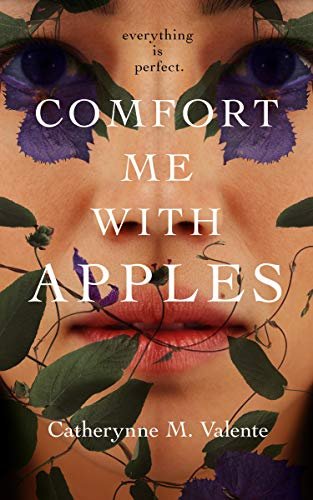
Book Review: COMFORT ME WITH APPLES

February 4, 2022 Anthony Cardno

TITLE: Comfort Me with Apples

AUTHOR: Catherynne M. Valente

103 pages, TorDotCom Publishing, ISBN 9781250816214 (hardcover, also available in e-book and audio)


DESCRIPTION: (from publisher): Sophia was made for him. Her perfect husband. She can feel it in her bones. He is perfect. Their home together in Arcadia Gardens is perfect. Everything is perfect.

It's just that he's away so much. So often. He works so hard. She misses him. And he misses her. He says he does, so it must be true. He is the perfect husband and everything is perfect.

But sometimes Sophia wonders about things. Strange things. Dark things. The look on her husband's face when he comes back from a long business trip. The questions he will not answer. The locked basement she is never allowed to enter. And whenever she asks the neighbors, they can't quite meet her gaze...

But everything is perfect. Isn't it?


MY RATING: 5 of 5 stars


MY THOUGHTS: This is one of those reviews where I’m at a loss for exactly how much to say. Yes, I know the book has been out almost three months as of this writing and some folks reading this have probably already read reviews that have spoilery details. On the off chance you have not, though – I’m not going to reveal the big twists.

So what can I say?

Any fan of Cat Valente’s beautiful use of language to propel story should love this for the words alone. The structure of sentences, paragraphs, and chapters, the repetition of words and phrases – it’s all crafted with care towards keeping the reader invested in the story, and I loved every moment of it.

The pacing of Comfort Me with Apples is about as perfect as one can get in a story of this style. No time is wasted trying to lull the reader into thinking everything is fine before the big twist. From the beginning, there is no doubt that something is very wrong in Arcadia Gardens; if the language of the opening paragraphs of the residents’ agreement doesn’t tip you off, Sophia’s first thought (I was made for him) should. The question of course is: just what is wrong with Arcadia Gardens? Is this a Stepford Wives situation? Has Sophia been brainwashed and stuck in a village where no one is who they seem, ala The Prisoner? Is Sophia even a reliable focal character, or is she imagining much of what she sees? The story could plausibly go in any direction, but readers who are paying attention will figure out where it’s going around the time I did if not earlier. (And for me, it was only a few pages before what’s happening is made explicit.)

The in-story action is broken up occasionally with quotes from the Arcadia Gardens Housing Association’s Rules. They give the reader a moment to breath, to think, and they are highly effective. They’re also increasingly controlling and creepy as they continue, and really make me glad I don’t live in a gated community.

One more recommendation: if at all possible, read Comfort Me with Apples in one sitting. It’s only 103 pages in hardcover. Carve out the time. It’s worth it.


I received an electronic advance reading copy from the publisher via NetGalley.

In BOOK REVIEWS, READING Tags novellas, Catherynne M. Valente, TorDotCom, horror
Comment

Book Review: NOTHING BUT BLACKENED TEETH

February 2, 2022 Anthony Cardno

Cover art by Samuel Araya

TITLE: Nothing but Blackened Teeth

AUTHOR: Cassandra Khaw

128 pages, Tor Nightfire, ISBN 9781250759412 (hardcover, also in e-book and audio)


DESCRIPTION: (from the publisher): A Heian-era mansion stands abandoned, its foundations resting on the bones of a bride and its walls packed with the remains of the girls sacrificed to keep her company.

It’s the perfect wedding venue for a group of thrill-seeking friends.

But a night of food, drinks, and games quickly spirals into a nightmare. For lurking in the shadows is the ghost bride with a black smile and a hungry heart.

And she gets lonely down there in the dirt.


MY RATING: 4 stars out of 5


MY THOUGHTS: Cassandra Khaw’s novella Nothing but Blackened Teeth is lushy written, full of physical and sensory detail. The horror starts out subtle – just a whisper the narrator thinks she hears – and by the time it turns obvious the reader knows more about the characters involved than they probably realize about themselves.

Narrator Cat is unsure of her place in a group of friends she used to lead, back when they were a sort of “Scooby gang” investigating haunted houses, abandoned hospitals, and any sewage pipe large enough for a body to crawl down. She’s been absent from the group for several months, working on her own problems, and has been drawn out to attend a wedding of two other members of the group (Faiz and Nadia) organized by a fourth member (Philip). There’s some question about whether the fifth member of their group, Lin, is even going to show up. There are a lot of dynamics at play here: the characters either seem to like each other too much or not at all, and their interpersonal histories turn out to be easy for the ghost haunting the house to use to her own ends. I must admit, I didn’t find any of these characters particularly likeable. They’ve all treated each other badly in the past and in the present. But I’m a firm believer that you don’t need to like everyone – or even anyone – in a horror story. I enjoyed watching their personal issues play out against a growing sense that the evening spent in this house is not going to turn out well for some, if not all, of them.

The house itself is just as much of a character as the group of friends renting it, and Khaw’s descriptions of the rooms the characters move through are at turns beautiful and disturbing, especially as the actual threat – the ghostly bride and those that surround her – become more apparent. At points, the mansion reminded me of the house in Mark Z. Danielewski’s House of Leaves: hidden depths, extra hallways and rooms that endlessly loop on each other, that aren’t discovered unless an occupant makes just the right turn at just the right time, none of which are visible from the mundane exterior of the building.

Nothing But Blackened Teeth is a fast-moving but deeply immersive reading experience in which a group of unhappy people barrel blindly towards an overwhelming supernatural presence. To say too much more would be to spoil the twists the story takes.

I received an electronic advance reading copy from the publisher via NetGalley, although this review is long over-due.

In BOOK REVIEWS, READING Tags book review, horror, novellas, TorDotCom, Cassandra Khaw
Comment

Book Review: FLOWERS FOR THE SEA

February 1, 2022 Anthony Cardno

Cover art by Xia Gordon

TITLE: Flowers for the Sea

AUTHOR: Zin E. Rocklyn

112 pages, TorDotCom Publishing, ISBN 9781250804037 (paperback, also available in e-book and audio)


DESCRIPTION: (from the publisher): We are a people who do not forget.

Survivors from a flooded kingdom struggle alone on an ark. Resources are scant, and ravenous beasts circle. Their fangs are sharp.

Among the refugees is Iraxi: ostracized, despised, and a commoner who refused a prince, she’s pregnant with a child that might be more than human. Her fate may be darker and more powerful than she can imagine.


MY RATING: 4 out of 5 stars


MY THOUGHTS: Zin E. Rocklyn’s debut is a stellar entry into the cosmic horror genre, a novella that leaves you unsettled and feeling small in the face of the universe even while you admire the tenacity of the main character.

Cosmic (or “Lovecraftian”) horror tends to be expansive and claustrophobic at the same time. The greater cosmos makes itself known to humans who are overwhelmed by it, usually in places that are tight and dark with odd architecture or geometry at play. Setting the action on a boat alone at sea certainly ticks those boxes off but limiting most of the action to the few places on the vessel that the outcast, disdained Iraxi is allowed to visit makes the book feel even more claustrophobic. There is no sense of a larger, supportive community that might normally feature in a lost-at-sea adventure. The desperation of 1743 days at sea, with no land in sight, is palpable. Rocklyn infuses the book with so many visceral sensory details: the sweat and grime on Iraxi and the people she interacts with, the pervasive salt water, the smells of food and humans. Most notably, there are the physical details of Iraxi giving birth to her possibly inhuman (or more than human) child: bloody, painful, brutal – words which also describe the novel’s one detailed sex scene.

It is implied that Iraxi has been pregnant for most of the voyage, or at least far longer than would be natural. While other women have died, or have survived with the baby dying instead, she has labored on waiting to deliver this child. The rest of the denizens of the ship’s society know something is not right, but not what. Iraxi does as well, and throughout the book she explores her past, analyzing what led her here. She knows what her decisions have cost her and those she loves, but she is also resolutely not ashamed to be who she is regardless of how the people around her (including current and former lovers) think.

At times the novella feels post-apocalyptic, at times like a completely separate fantasy world. Massive flooding (rising sea levels?) forced these people into their current situation, and it’s clear they are the poor, the unwanted, the exiled (in Iraxi’s case); they are cast out by soldiers of the prince Iraxi denied. This also, to me, makes the book feel a bit like a slave ship narrative. While there are no richer (whiter?) overseers on the ship, no destination in sight at which the human cargo will be sold, there is also no sense that signing onto the trip was really voluntary, that those on the ship might find a safe harbor to land in.

And then of course, there’s the cosmic horrors that eventually manifest, deadly and disturbing. I won’t spoil anything about their arrival and effect on the characters, but they are nightmare-inducing.

Flowers for the Sea is a truly stellar debut for a writer I cannot wait to read more from.

NOTE: I received an advance reading copy from TorDotCom Publishing via NetGalley well in advance of the book’s publication date in exchange for an honest review. This review is obviously long overdue.

In BOOK REVIEWS, READING Tags book review, cosmic horror, Zin E Rocklyn, TorDotCom, novellas
Comment

2022 Sunday Shorts Intro Post

January 16, 2022 Anthony Cardno

Header graphic by Scott Witt, 2019

As mentioned in a few recent posts, or at least hinted at, I hit a wall somewhere in the middle of 2021 and stopped posting to my blog. I felt guilty about it, of course, but the motivation just wasn’t there. That means it’s been six months or more since any of my intended regular features appeared. So I thought I’d use the first post of 2022 for each feature to re-introduce them.


Welcome to the first Sunday Shorts of 2022.

I love short fiction, and Sunday Shorts is the feature where I get to blog about it. I’ve considered promising to review a short story every day, like ‘Nathan Burgoine did a while back on his blog, but that’s a lot of pressure. And while no one will fault me if I miss days, I’ll feel guilty, which will lead to not posting at all. So better to stick to a weekly post highlighting a couple/three stories, as I’ve done in the past.

The stories featured will range in length from flash fiction to novellas, because I love all the lengths. And this seems like the right time to mention what those lengths are, at least according to The Hugo Awards:

·       Novella: 17,500 – 40,000 words (roughly 58 – 133 pages at 300 words/page)

·       Novelette: 7,500 – 17,500 words (roughly 25 – 58 pages)

·       Short Story: less than 7,500 words (roughly 25 pages or less)

In addition, many organizations/websites break “Short Stories” down into smaller categories, such as:

·       Flash Fiction: 1,000 words or less (some sites say 1,500 or less and some say 750)

·       Micro-fiction: 500 words or less

·       Drabble: precisely 100 words

although there seems to be a lot of disagreement out there when you get down to these finer categories.

My rule of thumb regarding novellas is that they’re eligible to be featured in this column if they appear in a larger book (say, as part of an author’s collection, or a collection of several novellas, or as an addition at the back of a novel) or if they’re published on an author’s Patreon. Novellas published for sale as single volumes (regardless of who the publisher is) count as “books” and usually get reviewed that way. (Otherwise, the constant stream of excellent novellas from TorDotCom would take over this column!)

For the time being, I’m focused on short fiction in print/digital formats. At some point, I might delve into individual stories/episodes of anthology formats in other media, like television and comics. I consider it every year and haven’t made that jump yet. Maybe that should be a separate regular feature. Feel free to weigh in in the comments.

The stories I’ll talk about come from a variety of print and online sources. I tend to read a fair number of anthologies and single-author collections, and occasionally will focus on stories from those even if I’m publishing a review of the entire book. Favorite anthology editors include Ellen Datlow, Terri Windling, John Joseph Adams, dave ring, Paula Guran, and Rhonda Parrish to name a few. (I could go on and on … that’s also probably the subject of a separate post.)

I am also subscribed to a bunch of magazines that I try to read at least semi-regularly, and some of those are even free to read online. When I do my monthly “Reading Round-Up,” you are likely to see stories from the following venues listed on a regular basis:

·       Lightspeed Magazine

·       Fantasy Magazine

·       Nightmare Magazine

·       The Dark

·       Uncanny Magazine

·       The Deadlands

·       Kaleidotrope

·       Apex Magazine

·       Fireside Magazine

·       Bachelors

Future Science Fiction Digest

·       The Magazine of Fantasy and Science Fiction

·       Tor.com

·       Mermaids Monthly (now defunct, but I have several issues to catch up on)

That said, I do try to vary the sources for the stories I review in-depth for this column, so you shouldn’t see any one of the above magazines appearing any more regularly than the others.

(In the interests of full disclosure: I’m the proofreader for the e-book editions of Lightspeed and Fantasy, and so they account for 12 of the short stories I read each month. I tend to feature them in this column less often to avoid accusations of “favoritism.” I am NOT the proofreader for Nightmare, from the same publisher.)

I also enjoy reading short fiction on authors’ websites/Patreons. Seanan McGuire is an example. For $1/month, you get access to every short story she’s published on her Patreon – all original works when they first appear. ‘Nathan Burgoine has also posted some great short fiction on his blog, including annual queer retellings/reinventions of classic Christmas carols and stories. Lucy Snyder occasionally posts short stories on her Patreon as well. Again, I could go on and on and on…

Have a favorite anthology, collection, magazine, or other online venue for short fiction that I haven’t mentioned above? Again, feel free to weigh in in the comments. I’m always looking for new places to read short fiction (as if I don’t have enough to read already!).

And of course, let me know who your favorite short fiction authors and editors are!

In READING, BOOK REVIEWS Tags sunday shorts
1 Comment
← Newer Posts Older Posts →

Photo credit: Bonnie Jacobs

1463659_10152361827714045_1412287661_n_opt.jpg

Anthony’s favorite punctuation mark is the semi-colon because thanks to cancer surgery in 2005, a semi-colon is all he has left. Enjoy Anthony's blog "Semi-Colon," where you will find Anthony's commentary on various literary subjects. 

CATEGORIES

Book Reviews.jpg
Interviews.jpg
Ramblings.jpg
Writing.jpg

Copyright 2017 Anthony R. Cardno. All Rights Reserved.