• HOME
  • ABOUT
  • BIBLIOGRAPHY
    • INVISIBLE ME
    • CANOPUS
    • PARADISE FEARS
  • BLOG
  • CONTACT
Menu

ANTHONY R. CARDNO

Street Address
City, State, Zip
Phone Number
Anthony R. Cardno is an American novelist, playwright, and short story writer.

Your Custom Text Here

ANTHONY R. CARDNO

  • HOME
  • ABOUT
  • BIBLIOGRAPHY
  • FREE STORIES
    • INVISIBLE ME
    • CANOPUS
    • PARADISE FEARS
  • BLOG
  • CONTACT

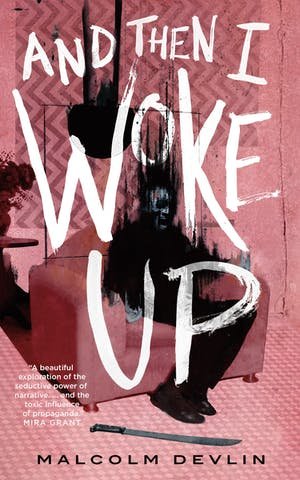
Book Review: AND THEN I WOKE UP

April 11, 2022 Anthony Cardno

TITLE: And Then I Woke Up

AUTHOR: Malcolm Devlin

176 pages, TorDotCom Publishing, ISBN 9781250798077 (paperback, also available in e-book)


DESCRIPTION: (from the back cover): In a world reeling from an unusual plague, monsters lurk in the streets while terrified survivors arm themselves and roam the countryside in packs. Or perhaps something very different is happening. When a disease affects how reality is perceived, it’s hard to be certain of anything…

Spence is one of the “cured” living at the Ironside rehabilitation facility. Haunted by guilt, he refuses to face the changed world until a new inmate challenges him to help her find her old crew. But if he can’t tell the truth from the lies, how will he know if he has earned the redemption he dreams of? How will he know he hasn’t just made things worse?


MY RATING:  5 stars out of 5


MY THOUGHTS: I love a good unreliable narrator, and Spence, the narrator of And Then I Woke Up, absolutely fits that description. Of course, being unreliable isn’t really his fault: his world has been turned upside down twice thanks to the latest plague, and sometimes his understanding of events is a bit muddled between what really happened and what he thinks happened. Reliable or not, Spence’s voice is captivating, pulling the reader along as he jumps between his present (returned to Ironside, as we find out in the opening pages of the book), his recent past (time spent outside the facility locating a fellow inmate’s plague-victim “crew”), and his earlier life (as a member of a different plague-victim “crew”). It’s not often I pronounce that a book is “unputdownable.” As much as I love novellas, I usually end up taking at least two sittings to read one of this length. But And Then I Woke Up turned out to be “unputdownable” for me, and I suspect it will also for many of my friends who love horror.

While I enjoy apocalyptic and post-apocalyptic fiction that takes time to explain the scientific or political underpinnings of whatever plague/crisis the world is facing, I really appreciated that author Malcolm Devlin did not spend any time on that aspect of world-building here. The nature of the plague, exactly how it works, is as unclear to the reader as it is to the character narrating the story. Spence is not a scientist, a reporter, a politician: he’s an average guy who has held down a number of jobs and is working as a dishwasher when the plague breaks loose. He doesn’t understand epidemiology; he just understands that suddenly some people are zombies, and some people aren’t, and that he needs to do whatever he needs to do to survive this zombie apocalypse.

Except that, as the book description above points out, it’s not actually the zombie apocalypse, but rather a distortion in how people perceive reality. This is a horror novel that is more-than-topical, taking on the rise of “false news” and the societal effect of the mindset that everyone’s opinion is as valid, if not more valid, than actual fact. Throughout the novella, Devlin touches on how just a few “true believers” can sway the perceptions of “followers” as well as how tenuous “deprogramming” efforts can be even when someone voluntarily leaves the cult (or in this case, the “crew”) when they start to question the beliefs they’re following.

While there is plenty of bloodshed and death in the book, it is not described in excruciating detail. This is not gross-out horror; it’s more psychological, as both the reader and Spence come to terms with the things he and others have done while subject to the plague. Concentrating on the psychological aspect, on Spence’s unsurety about certain events and absolutely certainty of others (along with hints that what he’s certain about may not be what actually happened), gives the book the narrative drive that kept me engaged from first page to last.

Absolutely recommended for folks who want their horror to be thought-provoking along with being disturbing and bloody.

I received an advance reading copy of this book for free from TorDotCom Publishing via NetGalley in exchange for an honest review. This does not affect my opinion of the book or the content of my review.
In BOOK REVIEWS Tags horror, Science Fiction, TorDotCom, post-apocalyptic fiction, book review
Comment

READING ROUND-UP: February 2022

March 28, 2022 Anthony Cardno

Better late than never, here’s the second monthly summary of what I’ve been reading and listening to in 2022!


BOOKS

I read 9 books in February: 6 in print, 3 in e-book format, and 0 in audio format. They were:

1.       Comfort Me With Apples by Catherynne M. Valente.  FULL REVIEW HERE. (PRINT)

2.       The Year’s Best African Speculative Fiction 2021 edited by Oghenechovwe Donald Ekpeki. Review of three stories HERE. (E-BOOK)

3.       Far Sector by Nnedi Okorafor, Jamal Campbell, Deron Bennett, Andy Khouri, Jamie S. Rich. (PRINT)

4.       Slights by Kaaron Warren. (PRINT)

5.       Lightspeed Magazine #141 (February 2022 issue), edited by John Joseph Adams. (E-BOOK)

6.       Three Left Turns to Nowhere by Jeffrey Ricker, J. Marshall Freeman, and ‘Nathan Burgoine. FULL REVIEW HERE. (PRINT)

7.       Unexpected Stories by Octavia E. Butler. FULL REVIEW HERE (PRINT)

8.       The Secret Skin by Wendy N. Wagner. (PRINT)

9.       Amethyst Dreams (Bloodlines Chronicles #1) by S.M. Butler. (E-BOOK)


STORIES

I have a goal of reading 365 short stories (1 per day, essentially, although it doesn’t always work out that way) this year. Here’s what I read this month and where you can find them if you’re interested in reading them too. If no source is noted, the story is from the same magazine or book as the story(ies) that precede(s) it.

1.       “Plausible Realities, Improbably Dreams” by Isabel J. Kim, from Lightspeed Magazine #141 (February 2022 issue), edited by John Joseph Adams

2.       “Bad Code” by Stephen Graham Jones

3.       “Neunet” by Sharang Biswas

4.       “Lyceum” by Karin Lowachee

5.       “Not Creator or Destroyer” by Anjali Sachdeva

6.       “When We Were Gods” by Isha Karki

7.       “How To Abandon Your Sourdough Starter: A Recipe for Disaster” by Theresa DeLucci

8.       “The Honest Fox, or, A Truth Shared Is Not A Truth Lost” by P H Lee

9.       “The Unseen” by Allahrakhi Memom, from Fantasy Magazine #76 (February 2022), edited by Christie Yant and Arley Sorg

10.   “Slow Communication” by Dominique Dickey

11.   “After Naxos” by Julia August

12.   “Cousins Season” by S. Fambul

13.    “Sacrifice Your Tears” by Seanan McGuire, on the author’s Patreon page.

14.   “Where You Go” by Somto O. Ihezue, from The Year’s Best African Speculative Fiction 2021, edited by Oghenechovwe Donald Ekpeki

15.   “Things Boys Do” by Pemi Aguda

16.   “Giant Steps” by Russell Nichols

17.   “The Future in Saltwater” by Tamara Jeree

18.   “The Thoughtbox” by Tlotlo Tsamaase

19.   “The Parts That Make Us Monsters” by Sheree Renee Thomas

20.   “Scar Tissue” by Tobias S. Buckell

21.   “Ancestries” by Sheree Renee Thomas

22.   “Breath of the Sahara” by Inegbenoise O. Osagie

23.   “The Many Lives of An Abiku” by Tobi Ogundiran

24.   “A Love Song for Herkinal As Composed by Ashkenas Amid The Ruins of New Haven” by Chinelo Onwualu

25.   “A Curse at Midnight” by Moustapha Mbacke Diop

26.   “A Mastery of German” by Marian Denise Moore

27.   “Are We Ourselves” by Michelle Mellon

28.   “The Goatkeeper's Harvest” by Tobi Ogundiran

29.   “Baba Klep” by Eugen Bacon

30.   “Dessicant” by Craig Laurance Gidney

31.   “Disassembly” by Makena Onjerika

32.   “The River of Night” by Tlotlo Tsamaase

33.   “Egoli” by T.L. Huchu

34.   “The Friendship Bench” by Yvette Lisa Ndlovu

35.   “Fort Kwame” by Derek Lubangakene

36.   “We Come as Gods” by Suyi Davies Okungbowa

37.   “And This Is How to Stay Alive” by Shingai Njeri Kogunda

38.   “The Front Line” by WC Dunlap

39.   “Penultimate” by ZZ Claybourne

40.   “Love Hangover” by Sheree Renee Thomas

41.   “Red_Bati” by Dilman Dila

42.   “Roadside Assistance” by Jeffrey Ricker, from Three Left Turns to Nowhere, edited by Jerry L. Wheeler and Stacia Seamen

43.   “The Scavenger Hunt” by J. Marshall Freeman

44.   ” Hope Echoes” by 'Nathan Burgoine

45.   “On Stony Ground” by Cynthia Ward, from Black Cat Weekly #23, edited by John Betancourt

46.   “A Necessary Being” by Octavia E. Butler, from Unexpected Stories, edited by Merrilee Heiftetz

47.   “Childfinder” by Octavia E. Butler

48.   “Islands Off the Coast of Capitola, 1978” by David Herter, from Tor.com, edited by David Hartwell

49.   “O2 Arena” by Oghenechovwe Donald Ekpeki, from Galaxy’s Edge Magazine #53 (November 2021), edited by Lezli Robyn

So that’s 49 short stories in February. A bit more than “1 per day.” (February 28th was the 59th day of 2022.)


Summary of Reading Challenges:

“To Be Read” Challenge: This month: 2 read; YTD: 2 of 24 main titles read.

RoofbeamReader To Be Read Challenge: This month: 1 read. YTD: 1 of 12 main titles (0 of 2 alternates)

366 Short Stories Challenge: This month:  49 read; YTD: 89 of 365 read.

Graphic Novels Challenge:  This month: 1 read; YTD: 4 of 52 read.

Goodreads Challenge: This month: 9 read; YTD: 18 of 125 read.

Non-Fiction Challenge: This month: 0 read; YTD: 0 of 24 read.

Read the Book / Watch the Movie Challenge: This month: 0; YTD: 0 read/watched.

Complete the Series Challenge: This month: 0 book read; YTD: 0 of 9 read.

                                                          Series fully completed: 0 of 3 planned

Monthly Special Challenge:  February was Black History Month and Women in Horror Month, so my challenge, as usual, was to read as many Black authors as I could and as many women horror writers as I could, and hopefully a few who overlap. Only three of the nine books were by black authors/editors (The Year’s Best African Speculative Fiction 2021, Far Sector, and Unexpected Stories) while three were were horror written by women (Comfort Me With Apples, Slights, and The Secret Skin). But somewhere around 70% of the short stories were by black authors. So I think I can count this month as having met the mini-challenge.


March is Women’s History Month, so the goal is going to be to read as many books by female authors as I can.

SUNDAY SHORTS: Three From Giving The Devil His Due

March 27, 2022 Anthony Cardno

Header art by Scott Witt

I love short fiction, and Sunday Shorts is the feature where I get to blog about it. I’ve considered promising to review a short story every day, but that’s a lot of pressure. And while no one will fault me if I miss days, I’ll feel guilty, which will lead to not posting at all. So better to stick to a weekly post highlighting a couple/three stories, as I’ve done in the past.


Three From GIVING THE DEVIL HIS DUE

Giving The Devil His Due, edited by Rebecca Brewer, is a charity anthology published by the Pixel Project comprised of stories in which the men who abuse and kill women and girls get their just desserts, usually through supernatural means. There are 16 stories in the anthology. Here are my thoughts on a few of them:

Nisi Shawl’s “The Tawny Bitch” is an epistolary story with endnotes, one of my favorite types of stories to read. Belle is imprisoned by her paternal cousin John after she has “inappropriate liaisons” with a female classmate at school. She writes letters she knows her lost lover may never see, telling of her abuse, neglect, and sexual assault by her cousin and the married couple he hires to mind her. A tawny-colored female dog plays a key role in the story. The “end-notes” are those of a later historian trying to piece together the true identities of the people Belle mentions. This is a classically Gothic story: lost love, a woman locked in a dark tower room, a slight supernatural vibe. Shawl pulls all those elements together with a narratorial voice that is warm and inviting and which never makes us doubt the experiences the narrator is relating. (I also enjoyed the mention of a visiting doctor named Hesselius and the implication that someone is impersonating the “real” man by that name whose adventures were made famous by author Sheridan Le Fanu.)

In Kelley Armstrong’s “Happy Birthday Baby,” Lisette meets her friend Roger for dinner to celebrate the birthday of Lisette’s late sister. The sister has been dead for three years and the police have not been able to prove that her estranged abusive husband was the one who killed her. Lisette tells Reggie she’s hired a private investigator, has uncovered the truth of that night, and is ready to murder her sister’s killer since the police can’t seem to catch him. Of course, there are more twists to the story – and it’s a fair-play type of story in that the clues to what’s really going on are well planted from the very beginning. The story is wonderfully paced, moves very fast, and hits all the right “revenge on the killer who got away” vibes and notes. It’s one of the few stories in the anthology in which the supernatural element is almost non-existent until the key moment, which also makes it stand out from the crowd.


“The Moon Goddess’s Daughter” by Lee Murray is described by the author as a “prose poem.” The language used is poetic; I’m inclined to describe it as ethereal. Even concrete details are given a certain weightlessness, or perhaps dreaminess is a better descriptor, by the way the words are used. This makes this story of a young woman in an abusive marriage different from the more direct and detailed looks at surviving abuse that surround it in the anthology – but no less, and perhaps even more, powerful. Stories that are ethereal/dream-like are not necessarily lacking in impact, as this story clearly demonstrates. Also interesting is the structure of the story, using the phases of the moon as a chart for the protagonist’s journey. The story is based on a legend of the Chinese moon goddess Princess Chang’e, and thus leans more into the fantasy side of the supernatural than the horror side that the previous two stories dwell in.


Giving The Devil His Due is still available as an e-book. Other authors featured in the anthology include Kaaron Warren, Stephen Graham Jones, Angela Yuriko Smith, Jason Sanford, Linda D. Addison, and Christina Henry.

In BOOK REVIEWS, READING Tags sunday shorts, horror, fantasy, short story challenge
Comment

SUNDAY SHORTS: Two From Tor.Com

March 20, 2022 Anthony Cardno

Header image by Scott Witt

I love short fiction, and Sunday Shorts is the feature where I get to blog about it. I’ve considered promising to review a short story every day, but that’s a lot of pressure. And while no one will fault me if I miss days, I’ll feel guilty, which will lead to not posting at all. So better to stick to a weekly post highlighting a couple/three stories, as I’ve done in the past.


Two Recent Stories From Tor.com

Kemi Ashing-Gawa’s “Fruiting Bodies” is one of those sneaky stories that appears to be one thing but turns out to be something quite different, and I loved every twist the narrative lured me through to get to the final reveal. The set-up is that a colony ship has landed (crash-landed?) on an inhospitable world and something is killing the colonists. The language used at first made me think the native species was vampire- or zombie-like, and that the narrator was looking to rescue her girlfriend from these creatures. And if that had been the story, it would have been perfectly fine as a sci-fi thriller and I’m sure very enjoyable. But the twists in world-building and reveals of character motivation start a page or so in and don’t stop until the very end, and I seriously could not read fast enough. I had to stop myself from looking ahead (something I’m not always good at). What’s really killing the colonists? Why does the narrator seem unaffected by the threat? What really happened to the missing girlfriend? I wanted to know the answers, but I didn’t want the story to end. I also appreciated how the author conveyed information about the world and the characters’ histories without awkward moments of the narrator telling the reader things any character existing in this world would already know.


In “Hush,” the always excellent Mary Anne Mohanraj takes on the xenophobia and mob mentality of the past few years. The place is Antira, a world colonized by humans but home and tourist destination to several alien species – one of which is noticeably non-human and endowed with a snake-like venomous defense mechanism. Jenny, a flight attendant on interplanetary passenger craft, comes home to Antira after her most recent flight to discover the latest anti-alien protest and a government “stay at home” order. She needs to get home to her younger son to comply with the order, a course of action complicated by her discovery that her alien neighbor’s teen daughter is also being given trouble by security because her mother has not yet arrived to pick her up. The guard is noticeably anti-alien, so Jenny rescues the girl. But their drive home is full of danger from the mob of protestors. Things, of course, start to go bad. The story is interspersed with Jenny’s memory of losing her older son, which of course affect her present-day decisions. This story is so topical and does an excellent job of presenting Jenny’s emotional struggles over both her son’s past actions and her current concern for her very-much in danger neighbor. I kept hoping the “lost son” subplot wouldn’t go where it went, but (without spoiling too much) we all know people who have fallen for rhetoric that “others” people different than ourselves.

Sunday Shorts: Two By Octavia E. Butler

March 13, 2022 Anthony Cardno

header art by Scott Witt

I love short fiction, and Sunday Shorts is the feature where I get to blog about it. I’ve considered promising to review a short story every day, but that’s a lot of pressure. And while no one will fault me if I miss days, I’ll feel guilty, which will lead to not posting at all. So better to stick to a weekly post highlighting a couple/three stories, as I’ve done in the past.

First released in e-book form in 2014, Unexpected Stories collects two previously unpublished Octavia E. Butler stories discovered among her papers after her untimely passing in 2006. I finally read the book, in the beautiful hardcover edition released by Subterranean Press, in February of this year.

“A Necessary Being” takes place in an alien culture that is based on societal caste and skin coloration. The Hao are revered and installed as rulers of each tribe/village, often whether they like it or not. If a tribe is lacking a Hao, they are willing to kidnap one from someplace else and torture/mutilate them to keep them from escaping, which is what happened to Tahneh’s father, the Hao of the Rohkahn. Tahneh has been unable to produce a Hao heir, so when a Hao named Duit and his companions stumble into their drought-ruined domain, a plan is put in place to keep this Hao from returning to his own people. Butler’s deft interplay of the conflicting wants and needs of Tahneh, Duit, and the people who surround them is absolutely wonderful and thought-provoking. There are no absolute good guys or bad guys here – the antagonist is the moral conflict, if that makes sense. In other hands the reader might be guided to take Tahneh’s side over Duit’s, simply because we are introduced to her and get a feel for her quandry first, but Butler makes sure that we understand and feel for Duit’s situation just as much as Tahneh’s. The story really touches on how societal blinders (“this is the way it’s always been,” “these are the things we need and our needs come first,” etc.) can sometimes keep us from seeing a path forward out of danger and into relative safety. Sometimes complacency is deadly and the ability to change is what enables us to survive.

The author herself described “Childfinder,” the second and much shorter story in Unexpected Stories, as pessimistic, and I can’t really disagree with her. Set in a bleak near future on Earth where The Organization recruits kids with potential for psionic ability, main character Barbara has left the Organization to find the pre-psionic kids The Organization doesn’t want – which means low-income kids of color. The story starts with her encounter with one such kid, and we can see that she really cares about their development and that they don’t get lost or chewed up by a system weighted against them. Of course, The Organization comes looking for her, understanding what their former employee is up to – and Barbara has to make a hard, one might even say brutal, decision. We see the immediate effect of that decision, but never get to see the long-term results. However, the quotes that bookend the story do imply that it doesn’t go as well as Barbara hopes. This is a much darker story than “A Necessary Being,” and yes, it feels pessimistic. It also leaves me hoping for more “Barbaras” (regardless of gender) helping low-income and other marginalized youth in our own world.

Unexpected Stories is available in e-book. Subterranean Press’s limited edition hardcover is currently sold out.

In BOOK REVIEWS Tags sunday shorts, book review, 2022 TBR Challenge
Comment

READING ROUND-UP: January 2022

February 24, 2022 Anthony Cardno

The first monthly summary of what I’ve been reading and listening to in 2022!


BOOKS

I read 9 books in January: 4 in print, 5 in e-book format, and 0 in audio format. They were:

1.       The Autumnal by Daniel Kraus, Chris Sheehan, Jason Wordie, Jim Campbell. Trade paperback collecting an 8-issue comic series I missed in monthly format. Following the death of her estranged mother, Kat Somerville returns to her childhood home in Comfort Notch NH with her young daughter. She remembers being sent away, but not why. Kraus crafts an intriguing slow burn of a story, made all the moodier by Sheehan’s artwork and Wordie’s nuanced use of autumn colors. Excellent folk horror. (PRINT)

2.       Giving The Devil His Due edited by Rebecca Brewer. An anthology of genre stories in which abusers of women actually pay for their crimes, usually through some supernatural means. Authors include Linda D. Addison, Stephen Graham Jones, Nisi Shawl, Christina Henry, and more. (E-BOOK ARC)

3.       Servant Mage by Kate Elliott. Brilliant novella about a society in which mages are an oppressed class and the main character is conscripted into a rescue mission that puts her life and safety at risk. FULL REVIEW HERE. (E-BOOK ARC)

4.       Lightspeed Magazine #140 (January 2022 issue), edited by John Joseph Adams. The usual great mix of science fiction and fantasy short stories, author spotlights, and book reviews. Favorite stories this month included N.K. Jemisin’s “Give Me Cornbread or Give Me Death,” Aimee Ogden’s “Dissent: A Five Course Meal (With Suggested Pairings),” Leah Cypess’ “On the Ship,” and Vanessa Fogg’s “An Address to the Newest Disciples of the Lost Words.” (E-BOOK)

5.       Black Panther and the Agents of Wakanda by Jim Zub, Lan Medina, Scot Eaton, Craig Yeung, Sean Parsons, Marcio Menyz, Federico Blee, Erick Arciniega, Joe Sabino, Jorge Molina, David Nakayama, Sara Brunstad, and Wil Moss. Collected issues 1-6 of the monthly comic run. A pair of characters I love (Ka-Zar! Gorilla-Man!) are shown on the cover and barely appear in the story within. On the other hand, Man-Wolf isn’t on the cover and plays a significant role in the first story. The stories were decent and did nice work with the characters that did appear. (PRINT)

6.       Spelunking Through Hell: A Visitor’s Guide to the Underworld (InCryptid #11) by Seanan McGuire. It’s time for the Price family matriarch, Alice Price-Healy, to take center stage and tell us what she’s been up to while her family save Cryptids and fights the Covenant. I really loved hearing Alice’s story in her own words and really getting a look into how trauma has shaped her. There’s lots of fight scenes and other dimensions to explore as well. FULL REVIEW HERE (E-BOOK ARC)

7.       Dark Breakers by C.S.E. Cooney. Cooney returns to the world of her novella Desdemona and the Deep to explore other aspects of the “thrice-wrapped worlds” of Athe (humans), the Valwode (Gentry/fae), and Bana the Bone Kingdom (goblinkind) through the eyes of a painter, a writer, a sculptor, and an investigative reporter. Such beautiful language. FULL REVIEW HERE (PRINT ARC)

8.       Death Follows by Cullen Bunn, A.C. Zamudio, Carolos Nicolas Zamudio, Simon Bisley. Collects an online comic originally published as “Remains.” Combines folk horror with body horror to tell the tale of two sisters on a farm and the new farmhand who has a deadly secret. Great pacing, perfect art for the story being told. Also includes the original short story by Bunn that the comic was based on. (PRINT)

9.       The Route of Ice and Salt by José Luis Zárate. We all know I’m a major fan of Bram Stoker’s Dracula and will read just about anything connected to it. This novella was originally published in Mexico in Spanish, unavailable in English until this translation by David Bowles was published. It focuses on the Captain of the Varna, the ship that unknowingly brings Dracula to England. The Captain’s loneliness, his attraction to his crew, and his internal conflict over childhood sexual encounters are stunningly captured. (E-BOOK)


STORIES

I have a goal of reading 365 short stories (1 per day, essentially, although it doesn’t always work out that way) this year. Here’s what I read this month and where you can find them if you’re interested in reading them too. If no source is noted, the story is from the same magazine or book as the story(ies) that precede(s) it.

1.       “Dissent: A Five Course Meal (With Suggested Pairings)” by Aimee Ogden, from Lightspeed Magazine #140 (January 2022 issue), edited by John Joseph Adams

2.       “Up Falling” by Jendayi Brooks-Flemister

3.       “On the Ship” by Leah Cypess

4.       “Cale and Stardust Battle the Mud Goblins of Hudson Valley” by Lincoln Michel

5.       “In the Beginning of Me, I Was a Bird” by Maria Dong

6.       “In the Cold, Dark Sea” by Jenny Rae Rappaport

7.       “An Address to the Newest Disciples of the Lost Words” by Vanessa Fogg

8.       “Give Me Cornbread or Give Me Death” by N.K. Jemisin

9.       “The Mirror Test” by Moses Ose Utoni, from Fantasy Magazine #75 (January 2022), edited by Christie Yant and Arley Sorg

10.   “Markets: A Beginner's Guide” by Shalini Srinivasan

11.   “Pest Control” by Saswati Chatterjee

12.   “Free Coffin” by Corey Flintoff

13.    “Long Way from Home” by Seanan McGuire, on the author’s Patreon page.

14.   “The Moon Goddess's Granddaughter” by Lee Murray, from Giving the Devil His Due Special Edition, edited by Rebecca Brewer

15.   “The Kindly Sea” by Dana Cameron

16.   “Just Us League” by Angela Yuriko Smith

17.   “American Murder” by Peter Tieryas

18.   “As We Stand and Pray” by Jason Sanford

19.   “Finding Water to Catch Fire” by Linda D. Addison

20.   “Escape From Pleasant Point (An Evelyn Northe-Stewart Origin Story)” by Leanna Renee Hieber

21.   “Daughter of Echidna” by Nicholas Kaufman

22.   “The Devil's Pocket Change” by Hillary Monahan

23.   “The Tawny Bitch” by Nisi Shawl

24.   “Happy Birthday Baby” by Kelley Armstrong

25.   “Devil's Hollow” by Errick Nunnally

26.   “The Little Thing” by Christina Henry

27.   “A Better Way of Saying” by Sarah Pinsker, from Tor.com website, edited by Ellen Datlow

28.   “And Behold, It Was Very Good” by Scott Edelman, from Kaliedotrope Winter 2022 issue, edited by Fred Coppersmith

29.   “The Skin Inside” by Richard E. Gropp

30.   “Thermophile” by Jack Klausner, from The Dark #80, edited by Sean Wallace

31.   “Intrusions” by Margot McGovern

32.   “Funny Faces” by Seán Padraic Birne

33.   “The Lending Library of Final Lines” by Octavia Cade

34.   “The Breaker Queen” by C.S.E. Cooney, from Dark Breakers, edited by Mike Allen

35.   “The Two Paupers” by C.S.E. Cooney

36.   “Salissay's Laundries” by C.S.E. Cooney

37.   “Longergreen” by C.S.E. Cooney

38.   “Susurra to the Moon” by C.S.E. Cooney

39.   “And Sweep Up the Wood...” by Seanan McGuire, novella included in the paperback of her InCryptid novel Spelunking Through Hell

40.   “Remains” by Cullen Bunn, short story included at the back of the graphic novel Death Follows


So that’s 40 short stories in January. A bit more than “1 per day.” (January 31st was, of course, the 31st day of 2022.)


Summary of Reading Challenges:

“To Be Read” Challenge: This month: 0 read; YTD: 0 of 24 main titles read.

RoofbeamReader To Be Read Challenge: This month: 0 read. YTD: 0 of 12 main titles (0 of 2 alternates)

366 Short Stories Challenge: This month:  40 read; YTD: 40 of 365 read.

Graphic Novels Challenge:  This month: 3 read; YTD: 3 of 52 read.

Goodreads Challenge: This month: 9 read; YTD: 9 of 125 read.

Non-Fiction Challenge: This month: 0 read; YTD: 0 of 24 read.

Read the Book / Watch the Movie Challenge: This month: 0; YTD: 0 read/watched.

Complete the Series Challenge: This month: 0 book read; YTD: 0 of 9 read.

                                                          Series fully completed: 0 of 3 planned

Monthly Special Challenge:  I haven’t set a specific “mini challenge” for January, other than to work on staying on track or getting ahead on the yearly challenges. I didn’t really get ahead but made partial progress on the graphic novel challenge while getting ahead on the 365 Short Stories and keeping pace on the Goodreads Challenges.


February is Black History Month and Women in Horror Month, so my challenge, as usual, is to read as many Black authors as I can and as many women horror writers as I can, and hopefully a few who overlap.

In READING, BOOK REVIEWS Tags book review, reading round-up, reading challenge
Comment

Book Review: THREE LEFT TURNS TO NOWHERE

February 23, 2022 Anthony Cardno

Cover by Inkspiral Design

TITLE: Three Left Turns to Nowhere

AUTHOR: Jeffrey Ricker, J. Marshall Freeman, and ‘Nathan Burgoine

235 pages, Bold Stroke Books, ISBN 9781636790503 (paperback; also in e-book)


DESCRIPTION: (from the back cover): Three strangers heading to a convention in Toronto are stranded in rural Ontario, where a small town with a subtle kind of magic leads each to discover what he’s been searching for.

Ed Sinclair and his friends get stuck in Hopewell after their car breaks down. It’s snark at first sight when he meets local mechanic Lyn, but while they’re getting under each other’s skin, the town might show them a way into one another's hearts.

Rome Epstein is out and proud and clueless about love. He’s hosting a giant scavenger hunt at the convention but ends up in Hopewell. When the town starts leaving him clues for its own scavenger hunt, he discovers a boy who could be the prize he’s been searching for.

Fielding Roy has a gift for seeing the past. His trip to reunite with friends hits an unexpected stop in Hopewell, but a long-lost love letter and two local boys give him a chance to do more than watch the past. This time, Fielding might be able to fix the present.

Authors Jeffrey Ricker, J. Marshall Freeman, and ‘Nathan Burgoine believe getting lost is a perfectly legitimate way to find yourself, but suggest you pack snacks.


MY RATING: 4 stars out of 5


MY THOUGHTS: The contents of “Shared World” short story or novella anthologies, with multiple authors working ostensibly in the same setting, can be notoriously hit/miss depending on factors as varied as the depth and breadth of the world-building before the authors start on their own stories, how all of that information is communicated from editors to authors, faithful to the shared setting the individual authors are. Typically, the more writers working in the setting the more likely it is to find “outlier” stories that don’t fit the setting or match the mood of the majority of the stories in the anthology. I’m happy to be able to say that Three Left Turns to Nowhere, a collection of novellas all set in the magical small town of Hopewell, is far more hit than miss despite, or perhaps because of, the quite different tones of the novellas. What all three stories have in common is the set-up of a slightly grumpy out-of-towner stranded in Hopewell meeting a local (or locals) who help lift the out-of-towner’s mood.

Jeffrey Ricker’s “Roadside Assistance” is a great lead-off: a sweet meet-cute of a romance between the grumpy out-of-towner (Ed) and a friendly local mechanic (Lyn) that doesn’t let the grumpy guy stay grumpy for too long. The attraction between the characters is clear from the start and nudged along by forces both human (Lyn’s BFF Josh) and not (a local ghost that only Lyn can see). I could try to count the number of times I found myself smiling at a geeky exchange or adorable moment, but there were too many. Ricker also does a wonderful job setting up the shared world in which these stories operate: by the end of the story I had a solid mental image of the “downtown” of Hopewell, a good sense of the character of the townspeople as a whole, and a total acceptance of the town’s subtle magic and how it works.

“The Scavenger Hunt” by J. Marshall Freeman is still a romance, but not as sweet meet-cute as Ricker’s. It’s a bit darker – homophobia rears its ugly head early in the story and stays a threat throughout in a way that doesn’t quite fit with the other two stories herein – but still centers a budding romance between an out-of-towner (activist Rome) and a local (artist Darcy). I liked the pacing of the story, I liked the way the town’s magic expresses itself (by sending Rome on the same type of scavenger hunt he’s designing for the Con all these out-of-towners are on their way to), and I loved Darcy’s found-object sculpture art. In fact, I loved Darcy – awkward, artistic, possibly neurodivergent Darcy – from the moment he’s introduced. Unfortunately, I can’t say the same for Rome, who I found self-centered beyond likeability even at the end of the story. (Your opinion, of course, may vary.)

The third novella, “Hope Echoes” by ‘Nathan Burgoine, doesn’t center romance for the lead character at all but still hinges the plot on one. The out-of-towner in the equation is Fielding, who can see echoes of the past, and the locals are adorable boyfriends who show him around town and help him resolve a mystery he’s stumbled into thanks to the echoes he can see. The romance is one that occurred well before any of the young men in the story were born, and I won’t spoil how the mystery of the love letter is resolved other than to say there’s a happy conclusion for all involved. The fun of this story is Fielding’s growing friendship with Josh and Logan, a nice interpretation of the way the town’s magic works. The town recognizes that what Fielding needs isn’t a boyfriend or romance – it’s supportive friends and a way out of his depression.

As one would expect, characters from one story pop up in the background or are mentioned in the other stories. But the authors also do an excellent job populating the story with interesting local characters: bed and breakfast owner Candace, used good store owner Mrs. Tremblay; Lyn’s mother; Josh’s father; Logan’s grandmother and her fellow residents at a nursing home; and auto shop owner Sloan and her wife the town Mayor. They make the shared setting of the stories consistent.

I do hope this isn’t the last we’ll see of the magical town of Hopewell. In fact, I’m putting in a request right now for a second anthology with perhaps a focus on lesbian characters – and please, Bold Stroke Books, let one of those be the story of how Sloan and Dina met!

I received this book for free from the publisher via NetGalley in exchange for an honest review. This does not affect my opinion of the book or the content of my review.

In BOOK REVIEWS Tags LGBTQ, novellas, fantasy, romance
Comment

Book Review: SPELUNKING THROUGH HELL

February 22, 2022 Anthony Cardno

cover art by Aly Fell.

TITLE: Spelunking Through Hell: A Visitor’s Guide to the Underworld (InCryptid Book 11)

AUTHOR: Seanan McGuire

352 pages, DAW Books, ISBN 9780756411831 (paperback, also in e-book and audio)


DESCRIPTION: (from the back cover): Love, noun:

1. An intense feeling of deep affection; may be romantic, filial or platonic.

Passion, noun:

1. A strong or barely controllable emotion.
2. Enthusiasm, interest, desire.
3. See also “obsession.”

It’s been fifty years since the crossroads caused the disappearance of Thomas Price, and his wife, Alice, has been trying to find him and bring him home ever since, despite the increasing probability that he’s no longer alive for her to find. Now that the crossroads have been destroyed, she’s redoubling her efforts. It’s time to bring him home, dead or alive.

Preferably alive, of course, but she’s tired, and at this point, she’s not that picky. It’s a pan-dimensional crash course in chaos, as Alice tries to find the rabbit hole she’s been missing for all these decades—the one that will take her to the man she loves.

Who are her allies? Who are her enemies? And if she manages to find him, will he even remember her at this point?

It’s a lot for one cryptozoologist to handle.


MY RATING: 5 stars out of 5


MY THOUGHTS: Spelunking Through Hell, the eleventh book in Seanan McGuire’s InCryptid series chronicling the adventures of a family of cryptozoologists (the Prices), is an action-packed emotional rollercoaster that caps off a long-running subplot and bodes a momentous change in the family’s status quo going forward. Oh, and it just happens to be the first book in the series narrated by nominal family matriarch Alice Price-Healy.

I say “nominal” because in the preceding ten novels, Alice has been more conspicuous in her absence and its effect on her children and grandchildren than in her presence. She’s been travelling between dimensions in search of her stolen husband, and that has absolutely put a strain on her relationship with her descendants. Most of the important things that have happened in this series? Alice has been absent for, and whoever is narrating a particular book (grandchildren Verity, Alex, and Antimony; extended family member Sarah) usually comments on it. It’s been an effective way to build interest in Alice and her quest, a great slow boil sub-plot that finally pays off as we get to see Alice in her element and hear her voice.

And that voice is straightforward, no nonsense. Alice is committed to her path. She will find her lost husband if it kills her (and it comes pretty darn close several times), even if it damages her familial relationships (as we know it has), even if it means she never returns to Earth (a distinct possibility). We’ve seen this commitment, this willingness to risk all for the right cause, in her grandkids – especially Antimony – so clearly Alice has been an influence on them. But it becomes clear there is so much Alice has not told her loved ones, that she has done Things of Which the Family would Not Approve (as the Aeslin mice would say, pronouncing all those capital letters along the way). Those things are just the latest trauma that has made Alice the woman she is.

This book is a wild adventure with fight scenes galore and fascinating world-building (the way dimensions work and dimensional travel happens is fascinating and not like any other version of such I’ve read) but it is also a treatise on the way repeated trauma informs who we are as well as how we can become inured to it. Those who have read the short stories chronicling Alice’s childhood, teen, and college years on McGuire’s website and Patreon know just how much emotional and physical trauma Alice has experienced: several near-death experiences, the loss of her mother at an early age (which also caused her father to become emotionally distant and controlling), the later violent losses of the grandparents who helped raise her as well as her father, and of course the taking of her husband by the Crossroads. Any one of those events is traumatic enough to cause one to seek therapy; a lifetime of them would be more than many of us would survive. Alice could not rescue her parents or grandparents, so rescuing her husband becomes not just a goal, but a mission, an obsession. As long as she’s focused on that, she can justify the further trauma she experiences, both self-inflicted (abandoning her son and daughter to the care of family friends, as well as something else I won’t spoil because it’s a major plot point) and inflicted by others (she starts the novel with another near-death experience). I haven’t been through anywhere near as much trauma as Alice has, but I recognized some of the language she uses and some of her coping mechanisms as similar to my own. McGuire understands trauma, understands coping mechanisms, and understands that sometimes the latter fail and we’re left raw. And she does not back away from or soften those moments. Nor should she.

If there’s a downside to this book, it’s a minor one: because Alice spends most of her time (and thus most of the book) away from Earth, any on-going plots regarding the Price family’s relationships and danger from the Covenant get put on hold. It’s a little jarring at first, but McGuire has more than earned the opportunity to veer off from the main narrative to finally tell the story she’s been anxious to tell from the start. It’s not a total disconnect, as events from the previous books are mentioned – especially those of Antimony’s novels which had a direct effect on Alice’s decisions at the start of this book.

The book also contains a novella that chronicles a key moment in Alice and Thomas’ shared past. It is both sweet and horrific at the same time. Which is something Seanan McGuire does so well.


I received an electronic advance reading copy for free from the publisher via NetGalley in exchange for an honest review. This does not affect my opinion of the book or the content of my review. Spelunking Through Hell releases on March 1, 2022.

In BOOK REVIEWS Tags urban fantasy, Seanan Mcguire, incryptid
Comment

SUNDAY SHORTS: Three From The Year's Best African Speculative Fiction 2021

February 20, 2022 Anthony Cardno

Header art by Scott Witt

I love short fiction, and Sunday Shorts is the feature where I get to blog about it. I’ve considered promising to review a short story every day, but that’s a lot of pressure. And while no one will fault me if I miss days, I’ll feel guilty, which will lead to not posting at all. So better to stick to a weekly post highlighting a couple/three stories, as I’ve done in the past.


2021 saw the release of what will hopefully be many volumes to come of The Year’s Best African Speculative Fiction, edited by Oghenechovwe Donald Ekpeki. The inaugural volume includes stories by twenty-five authors from across the breadth of the African diaspora. The stories are, as one would expect, all top-notch. Here are my thoughts on just a few:


“Egoli” by T.L. Huchu features an old village woman on a sometimes precarious pre-sunrise walk, reminiscing about how much technology has changed since she was a little girl, when it was unusual for a village to have even a wireless radio to listen to news. Now there are smart phones and people not only leaving village life behind but leaving the entire planet behind. She’s out and about because her grandson has told her to watch the southern sky around dawn to see something remarkable. I don’t want to spoil what that something is or why it matters, but it is tied up in what makes the story at turns wistful, nostalgic, lonely, and almost elegiac. I’ve commented many times in the past about how I’m usually not a fan of “second person” narrative, where “you” are the character (I find it creepy most of the time), but Huchu is such a deft touch with emotional and sensory elements that I found myself invested in the story and not creeped out at all.


Pemi Aguda’s “Things Boys Do” focuses on three quite different men about to become fathers, and the fear and loss they experience upon the arrival of their sons. Wives get sick, die, or just leave; friends and family drift away; jobs are lost. It turns out the three men have a common past although they have not seen or thought of each other in years, and that past is haunting them. The story is obviously horror from the start, but the creepiness of the small details bio-accumulates – you notice them at first but they don’t seem so “horrific” until they start to add up. Aguda’s interspersing of each man’s travails in the present with a slow reveal of their shared past is perfectly paced. Even if you figure out early on where the story is going (and I don’t think I’ve spoiled anything big in this description), the path is twisty and will leave you thinking.


In “The Thought Box” by Tlotlo Tsamaase, a woman in an emotionally abusive relationship with a man who takes advantage of her begins to learn the depths of his control and infidelity after he brings home a “thought box” so that they can review each others’ thoughts and thus have “total trust” in each other. The truth of her situation is so much worse than she, or the reader, initially suspects. The SFnal element (a box that records and plays back thoughts) is just the wedge into what is really a psychological horror story. Tsamaaase slowly moves the main character from being concerned she’s just paranoid and overworked to the recognition she’s been gaslit, and it is masterfully done; I believed every turn in the main character’s emotional state. This is one of those stories where the final twist is a brutal gut-punch that the author has absolutely earned.

In BOOK REVIEWS, READING Tags Short Fiction, afrofuturism, Science Fiction, horror, Oghenechovwe Donald Ekpeki, Pemi Aguda, Tlotlo Tsamaase, T.L. Huchu
Comment

Book Review: DARK BREAKERS

February 11, 2022 Anthony Cardno

Cover art by Brett Massé

TITLE: Dark Breakers

AUTHOR: C.S.E. Cooney

291 pages, Mythic Delirium Books, ISBN 9781732644069 (hardcover, also in trade paperback and e-book)


DESCRIPTION: (from the publisher): A young human painter and an ageless gentry queen fall in love over spilled wine—at the risk of his life and her immortality. Pulled into the Veil Between Worlds, two feuding neighbors (and a living statue) get swept up in a brutal war of succession. An investigative reporter infiltrates the Seafall City Laundries to write the exposé of a lifetime and uncovers secrets she never believed possible. Returning to an oak grove to scatter her husband’s ashes, an elderly widow meets an otherworldly friend, who offers her a momentous choice. Two gentry queens of the Valwode plot to hijack a human rocketship and steal the moon out of the sky.

DARK BREAKERS gathers three new and two previously uncollected tales from World Fantasy Award-winning writer C. S. E. Cooney that expand on the thrice-enfolded worlds first introduced in her Locus and World Fantasy award-nominated novella DESDEMONA AND THE DEEP.


MY RATING: 5 stars out of 5


MY THOUGHTS: C.S.E. Cooney’s Dark Breakers collection has been a long time coming (she self-published two of the novellas herein in 2014 and 2015), but it has been worth the wait. These stories beautifully illustrate the overlapping layers of creativity, love, ambition, and self-identity that propel us as individuals and thus as a society.

The “thrice-enfolded worlds” mentioned in the book’s description are Athe (the World), home of humans, which is in the midst of an industrial revolution and all the societal upheaval that comes with it; the Valwode (the World Beneath), home of the Gentry, which is in the midst of a political upheaval; and Bana the Bone Kingdom (the World Beneath the World Beneath), home of goblinkind, which doesn’t figure heavily into any of the stories in this volume. The ways between these three worlds were once open but are now sealed off, travel between them limited to certain powerful individuals like Nyx the Nightwalker (Queen of the Gentry) and Kalos Kantzaros, king of all the koboldkin. And even for them, the crossing can only be done at certain times and certain places (as in the titular Dark Breakers / Breaker House). To most people in Athe the other realms are fairy stories and cautionary tales, the stuff of authors and artists.

It is not accidental then that the lead human characters of these stories are creatives: Elliot the painter, Ana the author, Gideon the sculptor, Salissay the investigative reporter. In their own way, each tap into the old beliefs, molding those tales into paintings, books, and sculptures that bring change, as art so often does. Change to Athe and change to the Valwode (and by extension, to Bana), although the extent of those changes is not immediately evident to the characters or to the reader.

So much of the characters’ creativity is tied up with their ability to love not just others but themselves. It is Elliot’s instant connection with an unassuming maid who goes by “Nixie” on the night of a grand party at Breaker House that sets the first novella in motion, but it’s the friendship between Elliot, Ana, and Gideon (and later Nixie) that underpins everything. Even when they don’t believe in themselves (and low self-esteem runs rampant among these three), they believe in each other, and at key moments that support makes all the difference in what they are able to accomplish with and for each other. I recognized a lot of myself in each of them: Elliot’s social anxiety in large crowds, Ana’s fears that her work isn’t as good as people say it is, Gideon’s attempts to hide what he really feels behind a bit of witty repartee (okay, I use dad jokes, but same thing), Nixie’s dislike of one she thinks is unworthy of the woman she comes to love like a sister. But also their unwavering support for each other even when they’re not getting along, their teasing and gentle prodding, their willingness to deprive themselves to help their loved ones out of tight spots. Along the same lines, I recognized in Salissay’s sense of social justice some of my anger at the way things are in our own world and my urge to make things better. (Salissay also seems to lack any self-doubt, which works against her a bit, but hey, no one is perfect!) The best fantasy books are centered around people we can relate to and recognize despite the otherworldly or supernatural setting, and Dark Breakers is very much among the best fantasy.

You do not have to have read Cooney’s novella Desdemona and the Deep to enjoy these stories, but if you have (or when you do), you’ll pick out the connections easily enough. They all stand alone very well, and all feature Cooney’s trademark love of language. If you’re like me, you’ll be so invested in the stories that you won’t notice the amazing craftwork, but it will hit you afterward how amazing is Cooney’s knack for the right descriptive word in each moment.

I’ll say again here what I said at the end of my review of Desdemona and the Deep: the stories of Elliot, Ana, Gideon, Nixie, and Salissay may or may not be concluded, but I hope we still have many more visits to the worlds of Athe, the Valwode and Bana in our future. I think there are many stories left to tell.


I received an advance reading copy of this book for free from the publisher in exchange for an honest review. This does not affect my opinion of the book or the content of my review.

In BOOK REVIEWS Tags book review, C.S.E. Cooney, novellas, Short Fiction, fantasy
Comment
← Newer Posts Older Posts →

Photo credit: Bonnie Jacobs

1463659_10152361827714045_1412287661_n_opt.jpg

Anthony’s favorite punctuation mark is the semi-colon because thanks to cancer surgery in 2005, a semi-colon is all he has left. Enjoy Anthony's blog "Semi-Colon," where you will find Anthony's commentary on various literary subjects. 

CATEGORIES

Book Reviews.jpg
Interviews.jpg
Ramblings.jpg
Writing.jpg

Copyright 2017 Anthony R. Cardno. All Rights Reserved.