• HOME
  • ABOUT
  • BIBLIOGRAPHY
    • INVISIBLE ME
    • CANOPUS
    • PARADISE FEARS
  • BLOG
  • CONTACT
Menu

ANTHONY R. CARDNO

Street Address
City, State, Zip
Phone Number
Anthony R. Cardno is an American novelist, playwright, and short story writer.

Your Custom Text Here

ANTHONY R. CARDNO

  • HOME
  • ABOUT
  • BIBLIOGRAPHY
  • FREE STORIES
    • INVISIBLE ME
    • CANOPUS
    • PARADISE FEARS
  • BLOG
  • CONTACT

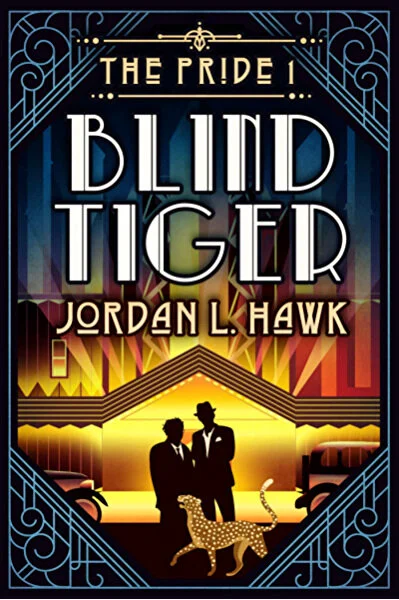
Book Review: BLIND TIGER

March 23, 2021 Anthony Cardno
blind+tiger+book+cover.jpg

TITLE: Blind Tiger (The Pride, Book 1)

AUTHOR: Jordan L. Hawk

206 pages, JLH Books, ISBN 9798711192763 (print, also available in e-book; audiobook forthcoming)


DESCRIPTION: (from Goodreads): 1924, Chicago. Prohibition is in full swing and gang bosses rule the city with might—and magic. When Sam Cunningham flees his small-town life to try his luck in the big city of Chicago, he quickly finds himself in over his head in a world of gangs, glitz, and glamour. Fortunately, he has his cousin Eldon to teach him the trade of hex-making. Everything changes the night Sam visits The Pride speakeasy and meets grumpy cheetah-shifter Alistair Gatti. After losing his first witch to the horrors of the World War, Alistair isn’t interested in any new entanglements, romantic or magical. Especially when said entanglement comes in the form of kind, innocent Sam. When Eldon is brutally murdered, Sam becomes drawn into the dark underworld of the Chicago gangs. Sam must find the missing hex Eldon created for one of the crime bosses—before whoever killed Eldon comes back for him. Together, Alistair and Sam begin the search for the mysterious hex, diving deep into the seedy side of Chicago’s underworld while dodging rival gangs. And as they come to rely on one another, Alistair realizes he’s falling for the one man he can’t afford to love.


MY RATING: 5 out of 5 stars


MY THOUGHTS: Fans of Jordan L. Hawk’s previous alternate history/fantasy/gay romance books will not be disappointed with Blind Tiger, the start of a new trilogy in the same alternate history timeline as his Hexworld books. Blind Tiger is full of the action, mystery, humor, romance, and steamy sex that are Hawk’s hallmarks.

For those not familiar with the world-building of the Hexworld series, a recap: it’s a world just like our own, with most of the same history intact, except that magic is a known quantity. Witches (a gender-neutral term in this world) are able to imbue written hexes with magic drawn from their shape-shifting familiars (also a gender-neutral term). Normal people can then use those hexes to do everything from keeping iceboxes cold when there’s no electricity to healing sickness – and occasionally, if the right hex is used, much larger scale magic. Any witch can bond with any familiar (but not more than one in either direction), but the magic works best when the familiar bonds to “their” witch (a nebulous-defined term that basically means that they are “meant to be together”). The books in Hawk’s Hexworld series all take place in 1890’s New York City, focused on the witches and familiars of that city’s Witch Police. Over the course of four books and a couple of short stories, Hawk has been developing a larger conspiracy involving the public’s perception and acceptance of familiars fanned to unhealthy levels by both government and religious leaders. Hawk has said he’ll eventually return to that storyline but had this idea that just wouldn’t wait. And thus, we have the start of the Pride trilogy, which moves the action to a different city (Chicago) and a different decade (the 1920s).

Whatever finally happens in 1890s NYC, it’s implied that in 1920s Chicago people are a bit more accepting of familiars in general but not necessarily of the more “dangerous” ones. Familiars are specific shapeshifters: they can transform into one animal and only one animal. When that animal is a cute dog or cat or bird, no one seems to care. But when that animal is something large and predatory, say “big cats” like lions, tigers, and cheetahs, people are still afraid. The members of the Gatti family all turn into big cats, and they’ve used that fear to carve out a place for themselves as “independent operators” within the territory of a gang overlord named Sullivan. Their position is ordinarily precarious but becomes even more so after the murder of Eldon Cunningham. Hawk does a wonderful job of setting the stakes for this “found family” from the very start of the book and then ramping those stakes up as the action progresses.

As the book synopsis indicates, the characters at the heart of the story are Alistair Gatti and Sam Cunningham. There’s an awkward meet-cute in the speakeasy the Gattis own, Sam introducing himself as “Sammy … Sam … Sam,” which Alistair riffs on immediately (but only until it’s clear Sam doesn’t like it; then Alistair backs off). These are two quite different men: Sam is shy, insecure, skittish where Alistair is grumpy, too sure of himself, bold. But they have something in common (other than the witch-familiar bond that Alistair recognizes right away and Sam has no reason to think even exists): both are suffering from forms of post-traumatic stress disorder (PTSD) and abandonment issues. The formative experiences that lead to the PTSD, and the ways in which each man deals with it (or doesn’t) are revealed slowly throughout the book and I don’t want to spoil anything. But I can say that Hawk writes these characters with a sensitivity and keen understanding of both PTSD and abandonment disorders that infuses both men with deep layers the reader will appreciate. This is true of pretty much every Hawk character I have encountered; just because there’s sex in these books doesn’t mean the characters are flat or undeveloped. But in this particular book, it really stands out. I look forward to how Alistair and Sam’s relationship will progress through the second and third books of this trilogy, and how they will help each other deal with the PTSD triggers they inevitably will encounter.

I also look forward to the development of the rest of the Gatti family over the next two books. The Gatti siblings are all orphans who adopted each other and do everything they can to protect each other. In addition to the five siblings, the family extends to include witches, lovers, and spouses (not always the same person; even when a familiar finds “their” witch, there’s not always a romantic connection nor does there need to be for the magic to work). We get glimpses of these relationships and tidbits about how they came to be, and we get a good sense of each family member’s personalities – but it would be nice to get to know them even better, to see the depths in them that we get to see in Alistair and Sam. Heck, I’d even like to see more of the crime-lord Sullivan.

The mystery of Eldon’s murder is very “fair play.” The clues are all there for the reader to pick up on, but not so obviously presented that you’ll guess whodunnit and why within the first half of the book.

And the steamy sex is steamy. As one would expect from a Jordan L. Hawk book.

Romance, erotica, mystery, and fantasy all under one cover and all equally well-written: Blind Tiger has something for everyone.

In BOOK REVIEWS Tags book review, Jordan L. Hawk, Hexworld, The Pride, LGBTQ, paranormal romance
Comment

Book Review: VILLAGE FOOL

March 10, 2021 Anthony Cardno
village-fool cover.jpg

TITLE: Village Fool

AUTHOR: ‘Nathan Burgoine

74 pages, Bold Stroke Books, ISBN 9781635559828 (e-book)


DESCRIPTION: (from Publisher website): Owen is only confident in two places: at work, supporting clients through IT woes, and when he’s sitting around a gaming table in the role of a smooth and charming bard. He’s never acted on the crush he’s had on his physiotherapist—and total cubcake—Toma. Even though Owen’s no longer Toma’s patient, and his crush hasn’t dialed down in the slightest, Owen can’t figure out how to make a move.

When a friend decides to play a prank involving Owen’s contact list, Owen spends the morning of April Fools’ day inadvertently texting smooth and charming thoughts about Toma... to Toma himself.

By the time Owen discovers the prank, things are completely out of control. Discussions of thighs and awards for the World’s Best Chest have been handed out—not to mention they’ve set an accidental coffee date—and there’s no taking that sort of thing back. When this joke finally gets told, Owen’s convinced he’ll be the punchline, but with a little luck and some nudging from his friends, the last laugh might be the best of his life.


MY RATING: 5 out of 5 stars


MY THOUGHTS: If you’ve read either of ‘Nathan Burgoine’s other “Little Village” romance novellas (Handmade Holidays and Faux Ho Ho) you will not be surprised at how endearing Village Fool is nor how relatable the main characters are. If this is your first “Little Village” romance, you’re in for a treat. Yes, this is the third book in a series if we look at them in release order, but each “Little Village” novella stands alone so you can jump right into this one without having read the previous two (and maybe it will inspire you to read the others!).

Like its predecessors, Village Fool is a holiday romance, but instead of the usual Christmas or New Year’s setting we get April Fool’s Day. Now, I don’t know about you, but April Fool’s Day is not one of my favorite holidays, having involved more bullying than humor in my childhood. But I don’t dislike the holiday enough to write off a romance with April Fools pranks at the core unread, especially when that book is written by one of my favorite authors (overall, and specifically of gay romance). Unlike its predecessors, where the holiday itself is not just the set-up but a key component of the plot, Village Fool really could have taken place at any time of year. Friends play pranks on friends all the time. But setting it on the holiday keeps the “Little Village” holiday theme going, and it works just fine.

I identified heavily with Owen, the novella’s POV character. Like him, I am far smoother and more personable when I’m on the job (corporate trainer in my case, IT support for Owen) or when I’m among very, very close friends (the Bittersweets Club and D&D circle for Owen) than when I have to make conversation with a guy I find interesting/attractive (my current ongoing crush is also a total “cubcake” like Toma, but he works in the food industry not as a physiotherapist). Like Owen, my friends tease me about my crush and I get a little angsty about why I can’t seem to formulate complete sentences around him. Also like Owen, I would be devastatingly embarrassed if my friends pulled a stunt like Felix does at the start of Village Fool to force the “just ask him out already” issue. (Unlike Owen, I still have no idea if my crush might be even remotely into guys, but that’s a topic for my therapist and not a book review…) The TL;DR of this paragraph is: Owen is recognizable, relatable, and very easy to like.

And even though we don’t get any scenes directly from Toma’s POV to see inside his head, we can tell that he’s also relatable and likeable. His every interaction with Owen is supportive, friendly, eventually flirty. He’s not happy that the date he thought he was finally going on was a misunderstanding and he’s not willing to let Felix completely or easily off the hook. But Toma also understands why Owen is so much more upset about the situation than he is and he’s willing to back off and give Owen space if that’s what Owen wants.

In the hands of other authors, this misunderstanding would garner a novel’s worth of anger and angst before the situation gets resolved, with both characters second-guessing their own feelings as well as the other character’s motivations and responses. Burgoine threads that needle expertly: Owen’s reactions, borne out of humiliation, are a bit more histrionic (without being soap-opera scenery-chewing) while Toma’s are more grounded (without being dismissive of Owen’s feelings), and both men’s reactions are totally in character.

The alternating chapters of present-day and flashbacks format works as well in Village Fool as it did in Faux Ho Ho, adding nice levels of tension and release. Again, it’s a style that not every author is fully effective with, but Burgoine is a master.

There’s also just the right amount of interference from Owen’s circle of friends in both the present and the past to help nudge things towards a Happily Ever After ending (although in Felix’s case the “nudging” is what creates the drama in the first place). The alternating flashback chapters fill us in not just on how Owen came to know Toma, but also how he met Silas, Ru, and Felix and started to feel like maybe the Village was someplace he belongs. The prank and its aftermath don’t occur in a bubble; we get glimpses of a well-developed group of friends without those glimpses being winky-nudgy-youshouldhavereadtheotherbooks distractions. I was happy to see Silas and Dino (from Faux Ho Ho) and Ru and Fiona (from Handmade Holidays) in varying-sized supporting roles along with mentions of other residents and businesses in the Little Village district.

I don’t think I will ever get tired of stories set amongst the group of friends we’ve met in these three novellas, and I hope the “Little Village” series goes on for a long time regardless of whether the “holiday” theme continues. If you like stories that include awkward meet-cutes, friends who are family, and happily-ever-after gay romance, pick up Village Fool and the other Little Village novellas.

In BOOK REVIEWS Tags book review, LGBTQ, Romance Novel, novellas, 'nathan burgoine, bold stroke books
Comment

Sunday Shorts: Two by Francesca Forrest

March 7, 2021 Anthony Cardno
Art by Scott Witt.

Art by Scott Witt.

I love short fiction, and Sunday Shorts is the feature where I get to blog about it. Posts will range from flash to novellas. At some point, I might delve into individual stories/episodes of anthology formats in other media, like television and comics, but for the time being, I’m sticking to prose in print and audio.

I get a lot of book recommendations from a variety of sources, including, of course, close friends. Every now and then, one of those recommendations leads to an author becoming a “favorite”/ “must-read everything.” For instance, it is Jim Savenkoff’s fault that you all now get inundated with so many Seanan McGuire reviews, interviews, and social media comments from me. I suspect, based on my enjoyment of the novelette and novella I’m about to talk about, that in the future you’ll be able to blame Claire Cooney for all the Francesca Forrest posts I’ll be making. Fair warning. (Claire’s first recommendation was Forrest’s The Gown of Harmonies, which I listened to as an audiobook last year and loved and briefly reviewed HERE. But me being me, it wasn’t until Claire recommended these two stories that I remembered I wanted to read more by the author.)

In The Inconvenient God, we are introduced to the world of the Polity through the first-person narration of Decommissioner Thirty-Seven, who occasionally allows people to call her by her childhood nickname of “Sweeting” rather than her job title or her real name. Thirty-Seven is a decommissioner of deities for the Polity’s Ministry of Divinity. The Polity is slowly migrating its citizens from worship of local gods to worship of universal Abstractions (like Justice, Peace, Mischief, etc.); when the time comes, fading gods are decommissioned – that is, their divinity is removed and they become mortal. They remember their divine existences but now age and die as mortals do. In this introductory novelette, Thirty-Seven has been called to distant Nando University to decommission a troublemaking minor local deity named Ohin, who is worshipped nowhere else but this campus and who is kept from fading because he’s basically the patron god of failing students. What should be a straightforward decommissioning takes several interesting turns as Thirty-Seven learns that the Ministry was not provided enough information about Ohin for her to do her job properly. I don’t want to spoil what the information is or how it affects the outcome of Thirty-Seven’s mission, but I will say that the twists and reveals flow logically from each other, expand our understanding of how decommissionings work, and lead to a great conclusion to the story. In fifty-five pages, Forrest gives us a chance to really get to know Thirty-Seven/Sweeting: her focus on doing her job well, her insecurities based on previous cases that were shall we say less-than-smooth, her aggravation when incomplete or inaccurate information hampers her efforts, her emotional ties to the now-decommissioned gods of the Sweet Harbor district where she grew up. I was as intrigued by what Thirty-Seven tells us about herself as what she doesn’t (her real name, for instance). Forrest also weaves in some hints about what kind of society the Polity is: world (or at least, continent) wide, pushing towards a state religion over the freedom to worship whatever gods a person chooses to (a move not everyone is happy about).

Both Thirty-Seven’s personal history and the Polity’s dystopian nature are revealed in the novella Lagoonfire. It turns out that one of Thirty-Seven’s earliest decommissionings was of the last still-deified Sweet Harbor god, Laloran-morna, and she botched the job. Laloran-morna is mortal but when he gets upset saltwater rushes from and through him, usually leaving unsightly puddles wherever he’s been. So naturally, when an unusual incursion of seawater threatens the stability of a land development project over the former Lotus Estuary section of the Sweet Harbor District of the Capitol, Laloran-morna is suspected and Thirty-Seven is sent to investigate. Neither Thirty-Seven nor the reader is surprised when the case turns out to be more complicated (involving a former lover of Laloran-morna’s as well as a human college professor of history and archaeology) and Thirty-Seven’s unorthodox problem-solving skills (so well displayed in The Inconvenient God) are needed, despite the preferences of her boss and other officials. Those other officials are the Civil Order – the state police. It’s through Thirty-Seven’s encounters with the professor and the Civil Order that we come to understand just how much of a dystopia this society is: “Big Brother” in a fantasy setting, out to subsume and overwrite local culture and even history itself – whatever it takes to solidify control and eliminate resistance. Everyone is watched and monitored via communications devices called “unicoms” and anyone suspected of questioning the Polity or working against its mandates is arrested and questioned. Thirty-Seven’s family history gives her plenty of reasons to avoid contact with the Civil Order and also explains her focus on just doing her job well and not being noticed. We get to see a great deal more of Thirty-Seven’s interactions with her co-workers (mostly her immediate superior, Decommissioner Five, and her closest peers, Decommissioners Thirty-Three (whose name is Tailin) and Thirty-Six (Feshi). We also learn Thirty-Seven’s real name and that her nickname of “Sweeting” comes from the decommissioned gods of Sweet Harbor, who treat her like a niece or daughter. The novella length allows Forrest to tease out these personal and world-building details slowly, allowing each reveal to breath a bit before the next one comes along. The slow build of tension is wonderfully paced until the action of the final act where it all comes together, and I had several “ohmygod, did that really just happen” moments along the way.

Each of these books wraps up its own major storyline, so there are no cliffhangers to entice you into the next book. That enticement comes through the wonderful character voice of Thirty-Seven and the world Forrest reveals through her. You could really read these books out of publication order and not feel lost in the world-building. The good news is, there’s a third Polity book in the works, and I cannot wait to see how Forrest builds on some of the sub-plots of Lagoonfire especially. In the meantime, I’ll be reading all the other short stories and novel (PenPal) by Francesca Forrest that I bought and downloaded before writing this column.

Forrest Polity covers.jpg
In BOOK REVIEWS, READING Tags sunday shorts, book review, the polity series, Francesca Forrest, novellas
Comment

Reading Round-Up: February 2021

March 2, 2021 Anthony Cardno
Graphic by Scott Witt

Graphic by Scott Witt

The monthly summary of what I’ve been reading and listening to in 2021!


BOOKS

I read 12 books in February: 6 in print, 5 in e-book format, and 1 in audio format. They were:

1.       Lightspeed Magazine #129 (February 2021 issue), edited by John Joseph Adams. The usual fine assortment of sf and fantasy short stories. This month’s favorites for me were Phoebe Barton’s “The Mathematics of Fairyland,” Keith Brooke and Eric Brown’s “Me Two,” A.T. Greenblatt’s “The Memory of a Memory is a Spirit,” and Autumn Brown’s “Small and Bright.”

2.       Abbott by Saladin Ahmed (writer), Sami Kivelä (art), Jason Wordie (colors), Jim Campbell (letters), Chris Rosa and Eric Harbur (editor). This graphic novel collects the first Abbott mini-series about intrepid reporter Elena Abbott, who happens to be both black and a woman working at a white-run newspaper in 1972 Detroit. As Abbott investigates a string of unusual murders (of black men and animals), she uncovers supernatural events tied to the death of her first husband. I absolutely loved this: the pacing of the story, the multi-faceted characters (and their full representation of racial/gender/sexuality marginalized groups), and the supernatural threat – the Umbra – along with Elena’s role in fighting it. A second mini-series, Abbott 1973, has just started monthly publication.

3.       The Worker Prince (The Saga of Davi Rhii Book 1) by Bryan Thomas Schmidt. Schmidt takes the Moses myth and jumps in into far-future interstellar space, where the human leader of the Borali Alliance declares the first-born sons of all human Workers must be killed. The one child spared grows up thinking he’s the leader’s nephew until the truth comes out and he rallies the Workers to revolution. Fast-paced space opera with engaging lead characters and a scenery-chewing villain you can’t help but hate.

4.       Lumberjanes True Colors by Lilah Sturges (writer), Polterink! (art and colors), Jim Campbell (letters), Sophie Philips-Roberts (editor). The focus of this stand-alone graphic novel (which does not reprint material from the regular monthly Lumberjanes book) is on Ripley. Ripley, the youngest and most excitable of the ‘Janes, starts to feel like standing out and being noticed isn’t the great thing she’s always thought, and then she meets a zebracorn (yes, you read that correctly, and it’s exactly what you think) who grants her wish to fit in and be like everyone else. Downside? She’s so bland everyone forgets her, which causes problems when her fellow ‘Janes encounter a problem only Ripley’s unique persona can solve. Once again, Sturges and Polterink deliver a story that shows the power of friendship and human need to be liked/respected/needed.

5.       The Returning (The Saga of Davi Rhii Book 2) by Bryan Thomas Schmidt. In the second book of the Davi Rhii trilogy, the Workers (Vertullians) have been made full members of the Borali Alliance, but not everyone is happy about that. Political and personal tensions bubble over. Just as fun and fast-paced as the first book, while adding layers to the characters and to the society as a whole.

6.       An Ordinary Man: An Autobiography by Paul Rusesabagina. I bought this book a few years back after several people recommended it. Reading Rusesabagina’s memoir of his role in saving refugees during the Genocide Against the Tutsi in Rwanda in 1994 was an interesting experience. He has an engaging style, very personable and expressive. The early chapters do a nice job of laying out not just his personal history but a bit of Rwanda’s history that led to the genocide. But about halfway through the book, I started to question what I was reading: were his actions really as altruistic as he was painting? why does he insist on describing the Hutu leaders of the genocide movement as “good men” when they clearly aren’t? Every memoir is subjective – ask five people who witnessed the same event to describe it and you’re going to get five different stories – but this felt a bit like the author was trying to unsuccessfully gloss over things he didn’t think fit the narrative that’s been built around him thanks to the movie Hotel Rwanda. So, I’m reading more about the genocide, from other refugees/survivors. Because one of the things the author is accurate about is the lack of knowledge in the US when it comes to genocide in general and especially to genocides in other countries.

7.       Nine Bar Blue by Sheree Renée Thomas. What an amazing short story collection. Every story here was new to me, even the reprints. I have no idea how I’ve managed to not read anything by Thomas even while being aware of her via Twitter, Facebook, and posts by so many other authors – it’s kind of embarrassing. As the title implies, a lot of these stories have music as a background or basis, and many of them take place in or near Memphis. They also skirt the genre line between horror and fantasy – quite a few gave me chills and a sense of wonder. I’m planning to post a full review soon.

8.       Later by Stephen King. The protagonist of Stephen King’s third novel for Hard Case Crime calls to mind King favorites like Geordie LaChance and Bill Denbrough but is set in the 2000s. There’s a solid supernatural element to this alongside the crime, so something for everyone. FULL REVIEW HERE.

9.       Hawkman Vol 4: Hawks Eternal by Robert Venditti (writer), Fernando Pasarin, Marco Castiello, Marcio Takara (art), Jeromy Cox (colors), Rob Leigh, Richard Starkings (letters), Harvey Richards (editor). Collecting the final issues of Venditti’s fantastic reinvention/expansion of the Hawkman mythos. I regret not picking this series up in monthly format, the story is that good. The run ends as strong as it started, while leaving room for other people to work with the character. I’m planning to do a Series Saturday post sometime soon.

10.   Inside the Hotel Rwanda: The Surprising True Story … and Why It Matters Today by Edouard Kayihura. While I was reading the Rusesabagina memoir, this book and several others about the 1994 Genocide Against the Tutsis in Rwanda popped up as recommendations. So, when I decided I wanted a broader look at the Hundred Days, it made sense to start here. Kayihura’s style is not as immediately personable as Rusesabinga’s; his style is more tense, fully acknowledging the danger everyone was in. Again, the early chapters cover his life pre-genocide and a bit of the country’s history – but Kayihura also extends the story beyond the end of the Genocide, covering his life and the nation’s attempts to heal. There’s also a lot of anti-Rusesabagina talk throughout the book, which matched some of what I thought was suspect about Rusesabagina’s story. I have two more memoirs (one by a female survivor, one by the leader of the UN peacekeeping forces) that I’m going to read this month to try and round out my understanding of what happened.

11.   The Measure of a Man: A Spiritual Autobiography by Sidney Poitier. The only audiobook I listened to this month (I’m traveling far less these days), and what a great listen. Poitier is a wonderful storyteller (no surprise there). What I found interesting is that this is not a linear memoir; Poitier bounces between his early childhood in the Bahamas, his teen years in Miami, his adult married life and acting career and his present (at the time he recorded this) reasons for looking back. He tackles moments in life and those of his parents when those moments tie into whatever point he’s making about being human. And it’s really enthralling all the way through. And he leaves in all the natural verbal tics (the “you knows” and “you understand what I’m saying” type phrases) that most memoirists leave out. There’s nothing effected at all in his style.

12.   How Long ‘Til Black Future Month? by N.K. Jemisin. The first of my fiction To Be Read challenge titles hasn’t been sitting on my shelf as long as some of the other titles on this year’s list, since the book came out in 2018, but it was an appropriate choice for Black History Month, don’t you think? I had previously read a handful of these stories in other venues (“The Ones Who Stay and Fight,” “The Effluent Machine,” “Cloud Dragon Skies,” “Valedictorian,” and “Non-Zero Probabilities”) but most of them were new to me. As with the Sheree Renée Thomas collection, I really tried to savor this one, but could never put it down after just one story. Every single story is thought-provoking, whether it’s science fiction or fantasy, present-day, far-future, or otherworldly. This is not just Afrofuturism/Afrofantasy at its finest, it’s science fiction/fantasy as a whole at its finest.


STORIES

I have a goal of reading 365 short stories (1 per day, essentially, although it doesn’t always work out that way) this year. Here’s what I read this month and where you can find them if you’re interested in reading them too. If no source is noted, the story is from the same magazine or book as the story(ies) that precede(s) it.

1.       “The Mathematics of Fairyland” by Phoebe Barton, from Lightspeed Magazine #129 (February 2021 issue), edited by John Joseph Adams

2.       “Bulletproof Tattoos” by Paul Crenshaw

3.       “Me Two” by Keith Brooke and Eric Brown

4.       “Sidewalks” by Maureen F. McHugh

5.       “Church of Birds” by Micah Dean Hicks

6.       “The Memory of a Memory is a Spirit” by A.T. Greenblatt

7.       “Small and Bright” by Autumn Brown

8.       “Destinations of Beauty” by Alexander Weinstein

9.       “Kisser” by David James Brock, from Fantasy Magazine #64 (February 2021), edited by Christie Yant and Arley Sorg

10.   “Of Course You Screamed” by Sharang Biswas

11.   “Like a Box of Chocolates” by Dani Atkinson

12.   “Flight” by Innocent Chizaram Ilo

13.    “Inflatable Angel” by Seanan McGuire, on the author’s Patreon page.

14.   “Spyder Threads” by Craig Laurence Gidney, from Come Join Us by The Fire Volume 2, (not sure who edited it)

15.   “Navigational Errors” by Lucy A. Snyder, from Fireside #88, edited by Maurice Broaddus

16.   “Ancestries” by Sheree Renée Thomas from Nine Bar Blues

17.   “Thirteen Year Long Song” by Sheree Renée Thomas

18.   “Aunt Dissy’s Policy Dream Book” by Sheree Renée Thomas

19.   “Nightflight” by Sheree Renée Thomas

20.   “River, Clap Your Hands” by Sheree Renée Thomas

21.   “Stars Come Down” by Sheree Renée Thomas

22.   “Child’s Play” by Sheree Renée Thomas

23.   “Headstatic” by Sheree Renée Thomas

24.   “The Parts That Make Us Monsters” by Sheree Renée Thomas

25.   “The Dragon Can’t Dance” by Sheree Renée Thomas

26.   “Who Needs the Stars if the Full Moon Loves You” by Sheree Renée Thomas

27.   “310 Lucy” by Sheree Renée Thomas

28.   “Shanequa’s Blues – Or Another Shotgun Lullaby” by Sheree Renée Thomas

29.   “Madame & the Map: A Journey in Five Movements” by Sheree Renée Thomas

30.   “Teddy Bump” by Sheree Renée Thomas

31.   “Origins of Southern Spirit Music” by Sheree Renée Thomas

32.   “The Ones That Stay and Fight” by N.K Jemisin, from How Long ‘Til Black Future Month?

33.   “The City Born Great” by N.K Jemisin

34.   “Red Dirt Witch” by N.K Jemisin

35.   “L’Alchemista” by N.K Jemisin

36.   “The Effluent Machine” by N.K Jemisin

37.   “Cloud Dragon Skies” by N.K Jemisin

38.   “The Trojan Girl” by N.K Jemisin

39.   “Valedictorian” by N.K Jemisin

40.   “The Storyteller’s Replacement” by N.K Jemisin

41.   “The Brides of Heaven” by N.K Jemisin

42.   “The Evaluators” by N.K Jemisin

43.   “Walking Awake” by N.K Jemisin

44.   “The Elevator Dancer” by N.K Jemisin

45.   “Cuisine des Mémoires” by N.K Jemisin

46.   “Stone Hunger” by N.K Jemisin

47.   “On the Banks of the River Lex” by N.K Jemisin

48.   “The Narcomancer” by N.K Jemisin

49.   “Henosis” by N.K Jemisin

50.   “Too Many Yesterdays, Not Enough Tomorrows” by N.K Jemisin

51.   “The You Train” by N.K Jemisin

52.   “Non-Zero Probabilities” by N.K Jemisin

53.   “Sinners, Saints, Dragons, and Haints, in the City Beneath the Still Waters” by N.K Jemisin


So that’s 53 short stories in February. Quite a bit more than “1 per day” and putting me ahead so far for the year. (February 28th was the 59th day of 2021.)


Summary of Reading Challenges:

“To Be Read” Challenge: This month: 3 read; YTD: 4 of 24 main titles read. (0 of 4 alternate titles read)

366 Short Stories Challenge: This month:  53 read; YTD: 79 of 365 read.

Graphic Novels Challenge:  This month: 3 read; YTD: 5 of 52 read.

Goodreads Challenge: This month: 12 read; YTD: 24 of 125 read.

Non-Fiction Challenge: This month: 3 read; YTD: 4 of 24 read.

Read the Book / Watch the Movie Challenge: This month: 0; YTD: 0 read/watched.

Complete the Series Challenge: This month: 0 book read; YTD: 0 of 14 read.

                                                          Series fully completed: 0 of 4 planned

Monthly Special Challenge:  February was Black History Month and Women in Horror Month, so my challenge, as usual, was to read as many Black authors and women horror writers as I could, and with hopefully a few overlaps. I read 5 books (An Ordinary Man; Nine Bar Blues; Inside the Hotel Rwanda; The Measure of a Man; and How Long ‘Til Black Future Month) by black authors, which was not quite half of the total books read for the month. Most of those short stories I read by black authors were accounted for by the Sheree Renee Thomas and N.K. Jemisin collections, but there was also work by Gidney, Ilo, and Brown. Thomas and Jemisin also accounted for most of my minimal “women in horror” reading, alongside short stories by Seanan McGuire and Lucy A. Snyder.


March is Women’s History Month, so my intent is to read as many female authors as possible.

In BOOK REVIEWS, READING Tags book review, reading round-up, 2021 reading challenges, graphic novel challenge, non-fiction challenge, TBR Challenge
Comment

Book Review: LATER

February 22, 2021 Anthony Cardno
Later Stephen King cover.jpg

TITLE: Later

AUTHOR: Stephen King

272 pages, Hard Case Crime, ISBN 9781789096491 (paperback, also available in e-book and audio)


DESCRIPTION: (from Goodreads): SOMETIMES GROWING UP MEANS FACING YOUR DEMONS.
The son of a struggling single mother, Jamie Conklin just wants an ordinary childhood. But Jamie is no ordinary child. Born with an unnatural ability his mom urges him to keep secret, Jamie can see what no one else can see and learn what no one else can learn. But the cost of using this ability is higher than Jamie can imagine - as he discovers when an NYPD detective draws him into the pursuit of a killer who has threatened to strike from beyond the grave.


MY RATING: 4 out of 5 stars


MY THOUGHTS: In Later, Stephen King’s upcoming (March 2, 2021) release from Hard Case Crime, the author returns to that fertile ground he tills so well: a narrator telling us, with more than a little nostalgia, of a horror-touched childhood or adolescence. Jamie Conklin shares a lot of emotional territory with Gordie LaChance and Bill Denbrough, although the landscape of Jamie’s childhood in the not-so-distant-2000’s rather than the 1950s or 60s. Jamie still fills his story with nostalgic nods at television shows, television shows, and New York City neighborhoods. At 22 years old, Jamie is not the published, well-regarded author that LaChance and Denbrough are when we catch them reminiscing about their childhood traumas (and yes, I know, Bill Denbrough doesn’t narrate IT; we’re still closely privy to his thoughts as an adult, as memories come back to him). But even Jamie notices (and this reader did as well) that his writing improves over the course of telling his story, so there’s hope for him yet, especially as the child of a literary agent. And I don’t believe King is done with Jamie Conklin after this book, not by a long shot.

Like Gordie and Bill, Jamie’s life is altered the first time he sees a dead body. Unfortunately, unlike them, he’s only six years old at the time, and he not only sees the body but also the dead man’s mutilated ghost. This is traumatic and formative and when Jamie finally tells us the full details of the event his childhood terror, even through the tinge of reverie, is palpable. Of course, it’s not Jamie’s last encounter with ghosts. Most of the encounters are quick and benign, but it wouldn’t be a King novel if things didn’t get dangerous.

The character acknowledges how like The Sixth Sense this whole set-up is; King has never been shy about wearing his literary and cinematic antecedents on his sleeve and giving inspirational credit where it’s due. But of course, King’s take on “kid seeing dead people” is much darker than Shyamalan’s. For one thing, the ghosts Jamie sees know they are dead, and most of them don’t tend to linger among humanity more than a few days, whether they have unfinished business or not. Which is both good for Jamie and bad, when one spirit decides to stick around longer than the norm.

Unlike the childhood trials of Gordie and Bill, Jamie doesn’t have a cadre of intrepid friends to share the emotional journey and physical dangers with. Classmates are mentioned enough that Jamie isn’t painted as an awkward loner with no social life, but they’re also all off-screen and unimportant to the narrative, grace notes to the main theme. King heavily leans into the stereotype that Gen Z kids would be more likely to record their friend’s “hallucinations” and post them to social media than join in a quest to save the day under the noses of unsuspecting adults. I don’t think this is a completely accurate assessment of that generation, but it works well enough as a plot point keeping other kids off-stage and leaving Jamie only the adults in his life to rely on – adults who, as much as they love him, are unreliable at best and in one case untrustworthy as well. This is yet another thing Jamie has in common with the boys of “The Body” and the Losers’ Club. They couldn’t rely on the adults in their lives either; the key difference being that Jamie is more fully alone in his moments of crisis.

If I have any complaints about the book, they’re minor. I think King really sticks the ending of the book – but then he adds a final reveal that feels a bit tacked on and which I don’t think really adds anything to the overall story or to our understanding of Jamie’s character. I’ll be interested to see if I’m in the minority on this once I get a chance to look at other reviews (which I’ve avoided doing while writing this). I also think this book would have been a better fit with a publisher like Cemetery Dance; the supernatural element is so important and prevalent that it doesn’t really feel like a Hard Case Crime title, which normally lean more towards “regular” crime and psychological horror. This might be the most supernatural book HCC has published (feel free to correct me in the comments if I’m wrong; I haven’t read all 100-ish HCC books yet). Interestingly, when King released his ostensibly “final” Richard Bachman book, Blaze, he said in the foreword that he’d considered placing it with Hard Case Crime but ultimately thought it wouldn’t be a good fit, whereas I think it would have been a perfect HCC title. So what do I know?

Bottom line: Later is a wonderful addition to the “kid sees ghosts, bad shit happens” oeuvre. The kid is endearing, the supernatural threat strong and scary, and the human threats even more so.


I reviewed an advance reading copy provided by the publisher.

In BOOK REVIEWS Tags book review, hard case crime, Stephen King
1 Comment

Book Review: CALCULATED RISKS

February 20, 2021 Anthony Cardno
Calculated Risks cover.jpg

TITLE: Calculated Risks (InCryptid, Book 10)

AUTHOR: Seanan McGuire

448 pages, DAW Books, ISBN 9780756411815 (paperback, also available in e-book and audiobook)


DESCRIPTION: (from the back cover): The tenth book in the fast-paced InCryptid urban fantasy series returns to the mishaps of the Price family, eccentric cryptozoologists who safeguard the world of magical creatures living in secret among humans.

Just when Sarah Zellaby, adopted Price cousin and telepathic ambush predator, thought that things couldn't get worse, she's had to go and prove herself wrong. After being kidnapped and manipulated by her birth family, she has undergone a transformation called an instar, reaching back to her Apocritic origins to metamorphize. While externally the same, she is internally much more powerful, and much more difficult to control.

Even by herself. After years of denial, the fact that she will always be a cuckoo has become impossible to deny.

Now stranded in another dimension with a handful of allies who seem to have no idea who she is--including her cousin Annie and her maybe-boyfriend Artie, both of whom have forgotten their relationship--and a bunch of cuckoos with good reason to want her dead, Sarah must figure out not only how to contend with her situation, but with the new realities of her future. What is she now? Who is she now? Is that person someone she can live with?

And when all is said and done, will she be able to get the people she loves, whether or not they've forgotten her, safely home?


MY RATING: 5 out of 5 stars


MY THOUGHTS: Seanan McGuire’s InCryptid series has always been about family: the ones we’re born into, the ones we build around ourselves, the ones we willingly leave behind. The series’ rotating narrators (mostly the Price siblings, Verity, Alex, and Antimony) spend copious amounts of time ruminating on the joys and tribulations of family life – the expectations, love and support as well as the fights, favoritism, and claustrophobia – when they aren’t hip-deep in battle protecting local Cryptid populations from the Covenant of St. George and other threats (and sometimes even when they are hip-deep in battle with the Covenant and other threats). But I don’t think anyone in the cast has been quite as well placed to talk about losing family as Sarah Zellaby, the narrator of the previous book, Imaginary Numbers, as well as this present installment, Calculated Risks, which releases on February 23rd.

WARNING: Because this is a review of the TENTH book in a series, there will be mild spoilers for previous books. If you haven’t read them yet and don’t want to be spoiled this is your chance to click away from this review.

Sure, other members of the Price clan have been separated from the family. Antimony spent the better part of the three books preceding Imaginary Numbers infiltrating and then on the run from the Covenant (the organization that not only wants to wipe out all Cryptids but also the entire Price-Healey clan), which necessitated staying out of touch to protect her family. Grandma Alice is absent more than she’s present, hopping between dimensions in search of her missing husband. But even when completely out of touch, Antimony and Alice know they still have a family that loves them and misses them. In Calculated Risks, Sarah must deal with beloved cousins who have forgotten her very existence as well as the real possibility that they may never remember who she is nor welcome her back into the fold.

As a supporting character in previous books, Sarah has always fought an internal war between what her genetics tell her to be (a homicidal predatory wasp in human shape) and who her adopted family has taught her to be (a caring and cautious telepath with an endearing love for ketchup and math). Sarah’s race, the Jorhlac (referred to by the Prices as “cuckoos” because of their predilection for leaving their young in the care of unsuspecting humans, with usually disastrous results), are ruthless telepaths who use their powers to control humans and rewrite their memories. Sarah’s adoptive mother and father raised her not to use her telepathy that way, raised her to be mindful of others’ privacy and never take advantage unless it meant saving someone’s life. The nature versus nurture question is writ large across Sarah’s life and in previous books nurture has won out – although barely, in the case of the cliffhanger at the end of Imaginary Numbers that leads directly into the start of Calculated Risks. The questions Sarah has always had about who and what she is mirror what so many of my friends who were adopted have felt (although I’m pretty sure none of them have turned out to be alien wasps in human form). And as Sarah’s powers have grown, so has her struggle. Even though most of that struggle has been seen through the eyes of her cousins, she has still become one of my favorite characters (and in this series, that’s saying a lot). So when Seanan announced that Sarah would finally be the narrator of a book or two, I was both excited and concerned. The narrators of these books always get put through the emotional and physical wringer, and Sarah has already been through so much (for instance, using her powers to rewrite some bad-guys’ memories of the Price clan, a task which shattered Sarah’s mind and left her a shell of herself for a long time – but which also led to her current predicament). Imaginary Numbers pushed her even further, almost shattering her again – and yet, Calculated Risks manages to top even that, by stripping her of her most valuable support system.

Sarah has always depended on her cousins to support her and understand her personality quirks (see the ketchup thing). To have that support torn away so completely and possibly irrevocably – to suddenly be the target of their suspicions, anger, and fear because of what they know of the race she was borne of – is the most devastating emotional abuse the character could suffer. There were moments, especially early in the book, that were downright painful to read and brought tears to my eyes – a testament to how much McGuire has gotten me to love Sarah, but also to just how damned good the author is at writing emotional conflict and internalized pain.

McGuire also show us Sarah’s strength. As much as she’s hurting, she knows she still has to help her cousins, and the unfortunate other humans and cryptids transported with them, to not only survive this new dimension they’ve entered but also to get home. And because her love for those who have forgotten her is more boundless than her greatly expanded powers, she’s willing to die for them if that’s what it takes. Her efforts to get her family to trust her again, even if they don’t remember her, show just how strong and in control of herself Sarah is. Yeah, she could force them to accept her – but she’d never forgive herself if she did.

I realize this review so far makes the book sound like an absolute tear-fest from page one to the end. I promise it is not. This is an InCryptid book. There’s a ton of action as the characters explore, and are threatened by, the new dimension they’re in, and the danger doesn’t just come from the Cuckoos mentioned in the cover copy. The fight scenes are fast and cinematic, the new threats creative and complex. There’s the usual amount of pop culture snark in the dialogue from the usual suspects (mostly Antimony and Sarah this time out), and there are the Required Adorable Scenes featuring the Aeslin mice (I have no doubt the Aeslin would indeed capitalize those words if they were speaking this sentence). There are a number of intriguing character and world-building developments to tee up future books; I’m hesitant to spoil any of them here but I uttered “oh, that should be important” several times.

Of course, I will also not spoil the ending, but I don’t think anyone will be disappointed in it.

There’s also a bonus novella, “Singing the Comic-Con Blues,” which is a flashback to happier days for the characters. The story is a road-caper for Antimony, Sarah, Artie, and Verity that really shows how well and fully these characters love each other (even when they don’t like each other very much in the moment), as well as how Sarah being adopted and not even human was never an issue for anyone in the family. After all the heaviness of the family aspects of the main novel, the novella is a pleasant grace note.

Oh, and DAW, if you’re reading this: since the next book in the series is narrated by Alice, don’t you think it’s about time to bring all of Seanan’s Alice-and-Thomas short stories together in a nice paperback edition? A collection of the Fran-and-Johnnie stories wouldn’t hurt either. I’m quite sure they’d sell well.

NOTE: This review was written based on an electronic ARC received via NetGalley.

In BOOK REVIEWS Tags book review, Seanan Mcguire, incryptid, DAW Books
Comment

Book Review: A SPECTRAL HUE

February 9, 2021 Anthony Cardno
a spectral hue cover.jpg

TITLE: A Spectral Hue

AUTHOR: Craig L. Gidney

215 pages, Word Horde, ISBN 9781939905505 (paperback, also available in e-book)


DESCRIPTION: (from Goodreads): For generations, the marsh-surrounded town of Shimmer, Maryland has played host to a loose movement of African-American artists, all working in different media, but all utilizing the same haunting color. Landscape paintings, trompe l'oeil quilts, decorated dolls, mixed-media assemblages, and more, all featuring the same peculiar hue, a shifting pigment somewhere between purple and pink, the color of the saltmarsh orchid, a rare and indigenous flower.

Graduate student Xavier Wentworth has been drawn to Shimmer, hoping to study the work of artists like quilter Hazel Whitby and landscape painter Shadrach Grayson in detail, having experienced something akin to an epiphany when viewing a Hazel Whitby tapestry as a child. Xavier will find that others, too, have been drawn to Shimmer, called by something more than art, something in the marsh itself, a mysterious, spectral hue.

From Lambda Literary Award-nominated author Craig Laurance Gidney (Sea, Swallow Me & Other Stories, Skin Deep Magic) comes A Spectral Hue, a novel of art, obsession, and the ghosts that haunt us all.


MY RATING: 5 out of 5 stars


MY THOUGHTS: Craig L. Gidney’s A Spectral Hue is a beautifully written novel told from multiple points of view that gives readers time to ruminate on the nature of art and art criticism and the influence both exert over artists and audiences. It’s a slow-burn in the very best ways a story can be. I loved the slow reveal of characters’ pasts and motivations and connections and I didn’t really want the book to end.

A Spectral Hue is told mostly told through the eyes of art history student Xavier Wentworth but also through the points of view of Shimmer resident Iris and museum security guard Lincoln. Each has their own personal and complicated relationship to the art created in Shimmer based partly on their individual pasts and the support they did or didn’t receive from parents and/or siblings. Gidney parcels these histories out (sometimes in internal monologue style, often in clearly defined flashbacks) in tantalizing portions that incrementally build towards a shared connection in which the artists become the art. It’s story-architecture as art, skillfully built so that don’t see the technical underpinnings but feel them all the same.

But in addition to the human characters, there is the mystery of the being who inspires the art to be created – the swamp-dwelling entity personified by the purple-pink pigment of the salt-marsh orchid. There is no doubt from the very beginning of the novel that there is something supernatural going on in the town of Shimmer, something only certain people (people with an artistic bent, whether they recognize it in themselves or not) can see or are affected by. Xavier, Link, and Iris are only the latest in that long line, and Gidney shows us how the influence and movement started by flashing back to the early life of a slave girl named Hazel, the same Hazel Whitby whose art Xavier came to town to study. We meet the spirit entity who calls herself Fuchsia before we meet any of the modern characters, and we begin to see her influence on young Hazel about a quarter of the way through the narrative – but we don’t learn exactly what Fuchsia is until near the end of the novel, and the reveal is worth the wait.

Throughout the novel, Gidney shows us how art can be a prison as much as an escape and how muses can be dominators as much as liberators. All the characters whose art is collected in the Whitby-Grayson museum, and several townsfolk whose art is kept private, experience a sense of stepping from everyday life while they are in the midst of creation – but over time many become obsessed with the creative act to the detriment of meeting their own daily needs for survival. The art traps them in deteriorating minds and bodies. Fuchsia is formless, bodyless muse – but her inspiration moves into the realm of mental, and occasionally physical, dominance, almost forcing these artists to give her what she needs. And Fuchsia herself feels trapped in her role and in a world she should have shifted away from long ago. Many of the moments where it is obvious the artists have lost control of themselves, given themselves over to their inspiration, are uncomfortable.

Art, especially created by those from marginalized or minimalized communities, can be uncomfortable to view, to interact with, to experience, especially for those audience members who come from outside the community (whether because of an interest to learn or to gawk and leer). The art created by the Shimmer movement artists has that effect: tapestries and paintings seem to undulate in the corner of a viewer’s eye, bringing on nausea or dizziness or even fainting spells; dolls seem to be watching or moving even when they’re not. The art in the story matches the art of the story -- there are lots of unnerving scenes, some visceral and some physical, some sensual and some emotional.

One particularly eye-opening moment for me touches on the way museum docents/curators can foster an atmosphere of gatekeeping. What is allowed to be displayed, what is worthy of study/analysis: The clinical approach of the white, college-educated curator of the Whitby-Grayson Museum contrasts with the emotional approach of the black, previously nomadic janitor. The curator’s condescending attitude towards his hired menial staff and the art and artists represented also contrasts with his reaction to the college art history student.

The test, for both the characters in the book and for readers of it, is whether they are willing to work through the discomfort to hear what the artist is saying. A Spectral Hue’s discomfiting moments are worth experiencing to get to the heart and beauty of a story about art forging connections between people who otherwise might never have met and artists’ dichotomous relationship with the art they create.

In BOOK REVIEWS Tags book review, LGBTQ, horror, fantasy
Comment

Sunday Shorts: Three Gay Romance novellas

February 7, 2021 Anthony Cardno
Graphic by Scott Witt

Graphic by Scott Witt

I love short fiction, and Sunday Shorts is the feature where I get to blog about it. Posts will range from flash to novellas. At some point, I might delve into individual stories/episodes of anthology formats in other media, like television and comics, but for the time being, I’m sticking to prose in print and audio.


In the past month I’ve read a trio of m/m romance novellas that really warmed my heart, so with Valentine’s Day coming up, I thought this Sunday would be a good time to tell you a little bit about them.

The Christmas Accomplice by Hank Edwards

The set-up: Welton Monroe, notedly not a winter sports enthusiast, ends up on vacation at a ski lodge after his break-up with former boyfriend Dean leaves them having to decide who gets to keep the vacation. On his arrival at the resort, Welton has an awkward meet-cute with Reece Donaghy, a front desk employee in the process of vying for a promotion to assistant activities director. Of course, Dean shows up even though he’s not supposed to, throwing a wrench in Welton and Reece’s attempts to get to know each other better. This novella clicks on all cylinders: likeable and relatable lead characters who you really want to see get together for either a HFN or HEA (look, guys, I’m learning romance fiction acronyms!), just enough stumbling blocks in the path of the couple we’re rooting for to cause complications (the ex-boyfriend’s presence, the workplace promotion tests) without slowing the story down or adding too many layers of angst, and just enough sub-plot for the equally likeable (except for that one guy, because there’s always one – and this time it’s not the trope-y ex-boyfriend!) supporting cast. Bonus points for the “week before Christmas” time frame (we all know that I’m a sucker for stories set at Christmas and New Year’s).


By the Way, I Love You by Seth King

Speaking of New Year’s Eve…  The set-up: college student Evan Ruiz is waiting for his roommate Tom to return from a holiday visit to family so that Evan can reveal a secret that’s been torturing him almost since they were assigned to live together: that Evan, despite thinking himself straight all his life, has fallen for Tom. Most of the story is narrated by Evan, revealing the history of their relationship while at the same time ratcheting up the drama of how Tom will react. I found Evan’s self-awareness regarding his history of little moments that might have indicated he wasn’t as straight as he thought he was to be pretty realistic as the heart of the story. This is not one of those “I’m gay but only for you” type stories (which I find pretty offensive; bi/demi/pan-sexual erasure is a real thing and I don’t tolerate it). Most of what we learn about Tom is through Evan’s perceptions of him, but we do get a little bit of Tom first-person narrative eventually, fleshing out his personality and his own insecurities. The New Year’s Eve setting works mostly as metaphor (new beginnings and all that), since most of the book takes place in flashback.


Defensive Play by Jamie Deacon

The set-up: Seventeen-year-old British soccer player Davey is deeply in the closet, aware that while his family would support him there’s a very real possibility his teammates would not. Then, at a multi-school tournament, he lays eyes on Adam and is captivated and terrified in even measure – especially when he hears his teammates talking about the “poofter” on the other team. Of course, since Davey is a defenseman and Adam is a striker, they end up face to face on the pitch, with disastrous results. But that’s just the start of the story. I seem to have developed a “thing” for m/m sports romances, and this one scratched that itch very well. Both Evan’s fear of coming out and losing the one steady thing in his high school career (saddled with crippling social anxiety, he doesn’t have many friends outside of the team) and Adam’s hurt when that closet door locks him out at a key moment were both recognizable. Deacon’s writing in those moments is emotional without being manipulative. Because this is a coming out story, there is of course at least one homophobic team-mate to put that outside stumbling block in the way of Evan and Adam’s relationship developing. I also thought Deacon’s descriptions of Evan’s social anxiety and Adam’s experiences with coming out were touching.

In BOOK REVIEWS Tags sunday shorts, novellas, LGBTQ, hank edwards, jamie deacon, seth king
Comment

Reading Round-Up: January 2021

February 2, 2021 Anthony Cardno
Graphic by Scott Witt

Graphic by Scott Witt

The first monthly summary of what I’ve been reading and listening to in 2021!

BOOKS

To keep my numbers consistent with what I have listed on Goodreads, I count completed magazine issues as “books.” I read 12 books in January: 3 in print, 8.5 in e-book format, and .5 in audio format I started We Are Totally Normal in audio but finished it in e-book). They were:

1.       Lightspeed Magazine #128 (January 2021 issue), edited by John Joseph Adams. The usual fine assortment of sf and fantasy short stories. This month’s favorites for me were Anjali Sachdeva’s “The Incorruptible World,” An Owomoyela’s “The Hard Spot in the Glacier,” Maria Dhavana Headley’s “The Orange Tree,” and P H Lee’s “Frost’s Boy.”

2.       By the Way, I Love You by Seth King. Cute New Year’s Day romance novella in which a college boy who has always thought he was straight falls for his out-and-effeminate new roommate. King gives the characters depth and personality.

3.       Lumberjanes Volume 16: Mind Over Mettle by Shannon Watters & Kat Leyh (writers), AnneMarie Rogers (artist), Maarta Laiho (colors), Aubrey Aiese (letters) and Sophie Philips-Roberts (Editor). Mal’s attempt to overcome her fear, which she thinks is a detriment to the other ‘Janes, lands her in dinosaur land again – but things have changed there, and the Janes must not only rescue their friend but all the dinosaurs. Another fun adventure with great character advancement for several of the main cast.

4.       The Christmas Accomplice by Hank Edwards. A gay holiday romance novella. Socially awkward geek Welton winds up on vacation at a ski resort after breaking up with his boyfriend, and immediately has an awkward meet-cute with resort employee Reece. Complications ensue (the arrival of the ex-boyfriend, nosy co-workers, and Reece’s challenges to earn a possible promotion) but there’s a HEA ending. The characters are endearing, the stumbling-blocks not insurmountable. Highly recommended.

5.       The Warrior’s Pilgrimage by Frank Schildiner. Schildiner takes on, in novella form, one of his favorite genres: the “sword and sandal” movies, and he nails it. His new take on the legend of Romulus and Remus focuses on the forgotten brother. FULL REVIEW HERE.

6.       The Final Decree by Jeffrey Ricker. All Bill Templeton wants is to marry his fiancée – but first he needs a divorce from Travis, the smuggler he left behind for a different life. To get it, Bill must travel to a city under siege by corporate armed forces. This is a really fun adventure story (light on the romance, although it underpins everything that happens) and I hope Ricker writes more novellas set in this universe with these characters.

7.       Remote Control by Nnedi Okorafor. A girl with strange powers travels Ghana in search of explanations and the seed that gave her her abilities, while legends grow around her. Once again, Okorafor blends magic and science with strong characters to give us a fantastic novella. FULL REVIEW HERE.

8.       We Are Totally Normal by Rahul Kanakia. A YA novel about coming out and coming to understand yourself. The main character, Nandan, is highly confused about his attractions and spends a good portion of the book contradicting himself in terms of what he wants and what he believes. There are scenes in which he’s even pretty unlikeable and manipulative. His friends seem to understand him a lot better than he does. I started this one in audio form, but finished in e-book partially because I just wasn’t driving long distances enough to make progress with the book, and partially because I found the narrator’s character voices irritating/grating (as this is the only thing I’ve heard this particular narrator on, I can’t judge whether it’s the narrator overall or just these particular voices).

9.       Kill the Man by Steve Orlando and Philip Kennedy Johnson (writers), Al Morgan (art and colors), Jim Kennedy (letters), Mike Marts (editor). Up and coming Mixed Martial Arts star James Bellyi watched his father be killed in the ring by a contender who happened to be gay, so he keeps his own sexuality quiet – until he’s publicly outed by the current MMA champ. This is a story not just of coming out in a notoriously homophobic sport, but also of finding peace with your past. Fantastic character work is accompanied by Morgan’s moody detailed artwork, and the limited black-white-red color palette increases the sense of claustrophobia, of being “in your own head.” Content Warning for homophobic language and physical violence.

10.   Calculated Risks (InCryptid #10) by Seanan McGuire. McGuire’s latest entry in her InCryptid series picks up immediately where the cliffhanger ending of the previous installment, Imaginary Numbers, left off. I read an e-ARC obtained through NetGalley, so a full review is forthcoming.

11.   Defensive Play (a Boys on the Brink novella) by Jamie Deacon. I do seem to have developed an interest in gay sports romances over the past year or so. In this one, a closeted British teen who suffers from social anxiety and panic attacks but who is a fantastic soccer defenseman finally meets the boy of his dreams – a striker for a rival team who is very openly gay. I loved the way this one develops both characters (without bouncing POVs, as so many romances seem to) and doesn’t let the roadblocks to their happy-for-now ending linger. I also thought the author took a realistic view of modern high school social dynamics.

12.   Poisoning for Profit: The Mafia and Toxic Waste in America by Alan A Block and Frank R. Scarpitti. The first of my non-fiction To Be Read challenge titles has been sitting on my work bookshelf for a long time. It’s an interesting, if now somewhat outdated, look at the links between organized crime and the waste disposal industry as it developed in New York and New Jersey in the late 70s and early 80s. A bit dry and repetitive in places, but still a solid read.


STORIES

I have a goal of reading 365 short stories (1 per day, essentially, although it doesn’t always work out that way) this year. Here’s what I read this month and where you can find them if you’re interested in reading them too. If no source is noted, the story is from the same magazine or book as the story(ies) that precede(s) it.

1.       “The Incorruptible World” by Anjeli Sachdeva, from Lightspeed Magazine #128 (January 2021 issue), edited by John Joseph Adams

2.       “The Hard Spot in the Glacier” by An Owomoyela

3.       “The Memory Plague” by D. Thomas Minton

4.       “On the Fringes of the Fractal” by Greg Van Eekhout

5.       “The Orange Tree” by Maria Dhavana Headley

6.       “Answering the Questions You May Have About the Kharbat” by Adam-Troy Castro

7.       “The Mushroom Queen” by Elizabeth Zienska

8.       “Frost’s Boy” by P H Lee

9.       “Things to Bring, Things to Burn, Things Best Left Behind” by C.G. McGill, from Fantasy Magazine #63 (January 2021), edited by Christie Yant and Arley Sorg

10.   “Incense” by Megan Chee

11.   “10 Steps to a Whole New You” by Tonya Liburd

12.   “The Billionaire Shapeshifters’ Ex-Wives Club” by Kristiana Willsey

13.    “What You Build” by Seanan McGuire, on the author’s Patreon page.

14.   “Let All the Children Boogie” by Sam J. Miller, from Tor.com, edited by Jonathan Strahan

15.   “A Fairy Tale for the Little Acorn” by ‘Nathan Burgoine, on the author’s website

16.   “Goal Invariances Under Radical Self-Modification” by Julie Nováková from Future Science Fiction Digest #6 (March 2020), edited by Alex Schvartsman

17.   “Our Lady of the Golems” by Irene Punti

18.   “Vic From Planet Earth” by Yevgeny Lukin (translated by Mike Olivson)

19.   “Sankofa” by Nnedi Okorafor, from Decision Points, edited by Bryan Thomas Schmidt

20.   “The Van Etten House” by Carrie Laben, from The Dark #68 (January 2021), edited by Sean Wallace

21.   “Love for Ashes” by Frances Ogamba

22.   “There, in the Woods” by Clara Madrigano

23.   “Each Night an Adaptation” by Osahon Ize-Iyamu

24.   “Singing the Comic-Con Blues” by Seanan McGuire, novella included in the paperback of her InCryptid novel Calculated Risks

25.   “Wild Geese” by Lavie Tidhar, from F&SF January/February 2021, edited by C.C. Finlay

26.   “How to Break into a Hotel Room” by Stephen Graham Jones, from Nightmare Magazine #100, edited by John Joseph Adams and Wendy N. Wagner.


So that’s 26 short stories in January. A bit less than “1 per day.” (January 31st was, of course, the 31st day of 2021.)


Summary of Reading Challenges:

“To Be Read” Challenge: This month: 1 read; YTD: 1 of 24 main titles read. (0 of 4 alternate titles read)

366 Short Stories Challenge: This month:  26 read; YTD: 26 of 365 read.

Graphic Novels Challenge:  This month: 2 read; YTD: 2 of 52 read.

Goodreads Challenge: This month: 12 read; YTD: 12 of 125 read.

Non-Fiction Challenge: This month: 1 read; YTD: 1 of 24 read.

Read the Book / Watch the Movie Challenge: This month: 0; YTD: 0 read/watched.

Complete the Series Challenge: This month: 0 book read; YTD: 0 of 14 read.

                                                          Series fully completed: 0 of 4 planned

Monthly Special Challenge:  I didn’t set a specific “mini challenge” for January, other than to work on staying on track or getting ahead on the yearly challenges. I didn’t really get ahead on any, but at least I made partial progress on the graphic novel challenge (Kill the Man and Lumberjanes Volume 16), the non-fiction challenge (Poisoning for Profit), the “To Be Read” Challenge (Poisoning for Profit), and the 365 Short Stories and Goodreads Challenges. No progress on the Read/Watch or Complete the Series Challenges this time out.


February is Black History Month and Women in Horror Month, so my challenge, as usual, is to read as many Black authors as I can and as many women horror writers as I can, and hopefully a few who overlap.

In BOOK REVIEWS, READING Tags reading round-up, 2021 reading challenges
Comment

The Firflake Performed Live!

February 1, 2021 Anthony Cardno
Art by Don Cornue.

Art by Don Cornue.

I haven’t been very good about talking about this here on my own site, but my novelette THE FIRFLAKE: A CHRISTMAS STORY has been adapted for the stage by Theatre Box of Floral Park, New York and director Kate Lenzo.

Kate and I are old college friends, and when she was looking for a project to work on with her community theater during the ongoing Covid pandemic that has shut down live theater and music venues, she approached me about doing a stage adaptation of The Firflake. It took me all of about 3.5 seconds to say “go for it.” She took a first pass at turning the book into a script and put her cast together. After the first rehearsal (and after the second, and after the third…) we made tweaks to the script (things that read well in your head don’t always translate well to live performance). Then the cast performed on Zoom and Kate recorded and edited, adding opening and closing credits and wonderful music (composed by Frank Sanchez, who really understood the whole “Rankin-Bass claymation special” feel I was going for).

And now, the performance is ready to be viewed by the public!

The Firflake: A Christmas Story is about the legend of the first snowflake of winter and also about how the elves met Santa. It’s also about family, tradition, and the friendships we build that carry us through hard times. It is wonderfully brought to life in this staged reading by a multi-generational cast from across Long Island.

Clicking the below link will take you to Theatre Box’s website. While the production is free, we’re asking for a donation of some kind (seriously, even $1.00!). Full disclosure: donations go to the United Methodist Church of Floral Park, which is the physical home of Theatre Box of Floral Park. Like many live theater, live music, and other gathering-places, UMC of Floral Park has had financial problems thanks to the pandemic. If the church closes permanently, so does the theater. A donation to view The Firflake benefits both the church and the theater, and increases the odds that both will be around when theaters are allowed to reopen. The hope is that in December 2021, we’ll be able to bring you a fully staged production of The Firflake!

In the meantime, we have this filmed reading. Once you make a donation, you will be taken directly to the performance, which is approximately 45 minutes long.

If you’re interested in viewing the Zoom-reading of The Firflake, CLICK THIS LINK.

In RAMBLINGS Tags The Firflake, Theatre Box of Floral Park, Christmas Books
Comment
← Newer Posts Older Posts →

Photo credit: Bonnie Jacobs

1463659_10152361827714045_1412287661_n_opt.jpg

Anthony’s favorite punctuation mark is the semi-colon because thanks to cancer surgery in 2005, a semi-colon is all he has left. Enjoy Anthony's blog "Semi-Colon," where you will find Anthony's commentary on various literary subjects. 

CATEGORIES

Book Reviews.jpg
Interviews.jpg
Ramblings.jpg
Writing.jpg

Copyright 2017 Anthony R. Cardno. All Rights Reserved.