PRIDE 2020 INTERVIEWS: Steve Cummings

Today’s PRIDE 2020 Interview is with artist Steve Cummings.
101134821_2876119592499280_4989098869334736896_n.jpg


Hi Steve! Hope you’re staying well during the current pandemic lockdown. What are you doing to stay creatively motivated during these unusual times? 

There are definitely pros to social distancing during this pandemic if you are a creative person.  I am immersing myself in several TV shows that have been on my radar to check out, most notably ‘The Marvelous Mrs. Maisel,’ whose period decor and Beatnik bar inspired my newest art piece. Lately I’ve been drawn to watching classic or ‘cult’ melodramas from the 1950s-1970s that were aimed primarily for women (or gay men), as well as 1970s horror films with an occult slant. For music I’ve been listening to a lot of West Coast Jazz, 1960s Bossa Nova and lounge music.  Curiously, as usual, the work of current exhibiting fine artists has had no influence.  Recently I’ve been drawn to some of David Hockney’s paintings, and Edward Hopper always inspires me, yet music and films have sparked ideas and themes more than the work of other visual artists.


Since June is Pride Month, I have to ask: how does being gay influence or inform your work?

Being gay has definitely informed my work over the years in several ways.  In addition to identifying as gay I also identify as ‘two-spirit’ and ‘Queer.’  As a two-spirit I believe you can look at all of the characters I’ve portrayed in my images and you’ll see me in all of them, both the males and the females - my complicated sexuality, my repressed desires, and my identification with being (at times) victimized, misunderstood, oppressed or liberated through rebellion. People say that the eyes of my characters say so much, and I agree.  There are equal amounts of vulnerability, fragility and perseverance in those eyes.  I believe that having a Queer sensibility ultimately gives you an enormous capacity for empathy and identification with the journeys of marginalized people (either due to race, class or sexual orientation).  In my art my characters are repeatedly in the process of being ‘caught’ in a moment - and that moment is often one of self-reflection or enlightenment.


I’m always interested in hearing about creative people’s processes. Can you walk us through the inspiration and process for your latest work?

Most of my inspiration for my images come from the journeys and experiences of individuals I refer to as ‘The Other,’ people who exist on the margins or fringes of conventional society. Many of my creations will show one or two characters in their perceived feelings of isolation or panic amid their surroundings.  Many of my environments evoke the past.  I’m drawn to Bohemian culture (and counter-culture), Mid-Century modern America in the 1950s through the 1970s, the hedonistic Disco era, carnival life, the Occult and the Great Depression. I also love vintage photos showing LGBT couples pre-1970s, when their lives were closeted from general society.  Over the past two years, I’ve been much more interested in portraying what I call ‘women on the verge’ - ladies (or transgender individuals) who are either heading toward a nervous breakdown, a psychic transformation, or a personal liberation.  I usually get a preliminary image in my head as to what the finished artwork will look like, and of course, this visual model will be tweaked and reworked and changed when I actually do the creating.  I’m primarily inspired by books, music, and films - especially those with a prevalent and bold visual language and a dynamic sense of color. In my latest piece, ‘Bossa Nova Beatnik,’ I married two passions of mine - Brazilian jazz and rebellious women from mid-century America - into a personal ‘snapshot’ of a gal (either alone in her house or hosting a party) dancing to one of her Stan Getz samba records.  Her eyes express vulnerability and a wide open hunger to seize her life on her own terms; her dress and body language express a defiance and possibly a future LGBT / Women’s Rights advocate.

Steve Cummings art.jpg


Do you work on multiple projects at a time, or do you concentrate on one piece to completion?

Usually I concentrate on one piece to completion.  I work digitally now, on my Apple iPad, using the Procreate APP with my Apple Pencil.  It normally take me several weeks to complete a new work.


Where can interested people find your work online/what are your social media accounts? 

My artwork can be seen on my website: www.s-cummingsart.com, on Facebook under Stevie Artiste or Art For the Wild At Heart, and on Instagram under auteur4489 or stevecummingsart.


Steve Cummings was born in Orange, NJ in 1968 and raised in West Orange.  In 2001 he moved to Keyport, NJ where he currently resides. He’s been drawing and painting since Kindergarten and studied art throughout high school, attended college at Montclair State College and received a BA in Fine Arts in 1992.  Two years later he returned to Montclair State (University) and earned a Post BA degree in Art Education. Since the early 1990s Steve has exhibited in various galleries throughout NJ, including (most recently) La Vie Galerie in Livingston, the QSpot LGBT Center in Ocean Grove, Kiss My Art Gallery in Asbury Park, Gallery U in Westfield, Trinity in Keyport, Rockpaperscissors in Asbury Park, and various exhibits at the Mitchell Sanborn Gallery in Keyport, and Lena DiGangi Gallery and Studio in Totowa.

PRIDE 2020 INTERVIEWS: Joseph Pittman / Adam Carpenter


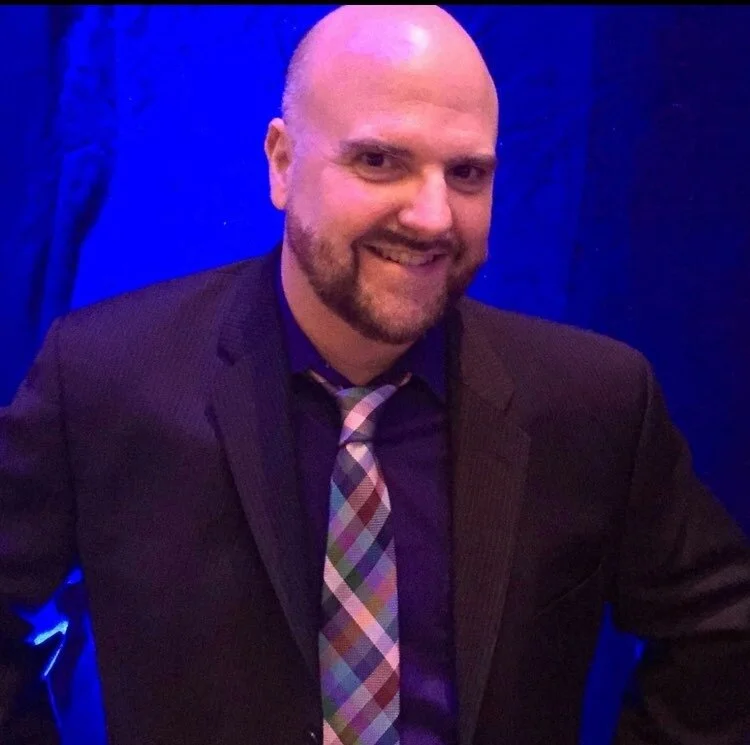
Today’s Pride 2020 Interview is with author Joseph Pittman, who also publishes under the pen name “Adam Carpenter.”

Joseph_Pittman author photo.jpg


Hi, Joe! I hope you’re staying safe and healthy during the current pandemic lockdowns. What are you doing to stay creatively motivated in these unusual times?

Everything I can. It’s important to keep your mind engaged. I have read over a dozen books since March, and it’s knowing that these authors have kept at their creative process reminds me that I too can do it. Some days I get a lot done, some days I get caught up in a novel that I want to finish. It’s all about resolution: knowing what’s possible, and that endings lead to future adventures.


Since June is Pride Month, I have to ask: how has being gay influenced or informed your art/craft?

I struggled for years with my identity. When I published the sweet, romantic TILTING AT WINDMILLS, one of the reviews called it “sentimental slop.” Someone else said, a man writing a romance? What, is he gay? Brutal words from anonymous people. But you are who you are. You feel what you feel. Finally recognizing my dual life helped make me whole. It led to Adam Carpenter.


You’re one of the most versatile writers I know, published in a variety of genres from mystery to erotica. Is there any genre you haven’t been published in that you’d like to try your hand at?

I think I’ve covered all my interests. I’ve done mystery, crime, caper, saga, erotica, romance, I even did a sort-of western (DUDE RANCH!). Literary fiction is a questionable category, as it expects a certain level of writing I’m not sure I have in me. My closest example of that would be WHEN THE WORLD WAS SMALL, inspiration after having read a John Irving novel. Otherwise, I’m content mostly with the mystery genre.


I think the last time I interviewed you, I wasn’t aware that you also publish under the pen name Adam Carpenter. Many writers publish under different names in different genres, and I’m always curious why and how the pen name was developed.

I was approached by a new online eBook publisher to write erotica. But given that Joseph Pittman is known for his Linden Corners books, I couldn’t publish DESPERATE HUSBANDS under my own name. It’s a marketing decision. Know your audience. And so Adam Carpenter was born. The name is ironic. Adam is biblically the first man. Carpenter was the profession of Jesus’s stepfather, for whom I’m named after. It was meant to mean we have all origins.


Has there ever been a story idea that you thought could just as easily be a Pittman book as a Carpenter, or vice versa? And does your writing process vary at all between pen names?

Actually, Jimmy McSwain was originally straight. I developed the idea in the early 2000s. He had a girlfriend, but the backstory of his father’s death remained the same. I sold it to an audio publisher for an original series, but it ended up not panning out. When Adam was created, I recreated Jimmy as gay. But otherwise, Joseph and Adam maintain separate identities and separate audiences. But each of my characters, Brian Duncan, Todd Gleason, and Jimmy McSwain make one person: me.


What’s next from Joseph Pittman and from Adam Carpenter?

Joseph is currently writing THE CASE OF THE CON IN CANNES, a Todd Gleason novella. There’s also a partial draft of THE WINDMILL’S PROMISE and a stand-alone, THE SILVER MOON. Adam’s busy too. SECOND SHOT, #7 in the Jimmy McSwain Files, plus #8 and a new series set in Provincetown, more of a “Murder, He Wrote” cozy style.

The big news though is THE SHADOW DIARIES. A year-long blog written (sort-of) by our dog SHADOW. It’s the story of how he was rescued and came to be loved by his two daddies. It’s actually the perfect combination of Joseph and Adam…and Steve.  It will be published this summer, with beautiful artwork by Steve Cummings. (Editor’s Note: Joseph’s husband, artist Steve Cummings, is tomorrow’s interviewee.)


Where can people find you and your work online?

All of my books are available at Amazon, Barnes & Noble.com, Kobo, iTunes, Audible.


JOSEPH PITTMAN is the author of the beloved Linden Corners series: TILTING AT WINDMILLS, A CHRISTMAS WISH, A CHRISTMAS HOPE, THE MEMORY TREE, and CHASING WINDMILLS. Other novels include WHEN THE WORLD WAS SMALL, BEYOND THE STORM, and LEGEND'S END. His crime fiction includes the Todd Gleason novels, LONDON FROG and CALIFORNIA SCHEMING, and novellas "The Perils of Penelope Pittston," "The Antics of Anton Ardno," "The Mystery of Marilyn and Her Men," and "The Business with the Bumbling Blind Man." Also available is the three-part serial suspense novel, THE ORIGINAL CRIME, in eBook and audio: PART ONE: REMEMBRANCE; PART TWO: RETRIBUTION; PART THREE: REDEMPTION. Under the Adam Carpenter name, he is the author of the Jimmy McSwain Files, a detective series set in NYC, which includes HIDDEN IDENTITY, CRIME WAVE, STAGE FRIGHT, GUARDIAN ANGEL, FOREVER HAUNT, FRESH KILL and the forthcoming SECOND SHOT. Other series include the Cane's Inlet Mystery: SCANDALOUS LIES, SINISTER MOTIVES, and SUSPICIOUS TRUTHS; The Wonderland Scandal: DESPERATE HUSBANDS, DESPERATE LOVERS, and DESPERATE ENEMIES; the Edenwood Saga, EDEN'S PAST, EDEN'S PRESENT, and EDEN'S FUTURE.

Reading Round-Up: May 2020

Continuing the monthly summaries of what I’ve been reading and writing.


BOOKS

To keep my numbers consistent with what I have listed on Goodreads, I count completed magazine issues as “books.” I read or listened to 8 books in May: 6 in print, 2 in e-book format, and 0 in audio format. They were:

1.       Lightspeed Magazine #120 (May, 2020 issue), edited by John Joseph Adams. The usual fine assortment of sf and fantasy short stories. This month’s favorites for me were C. Robert Cargill’s “We Are Where the Nightmares Go,” Millie Ho’s “The Fenghuang,” Charlie Jane Ander’s “Rager in Space,” and Adam-Troy Castro’s “The Time Traveler’s Advice to the Lovelorn.”

2.       Sal & Gabi Fix the Universe, by Carlos Hernandez. The second installment in Carlos Hernandez’s Sal & Gabi series, in which Sal & Gabi realized that Sal’s father’s efforts to discover a way to close the holes between the Universes may actually be endangering the multiverse, is as inclusive, fun-filled, and love-filled as the first. Full Review HERE.

3.       Zlonk! Zok! Zowie! The Subterranean Blue Grotto Guide To Batman ’66 Season One edited by Jim Beard. Episode-specific essays discuss casting, trivia, and behind-the-scenes facts. The tone of the essays varies from Very Scholarly to Very Silly, but they’re all enjoyable. Fans of the television series should check this out, and be on the lookout for volumes about seasons 2 and 3 in the future.

4.       The Shadow Hero by Gene Leun Yang and Sonny Liew. The Shadow Hero is a really fun re-imagining of an obscure Golden Age hero called The Green Turtle. The current creators move the character from the Asian theater of World War II to San Francisco’s Chinatown district, and the plot involves gang activity. The social commentary is interwoven with the character development. The graphic novel also includes an essay by Yang about the original comics character, and a reprint of the original Green Turtle’s first appearance.

5.       DC Comics: First Issues Specials, edited by Gerry Conway. A hardcover volume reprinting the short-lived and varying-in-quality DC Comics series called “First Issue Special.” It includes work by Jack Kirby, Joe Simon, Marty Pasko, Walter Simonson, Mike Grell, Gerry Conway, Bob Haney, Ramona Fradon, Steve Ditko and others, featuring characters DC was looking to return to prominence (The Creeper, Metamorpho, Manhunter, Doctor Fate, the New Gods) and newly-created characters (an alien Starman, Atlas, and Grell’s Warlord). Full review HERE.

6.       Dead Girl Blues by Lawrence Block. Block’s latest self-published novella (still on preorder as I post this, but due to release in mid-June) is not an easy read. It starts with the murder-rape (in that order) of a young woman and then follows the life of the murderer/rapist to the present day. It’s a deep character study of a particular mind and thus may not be for everyone. Full Review HERE. (I received an Advance Review Copy from the author.)

7.       The Empress of Salt and Fortune by Nghi Vo. Vo’s novella from Tor.com details the rise to power of a twice-exiled empress, through the eyes of a cleric documenting the contents of the Empress’s home-in-exile and the elderly woman the cleric meets there. Full review to come.

8.       A History of the Philippines: From Indios Bravos to Filipinos by Luis H. Francia. A concise history of the islands-nation from prehistory to the near present. Informative without being too granular.


STORIES

I have a goal of reading 366 short stories (1 per day, essentially, although it doesn’t always work out that way) this year (366 because it’s a Leap Year). Here’s what I read this month and where you can find them if you’re interested in reading them too. If no source is noted, the story is from the same magazine or book as the story(ies) that precede(s) it:

1.       “The Time Traveler’s Advice to the Lovelorn” by Adam-Troy Castro, from Lightspeed Magazine #120 (May 2020 issue), edited by John Joseph Adams.

2.       “One Hundred Sentences About the City of the Future: A Jeremiad” by Alex Irvine

3.       “Melting Like Metal” by Ada Hoffman

4.       “Rager in Space” by Charlie Jane Anders

5.       “I Bury Myself” by Carmen Maria Machado

6.       “The Fenghuang” by Millie Ho

7.       “We Are Where the Nightmares Go” by C. Robert Cargill

8.       “Destinations of Love” by Alexander Weinstein

9.       “The Proper Thing” by Seanan McGuire, on the author’s Patreon page.

10.   “Perilous Blooms” by Beth Cato, from Daily Science Fiction, edited by Jonathan Laden and Michele-Lee Barasso

11.   “Job Placement” by Jim Butcher, from the author’s website


So that’s 11 short stories in May. Once again way under “1 per day,” putting me further behind for the year so far. (May 31th was the 152th day of 2020.)


Summary of Reading Challenges:

“To Be Read” Challenge: This month: 0 read; YTD: 3 of 14 read.

366 Short Stories Challenge: This month:  11 read; YTD: 95 of 366 read.

Graphic Novels Challenge:  This month: 1 read; YTD: 10 of 52 read.

Goodreads Challenge: This month: 8 read; YTD: 58 of 125 read.

Non-Fiction Challenge: This month: 2 read; YTD: 6 of 24 read.

Read the Book / Watch the Movie Challenge: This month: 0; YTD: 0 read/watched.

Complete the Series Challenge: This month: 1 books read; YTD: 6 of 16 read.

                                                                Series fully completed: 0 of 3 planned

Monthly Special Challenge: May was Asian-Pacific/South Asian Heritage Month, so my goal was to read some poetry. Three books fit this goal (The Shadow Hero, The Empress of Salt and Fortune, and A History of the Philippines) and one short story (“The Fenghuang” by Millie Ho). Not as good as I’d have liked to have done, but better than I did with the poetry challenge last month.

June is Pride Month, so my goal is to read a number of authors from across the LGBTQIA+ spectrum.

Pride Month Kick-off Post

Normally, I’d start June off with a HAPPY PRIDE MONTH, EVERYONE! post near the start of the month (but rarely on the 1st because I’m rarely that organized) and then I’d attempt to make some Pride-centric or Pride-adjacent posts throughout the month. This year, I actually started thinking about what I’d post this month slightly in advance (okay, a whole *week*!). I decided what my Top Ten(ish) lists are going to be, which book reviews I absolutely wanted to post, and then hit on the idea of reviving the interviews that launched this blog so long ago. I started reaching out to fellow LGBTQIA+ creative types, and such folks in other walks of life and careers as well, and then sending short interviews, 5-6 questions, out via email.

But as I sit here at almost 2:00 am on June 1, 2020, part of me can’t help but wonder: is posting book reviews and top ten lists and interviews with writers and artists frivolous in light of what’s going on out there right now? 

Pride parades and gatherings were already cancelled (and rightfully so) to help slow the spread of Covid-19. I have friends and relatives of all walks who have been hit hard by the virus: a good friend who had it, finally tested negative, was given the all-clear, and still has days when he can’t summon the energy to walk across the room; a nephew in his early 30s who spent a week in the hospital while they tried different remedies to clear him up and whose husband also tested positive; a cousin who is a police officer in Brooklyn whose precinct almost completely tested positive in the course of a week or so; and too many more to list. I’ve watched so many people lose their jobs during the shutdown and have struggled with survivor’s guilt that I still have a full-time job that has allowed me to transition to working from home (an adjustment from the non-stop traveling the job normally entails, to be sure, but at least I still have a job).

On top of the virus, over the past few months I’ve watched threads in a number of comic book and science fiction groups I’m a member of on Facebook take decidedly anti-LGBTQIA, and especially anti-Trans*, turns (not to mention misogynistic and racist turns as well). The rhetoric has always been there among a section of every fandom, but it seemed in the first two months of Covid-19 to ratchet up considerably. Perhaps because people stuck at home have more time to lash out? I don’t know. But it was noticeable especially in how not-directly-connected-to-Covid-19 it appeared to be.

And then a few days ago George Floyd was murdered in plain sight by a police officer with a history of violence. And this weekend we’ve seen peaceful protests turn violent, with looting and property destruction. Not for the first time in our history, and probably not for the last. And Pride celebrates/memorializes the Stonewall riots, led largely by queer people of color. I do wonder how accepting the world would be of folks like me in 2020 if those riots hadn’t happened in 1969 (three years after I was born, and a good twenty years before I came out).

In light of all of this, does making posts about the things I love seem akin to rearranging deck chairs on Titanic? Am I just sticking my head in the sand to avoid how bad the world is getting?

It’s taken a lot of thinking, and a lot of false starts on this post, but I’m going to say the answer is “no.” As a number of the folks I’ve interviewed will say in posts over the coming month: continuing to share the things we love, the things that make us happy (whether that’s cute animal pictures, bad puns, or top ten favorite red-headed comic book characters), means we’re continuing to be human, continuing to try and put a little light – however dim, however short-lasting – into a world that’s growing darker by the day.

I don’t have all the answers. I can’t fix all of society’s woes. But I can do what I’m good at: which is hopefully make some people smile and provide some distraction.

So I’m planning to post a lot more often this month than I have been of late. Maybe not every day, but as many days as I can. Not every post will be about something LGBTQIA-related (for instance, tomorrow’s Reading Roundup of what I read in May), but many of them will be. And hopefully, the contents will make readers smile, or think, or both.

Stay safe, my friends.

Sunday Shorts: Two by Beth Cato

Sunday Shorts is a series where I blog about short fiction – from flash to novellas. For the time being, I’m sticking to prose, although it’s been suggested I could expand this feature to include single episodes of anthology television series like The Twilight Zone or individual stories/issues of anthology comics (like the 1970s DC horror or war anthology titles). So anything is possible. But for now, the focus is on short stories.


Recently on Facebook, I commented that Beth Cato is one of those authors who expertly breaks this reader’s heart on a regular basis, and yet I constantly go back for me. This was precipitated by reading two of Cato’s stories almost back-to-back, one a recent publication and one a reprint. Both stories are about struggling with the impending loss of a loved one, making hard decisions about whether it’s better to try to delay the inevitable or give in to it, and about what good may come, in time, from such a loss.

“Perilous Blooms” (Daily Science Fiction, May 26, 2020) takes place in a world where super-abilities are just common enough to be taken advantage of by a government that only wishes to remain in power. People who develop these extra abilities are corralled up, shipped off to war off-planet. The narrator of the story, a grandmother now, lost her own mother in such a way. We realize very quickly that she has reason to fear losing her very young grand-daughter the same way. Mother and grand-daughter are both struggling with the impending death of the woman who connects them. Grand-daughter thinks she can heal her mother, keep her from dying. Part of grandmother wishes this could be true, but most of her hopes her grand-daughter is just imagining the ability as a way of coping with the fact that her mother is dying. I won’t spoil the outcome, as I think the spooling out of what is true and what is imagined is part of what makes the story so heartbreaking. Cato keeps the POV very tight, gives us no more world-building than is absolutely necessary to understand the narrator’s quandary and the threat to the grand-daughter in a world where even pretending to have a super-ability is enough to get you snatched up by the authorities.

“The Sweetness of Bitter” first appeared in Orson Scott Card’s Intergalactic Medicine Show’s September 2013 issue and will be reprinted in an upcoming anthology I had the pleasure of proofreading. The setting is post-apocalyptic: what the apocalypse was is vague, but there’s little in the way of electricity, communities are barren, and what people the main character encounters are distrustful of strangers. The main character, Margo, and her daughter, Tara, are making their way towards a facility Margo hopes will stop her daughter from dying a second death. Second, because we learn very quickly that this daughter is a “sim,” an android recreation of the daughter she’s already lost once to leukemia. In the days before the collapse of society, repairing sims was fairly easy. But now, Margo’s only hope is a headquarters of the company that made the sims in the first place. The signs of Tara’s impending system failure become more apparent as the story progresses and the two encounter unexpected roadblocks. Those roadblocks made the story even more poignant to me, made me feel Margo’s anguish at yet another delay in healing her daughter. Backstory (where is Tara’s father? what else has Margo tried before getting to this point) are sketched in as the story progresses as well.

Back in December 2004 through February 2005, I was primary caregiver for my mother, who was slowly finally succumbing to the cancer she’d been fighting for the previous four years. In restrospect, the end was more apparent in December and even early January than I wanted to see – in fact, it was probably more apparent months earlier than any of us, even her doctors, wanted to admit. I see that struggle of mine to accept the inevitable, to make peace with it and start deciding what positives could come from her passing (for instance, we caught my own colon cancer just seven months later thanks in part to me “listening to my body” in a way my parents hadn’t), reflected in the main characters of these two stories. Neither of them wants their daughter to die. Neither of them wants the world to be the way it is. But both also find strength, to do what needs to be done (for me, that need was to acquiesce to my mother’s wishes to die at home surrounded by loved ones instead of in a hospital). There is hope even in their despondency.

And that is why I say that Beth Cato, especially in her short fiction, has the ability to rip a reader’s heart out and yet keep us coming back for more. In the past few years, largely due to her Blood of Earth trilogy, she has become one of my favorite writers.

Series Saturday: The Crossover Universe

This is a series about … well, series. I do so love stories that continue across volumes, in whatever form: linked short stories, novels, novellas, television, movies. I’ve already got a list of series I’ve recently read, re-read, watched, or re-watched that I plan to blog about. I might even, down the line, open myself up to letting other people suggest titles I should read/watch and then comment on.

crossovers masthead.jpg

As regular readers of this blog will have noticed by now, there are a number of things I’m obsessed with: series, short stories, Dracula (and the rest of Bram Stoker’s works), King Arthur, Macbeth, novellas, book series published with a “trade dress” of some kind, television series that last only one season, making lists, redheads, pistachio ice cream (okay, maybe those last two are not quite as obvious if you haven’t been around me in person) … and crossovers. I love when characters from different shows/movies/books appear together in whatever form: full on crossovers, or wink-wink-nudge-nudge passing references.

But as much as I love crossovers, I have friends who love them even more. Friends who love them so much, they’ve written entire books chronicling them. In other words, they’ve written a series about crossovers between literary characters, including Dracula and King Arthur, from movies, television, novels, novellas, short stories and comic books. That combination obviously pushes a lot of my buttons.

The series is called Crossovers: A Secret History of the World. Volumes 1 (from the Dawn of Time to 1939) and 2 (1940 to The Future) were written by Win Scott Eckert and published by Black Coat Press in 2010. Win passed the very heavy baton to Sean Lee Levin, who wrote Crossovers Expanded Volumes 1 and 2 which were published by Meteor House Press in 2016. Crossovers published since 2016 have been chronicled by Sean Lee Levin in a Crossovers Universe group on Facebook.

There is some impressive scholarship and dedication that went into producing these books. The average length of each volume is 450 pages. That’s a lot of reading, viewing, checking sources, and cross-referencing. Every entry includes a synopsis of the crossover, indicates where the characters/settings/objects in the crossover first appeared, and identifies the creators of said characters/settings/objects.

This is not just a random collection of chronologically-organized entries featuring every crossover in existence. There are rules to this Crossover Universe that Win and Sean have curated, rules that help organize the entire idea and present a cohesive whole despite how disparate the source material and authors referenced are.

Win built the concept off of Philip Jose Farmer’s “Wold Newton Family” literary biographies of Tarzan and Doc Savage, where the idea was that Burroughs and Dent (and many other authors) simply fictionalized true events that took place in “the world outside our window.” Thus, the basic tenet of the Crossover Universe: if it changes the history we know or presents the world we know as technologically more advanced than it really is, it doesn’t fit in this particular CU. So first instance, there are very few costumed, highly-powered super-heroes in the mix, and what few there are usually have notations that in the Crossover Universe, those characters are not as powerful or as world-changing. There are a lot of “street level costumed crusaders” in the mix, though – from the Lone Ranger to the various iterations of The Green Hornet and Batman to more recent folks like Luke Cage and Iron Fist. This is vital to maintaining the basic conceit of the Crossover Universe: costumed crusaders in trench coats or martial arts gear might get a lot of notice at the local level, and may even become “urban legends” (I’m looking at you, Batman), but entire teams of gaudily-costumed flying, fiery, winged, giant super-heroes and their super-tech crafts would be way too much for the “world outside our window.”

Likewise, Kaiju are also effectively off the table as their movie rampages destroy whole cities, but there are notations that some smaller version of Godzilla, for instance, exist in the CU with less world-devastating events. And of course Skull Island and King Kong exist here. There are no full-scale zombie outbreaks, but smaller localized zombie events that are quickly quelled and pass into being urban legends have happened in the CU. Vampiric, demonic and alien convergences the entire world notices are out (sorry, Independence Day fans), but smaller vampiric communities (The Lost Boys), deals with the devil (too numerous to list) and hidden aliens (hi, X-Files) are all frequent reasons for characters to crossover.

What else is in? Prehistoric characters from Conan to Ayesha to Hadon of Opar. Historical fiction characters like King Arthur, Solomon Kane, The Three Musketeers, The Scarlet Pimpernel, and Dracula. Famous detectives like Holmes, Miss Marple and Lincoln Rhyme are included, as are occult/paranormal detectives from Thomas Carnacki to Carl Kolchak to Buffy Summers and the Mulder-Scully team. Slasher flicks are rife with crossovers. And because it would be unprofessional not to mention it, one of my own stories is included: “So Much Loss,” taking place in 1897, in which Arthur Holmwood and Jack Seward, having moved in together and declared their love after the events of Dracula, mourn the loss of Lucy Westenra and team up with French occult investigator Sar Dubnotal to deal with one of Lucy’s unfortunate legacies. (The story also features a sneaky tie to the television series Lost, just for the heck of it.)

More stories featuring crossovers are published weekly. Not all of them fit the continuity established by Win and Sean; some of them purport to tell the “true story” of an earlier work in a way that doesn’t fit with the original works timeframe or facts while some repeat stories already told by others. There are, after all, only so many times Holmes can have met Dracula or Jack the Ripper “for the first time.” There are only so many times Mars can invade Earth before the general public begins to notice it’s not just mass hysteria. There are only so many disparate futures a universe can have. If the contradictions are small and easily reconciled, the authors engage in a bit of “creative mythography” to make them fit. If the details are just too incongruous, the stories are relegated to “exciting alternate universes.” The idea has always been to be as inclusive as possible while still keeping some organization to the whole, and Eckert and Levin succeed at making it all consistent.

Of course, anyone can create their own universe which characters crossover. Want more superheroes in your mix? Want none at all? Want to completely remove the works of authors you don’t like? Go for it, make it your own. I love reading different people’s takes on what is or isn’t in their particular head-canon of crossovers. But I have to give, and will always give, Win Scott Eckert and Sean Lee Levin for creating such a comprehensive, creative, and consistent Crossover Universe through these four books and Sean’s ongoing Crossover Universe Facebook page.

Top Ten(ish): Stephen King Books

Top Ten(ish) is a new series on the blog, in which I list of ten or so of my favorite things that have something in common: books by the same author or editor or publisher; music by the same band/performer, etc. Feel free to suggest topics (although if I don’t have a deep enough catalogue of experience with the category, I may choose not to post about it). The (ish) allows me to run slightly higher or lower, because exactly 10 is often hard for me to decide. Note: they’re MY favorites, for a variety of reasons not always having to do with quality alone. I’m not saying they are The Best (in fact, I never make that determination, about anything). Your Mileage May Vary (YMMV). Please, don’t yuck my yum and tell me how I’m completely wrong about anything on this list.


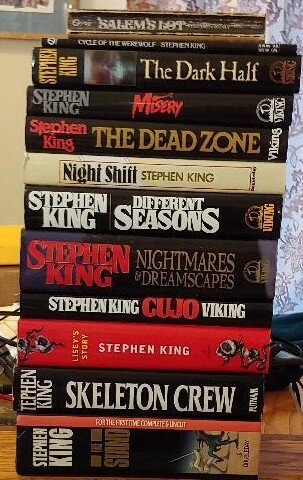
Top Ten King books (2).jpg


Today’s inaugural Top Ten(ish) post: Stephen King Books, in no particular order other than #1:

1.       ‘Salem’s Lot: I sincerely doubt anything will ever knock this novel from the top spot. I’ve read it about as many times as I’ve read Dracula. I love the sweep of the narrative, the sense that the infestation is so much bigger than the rag-tag band that is fighting it. I love the main characters. And every time I read the scene where Danny Glick shows up at Mark Petrie’s second-floor bedroom window I find myself back in 13-year-old Anthony’s panicked mind – when I first read the scene, it was a windy night and something scratched at my window; I looked and saw red eyes for a second. It turned out to be a raccoon on a tree branch, but I don’t think I’ve ever thrown a book across a room so quickly nor screamed quite so loud.

2.       Cycle of the Werewolf: I’m a bit of a sucker for books that are set up to match a calendar of some kind, whether it’s a chapter per day, per week, per month or per year. This one works so well on that level and as a novella, which is my favorite length to read. And of course, in the edition I have, the Bernie Wrightson art just makes the whole thing even better. (Admission: pretty sure I saw the movie Silver Bullet before I read the book on which it’s based. I like both, but when push comes to shove in this case, I think the book is far superior.)

3.       The Dark Half: I’m also a sucker for books where the main character is a writer, especially if that writer gets involved in supernatural or criminal shenanigans (See: ‘Salem’s Lot previously, and also the next entry on the list). Thad Beaumont may be one of my favorite characters of all time, and definitely one of my favorite King characters. I love the pacing and the reveals on this one, and the glimpses into how Thad wrote versus how George Stark wrote. Interestingly, when the book was released it was touted as the first part of King’s “final Castle Rock trilogy,” followed by the story “The Sun Dog” (which I read and liked) and the novel Needful Things, which is among the King books I haven’t read yet.

4.       Misery: Oh, Annie Wilkes, perhaps one of King’s greatest creations. As a play lover, I’ve always been fascinated by how a writer keeps the audience’s interest up when there are only two characters in the entire story, and I think this novel is something of a masterwork in that regard. Yes, there are the chapters with the new Misery novel Paul Sheldon is writing under duress, but otherwise for the most part it’s just Annie and Paul in a house. And every page is riveting. (Even moreso the movie, which may be one of the few times I like the movie slightly more than the book.)

5.       The Dead Zone: My memory’s getting rusty, but I’m pretty sure this was the second King novel I ever read (after ‘Salem’s Lot and before Cujo) and it has always stuck with me: Johnny’s sense of loss and disconnectedness after his five-year coma turning into a sense of mission as he realizes what he can do; the look into the seedier side of politics (very impressionable on a 13- or 14-year old small-town boy); the apocalyptic nature of the whole thing. I am way overdue for a re-read of this one.

6.       Night Shift: I am a short story fanatic (someday maybe I’ll write a post about why). I may not have read every Stephen King novel, but I have read every short story and novella collection and this was the first (and may have been the second King book I read; I know I read it around the same time as The Dead Zone and Cujo but can no longer remember the exact order). I know people love King’s dictionary-size works, but I think he’s a master of the short form. In this particular volume, favorites include “Jerusalem’s Lot,” “Sometimes They Come Back,” “Quitters, Inc.,” “Children of the Corn,” and “One for The Road.”

7.       Different Seasons: I might have to credit this volume for instilling my love of novellas (alongside Robert Silverberg’s To Open the Sky). Three out of the four included in this volume blew me away, showing me how a writer could step outside of their identified-with genre and still be fantastic. There’s barely a hint of horror at all in “Rita Hayworth and the Shawshank Redemption,” and no supernatural element to the horror of either “The Body” or “Apt Pupil” (which contrast two very different childhoods to great effect). And all three captivate me from start to finish. The only novella herein that I rarely re-read is “The Breathing Method.” When I first read it, it felt too much like Peter Straub’s Ghost Story in terms of set-up (I was young, opinionated, and unaware of the tradition of “gentlemen’s club stories.” Sue me.); I really should try to read it with fresh eyes.

8.       Nightmares and Dreamscapes: So yeah, there are a few themes among this list, as you can tell. More great short stories (perhaps I should do a separate post about Top Ten(ish) Stephen King short stories?). Favorites in this particular collection include “The Night Flier,” “Popsy,” “Home Delivery,” “Crouch End,” “The House on Maple Street,” “The Doctor’s Case,” and “Umney’s Last Case.”

9.       Cujo: Either the third or fourth King book I ever read (again, that pesky rusty memory). Another time I saw the movie before the book. In fact I almost didn’t read the book because the movie holds a not-pleasant memory for me: a friend and I went to see it and for various reasons got there late and ended up sitting in the second row. I developed a headache throughout the movie, and when we got to the scene where Cujo circles the car, the constant eye-view motion got to me, and I ran out of the theater to puke up my popcorn (the first of two times that’s ever happened to me). And of course got teased mercilessly. Pretty sure I never went to a movie with that friend again. The book was phenomenal, partly because another thing I love is books where the characters (and sometimes the reader) are unsure as to whether events have a basis in the supernatural or have a mundane explanation.

10.   Lisey’s Story: I had taken a long break from Stephen King novels, for no apparent reason, but December of 2006 brought me back to it, with almost back-to-back reads of The Colorado Kid (the first Hard Case Crime imprint release I read, leading to my love of that line and thus covered in a future post) and Lisey’s Story. I was in a rough place at the time: unexpectedly between jobs, still not quite over the death of my mother almost two years earlier, with heavy depression, questioning my abilities as a teacher and as a writer … and Lisey Landon’s loss and memories resonated with me. And look at that – another book in which a writer and his secrets take center-stage (or close to it), although this time we see that all through the lens of the writer’s wife/widow.

11.   Skeleton Crew: Have I mentioned how much I love short stories, and how much I love Stephen King’s short stories in particular? I’m not sure that’s been made clear enough in the preceding 10 entries. (That’s a joke, son. Poking a little fun at myself. All the best writers and bloggers do it.) In this volume, the stand-outs for me personally are “The Mist,” “Mrs. Todd’s Shortcut,” “The Raft,” “Word Processor of the Gods,” “The Ballad of the Flexible Bullet,” and “The Reach.”

12.   The Stand Complete and Uncut: Look, I don’t hate King’s doorstop-size novels. If I did, there’s no way the uncut version of The Stand would be on this list at all. I just in general struggle with 1,000+ page books: they’re a big investment, and I find they often take a long time to really “get going.” But The Stand is an exception to that trend: it starts with a bang, and then the swell of characters and locations carries you along until the characters come together and shit really starts to happen. Images sit in my mind’s eye years after reading it: Trashcan Man’s irradiated skin; the mystery of Mother Abigail, the skeeviness of Harold Lauder, the connection between Franny and Stu, the sacrifice of Nick Andros, and of course the big final confrontation.

Okay, Constant Readers: your turn! Hit the comments and tell me what your favorite King books are – put please do so without denigrating what other people love.

Review of DEAD GIRL BLUES

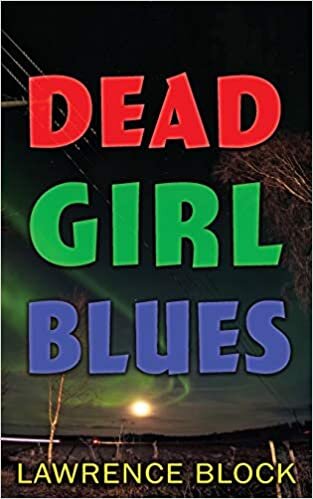
dead girl blues cover.jpg

TITLE: Dead Girl Blues

AUTHOR: Lawrence Block

218 pages, LB Productions, ISBN 9781951939649 (ebook, softcover, hardcover)


DESCRIPTION: A man walks into a bar. It sounds like the start of a joke, but it’s the precursor to a heinous crime: the murder and rape (in that order) of a young woman. The perpetrator and protagonist, at first known only as “Buddy,” narrates the crime and the rest of his life waiting to be caught without ever turning himself in.


MY RATING: Five stars out of five


MY THOUGHTS: Don’t read Dead Girl Blues if you’re looking for an action-packed thriller like Block’s Scudder or Keller books, or if you’re looking for the feel-good comedic hijinks of his Bernie Rhodenbarr series. If this book can be likened to any of Block’s work, it would be his early stand-alone crime books (many written under various pseudonyms and reprinted by Hard Case Crime in recent years). But even that comparison falls a bit short, because there’s really only one major crime in the entire story, and it happens in the opening pages.  No, what Dead Girl Blues really is is a character study, a deep dive into the inner monologue of a man who committed a crime when he was young and who has spent the rest of his life waiting to be caught while not making any effort to turn himself in. As such, the book is not going to be everyone’s cup of tea. But if deep psychological character studies of unsavory personalities are your type of book, you won’t be disappointed in Dead Girls Blues.

The book starts exactly as the description says, with a non-descript man walking into a bar in Bakersfield, California. Not long after, he drives away with a drunk woman, and proceeds to murder and rape her. The crime is brutal, and Block pulls no punches in describing how “Buddy” feels before, during and after (although the author thankfully does leave out the gorier physical details). And as far as the bloody crimes so many early Block books are known for, that’s it. “Buddy” never commits another crime (and even unintentionally stops one), other than doing what he can to change his identity as he moves east – a trick much easier in the late 1960s than it would be now – and ultimately settles in Lima, Ohio.

The rest of the book is “Buddy” moving on with his life in his new identity: joining the Rotary and other service organizations, becoming the owner of a business, building a family … but always with an eye over his shoulder waiting for the police to show up. The tension in the book comes from the reader wondering along with “Buddy” (or John Thompson, the identity he settles into completely long before the end of the book) whether he’ll finally get caught, as DNA forensic science grows by leaps and bounds.

And that’s where the character study aspect comes in. We meet the lead character in the present day, as narrator, but know nothing about his present life because he starts his story with the worst moment of his past. His own analysis of why he did what he did, and how he continues to fantasize about it without ever again acting on the impulse, doesn’t endear him to the reader. His thoughts about what he’ll do if the cops ever do show up at his door don’t necessarily make him any more likeable, as he considers options from suicide to a killing spree. But the tone of the story shifts as he finds a woman he can truly love, adopts her young son, has a daughter of his own. He becomes the kind of neighbor any of us who grew up in small towns would recognize: family man, businessman, member of the bowling league. “Buddy” is totally reprehensible but John Thompson is very likeable. Exploration of that dichotomy, of how someone can be a murderer and a family man, is at the heart of the book and informs pretty much every page. I have to wonder: if we, as the reader, didn’t know what “Buddy” had done, would we feel friendlier towards John? Would we love him as much as his wife and kids and neighbors do? If Block had structured things differently, introduced us to John and his family in the present first before revealing the murder/rape much later, would the revulsion we feel for him from the start be replaced by shock at the depth of his secret? We can’t know, of course, because Block wrote the book the way he wrote it. But even with his story told in chronological order, there was a small part of me that wanted the John we get to know to continue with his family even as most of me wanted “Buddy” to pay for his crime. Block manages to elicit these conflicting feelings in me without resorting to baldly manipulative language. Liking John sort of creeps up on you, as much as becoming a family man creeps up on him.

There’s also something Block never addresses but which occurred to me as a reader: could John Thompson ever have come into existence if “Buddy” hadn’t done what he did? We are all a product of every decision we’ve ever made, every right/wrong/in-between thing we’ve ever done (on top of being a product of all the decisions made for and about us when we were too young to have control over our own lives, as evidenced in the backstory of John’s wife Luella), and it was running from his crime that led “Buddy” to change his name and to settle in Lima.

I won’t spoil the later developments or the end of the story for those who might be intrigued enough to read Dead Girl Blues when it comes out in late June. There are a few twists, quite a few well-written high tension moments, and no end of questions for the main character and the reader that propel the action forward. As said at the beginning of the review: this book isn’t for everyone, but I think fans of psychological horror/crime will enjoy it.

Series Saturday: DC's FIRST ISSUE SPECIAL

This is a series about … well, series. I do so love stories that continue across volumes, in whatever form: linked short stories, novels, novellas, television, movies. I’ve already got a list of series I’ve recently read, re-read, watched, or re-watched that I plan to blog about. I might even, down the line, open myself up to letting other people suggest titles I should read/watch and then comment on.

First Issue Special covers.png


As much as the size of my comic book collection has fluctuated over the decades, there are certain series that I have just never been able to part with. It is nostalgia and sentimental value that drives these decisions rather than monetary – anyone who has seen my collection knows that I’m all about readability and favorite characters and not about getting the most value. I can’t imagine the day will come that will see me purchasing a “slabbed-and-graded” copy of any comic book. All of this is why there are what some would consider to be real “quirky gems” in my boxes.

And one of those quirky gems is the 1975-1976 DC series called First Issue Special. The idea, as explained by series editor Gerry Conway in the recently-released hardcover reprint volume, came from DC publisher Carmine Infantino: since new first issues sell better than anything else, why not a series that was all first issues, and anything that really caught readership attention would get spun off into an on-going title? I won’t reiterate the logistic issues Conway explains in his hardcover Introduction. I will say that the concept made for one of the most eclectic mixes of characters and creators one is likely to find under a single title.

The idea of “try-out” titles was nothing new by the mid-70s. DC’s Showcase title, defunct by this point but due to be revived in 1977 for a short run, was the book that launched the Silver Age with try-out revivals of The Flash, Green Lantern, and others. The Justice League and the Teen Titans got their try-out in the pages of The Brave & The Bold. Over at Marvel, try-out series included Marvel Premiere (which launched Iron Fist, Warlock, and a Doctor Strange revival, as well as an Alice Cooper issue), Marvel Spotlight ( which gave us Werewolf By Night, Ghost Rider, Son of Satan, and Spider-Woman), and Marvel Feature (which introduced The Defenders, and launched Red Sonja as well as the Thing’s team-up title, Marvel Two-in-One). What set First Issue Special apart was that no character or concept was given more than one issue to prove itself, because featuring a character in more than one issue would contradict the idea that every issue was a “first” issue.

The line-up of creators alone is impressive: three issues written and drawn by Jack Kirby, two written by Joe Simon, work by Marty Pasko, Walt Simonson, Steve Ditko, Mike Grell, Robert Kanigher, Bob Haney, Ramona Fradon and Conway himself. Not all of these folks were necessarily at the top of their games here, but that was probably as much from the rushed production schedule as anything. According to Conway’s introduction, it sounds like concepts were picked as much because they could be executed quickly as because they might be any good.

The characters were a mix of previously-established properties like Doctor Fate, the Creeper, the New Gods, Manhunter, and Metamorpho and new concepts. The newly-introduced concepts ran the gamut from solo super-heroes and teams (Codename: Assassin and The Outsiders) to boy gangs (The Green Team and The Dingbats of Danger Street) to fantasy (Atlas), pulp-adventure (The Warlord), gritty crime drama (Lady Cop) and science fiction (a new version of Starman).

Of the three Kirby issues, his revamp of classic Gold Age character The Manhunter probably holds up the best, a “passing of the mantle” type story that I think gets unjustly overshadowed by the Archie Goodwin-Walt Simonson Manhunter revamp that debuted in Detective Comics around this same time. The Goodwin/Simonson was more spy thriller than super-hero, while this Kirby issue features classic Kirby throwbacks to Golden Age over-the-top-ness (the villain in the first half of the story has a Hall of Talking Heads to taunt the hero!), and there’s really no reason both could not have been successful. The Kirby Manhunter, Mark Shaw, did eventually show up in issues of Justice League written by Steve Englehart. The Kirby issue that intrigued young me the most, though, was the very first First issue Special: Atlas. It always amazed me how Kirby managed to make even “high fantasy” concepts looks science-fictional, and that’s totally true here. Young me loved Greek mythology, and didn’t seem to mind (and still doesn’t) that this version of Atlas is nothing at all like his Titan namesake. Sadly, the character didn’t catch enough interest, although he’d be used later and to lesser effect in Superman stories written by James Robinson.

It’s also of interest that both Jack Kirby and Joe Simon took First Issue Special as a chance to return to their heyday as creators of “boy gang” characters (see The Newsboy Legion, the Boy Commandoes, and Boys’ Ranch). Kirby introduced The Dingbats of Danger Street (which apparently had been given the go-ahead as an on-going but then was yanked from the schedule with only the first of three completed issues seeing print here) while Joe Simon wrote (with art by Jerry Grandenetti) The Green Team. Talk about taking concepts in complete opposite directions! Kirby’s Dingbats are street-level kids fighting costumed supervillains, while Simon’s group are all young millionaires whose biggest concern is a crowd trying to shut down a project they’ve backed (also, awkwardly, the token black kid only becomes a millionaire by accident while the others are born into – and their privilege shows. Even in the 70s, this was obvious to me and made the Green Team my least favorite issue of the run). The Dingbats eventually showed up in some Superman stories and the Green Team in work by Grant Morrison in the 2000s.

Other than Atlas, my two favorite “new concept” issues were The Warlord and Starman. The Warlord was Mike Grell’s take on the classic pulp-adventure “hollow Earth” concept, following in the footsteps of Edgar Rice Burroughs and Jules Verne but putting his own distinct spin on it. Warlord is the one First Issue Special character to successfully spin out into a long-running series, but moreso because it was planned that way from the beginning rather than from immediate reader response. Regardless, I loved everything about the character, the world of Skartaris, and the series that followed. Grell has also always been one of my favorite artists and he’s at the top of his game in this issue. The science-fictional Starman, about a lone alien rebel looking to protect Earth from invasion by his own warrior society, had lots of promise that never got the chance to shine. I’d like to think if the character had had a multi-issue tryout in Showcase a few years later he might have taken off (although then much of what James Robinson eventually did with the character in his own Starman revival decades later might have been vastly different).

At the time of publication, I can’t say that the Lady Cop, Codename: Assassin, or The Outsiders issues made any strong impressions on me. Rereading them now, the first two are pretty solid character introductions with potential. I can see the appeal to some of The Outsiders as an ersatz Doom Patrol, with the main characters even less “passing-for-human” that Robotman and Negative Man, but to me the story seems to be trying too hard.

Of the previously-established characters given berths in First Issue Special, the return to Metamorpho by Bob Haney and Ramona Fradon is probably the most fun, a ridiculous non-stop romp through Washington DC’s landmarks to stop a vengeful ghost. Some of Haney’s dialogue is over-the-top, especially for lovesick goon Java, but Fradon’s art is spot-on. The Creeper story attempts to establish a new norm for the hero. It’s a good enough story, making use of a little-remembered (at the time) Batman villain, but I think it loses something by not having original creator Steve Ditko write as well as draw the story. The “Return of the New Gods” (also the series’ final issue) is pretty much one long fight scene and feels a bit rushed story-wise (trying to do too much to establish that these are the classic Kirby characters but also different) and art-wise (Mike Vosburg’s pencils feel much more dynamic in the Starman story the preceding issue), almost like the creators were pushed to hit a deadline.

The stand-out among these previously-established characters is clearly the Marty Pasko-scripted, Water Simonson-drawn Doctor Fate issue: a great story that builds on Fate’s history and lays the groundwork for later Doctor Fate solo features. I really wish this one had gone to series.

First Issue Special may have varied in quality across its short run, but conceptually it was more hit than miss for this reader, and I’m glad I still own all of the original issues as well as the new hardcover reprint. Now if DC would just get on the ball and give us hardcover or trade paperback collections of the one on-going series that successfully spun out of First Issue Special, Mike Grell’s The Warlord, I’d be really happy.

One-Season Wonders

one season wonders (2).jpg

“What series(es) cancellation(s) broke your heart?”

This question was posted on a friend’s Facebook page a few weeks ago. I noticed as I typed my response that while most respondents were naming long-running series they loved (everything from Lost to ER to Family Matters), my instinct was to list all the “one-season wonders” I remember loving and wishing I had been able to see more of. Okay, there were a few more-than-one-season shows that crossed my mind (Seaquest DSV; Hamish Macbeth; Wonder Woman) but the most immediate thoughts were of shows that lasted only one season.

It also occurred to me that most of the shows on this list of “one season wonders I loved” are shows I have not watched in at least a decade and in most cases several decades. Despite having quite a few of them on DVD. So I’m using this post as a challenge: today, I’m going to talk about these shows almost purely through the lens of nostalgia. Down the line, I’d like to do a rewatch and see if my thoughts on any of them have changed.

Note: This list is comprised of shows I actually remember watching and enjoying and wanting more of. So, for instance, shows like The Green Hornet, Honey West, and T.H.E. Cat are not on here because I have no clear memory of watching them.

And so, in no particular order, here are my thoughts on “One Season Wonders I Loved:”


Voyagers (1982): In general, I love time-travel stories (even when they make my head hurt if I think too hard about the concept). And my memories of this show are that the episodes were campy fun. I wanted to be Meeno Peluce’s Jeffrey Jones and couldn’t get admit even to myself that I had a crush on Jon-Erik Hexum’s Phineas Bogg (but I did recognize how similar the character’s name was to Jules Verne’s Phileas Fogg and wondered if there were a familial connection). I was definitely sad when this one ended.

Awake (2012): The concept intrigued me: a cop’s life is turned upside down when a car crash kills one member of his family – but depending on which reality he wakes up in (red or blue), it’s either his wife or his teenage son who is dead. But it’s the cast that sold me: Jason Isaacs. Dylan Minnette. BD Wong. Cherry Jones. Laura Innes. The finale episode works fine as a cliff-hanger and as a series finale, but I wish we could have seen where creator Kyle Killen was going next.

Invasion (2005): If I recall correctly, the 2005-2006 television season debuted three distinct “alien invasion via water” series (the other two were Threshold and Surface, neither of which I’ve ever seen). I latched onto this one: after a hurricane, a Florida town’s inhabitants start to act strangely, and a park ranger has to figure out what’s going on while dealing with his doctor ex-wife, her husband the sheriff, and other family members. It wasn’t a perfectly-acted show, but it did feature Kari Matchett, William Fitchner, Aisha Hinds, and was one of Evan Peters’ earliest series roles. (Fun story: a couple of years later I was on the Warner Brothers Studio Tour. We passed the lagoon where much of Invasion was shot. The guide asked if anyone had watched it. I was the only one who raised my hand. Tour Guide: “And that’s why it was cancelled.”)

Best of the West (1981): Yes, there are two Meeno Peluce shows on this list. Sue me.  I *loved* this sitcom about a Civil War vet who would rather talk than shoot and who moves his family to the West and ends up the town marshal. Joel Higgins as Sam Best, Meeno Peluce as his son, Leonard Frey as the criminal “town boss” and the great Tracey Walter as dim-witted bad-guy sidekick “Frog.”

Earth 2 (1994): A colony ship crash lands on the Earth-like planet they were aiming for, which is supposed to be uninhabited. But signs quickly point to native sentient life and that some humans may have preceded them there. This is one of those shows I feel really would have hit its stride in a second and third season. Debrah Farentino and Clancy Brown (as a good guy!) headed a cast that also had Terry O’Quinn, Roy Dotrice, and Tim Curry (“Hello, poppet!”) as recurring guest-stars.

Planet of the Apes (1974): This show was the subject of one of my first Series Saturday posts. I loved everything to do with Planet of the Apes back in the day: I rewatched the movies and the re-cut movie length versions of the tv series whenever they aired, owned all of the Mego action figures and playsets and a good number of the Marvel magazines (sadly, the action figures and the magazines are long gone). One of several shows I wound up writing fan-fiction about during my high school years (not that I knew it was called fan-fiction at the time).

Tales of the Gold Monkey (1982): Created to capitalize on the Indiana Jones craze, I adored this show for the over-the-top fun and because it co-starred Roddy McDowell, who I loved from the Apes movies and tv show. Another show I wrote fan-fiction about, my stories would have qualified as “Mary Sue / Gary Stu” because I created for myself the role of Jake Cutter’s nephew Baldwin.

Terriers (2010): The subject of a recent Series Saturday post and one of only two shows on this list I didn’t watch when it originally aired but came to later and loved. Brilliant modern-noir, top-notch acting by the cast led by Donal Logue and Michael-Raymond James, and a great soundtrack as well.

Firefly (2002): The other show on this list that I didn’t watch when it originally aired but came to on DVD later. So much promise left on the table. And a roundly great cast led by Nathan Fillion at his most endearing but anchored, in my humble opinion, by the great Ron Glass.

Dark Shadows (1991): I was both anxious and excited for the revival (now we’d call it a “reboot”) of one of my favorite childhood soap operas as a night-time drama. It was uneven, to be sure, but I still loved pretty much every minute of it. I’d been familiar with lead actress Joanna Going from her work on the soap opera Another World, was intrigued by the casting of Ben Cross as Barnabas and the great Jean Simmons as Elizabeth Collins Stoddard. The only upside to the cancellation: Joseph Gordon-Leavitt wound up on Third Rock from the Sun a few years later.

Clue (2011): I have a real soft-spot for this teen action series nominally based on the board game. It ran 5 episodes and the finale left room for a second season that never materialized. It was a fun story despite any real connection to the board game, but part of the reason I have a soft-spot for it admittedly is because one of the stars, Zach Mills, is the son of a friend of mine.

Quark (1977): Another one of those sitcoms that just cracked me up, even if some of the humor went over my eleven-year-old head. It was science fiction, it was funny. That was enough for geeky little me. And it was created by Buck Henry, who co-created Get Smart with Mel Brooks.

Man from Atlantis (1977): In retrospect, a large part of the attraction to this show for baby-gay Anthony was probably shirtless Patrick Duffy, but I didn’t really know that at the time. I loved the science fiction aspects of the show, and the friendship between the amnesiac outsider (Duffy) and the human doctor (Belinda Montgomery).

Salvage 1 (1979): Okay, this one’s in on a technicality. It officially had two seasons. But the second season only aired 2 episodes before cancellation, and all in the same calendar year as season 1. So I’m counting it. I loved it: Andy Griffith as a junk-man with his own spaceship for collecting satellite debris, Joel Higgins as his pilot/sidekick (so yeah, two Joel Higgins shows on the list!). The unrealistic logistics didn’t bother 13-year-old me. Another show I wrote fan-fiction about. I wish this one was on DVD or streaming somewhere.

Battlestar Galactica (1978): In my memory, the original Battlestar Galactica ran more than one season, so I was actually surprised when someone pointed out it in fact hadn’t. My father loved that it starred Lorne Green (from Bonanza). I enjoyed the swagger of Dirk Benedict, the scenery-chewing of John Colicos, and the fact that it also featured Noah Hathaway who I followed to The Never-Ending Story.

When Things Were Rotten (1975): Long before Mel Brooks directed Men in Tights, he co-created this sitcom spoof of the Robin Hood myth. In my memory, its classic slapstick over-the-top comedy was hilarious. Dick Van Patten, Ron Rifkin and Bernie Kopell co-starred.

The Prisoner (1967): I was one year old when the show originally aired, but I remember watching it in reruns years later with my father (I think it aired on the New York City PBS affiliate, but I could be wrong). One of my first spy-series loves (along with Mission: Impossible and The Man From U.N.C.L.E., both of which were not one-season wonders).

Kolchak the Night Stalker (1974): Another show that looms longer in my memory than it actually ran. The prototype for all of the “investigate weird goings-on” shows that came later. Several of the episodes scared the heck of out eight-year-old me – possibly not my father’s finest parenting moment letting me watch it.