SUNDAY SHORTS: 2025 RoundUp Part 2

Last week on Sunday Shorts I listed all of the stories I read in January through June of 2025, with links (where possible) to where they could be found. Today I present the list of all the short stories I read in the second half of 2025. As with the first post, I decided to break them up by month and then within each month by where they were published. I am really going to try to do monthly round-ups instead of waiting until the end of the year.


JULY

Lightspeed Magazine #182, edited by John Joseph Adams

“The Lord of Mars” by Meghan McCarron

“How to Win Against the Robots” by Katherine Crighton

“Domestic Disputes” by Naomi Kanakia

“Finding Love in a Time Loop: A How-To Guide” by Leah Cypess

“What Else, What Else, in the Joyous City” by Sadoeuphemist

“A Dish Best Served Cold, or, an Excerpt from the Cookbook of the Gods” by Oluwatomiwa Ajeigbe

“Un-Pragmagic: A Tyler Moore Retrospective” by Spencer Nitkey

“You Knit Me Together in My Mother's Womb” by Paul Crenshaw

Nightmare #154 edited by Wendy N. Wagner

“Asking For It” by Kristi DeMeester

“The Hearth” by Benjamin Percy

Clarkesworld #226 edited by Neil Clarke

“Serpent Carriers” by K.A. Teryna

The Dark #122 edited by Sean Wallace

“Skin and Bones” by Gary McMahon

The Shivers (Amazon Originals) (editor unknown)

“The Indigo Room” by Stephen Graham Jones

“Letter Slot” by Owen King

“The Blanks” by Grady Hendrix

“Night and Day in Misery” by Catriona Ward

Kaleidotrope Summer 2024 edited by Fred Coppersmith

“How to Create a God” by Rachel Meresman


AUGUST

Lightspeed Magazine #183, edited by John Joseph Adams

“Five Dispatches From Conflict Zone W-924/B Regarding Post-Battle Deployment of A. Thanatensis” by David Anaxagoras

“Feast of Famine” by Adam-Troy Castro

“The Dream Tourists” by Sarah Langan

“To Access Seven Obelisks, Press Enter” by V.M. Ayala

“It Might Be He Returns” by Fatima Taqvi

“Dad Went Out to Get the Milk” by Osahon Ize-Iyamu

“Savannah and the Apprentice” by Christopher Rowe

“Anti-Capitalism vs. The Man of Flowers” by Naomi Kanakia

Seanan McGuire’s Patreon

“Those Three Girls From Rush's Bend” by Seanan McGuire

Carribean Phantom and Other Stories (single-author collection)

“The Ghost Crutches” by Mary Gann

“The Wanted Bone” by Mary Gann

“Juan” by Mary Gann

“On Board the Argolla” by Mary Gann

“The Winking Eye” by Mary Gann

“There Is A Way” by Mary Gann

“The Governor's Visit” by Mary Gann


SEPTEMBER

Lightspeed Magazine #184, edited by John Joseph Adams

“Last Meal Aboard the Awassa” by Kel Coleman

“The Place I Came To” by Filip Hajdar Drnovsek Zarko

“The Girlfriend Experience” by C.Z. Tacks

“City of One” by Stephen S. Power

“Beginning Before and After The End” by Jake Stein

“Apeiron” by Cadwell Turnbull

“On An Unusual Kind of Spatially Distributed Haunting” by Bogi Takacs

“Human Voices” by Isabel J. Kim

Seanan McGuire’s Patreon

“Married in Gray” by Seanan McGuire

Nightmare #156 edited by Wendy N. Wagner

“Autogas Ferryman” by Champ Wonsatayanont

Carribean Phantom and Other Stories (single-author collection)

“Across the Bluff” by Mary Gann

“The Bungalow of Mystery” by Mary Gann

“Outwitting Justice” by Mary Gann

“What Was It?” by Mary Gann

“What Happened to Jim MacNarth” by Mary Gann

“The Black Bat” by Mary Gann

“Dr. Holm's Unsolved Problem” by Mary Gann

“Xcunya” by Mary Gann

“Orchid Hall” by Mary Gann

“Heirlooms” by Mary Gann

“Admonition” by Mary Gann

“The Tide of Retribution” by Mary Gann

“Port Quin” by Mary Gann

“Little Pitchers” by Mary Gann

“The Little Wood” by Mary Gann

Black Hole Heart and Other Stories (single-author collection)

“Black Hole Heart” by K.A. Teryna (Translator: Alex Shvartsman)

“Songs of the Snow Whale” by K.A. Teryna (Translator: Alex Shvartsman)

“The Errata” by K.A. Teryna (Translator: Alex Shvartsman)

“Untitled” by K.A. Teryna (Translator: Alex Shvartsman)

“Morpheus” by K.A. Teryna (Translator: Alex Shvartsman)

“Copy Cat” by K.A. Teryna and Alex Shvartsman

“The Chartreuse Sky” by K.A. Teryna and Alexander Bachilo

“The Jellyfish” by K.A. Teryna (Translator: Alex Shvartsman)

“No One Ever Leaves Port Henri” by K.A. Teryna (Translator: Alex Shvartsman)

“Madame Felides Elopes” by K.A. Teryna (Translator: Anatoly Belilovsky)

“The Tin Pilot” by K.A. Teryna (Translator: Alex Shvartsman)

“Lajos and His Bees” by K.A. Teryna (Translator: Alex Shvartsman)

“The Farctory” by K.A. Teryna (Translator: Alex Shvartsman)


OCTOBER

Lightspeed Magazine #185, edited by John Joseph Adams

“O Mechfighter, O Starfighter” by Osahon Ize-Iyamu

“The Porniest Porn in Porntown” by Stephen Graham Jones

“Everyone Hates the Auditor” by Megan Chee

“Thaw” by An Owomoyela

“At the Bottom of the Bonfire” by Martin Cahill

“Dirge and Gleam” by Micah Dean Hicks

“Dating Fortune” by Sean McMullen

“Drosera regina” by A.L. Goldfuss

Asimov's Science Fiction #596/597 edited by Sheila Williams

“Frankenstein's Book Launch” by Karen Heuler

Seanan McGuire’s Patreon

“Seek Sweet Safety” by Seanan McGuire

Nightmare #157 edited by Wendy N. Wagner

“Courtney Lovecraft's Book of the Dead” by Sam J. Miller

“The Version of Yourself That You're Better Off Without” by Aimee Ogden

Silver and Lead (October Daye Novel)

“Seas and Shores” by Seanan McGuire

Complete Tales and Poems (single-author collection)

“The Cask of Amontillado” by Edgar Allan Poe


NOVEMBER

Lightspeed Magazine #186, edited by John Joseph Adams

“How to Set Up Your Mourning Robot” by Angela Liu

“Elegy For Zephyr One” by Gene Doucette

“Visible Damage” by Nina Kiriki Hoffman

“Operation: Grapevine” by Joel W.D. Buxton

“In the Zone” by Lisa M. Bradley

“Beneath the Umdlebe Tree; or, A Vegetable Love Story” by Modupeoluwa Shelle

“How to Build a Homecoming Queen: A Guide by a Bad Asian Girl” by Tina S. Zhu

“The Cold Burning Light of Her” by Sam W. Pisciotta

Seanan McGuire’s Patreon

“What We Forget, What We Forgive” by Seanan McGuire

Delphi Anthology One (single-author collection)

“Kade & Karger: Big Trouble for Lil' Easy” by Randy Duncan

“The Four Aces: Zombies of Howling Cave” by Randy Duncan

“Conrad's Crew: The Crimson Triangle” by Randy Duncan


DECEMBER

Lightspeed Magazine #187, edited by John Joseph Adams

Reality Check by Nancy Kress

Us, In Another Universe by A.C. Wise

The Hub Living Among the Stars by Oyadotun Damilola Muess

The Space Between Us by P.A. Cornell

You Always Told Her You'd Give Her the World by Aimee Ogden

Cricket in the Lost Light by Jonathan Olfert

HagioClass by Jose Pablo Iriarte

Memories of the MindMine by David Marino

Seanan McGuire’s Patreon

Infringement by Seanan McGuire

Lies I Tell Myself: Stories (single-author collection)

How to Make A Souffle in 38 Easy Steps by Jeffrey Ricker

Looking for Bigfoot by Jeffrey Ricker

Peripheral by Jeffrey Ricker

Shepherd by Jeffrey Ricker

Multiverse by Jeffrey Ricker

Nightmare #159 edited by Wendy N. Wagner

The Short History of a Long-Forgotten, Ill-Fated Telenovela by Dante Luiz

Review: When the Baby Sleeps by Lyndsie Manusos

Shahmeran by Leyla Hamedi

The Dark #127 edited by Sean Wallace

Most Likely To ... (Class of 1997) by A.C. Wise

Lustre Mining by Eliza Chan

Uncanny #67 edited by Lynne Thomas and Michael Damien Thomas

The Millay Illusion by Sarah Pinsker

Who Are You Wearing? by Russell Nichols

To Speak in Silence by Mary Robinette Kowal

Plott Hound #3 edited by Allison Thai

The Cemetary Cat by Renee Carter Hall

A Mountain Retirement by Jeanne Kramer-Smyth

Clarkesworld #229 edited by Neil Clarke

The Job Interview by Carrie Vaughn

In Luck's Panoply Clad, I Stand by Phoebe Barton

Beneath Ceaseless Skies #447 edited by Scott H. Andrews

A Good Brother by Anne Wilkins

Vanya and the Dog Witch by Walter J. Wiese

Upon The Midnight Queer (single-author collection)

Dolph by 'Nathan Burgoine

Frost by 'Nathan Burgoine

Reflection by 'Nathan Burgoine

The Five Crowns and Colonel's Sabre by 'Nathan Burgoine

Five Shillings and Sixpence by 'Nathan Burgoine

The Doors of Penlyon by 'Nathan Burgoine

A Day (Or Two) Ago by 'Nathan Burgoine

The Future in Flame by 'Nathan Burgoine

Not The Marrying Kind by 'Nathan Burgoine

All of '81 by 'Nathan Burgoine

Folly by 'Nathan Burgoine

‘Nathan Burgoine’s Website

Wonder by 'Nathan Burgoine

A Winter's Hourglass by 'Nathan Burgoine

The Magazine of Fantasy and Science Fiction #773 edited by Sheree Renee Thomas

Soul Rebel by Maurice Broaddus

Christmas Days: 12 Stories and 12 Feasts for 12 Days (single-author collection)

Spirit of Christmas by Jeanette Winterson

The SnowMama by Jeanette Winterson

Dark Christmas by Jeanette Winterson

Christmas in New York by Jeanette Winterson

The Mistletoe Bride by Jeanette Winterson

O'Brien's First Christmas by Jeanette Winterson

The Second-Best Bed by Jeanette Winterson

Christmas Cracker by Jeanette Winterson

Ghost Story by Jeanette Winterson

The Silver Frog by Jeanette Winterson

The Lion, The Unicorn and Me by Jeanette Winterson

The Glow-Heart by Jeanette Winterson

Strange Horizons November 2025 ed. by Joyce Chng, Dante Luiz, Hebe Stanton, Kathryn Weaver and Aigner Loren Wilson

Palimpset by Melissa A Watkins

If Dragon's Mass Eve Be Cold and Clear (single-author collection)

If Dragon's Mass Eve Be Cold and Clear by Ken Scholes

The Doom of Love in Small Spaces by Ken Scholes

Golden Age Christmas Mysteries edited by Otto Penzler

Mystery For Christmas by Anthony Boucher

Christmas and Other Horrors edited by Ellen Datlow

The Importance of a Tidy Home by Christopher Golden

The Ones He Takes by Benjamin Percy

His Castle by Alma Katsu

The Mawkin Field by Terry Dowling

The Blessing of the Waters by Nick Mamatas

Dry and Ready by Glen Hirschberg

Last Drinks at Bondi Beach by Garth Nix

Return to Bear Creek Lodge by Tananarive Due

The Ghost of Christmases Past by Richard Kadrey

Our Recent Unpleasantness by Stephen Graham Jones

All The Pretty People by Nadia Bulkin

Loyla Sow-na by Josh Malerman

Cold by Cassandra Khaw

Gravé of Small Birds by Kaaron Warren

The Visitation by Jeffrey Ford

The Lord of Misrule by M. Rickert

No Light, No Light by Gemma Files

After Words by John Langan

Mysterious Bookshop Chapbook, edited by Otto Penzler

A Christmas Delivery by Andrew Welsh-Huggins

Jericho Hill Books Chapbook, editor unknown

A Night in the Lonesome by Richard Chizmar and W.H. Chizmar

A Good Night For Bad Dreams by W.H. Chizmar

The Adventures of Sherlock Holmes, editor unknown

A Scandal in Bohemia by Arthur Conan Doyle

The Adventure of the Red-Headed League by Arthur Conan Doyle

A Case of Identity by Arthur Conan Doyle

The Bascombe Valley Mystery by Arthur Conan Doyle

The Only Way Out Is Through The Window (single-author collection)

Build My Body Around My Bones by Christine Vartoughian

All The Falling Stars of Rome by Christine Vartoughian

As Far As My Body Can Take Me by Christine Vartoughian

The Only Way Out Is Through The Window by Christine Vartoughian

The Color of Forgotten Dreams by Christine Vartoughian

Small Creatures Vanishing by Christine Vartoughian

The Benefits of Being Misunderstood by Christine Vartoughian

Animals of A Vicious Kind by Christine Vartoughian

No One Dies Here by Christine Vartoughian

The Last Encore by Christine Vartoughian

Top Ten(ish) Tuesday: 10 Favorite Books of 2025

I read 123 books in 2025. Disregarding titles that were re-reads from previous years, here are my Top Ten(ish) favorites, in no particular order, with links to reviews if I posted one.


How To Fake a Haunting by Christa Carmen. I have loved all of Christa Carmen’s “New England Gothic/Spooky” novels to date, so it is probably no surprise that this in on my list of favorites. A woman in an emotionally abusive relationship decides to gaslight her husband into thinking their house is haunted … but what if it really is? Keeps you guessing throughout as to how supernatural it really is and provides more than a few good scares and creepy moments along the way. I interviewed Christa earlier this year about her writing process and this book in particular.

Christmas and Other Horrors, edited by Ellen Datlow. The darkest, shortest days of winter in general, and Christmas in particular, is traditionally a time for ghost stories. Editor par excellence Ellen Datlow once again assembles a great group of writers to spin horror stories around Christmas, Hannukah, Solstice, Yule, and even sometimes your average winter day. Favorites included Mary Robinette Kowal’s “To Speak in Silence,” Benjamin Percy’s “The Ones He Takes,” “Return to Bear Creek Lodge” by Tananarive Due, “Gravé of Small Birds” by Kaaron Warren, and M. Rickert’s “The Lord of Misrule,” but there isn’t a clunker in the group.

The Breathtaker Collection by Mark Wheatley and Marc Hempel. I didn’t read a lot of graphic novels in 2025, but even if I had this one would stand out. A woman who survives by draining the energy from the men who loves her is pursued by a government super-hero for her perceived crimes. There are so many twists in this one I can’t say much more without giving them away. I interviewed Mark Wheatley earlier this year about his creative process.

Our Share of Night by Mariana Enriquez, translated into English by Megan McDowell. In a narrative that spans decades and changes not just character point of view but narrative style multiple times, Enriquez melds almost every sub-genre of horror (cosmic, cult, supernatural, slasher, body, medical, and haunted houses) with generational trauma and the real-world horrors of living under Argentine dictatorship. This is not an easy read, but I stand by my assessment that it is an important, vital, one. I read it for the Stanza Books (Beacon NY) Dark Fiction Book Club and reviewed the book back in February.

Born A Crime by Trevor Noah. Noah’s memoir of growing up under Apartheid as a mixed-race child moved me deeply. Highly recommended. I listened to the audiobook, narrated by the author, which just heightened the emotion.

The Front Seat Passenger by Pascal Garnier, translated into English by Jane Aitken. I tripped across this French noir novella at McNally Jackson Books in Rockefeller Center, apparently the only one of Garnier’s books currently in print in English translation. At first it didn’t feel particularly noir, but man does it get there. And when it does, the twists are fast and furious. I loved this one so much I immediately sought out everything of Garnier’s I could find in translation and look forward to doing a deep dive at some point soon.

Saint Death’s Herald by C.S.E. Cooney is a complex fantasy featuring Miscellaneous “Lanie” Stones, a young necromancer who gets ill at any signs of violence, which makes her job – hunting down the man possessed by the ghost of her evil grandfather – must more difficult. This is the second book about Lanie (the first was Saint Death’s Daughter) and the third volume is coming in 2027. The world-building is wonderful, the characters quirky and relatable, the footnotes hysterical. I reviewed the book earlier this year.

Cheddar Luck Next Time by Beth Cato. The mystery I loved so much, I read it then listened to it on audio, then moderated a Sparta Books (Sparta NJ) book club meeting about it. Set in a small town on the central California coast and featuring an autistic lead character who gets embroiled in a murder investigation while dealing with the recent death of her grandmother, Cheddar Luck is hopefully the start of a new series that is part cozy mystery, part thriller. I reviewed the book earlier this year, and interviewed author Beth Cato as well.

The Art Thief by Michael Finkel. The second non-fiction book on the list. Read this one for the Mystery Book Club at Stanza Books, and I’m so glad we did. The book is a fascinating character study of the most successful art thief in European history – a thief who operated not in the 18th or 19th century, when such thefts would have been easier, but the 1990s!

Amplitudes: Stories of Queer and Trans Futurity, edited by Lee Mandelo. The second short story anthology on the list, almost every story in this volume blew me away with honest yet still hopefully looks at the future and in particular how LGBTQIA+ people exist in that future. I particularly liked Sarah Gailey’s “Moonwife,” Bendi Barrett’s “Six Days,” “The They Whom We Remember” by Sunny Moraine, and “Sugar, Shadows” by Aysha U. Farah, all of which I talked about in my review back in July.

Sgt. Janus and the House That Loved Death by Jim Beard is the fourth book in his occult detective series starring the mysterious Sgt. Roman Janus. This may or may not be the last book in the series, as it establishes quite a change in the status quo for the main character and his compatriots. The previous three books, which I reviewed in a Series Saturday post in 2020, were purely epistolary in style; this book breaks that mold a bit to great effect. I really need to update the series post to include this latest book.

Girl in the Creek by Wendy N. Wagner. A fantastic ecological horror novel set in the Pacific Northwest that manages to feel cosmic and claustrophobic at the same time and equally effectively. That’s quite a feat in my opinion. Wendy N. Wagner’s work always excites and intrigues me, and this one was no exception. I reviewed this one back in July.

Dogs Don’t Break Hearts by ‘Nathan Burgoine. Burgoine is another of my “go-to” auto-buy authors. This is his second “HiLo” book (High Interest, Low Readability, aimed at getting kids who struggle with reading to read). Teenager Beck volunteers at a dog rescue to get over being gaslit by who he thought was his boyfriend, and through the dogs finds both healing and a new love interest.

Black Hole Heart and Other Stories by K.A. Teryna, translated into English by Alex Shvartsman. The only single-author short story collection on this list, for which I still need to write a review. Teryna’s speculative fiction (mostly science fiction, but not all) is character-based while still exploring larger ideas of how technology improves and disrupts our lives and our greater need for community. I particularly enjoyed “Lajos and His Bees,” “Madame Felides Elopes,” “The Chartreuse Sky,” “Songs of the Snow Whale,” and the title story.


I have to also include Jack of All Comics! A Fan Conversation About the King of Comics, edited by Jim Beard. I had an essay in the book, discussing Jack Kirby’s work on DC’s 1970s Sandman title, so this feels a little like cheating or shameless self-promotion … but the other essays in the book are all great. Each one focuses on a different series Kirby wrote and/or drew for Marvel and DC through the 60s and 70s – from the well-known (Fantastic Four, Thor, Superman’s Pal Jimmy Olsen) to the more obscure (his issues of DC’s First Issue Special, the aforementioned Sandman run and his work on DC’s war comic The Losers).


Top Ten(ish) is a feature where I identify my personal top ten (or so) favorites in a given category. The key words there are “my” and “favorites.” My favorites may not be your favorites, and I’m not claiming that my favorites are necessarily the best in a given category. Everyone’s tastes are different, and “best” is subjective. I welcome polite discussion on these lists.

ELLEN DATLOW, Author - Interview

This week, I’m happy to be interviewing another one of my personal favorites, editor Ellen Datlow.

(From her website:) Ellen Datlow has been editing science fiction, fantasy, and horror short fiction for almost thirty years. She was fiction editor of OMNI Magazine and SCIFICTION and has edited more than fifty anthologies, including the horror half of the long-running The Year’s Best Fantasy and Horror. Ellen is currently tied with frequent co-editor Terri Windling as the winner of the most World Fantasy Awards in the organization’s history (nine). Ellen was named recipient of the 2007 Karl Edward Wagner Award, given at the British Fantasy Convention for “outstanding contribution to the genre.” She lives in New York.

ANTHONY: Between April and September of 2011, you’ve had four anthologies hit the market. That’s a lot of pages in a short period of time! Are you planning on resting any time soon?

ELLEN: Those anthologies were finished more than a year before they were published, and Naked City was essentially finished two years before it came out. I should have only had three original anthologies published in 2011 (I also had The Best Horror of the Year volume three) but Naked City was delayed by a year as I awaited a promised story that never came in (by a BIG name). Publicizing four anthologies within a six month period became very complicated. It was difficult for me to remember which writers were in which book. Honestly. I occasionally screwed up and set up two different signings for which I asked the wrong writers to participate—embarrassing.

I’m currently only working on one original anthology plus The Best Horror of the Year volume four so have it relatively easy this year as far as editing goes. But overall, I’d much rather be editing more than less.

ANTHONY: The anthologies seem to work in pairs. For instance, NAKED CITY: New Tales of Urban Fantasy from St. Martin’s Griffin and SUPERNATURAL NOIR from Dark Horse. From the titles, a casual browser might assume both feature gritty city-based detective tales with a supernatural angle. Aside from different publishers, what distinguishes these two books from each other?

ELLEN: The two anthologies aren’t meant to be related at all. Naked City is mostly comprised of stories reflecting the traditional definition of urban fantasy as written by John Crowley, Ellen Kushner, Peter Beagle, and Delia Sherman—fantasy that takes place in cities, with the city almost always crucial to the action. It mostly includes fantasy and some dark fantasy.

Supernatural Noir is a horror anthology-combined with the flavor of the film noir of the 40s-50s. In my guidelines I made it clear that I didn’t want only detectives as main characters and that in fact I’d prefer that writers avoid that kind of set-up. And mostly they did.


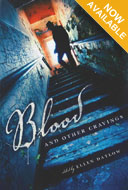
Blood & Other Cravings

ANTHONY: I can ask the same question of TEETH: Vampire Tales from Harper and BLOOD AND OTHER CRAVINGS from Tor. Both are, on the surface, books about vampires. One thing that distinguishes these two books from each other is the target audience. TEETH is aimed directly at the YA market, BLOOD is for the adult reader. What else separates them?

ELLEN: Teeth is a young adult anthology in which vampires play a major role. Every story has an actual blood-sucking vampire in it.

Blood and Other Cravings is an adult anthology focusing on vampirism, the concept rather than the creature, even if there are vampires in some of the stories. It’s a follow up to my two vampirism anthologies from 1989 and 1991: Blood is Not Enough and A Whisper of Blood (both recently brought together in one big beautiful new hardcover edition titled A Whisper of Blood from the Barnes & Noble imprint Fall River Press).

ANTHONY: Only one of your four recent anthologies has been with a co-editor: TEETH, with long-time editing partner Terri Windling. What are some of the key differences between solo editing and co-editing?

ELLEN: With co-editing, some of the material might include stories that one editor loves more than the other. When I’m editing solo it’s completely my taste. We both approach writers and wrangle them (to get the stories in on time). We both read and choose the stories. We split some of the tasks. Terri writes our meaty introductions, I put together the bios of each contributor and compile the front matter. Depending on how strongly one of us feels about a particular story we want to buy, either Terri or I will work with the writer on the substantive editing. I do most of the line editing.

ANTHONY: You’ve worked with Terri quite often, but I think you’ve had other co-editors as well. Is there a quantifiable difference between working with Terri and, say, Nick Mamatas?

ELLEN: I’ve worked with Terri on six young adult anthologies, two adult anthologies, and three middle-grade anthologies. (For our Year’s Best Fantasy and Horror we each chose our halves independent of one another.) They were all fantasy.

The only other editor I’ve worked with has been Nick Mamatas. Nick and I worked on Haunted Legends, a horror anthology, together. Nick knows a different pool of writers than Terri and I do so it was interesting to work with some of “his” authors. Since it was our first anthology together it was also a little worrisome at the beginning as to whether we’d be on the same wavelength. Luckily we were and I’d be happy to work with him again.

ANTHONY: You’ve occasionally been accused of having a sort of stable of writers: “If this is a Datlow anthology, I don’t even have to look at the ToC, I know Authors A, B, C and D will be included.” And I’m sure other editors receive similar accusations. Do comments like that have any influence on your story choices?

ELLEN: I don’t consider having a stable of writers an negative, and it’s certainly not a limitation. It’s a fact of editing over a long period of time. One works with writers whose work one enjoys and who produces great stories –on time. So of course the editor will keep buying stories from those writers over the course of time, as long as she can –see my note in the next paragraph. I have a huge stable of writers from my seventeen years at OMNI Magazine, my almost six years at SCIFICTION, plus the twenty-five Best of the years I’ve edited.

In every original and reprint anthology I edit there are some writers whose work I use repeatedly, but there are always other writers I’ve only rarely or never before published in my anthologies. This is especially true in my best of the year anthologies. Just in the last two years of The Best Horror of the Year I published twelve stories by writers I’d never worked with before—some of whom I’d never even read before. The crucial thing to know about writers is that they often stop writing short stories once they publish their first novel, so to me it’s important to use their best short fiction while they‘re still writing it. Very few of the hundreds of writers I published in OMNI write many if any short stories today. So yeah. I’m delighted to be able to continue to publish writers like Jeff Ford, Kathe Koja, Kaaron Warren, Laird Barron, and Richard Bowes as long as they continue to produce great stories. I’d be stupid not to.

ANTHONY: We’ve talked in the past (mostly on your livejournal) about the importance of story placement, especially in the lead-off and concluding positions of an anthology. Is there ever pressure from a publisher to ensure Author X gets the lead-off, even if you personally feel the story is more appropriate for the middle of the book in relation to the rest of the stories you’ve accepted?

ELLEN: No –that’s generally my decision. Twice, in-house editors have suggested a switch, but when that happened it had nothing to do with who the writer was but the feeling that a different story would work better as the lead. And thinking it over I concurred.

ANTHONY: How intimately do you work with writers before a story is officially accepted? Have you ever initially accepted a story and then through the editing process realized that it wasn’t going to work out?

ELLEN: I never accept a story before I’m certain that it will work out. If I love a story but feel it needs too much work to buy outright, I’ll ask the writer if she’s willing and able to work with me on it (setting out what I see are the problems). If she is, I’ll make it clear that until we’re agreed on the revisions and I see the rewrite I can’t commit to taking the story (giving specific suggestions and asking specific questions about the trouble spots). But if I and the writer put that much time into rewrites I know that ultimately I will take the story.

When I was a lot newer to editing I had a few experiences in which I requested rewrites but the writers didn’t “hear” what I was saying–they made changes I didn’t ask for and in so doing made their story worse. Which is why I’m much more careful now how I ask for rewrites and try to be very specific.

Also, because I’m not working on a magazine/webzine with a slush pile, I usually work with writers whose work I’ve solicited. That means I’m familiar with their work and hope we’re on the same wave length. Going back to your questions about “stables”–that’s the advantage of working with writers you’ve worked with before. You know that you can work with them, saving a lot of time and energy on both sides.

ANTHONY: You’ve said in recent interviews that all of your anthologies are “invitation only.” I can’t resist asking: how does one go about getting invited? Or, to phrase the question more seriously: what catches Ellen Datlow’s attention these days that might cause you to invite a writer to a future anthology?

ELLEN: By me noticing your fantastic stories when I read for The Best of the Year. And since I skim so many sf/f/h/mystery short stories (and some non-genre) being published in a given year, I’m pretty aware of new writers as well as the more established ones.

ANTHONY: Speaking of the future. I see that one of your and Terri’s classic anthologies, SNOW WHITE, BLOOD RED, was recently reissued. Are there any plans to continue the Adult Fairy Tale series?

ELLEN: We’re very pleased that Snow White, Blood Red has always done so well. It sold 72,000 in mass market pb which is amazing for an anthology. It was in print for over ten years and it’s great that it’s in print again from Fall River Press.

I grew tired of reading so many re-told fairy tales after six volumes of adult tales and three of middle grade (for children). The sub-genre exploded after we did ours. I don’t know if there’s much of a market for new anthologies on the theme any more– I’m not convinced we could sell a new one these days. Black Thorn, White Rose, and Ruby Slippers, Golden Tears are both currently in print from Wildside Books. What we’d love is for the last three volumes to be reissued, as they’ve been out of print for awhile.


ANTHONY: What else are you working on at the moment?

ELLEN: Terri and I recently finished a young adult anthology called After: Dystopian and Post-apocalyptic Tales that will be published by Hyperion next fall. And we’re working on an adult Victorian Fantasy anthology for Tor. And of course, The Best Horror of the Year volume four, my bête noir.


ANTHONY: Finally, can you tell my readers about the Fantastic Fiction readings at KGB in New York City?

ELLEN: It’s a monthly reading series started in the late 1990s by writer Terry Bisson and Alice K. Turner (former fiction editor at Playboy), originally pairing genre and mainstream writers at the KGB Bar, an east village institution (in New York City). I took over for Alice in spring 2000 and when Terry Bisson left for the west coast in 2002, Gavin J. Grant began co-hosting with me. Matthew Kressel took over for Gavin in 2008 and we’ve been co-hosting ever since.

ANTHONY: Thank you for taking the time to chat, Ellen! Always a pleasure!

* * * * * *

I somehow managed to not ask Ellen my usual closing question (“What is your favorite book and what would you say to convince someone who hasn’t read it that they should?”), so I’ll mention that my favorites of Ellen’s anthologies are The Beastly Bride, co-edited with Terri Windling, and Naked City.

You can go to Twitter to follow @ellendatlow, and you can find Ellen on her own website.

I’m also happy to announce my first Interview Giveaway! Ellen and her publisher, Dark Horse Books, have been kind enough to provide me with a copy of SUPERNATURAL NOIR to give away in conjunction with this interview.


Supernatural Noir

SUPERNATURAL NOIR is a “masterful marriage of the darkness without and the darkness within … an anthology of original tales of the dark fantastic from twenty modern masters of suspense,” including Gregory Frost, Paul G. Tremblay, Caitlin R. Kiernan, Elizabeth Bear, and Joe R. Lansdale.

To be entered to win the book, leave a comment on this post sharing the name of your favorite Ellen Datlow-edited (or co-edited) anthology. Winner will be picked at random from all comments left here by midnight Tuesday, November 29th. That’s one week from today, folks! Comments are screened, so you won’t show up on the post right away, but rest assured I will approve all comments that are not obviously spam (and I do seem to get a lot of that) and chose from all eligible comments!