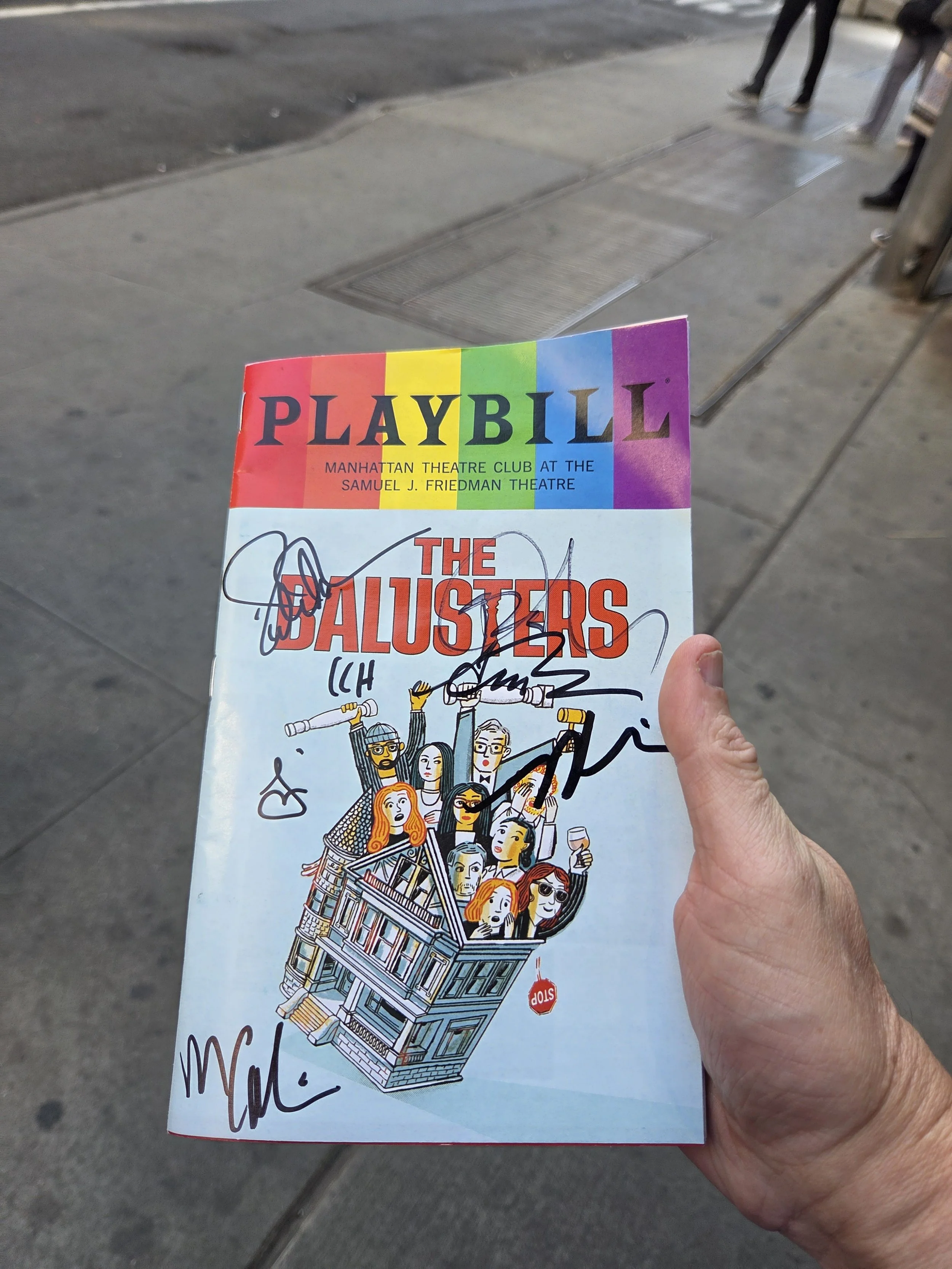
I was fortunate enough thanks to my friend Deb Flood, to catch The Balusters at the Samuel J. Friedman Theatre the day before it closed. I wish I had seen it sooner and been able to sing its praises while it was still running. But in life, just as in comedy, timing is everything and good timing is something I usually don’t have. But hey, I still made it thanks to a well-timed phone call and unexpectedly free afternoon.
The Balusters is a comedy about a homeowner’s association in a neighborhood that has been declared a historic landmark area – which means changes, however small or needed for the safety of residents, face an uphill battle to approval. And as soon as one of the characters starts complaining about increased traffic and speeding cars at the intersection outside her front door, you know what battle is about to be fought and what the likely stakes will be. Hint: it’s not actually a fight over balusters (the short vertical spindles that support handrails on stairs, balconies, and decks).
The ensemble cast was led by Anika Noni Rose as new neighbor Kyra Marshall, a wife and mother coerced into joining the homeowner’s association by her friend Melissa (Jeena Yi) and in who’s living room all the action takes place, and by Richard Thomas as board president Elliot Emerson, Kyra’s opposite number in so many ways, who is also the realtor who sold the Marshalls the house (along with almost every other younger person on the board) and who happens to be the former employer of the Marshalls’ housekeeper Luz (Maria-Christina Oliveras). The board is diverse. Sure there are five white people – three older (Elliot; Penny Buell (played by understudy Sophie Hayden at our performance); and Ruth Ackerman (Margaret Colin) and two younger (Willow Gibbons (Kayli Carter) and Alan Kirby (Michael Esper), but there’s also a Latino man (Isaac Rosario, played by Ricardo Chavira), two black people 9 (Kyra, and Brooks Duncan, played by Carl Clemons-Hopkins; Brooks also happens to be gay), and one lesbian Asian woman (the aforementioned Melissa). Over the course of the play, the differences in age, cultural background, economic status, upbringing, and beliefs result in clashes that are comical, revealing, and topical.
Both the titular balusters and the dangerous intersection begin a conversation about historical accuracy versus necessary modernization that veers into arguments about who benefits from such changes, who is adversely affected, and who is doing the gatekeeping. By the end of the play, every character’s secrets have come out – and, remarkably, every character comes across as both sympathetic and unlikeable in equal measure.
Let me stress – this is a social commentary comedy. It is pointed and biting and thought-provoking. I spent a fair amount of time during the week after the show thinking about the points it was making and especially why the moments that made me uncomfortable made me uncomfortable. But I also laughed through most of the 90-ish minutes (the show is performed without an intermission), even when it was uncomfortable (or maybe because it was uncomfortable?). This is a tribute to David Lindsay-Abaire’s script and Kenny Leon’s direction. The pacing, the way secrets are revealed, the shifting alliances, the mad rushes and the quiet moments – perfect synergy of writer and director, in my opinion.
Credit also to Derek McLane’s scenic design (the set includes the living room, dining room, foyer, a staircase, and through windows and front door, the house’s porch is partially visible) which never feels cramped but also doesn’t feel unrealistically spacious; to Allen Lee Hughes’ lighting and Dan Moses Schreier’s sound designs, which work flawlessly together (the thunderstorm scene is a highlight, but I also impressed with the lights and sounds for the scene changes, as the action takes place over the course of several months), and Thomas Schall’s fight direction (when you have people of disparate ages and physical abilities flailing at each other, expressing each character’s physicality is key to the realism of it all). Emilio Sosa’s costumes and J. Jared Janas’ hair and makeup also do heavy lifting in expressing each character’s personality.
While Rose and Thomas are the clear centers of the story (they share a final bow), the show is truly an ensemble and there were no weak performances. I overheard some people in the audience before the show expressing disappointment that they were not seeing Marylouise Burke as Penny, but Sophie Hayden was brilliant in the role – in fact we’re pretty sure that in the second half of the show, her line delivery made everyone on stage almost corpse. The laughter in that moment was a bit more real, I thought.
I have no idea if The Balusters will be touring or if there will be a barrage of regional theater productions, but I can wholeheartedly recommend it if a production does turn up near you. Just don’t ask the theater to replace the staircase balusters with something more historically accurate.
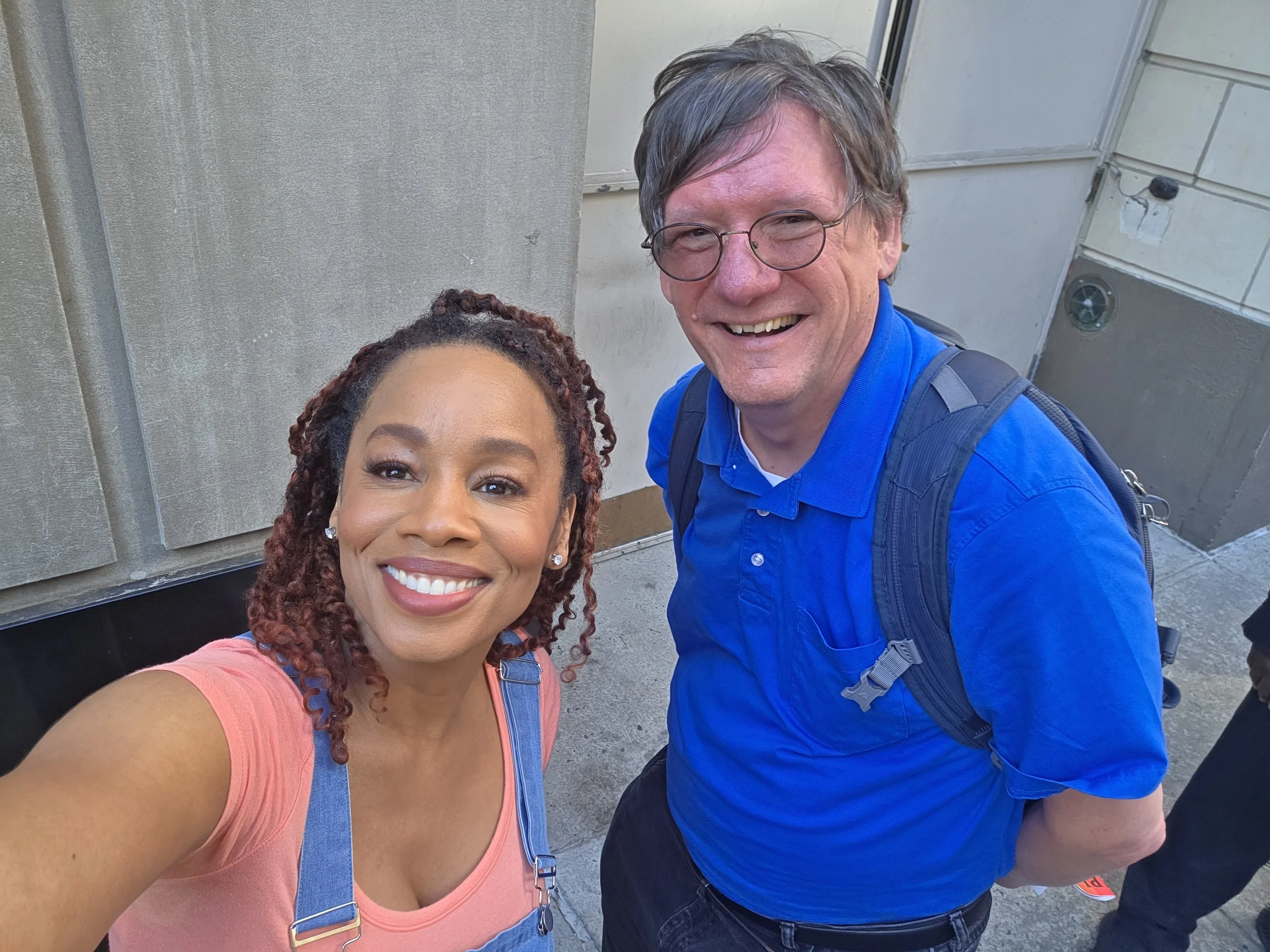
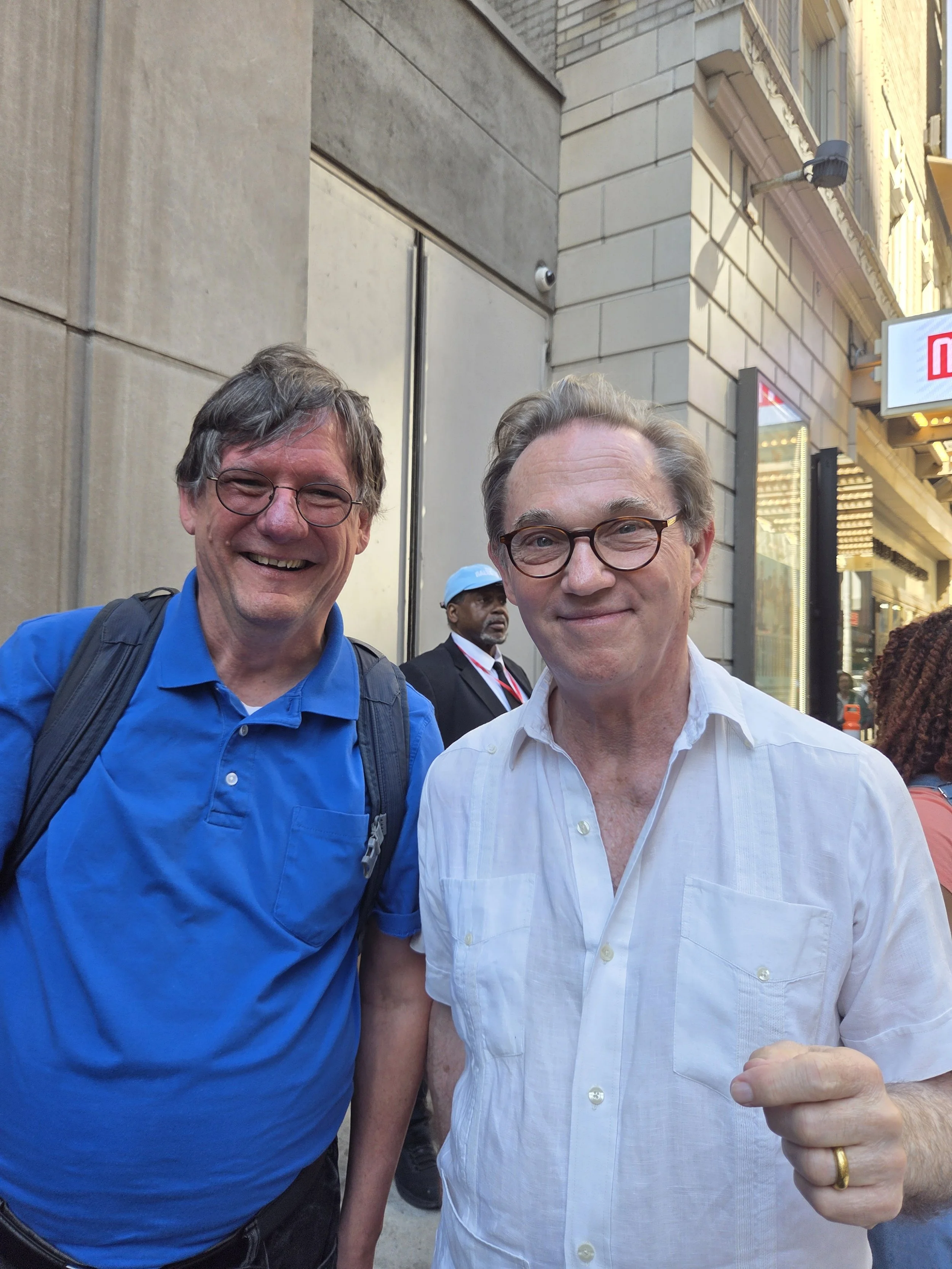
Also: I rarely stagedoor these days, but meeting both Richard Thomas and Anika Noni Rose was a true treat. (Yes, I had a crush on John Boy back in the day.)
I’ve always loved live theater, and in the past couple of years I’ve been making a stronger effort to see more of it. Theater Thursday is an occasional series where I talk about live theater, both shows I’ve seen recently and shows I’ve loved in the past.
