• HOME
  • ABOUT
  • BIBLIOGRAPHY
    • INVISIBLE ME
    • CANOPUS
    • PARADISE FEARS
  • BLOG
  • CONTACT
Menu

ANTHONY R. CARDNO

Street Address
City, State, Zip
Phone Number
Anthony R. Cardno is an American novelist, playwright, and short story writer.

Your Custom Text Here

ANTHONY R. CARDNO

  • HOME
  • ABOUT
  • BIBLIOGRAPHY
  • FREE STORIES
    • INVISIBLE ME
    • CANOPUS
    • PARADISE FEARS
  • BLOG
  • CONTACT

Book Review: A LITTLE VILLAGE BLEND

July 17, 2021 Anthony Cardno
a-little-village-blend cover.jpg

TITLE: A Little Village Blend

AUTHOR: ‘Nathan Burgoine

54 pages, Bold Stroke Books, ISBN 9781636790978 (e-book)


DESCRIPTION: (from the Goodreads page): According to Ivan’s sister Anya, Ivan’s tea leaves promise his perfect match is out there somewhere, just waiting to be swept off their feet. Ivan knows Anya’s always right—an annoying trait for a sister if ever there was one.

Ivan’s own knack with tea might not deal with the future, but it’s pretty good at helping with the here and now. When Walt, a tall, dark, and grumpy soldier shows up at his store, NiceTeas, in obvious need of a hand—and a dog-sitter—Ivan rises to the challenge and offers blends to make Walt’s life a little easier. There’s just no way he can help falling for the guy. But Anya says Walt’s not the one for Ivan, and the tea leaves don’t lie.

Is it worth steeping a here-and-now while waiting for the one-and-only? Ivan’s not sure, but everything tells him it’s all just a matter of finding the right blend.


MY RATING: 5 stars out of 5


MY THOUGHTS: In A Little Village Blend, ‘Nathan Burgoine delivers another sweet gay romance set in the Little Village, an area of primarily queer-owned businesses and queer-occupied apartments. This time, the focus is on Ivan, the co-owner (with his sister Anya) of NiceTeas. Like a lot of Burgoine’s characters who occupy the Village, Ivan has a touch of magical ability: he’s able to imbue the teas he hand-crafts and brews with a little extra magic to help the drinker with what they most need: a boost of confidence, an extra layer of calm, and so on. Anya has a related ability: she can read the grounds/leaves left behind and get a sense of a person’s future. And as the synopsis says, when harried and moody Walt enters NiceTeas, Ivan’s heart says one thing and Walt’s tea leaves as read by Anya say something different. The novella builds off that conflict smoothly and steadily without unnecessary detours or extra complications. It’s a tightly told story with a happily-ever-after (or at least a happily-for-now).

Even at a scant 54 pages, there’s a ton of character development for all three leads. We get details of Ivan and Anya’s childhood and why Anya is so concerned about Ivan finding a man who will love and protect him. We get a good sense of Walt’s current job and the not-work-related reasons he’s out-of-sorts on his first and later visits to NiceTeas. We get a look at Anya’s acting career and her thing about cats. And we get a sense of NiceTeas regular clientele and neighboring businesses as background characters, something a lot of books don’t seem to bother with.  Some of these folks are characters we’ve met in other Burgoine stories, and some are brand new. This being the Village, there’s a strong possibility every new character who gets a name and even a bit of dialogue could turn up as the main character of a later story or novella.

And then there’s Sensei, the husky who brings Ivan and Walt together as more than tea-purveyor and customer. This dog absolutely steals the show in every scene he is in and is the heart of the novella. Often, pets can be nothing more than plot devices or as an easy signifier of a character’s personality (“Oh, this guy is a dog lover”). Not so Sensei. Burgoine and his husband have a husky, so it’s no surprise he gets the dog’s personality so totally correct.

It bears noting once again: you do not have to have read any of Burgoine’s other Little Village novellas to follow the plot of this one. The author goes out of his way to make sure these stories stand alone and can be read in any order. So if gay romance with subtle magic and an adorable husky sounds like your thing, pick up A Little Village Blend.

In BOOK REVIEWS Tags book review, LGBTQ, novellas, 'nathan burgoine, bold stroke books, romance
Comment

Book Review: THE PAST IS RED

July 16, 2021 Anthony Cardno
the past is red cover.jpg

TITLE: The Past is Red

AUTHOR: Catherynne M. Valente

160 pages, TorDotCom Publishing, ISBN 9781250301130 (hardcover, also in e-book and audio)


DESCRIPTION: (from the Goodreads page): The future is blue. Endless blue...except for a few small places that float across the hot, drowned world left behind by long-gone fossil fuel-guzzlers. One of those patches is a magical place called Garbagetown.

Tetley Abednego is the most beloved girl in Garbagetown, but she's the only one who knows it. She's the only one who knows a lot of things: that Garbagetown is the most wonderful place in the world, that it's full of hope, that you can love someone and 66% hate them all at the same time.

But Earth is a terrible mess, hope is a fragile thing, and a lot of people are very angry with her. Then Tetley discovers a new friend, a terrible secret, and more to her world than she ever expected.


MY RATING: 4 out of 5 stars


MY THOUGHTS: In The Past is Red, Catherynne M. Valente’s novella-length expansion of her short story “The Future is Blue,” Tetley Abednego navigates life as the most hated girl (and later, woman) in Garbagetown with a combination of complacency and curiosity. Tetley’s first-person narration is engaging, reminding me of the way older people who are not accustomed to visitors will enthusiastically share their life story. Words and scenes come out in a rush of lush detail interspersed with moments of deep introspection or pain or longing for what has been lost.

Tetley does not waste time or energy on longing for what was lost in the collapse of civilization precipitated by the rising of ocean levels – she and her contemporaries call those who lived before the rising waters “fuckwits” and blame them what happened to the world. And yet, as the novel goes on, it becomes apparent that some things are ingrained in human nature and will never change. Regardless, there’s a certain amount of curiosity about life pre-flood evident in the details Tetley shares, such as when she discovers a long-lost award for “best wife.” She may not be able to mourn a world she never knew, having been born a generation or more after everything flooded, but she can certainly express interest in it while she describes the world she actually inhabits.

The fact that Tetley exists as a social outcast in her own world colors the way she describes it. She tells us several times that Garbagetown – the former Pacific Ocean floating garbage patch that has solidified enough that people can live on it – is the most beautiful place on the Earth. I can’t help but feel her outcast status infuses her opinion with a certain amount of nostalgia for something that never really was. The first arrivals on the patch sorted the trash to create districts (“Candle Town,” “Electric City,” “Aluminumopolis,” and so on) that have become somewhat rigid and codified and even judgmental of each other. Cycles of “haves and have-nots” repeat even in places where people have truly little.

The first half of the novella is comprised of the original short story, which I had never read, and introduces us to Tetley, her estranged family, her first love, and the society around her. We never get to see the event that turned her into the most hated girl in Garbagetown, but we do get to see the aftermath and her on-going punishment. Valente doesn’t spell out the worst of it, but plenty of violence is done unto Tetley throughout the first half of the book – violence she must accept humbly, and which someday could result in her death. It’s a tough dichotomy to get used to – Tetley’s clearly enthusiastic personality and the way she draws into herself when she gets visitors, not knowing what will happen and if this will be the time they kill her.

The second half of the novella is narrated from a later vantage point in Tetley’s life. Her enthusiasm for telling her story is still the same, but she’s learned more about the world outside of Garbagetown and has a new place to live. This expansion of what she (and therefore we) knows allows the story to breath and prevents it from becoming repetitive. It also allows a peak into Tetley’s dreams. Valente allows Tetley to mislead us a couple of times, describing what she wishes would have happened before telling us what really did. I don’t think this quite makes her an unreliable narrator, but it did make me question some of the narrative – which I think was the author’s intent. Tetley is still convinced that what she did, while devastating to her fellow citizens, was the right thing to do to save them from a worse fate. Nothing in the book directly contradicts this belief, but when Tetley is faced with making a similar choice will she decide the price she’s already paid is worth making people hate her all over again?

The Past is Red is more than just a look at the world post-climate-change. It’s a rumination on acceptance, complacency, curiosity, and the ways in which knowledge can be freeing or can be a burden.

I received an Advance Reading Copy from the publisher via NetGalley in exchange for an honest review. THE PAST IS RED will be published on July 20, 2021.

In BOOK REVIEWS Tags book review, novellas, TorDotCom, Catherynne M. Valente, Science Fiction
Comment

Book Review: SUN-DAUGHTERS, SEA-DAUGHTERS

July 14, 2021 Anthony Cardno
Sun-Daughters Sea-Daughters cover.jpg

TITLE: Sun-Daughters, Sea-Daughters

AUTHOR: Aimee Ogden

112 pages, TorDotCom Publishing, ISBN 9781250782120 (softcover)


DESCRIPTION: (from the back cover): Gene-edited human clans have scattered throughout the galaxy, adapting themselves to environments as severe as the desert and the sea. Atuale, the daughter of a Sea-Clan lord, sparked a war by choosing her land-dwelling love and rejecting her place among her people. Now her husband and his clan are dying of an incurable plague, and Atuale’s sole hope for finding a cure is to travel off-planet. The one person she can turn to for help is the black-market mercenary known as the World Witch—and Atuale’s former lover. Time, politics, bureaucracy, and her own conflicted desires stand between Atuale and the hope for her adopted clan.

Sun-Daughters, Sea-Daughters has all the wonder and romance of a classic sci-fi novel, with the timelessness of a beloved fairy tale.


MY RATING: 5 out of 5 stars


MY THOUGHTS: Aimee Ogden’s Sun-Daughters, Sea-Daughters may use The Little Mermaid as its base and starting point, transferring the action to a far-future interstellar setting, but I wouldn’t categorize this novella as a retelling of the fairy tale. Rather, I think it’s the sort of “what happened next” story that has always intrigued me (it’s not chance that of all the musicals based on fairy tales, Stephen Sondheim and James Lapine’s Into the Woods is my favorite, or that I list Bill Willingham’s comic series Fables and the first season of the television series Once Upon a Time as favorites as well). I quite enjoy stories that explore the “happy ever after” (or not-so-happy, as the case may be), and Ogden delivers the goods.

Rather than start with a straight retelling of The Little Mermaid and progressing linearly from there, Ogden dumps us right into the “no longer so happily ever after” described in the back cover copy: in the very first scene, Atuale (the “mermaid” of the story) leaves her husband’s sick-bed to seek the aid of her former “pillow-friend” Yanja, known more commonly as “the World-Witch:” a smuggler/dealer/scientist who years before created the gene modifications that allowed Atuale to leave her controlling father’s sub-sea kingdom. Hints about those events, about Atuale’s relationships with Yanja, with husband Saareval and his family, and with her estranged father are dropped throughout the story but don’t dominate it. There’s just enough for us to recognize the basics of the original fairy tale, to see how science replaces magic in the narrative, and to understand just how much things have changed for Atuale and Yanja.

And things have changed: the World-Witch is not physically the person Atuale knew and is no longer disposed to acquiesce to Atuale’s needs just for old times’ sake. And of course Atuale is no longer the same person she was when she first left for the surface world. Through dialogue and quiet moments, Ogden explores the question of whether two people who used to love each other but have been estranged for a long time can find their way back to some kind of mutual respect and peaceful co-existence. It’s a beautifully told arc woven around all of the other stumbling blocks the pair encounter, both on-planet and off, attempting to reach Atuale’s goal. I don’t want to spoil any of those stumbling blocks in this review. Suffice to say, they varied from the personal to the societal and none of them felt contrived or forced.

I also must compliment Ogden on how, as someone else put it, “casually queer” the novella is. Atuale and the World-Witch’s former relationship isn’t played for shock or as anything outside of the societal norm, nor are the physical changes in Yanja. It’s always nice to read stories about alien cultures that do not have the prejudices we have here on Earth in the present day.

Although Sun-Daughters, Sea-Daughters was written pre-pandemic, it came out during it, and it was hard not to see echoes (perhaps unintentional given the time) of it in how different the response to such a fast-spreading plague is from culture to culture across not just a planet but star-systems. This, and references to miscarriages as well as a bit of body horror, may make the novella a harder read for some folks.

In the end, Aimee Ogden delivers a fast-moving star-spanning adventure in which the lead characters discover/rediscover themselves during a quest to help others regardless of the personal repercussions, expanding on the questions of identity and belonging that are a part of any good retelling or expansion of The Little Mermaid.

I received an Advance Reading Copy from NetGalley/TorDotCom in exchange for an honest review, which is clearly being posted far later than anticipated. Sun-Daughters, Sea-Daughters was released in February of 2021.

In BOOK REVIEWS Tags book review, Science Fiction, fairy tales, novellas, TorDotCom, LGBTQ
Comment

Book Review: HALF SICK OF SHADOWS

July 13, 2021 Anthony Cardno
Half Sick of Shadows cover.jpg

TITLE: Half Sick of Shadows

AUTHOR: Laura Sebastian

448 pages, Ace Books, ISBN 9780593200513 (hardcover, also e-book and audio)


DESCRIPTION: (from the back cover): Everyone knows the legend. Of Arthur, destined to be a king. Of the beautiful Guinevere, who will betray him with his most loyal knight, Lancelot. Of the bitter sorceress, Morgana, who will turn against them all. But Elaine alone carries the burden of knowing what is to come--for Elaine of Shalott is cursed to see the future.

On the mystical isle of Avalon, Elaine runs free and learns of the ancient prophecies surrounding her and her friends--countless possibilities, almost all of them tragic.

When their future comes to claim them, Elaine, Guinevere, Lancelot, and Morgana accompany Arthur to take his throne in stifling Camelot, where magic is outlawed, the rules of society chain them, and enemies are everywhere. Yet the most dangerous threats may come from within their own circle.

As visions are fulfilled and an inevitable fate closes in, Elaine must decide how far she will go to change fate--and what she is willing to sacrifice along the way.

The Lady of Shalott reclaims her story in this bold feminist reimagining of the Arthurian myth from the New York Times bestselling author of Ash Princess.


MY RATING: 4 out of 5 stars


MY THOUGHTS: I’m not sure that there are any truly “new” ways to reinterpret the core of the Arthurian mythos, but Laura Sebastian introduces some interesting tweaks to the most commonly accepted/popular versions of the story that are out there, including a couple of large and unexpected changes to character histories. These changes will probably not please readers who expect every story about Camelot to march to the standard beats of the childhood of Arthur, the Arthur/Guinevere/Lancelot love triangle, the Arthur/Morgana/Mordred history, the quest for the Holy Grail, and the final battle between the forces of Arthur and Mordred. But I found Sebastian’s rearranging of relationships and histories intriguing and would love to know more about how she made the story choices she made. To say “this is not your grandfather’s Camelot” is probably accurate. And I think that’s perfectly okay. (Your mileage may vary, of course.)

Sebastian riffs on the traditional idea that Arthur’s childhood was spent away from his father’s court – but instead of Arthur being unaware of his true heritage and raised by Sir Ector as younger brother to Sir Kay, Arthur is traded by King Uther to the magical island nation of Avalon as a hostage to prevent further war between Albion and Avalon (a fairly common practice in medieval times), and grows up with a half-fae Lancelot as well as fellow human transplants Guinevere and Elaine along with half-sister Morgana. She deals with the on-going confusion about Arthur’s half-sister’s name (sometimes Morgan le Fey, sometimes Morgana, something Morgause) by giving him two half-sisters, twins named Morgause and Morgana.  These are foundational changes that add new breath to the story without veering too far from the familiar. She also takes the somewhat daring step of making Mordred Arthur’s bastard half-brother rather than his bastard son. I’ll admit that this particular change threw me, as it didn’t seem to add anything to this narrative other than giving Arthur a blood relative rival for his father’s throne. I didn’t hate this change, but it didn’t seem as smooth a fit as the other changes Sebastian makes, especially since Mordred is pretty ineffectual as a foil, appearing in a bare handful of scenes. Likewise, the expected Arthur/Guinevere romance is present but is somewhat tangential to the Elaine/Lancelot romance. In a book inspired by The Lady of Shallot, this should not surprise anyone. Also fair warning: Merlin fans will be disappointed. He’s in a couple of key scenes, but he is not the master manipulator/mentor figure he’s usually portrayed as.

Elaine is the narrator, and she tells the story in three time frames, only one of which is linear. The “present day” time frame starts with the friends being told it is time to leave Avalon because Arthur’s father had died and it’s time for him to claim the throne. The flashbacks to how Elaine came to Avalon, met the others, and studied under Avalon’s head oracle, Nimue, are revealed when current events inspire Elaine to remember key moments of their past – thus, not in chronological order but mirroring the way we all tell people about our pasts: “Oh, then there was the time we…” And then there are Elaine’s disjointed and sometimes contradictory visions of the future, of the ways in which Arthur will come to that final battle, and even what will happen after. These are of necessity also not linear/chronological, because in this world the nature of visions is to change as present-day decisions strengthen or weaken the possibilities the future holds. This is the way I prefer to see prophecies handled in fiction: not as a single immutable “must happen” event, but as something open to interpretation and change. One of the central ideas of the book is that the future is only solidified once it is in the past. Jumping across these time frames, sometimes in mid-chapter, kept the book interesting for me.

I’m also not sure just how much this qualifies as a “bold feminist retelling” the way the cover copy claims. Yes, Elaine is the narrator of the story, which focuses equally on her friendships with Morgana and Guinevere and touches slightly on her mentoring by Nimue. But an oft-repeated refrain in the book is that the friends must do “All For Arthur” – meaning whatever it takes to get him on the throne of Camelot. Throughout the book, the female characters (and Lancelot) subvert their own needs, sacrifice their own happiness, to assure Arthur meets his destiny – even though Arthur himself doesn’t seem really capable of accomplishing the tasks set for him without his friends’ interference. Half Sick of Shadows is definitely a bold, one could even say controversial, take on the Arthurian legend – but I’m not convinced it’s really “feminist” in the way the cover copy claims. (In fact, I’d go out on a limb and say that it possibly fails the Bechdel test, as most of the conversations between the female leads are about the two guys.) That being said, I do wonder if this is just the first book in a series, and that the major decision Elaine makes at the end of the book will in fact lead to a much broader reinterpretation that further centers the female characters. If this is a series, I’ll definitely be signing on for book two.

I received an Advanced Reading Copy via NetGalley and the publisher in exchange for an honest review.

In BOOK REVIEWS Tags book review, Arthurian mythos, fantasy
Comment

Book Review: THE CHOSEN AND THE BEAUTIFUL

July 11, 2021 Anthony Cardno
the chosen and the beautiful cover.jpg

TITLE: The Chosen and the Beautiful

AUTHOR: Nghi Vo

272 pages, Tordotcom Publishing, ISBN 9781250784780


DESCRIPTION: (from the back cover): Immigrant. Socialite. Magician.

Jordan Baker grows up in the most rarefied circles of 1920s American society―she has money, education, a killer golf handicap, and invitations to some of the most exclusive parties of the Jazz Age. She’s also queer and Asian, a Vietnamese adoptee treated as an exotic attraction by her peers, while the most important doors remain closed to her.

But the world is full of wonders: infernal pacts and dazzling illusions, lost ghosts and elemental mysteries. In all paper is fire, and Jordan can burn the cut paper heart out of a man. She just has to learn how. In The Chosen and the Beautiful, Nghi Vo reinvents F. Scott Fitzgerald’s The Great Gatsby as a coming-of-age story full of magic, mystery, and glittering excess.


MY RATING: 5 out of 5 stars


MY THOUGHTS: Nigh Vo’s reinvention of The Great Gatsby gives voice to characters Fitzgerald barely allowed to speak and classes of people he barely acknowledged existed (if at all), and in doing so opens up the narrative in wonderful, startling ways. And the author does it all while adhering pretty closely to Fitzgerald’s plot and pacing. Vo and fellow authors like Victor LaValle (The Ballad of Black Tom, which reinvents Lovecraft’s “The Horror at Red Hook”), are at the leading edge of writers who are confronting the racism in American classics (sometimes blatant, as with Lovecraft, sometimes by total exclusion from the narrative, like Fitzgerald) by filling in the time-gaps in the original novels or by showing key scenes from a new or different character’s perspective.

Vo does this first and foremost by having Jordan Baker, who is barely a presence in Fitzgerald’s novel, become our narrator in place of Nick Carroway. Giving us the story from any woman’s perspective would change how we see the events of Gatsby but giving it to us through the eyes of a character Fitzgerald didn’t bother to develop allows Vo to fill in scenes Fitzgerald doesn’t give us. And since Jordan is so ill-defined in the original novel, Vo can make the character anyone she wants Jordan to be – in this case, a child ripped from her homeland by an earnest missionary and raised in relative high society. We never quite learn whether Jordan was actually an orphan when she was brought to the States, but the heavy implication is that she was “rescued” perhaps against her family’s will. Vo uses Jordan to shed light not just on how the rich view anyone who is different but also on the unsavory aspects of the Chinese Exclusion Act and other anti-Asian-immigration legislation of the era. (And if that isn’t timely and pertinent in 2021, you’re not paying attention.)

Vo also expands the sexuality of the main characters. Jordan is clearly bisexual (or maybe what we would now call pansexual) as are, by implication at least, Gatsby and Nick and perhaps even Daisy. We never see Gatsby and Nick in the act, as it were, but Jordan sees through their denials pretty easily. There’s no judgement between the characters, although there is a fair amount of jealousy. And this is one spot where Jordan is more like her rich white peers than she’d like to admit: they all seem to “get away” with same-sex liaisons without fear of repercussion – even though in that time period being found out as a “degenerate” could result in jail time, psychiatric hospitalization, and loss of job/family/etc. (I put “get away” in quotes because while the societal repercussions may not be explored, the emotional ones are – these characters devastate each other over and over again, and it’s both fascinating and infuriating to watch.) The possibilities of being caught by the police never seem to occur to the characters, although there is a nod toward the magic that hides a gay nightclub in plain sight.

And that’s the other major difference between The Great Gatsby and The Chosen and the Beautiful: the magic. Vo builds the societal acceptance of magic into virtually every page of the book. “Demonaic” liquor enables Jordan and Daisy to float around the ceilings of Daisy and Tom’s mansion at the start of the book. We learn that Jordan is able to do paper magic, building things and even people out of paper. She’s the only one she knows who can do this, until she meets some Chinese performers via one of Gatsby’s parties and discovers how much more powerful this magic can be. There’s the heavy implication that the “money” behind Gatsby being able to afford his mansion and parties is literally infernal. The magic isn’t just set-dressing. Vo has clearly given a lot of thought to how it all works, and to how and where it informs/influences the events of the original novel.

And here’s where I have to admit: I have no recall of every having read The Great Gatsby in high school or college. Classmates assure me we did, but it was probably one of those books I skimmed the Cliff Notes for because I hated being told what to read when I was in high school. I also have never seen the various movie adaptations. So once I was done with The Chosen and the Beautiful, I decided I had to read Gatsby to see how closely Vo stuck to the source material. After doing so, I was even more impressed with the magic Vo introduces – little innocuous turns of phrase in Fitzgerald’s hands turn into beautifully detailed magic in Vo’s. Which really can be said of the whole book. I liked Gatsby well enough once I finally read it for what it is, but Vo expands it into so much more.

I received an e-ARC from NetGalley in advance of the book’s June 1 publication date, although this review is being posted well after that date.

In BOOK REVIEWS Tags book review, NetGalley, TorDotCom, The Great Gatsby, fantasy, alternate history
Comment

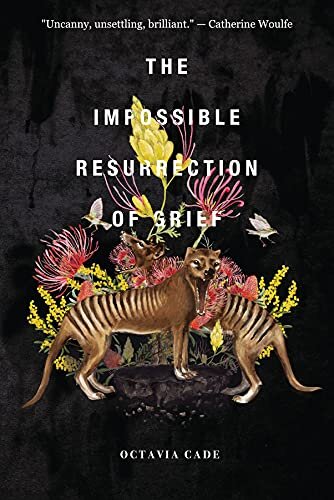
Book Review: THE IMPOSSIBLE RESURRECTION OF GRIEF

June 29, 2021 Anthony Cardno
the impossible resurrection of grief cover.jpg

TITLE: The Impossible Resurrection of Grief

AUTHOR: Octavia Cade

82 pages, Publisher, ISBN 9781777091767 (paperback, eBook)


DESCRIPTION: (from the back cover): IN A DYING WORLD, GRIEF HAS A LIFE OF ITS OWN...

With the collapse of ecosystems and the extinction of species comes the Grief: an unstoppable melancholia that ends in suicide. When Ruby’s friend, mourning the loss of the Great Barrier Reef, succumbs to the Grief, the letters she leaves behind reveal the hidden world of the resurrected dead. The Tasmanian tiger, brought back from extinction in an isolated facility, is only the first... but rebirth is not always biological, and it comes with a price. As a scientist, Ruby resists the Grief by focusing her research on resilient jellyfish, but she can’t avoid choosing which side she’s on. How can she fight against the dead and the forces behind them when doing so risks her home, her life, and the entire biosphere?


MY RATING: 4 out of 5 stars


MY THOUGHTS: There are plenty of books out there that utilize grief as a physical, palpable threat to the health and happiness of the protagonist, but Octavia Cade’s recent novella The Impossible Resurrection of Grief rocked me particularly hard, and part of the reason this review is so delayed is because I’ve been trying to figure out why it affected me so.

Part of it, of course, is simply the way Octavia Cade writes. Granted, I have not read everything Cade has ever written, but I’ve read enough to know that when I see her name on a story I’m in for some deep character immersion, emotions tapped into and explicated in ways that the reader can’t help but connect with and linger over. This novella is no exception. Cade brings us into the mind of a woman watching her best friend deteriorate alongside the world around them. Ruby is as yet untouched by the Grief but compassionate enough to feel guilty: guilty about being untouched by the Grief, guilty about the loss of her friend, guilty about the fact that the thing she loves (jellyfish) are surviving climate change when so much isn’t. The guilt doesn’t immobilize her but rather motivates her to investigate the letters left behind by Marjorie and discover what those afflicted with the Grief are capable of accomplishing before they die. Ruby goes on a journey from wanting to save her friend to wanting to understand why her friend succumbed to wanting to honor her legacy, and I was fully invested throughout thanks to the relatable voice of the narrator.

As adults we’re often told to just ‘suck it up’ and move on when it comes to losses. What ‘moving on’ looks like is highly individual: do we cut loose whatever we lost and pretend it never existed? do we acknowledge the absence in our life analytically? do we obsess over it, analyze where we went wrong, try to fix it? Ruby does all of this in the course of The Impossible Resurrection of Grief, which leads her into danger several times. Through Ruby, Cade reminds us that there is no one way to process loss, to experience grief. Through Ruby, Cade also reminds us that we can never totally understand the depth of someone’s attachment to a thing (or person or concept) that they love, and thus cannot truly understand how the loss of that thing might drive a person to emotional despair or suicide. Ruby knows Marjorie loved the Great Barrier Reef as much as Ruby loves jellyfish, but she can’t understand the depth of her friend’s grief because Ruby hasn’t lost the thing she loves the most.

The Grief itself is a sort of nebulous phenomena. It seems mostly tied to losing something outside of yourself that you were passionate about rather than, say, the loss of a relationship or the death of a family member. I think Cade implies that Grief can be brought on by these other events, but the focus seems to be on losing some larger interest totally and, more important, irreplaceably. We all have had those hobbies/interests/passion projects that we think we’ll never leave behind but eventually do – that’s not what Cade is connecting the Grief to. Those types of things we can come back to (and often do), even if our feelings aren’t as strong the second or third time around. But the loss of a species or biome we’ve devoted our life to studying, in a way that makes it impossible for that species or biome to come back? Gone is gone. (Yes, I know, people make a lifetime of studying extinct species, particularly dinosaurs. Usually, that attachment comes from curiosity about what those species were like rather than from having experienced those species first-hand.)

The Impossible Resurrection of Grief takes place in a future near enough for the reader to be familiar with the technology the characters use in their daily life but far enough away that our impending climate change is this world’s present. It’s not just the Great Barrier Reef that’s been lost to rising temperatures and lost shoreline: different types of birds and terrestrial predators are gone as well, and Ruby meets people suffering the Grief because of how much they loved those populations. These losses are imaginary for us and the author, an exercise in what might happen if the climate continues to change in the direction, and at the rate, it’s currently going. But they are all too real for Ruby and the people in her life, and Cade does an excellent job of making them real for us as well.

There are some brutal moments within the narrative – Marjorie succumbing to the Grief (which is not a spoiler, given it’s in the book’s back cover description) in particular is packed with torment for Marjorie and Ruby both – that some readers might want to be aware of. Suicide, whether by intentional act or slow attrition, is always in the background when the characters discuss Grief. But it is never gratuitous and always pertinent to Ruby’s journey of understanding.

Deep immersion into a character’s mind, solidly realistic climate change repercussions, ruminations on the way we’re told to handle loss and grief – all of these are reasons The Impossible Resurrection of Grief affected me as deeply as it did, and I suspect each future re-read of the novella will open up more reasons. And I will be reading it again, certainly.

In BOOK REVIEWS Tags book review, Octavia Cade, Science Fiction
Comment

READING ROUND-UP: April, 2021

June 29, 2021 Anthony Cardno
Anton Reading Roundup Small.jpg

Very much belatedly, the monthly summary of what I read and listened to in April 2021!


BOOKS

I read 9 books in April: 5 in print, 2 in e-book format, and 0 in audio format. They were:

1.       Lightspeed Magazine #131 (April 2021 issue), edited by John Joseph Adams. The usual fine assortment of sf and fantasy short stories. This month’s favorites for me were An Owomoyela’s “The Equations of the Dead,” Seanan McGuire’s “Swear Not by The Moon,” Ashok K. Banker’s “The Giving One,” and Genevieve Valentine’s “Blood, Ash, Braids.”

2.       Angel of the Overpass (Ghost Roads, Book 3) by Seanan McGuire (writer). The third novel featuring hitch-hiking ghost Rose Marshall (also known as The Girl in the Green Silk Gown, the Phantom Prom Date, and more) brings her afterlife-long battle with her killer, the immortal Bobby Cross, to a head. There’s action, character growth, world-changing moments, and my favorite ghost dinosaur ever. FULL REVIEW HERE. (Did I mention the ghost dinosaur? Seriously worth the price of admission alone.)

3.       Glitter + Ashes: Queer Tales of a World That Wouldn’t Die edited by dave ring. Wonderful collection of post-apocalyptic short stories centering characters from across the LGBTQIA+ spectrum.

4.       A Field Guide to the Spirits: Poems by Jean LeBlanc. Poems about life, love, grief, and more, many with a fantasy, science fiction, or mythological tone.

5.       Harryhausen: the Lost Movies by John Walsh. Interesting coffee table book tracking all the film projects Ray Harryhausen ended up not working on, from his own aborted ideas to the opportunities he turned down to work on others’ projects. Tons of original sketches, test models, and photographs make this a must-read for any Harryhausen fan.

6.       Ancient Songs of Us by Jean LeBlanc. More poems by a truly wonderful poet.

7.       The Impossible Resurrection of Grief by Octavia Cade. A stunningly emotional novella in which loss and sadness bring on Grief, an irreversible mental and physical deterioration. FULL REVIEW TO COME.

8.       Prince Neptune by Cody Simpson. Poems by the former teen singer/songwriter/YouTube star (and current potential Olympic swimmer), focused on saving the environment but also on teen emotional and sexual angst.

9.       A Master of Djinn by P. Djèlí Clark. The first full-length novel in Clark’s alternate history, magic-infused steampunk Cairo is a wonderful fair-play murder mystery. FULL REVIEW HERE.


STORIES

I have a goal of reading 365 short stories (1 per day, essentially, although it doesn’t always work out that way) this year. Here’s what I read this month and where you can find them if you’re interested in reading them too. If no source is noted, the story is from the same magazine or book as the story(ies) that precede(s) it.

1.       “The Equations of the Dead” by On Owomoyela, from Lightspeed Magazine #131 (April 2021 issue), edited by John Joseph Adams

2.       “Swear Not by The Moon” by Seanan McGuire

3.       “The Ocean Between the Leaves” by Ray Nayler

4.       “Complete Exhaustion of the Organism” by Rich Larson

5.       “The Justified” by Ann Leckie

6.       “The Giving One” by Ashok K. Banker

7.       “Blood, Ash, Braids” by Genevieve Valentine

8.       “Single Origin” by A.Z. Louise, from Fantasy Magazine #66 (April 2021), edited by Christie Yant and Arley Sorg

9.       “The Woman with No Face” by Alice Goldfuss

10.   “So. Fucking. Metal.” by Shane Halbach

11.   “How I Became MegaPunch, or, Why I Stay with Dylan” by Y.M. Pang

12.    “Earth to Charity” by Seanan McGuire, on the author’s Patreon page.

13.   “Forward, Victoria” by Carlie St. George, from The Dark #71 (April 2021), edited by Sean Wallace

14.   “A Study in Ugliness” by H. Pueyo

15.   “Worm Blood” by Octavia Cade

16.   “Wrath of a Queer God” by Anthony Moll, from Glitter + Ashes: Queer Tales of a World That Wouldn’t Die, edited by dave ring

17.   “Didn’t My Lord Deliver Daniel” by Christopher Caldwell

18.   “The Descent of Their Last End” by Izzy Wasserstein

19.   “Soft” by Otter Lieffe

20.   “The Black Hearts of La Playa” by Jordan Kinella

21.   “The Bone Gifts” by Michael Milne

22.   “When the Last of the Birds and Bees Have Gone” by C.L. Clark

23.   “A Future in Color” by R.J. Theodore

24.   “Champions of Water War” by Elly Bangs

25.   “A Sound Like Staying Together” by Adam R. Shannon

26.   “Be Strong, Kick Many Asses” by Ann-Julie Riddle

27.   “Venom and Bite” by Darcie Little Badger

28.   “The Currant Dumas” by L.D. Lewis

29.   “The Limitations of Her Code” by Marianne Kirby

30.   “You Fool, You Wanderer” by Brendan Williams-Childs

31.   “A Party-Planners Guide to the Apocalypse” by Lauren Ring

32.   “Imago” by A.Z. Louise

33.   “Safe Haven” by A.P. Thayer

34.   “Note Left on a Coffee Table” by Mari Ness

35.   “The Valley of Mothers” by Josie Columbus

36.   “For the Taking, For the Making” by V. Medina

37.   “When She Nothing Shines Upon” by Blake Jessop

38.   “The Last Dawn of Targadrides” by Trip Galey

39.   “The Dreadnought and the Stars” by Phoebe Barton


So that’s 39 short stories in April. Back to a bit more than “1 per day” but I’m still slightly ahead for the year. (April 30th was the 120th day of 2021.)


Summary of Reading Challenges:

“To Be Read” Challenge: This month: 0 read; YTD: 6 of 24 main titles read. (0 of 4 alternate titles read)

365 Short Stories Challenge: This month: 39 read; YTD: 143 of 365 read.

Graphic Novels Challenge:  This month: 0 read; YTD: 8 of 52 read.

Goodreads Challenge: This month: 9 read; YTD: 46 of 125 read.

Non-Fiction Challenge: This month: 1 read; YTD: 8 of 24 read.

Read the Book / Watch the Movie Challenge: This month: 0; YTD: 0 read/watched.

Complete the Series Challenge: This month: 0 book read; YTD: 0 of 14 read.

                                                          Series fully completed: 0 of 4 planned

Monthly Special Challenge:   April’s mini-challenge was poetry, as April is National Poetry Month. I am not a consistent reader of poetry, but in April I usually try to read at least a couple of poetry collections. I managed three: two by American poet Jean LeBlanc and one by Australian Cody Simpson. I also read a couple of poems in Fantasy Magazine #66: “Appeal to the Doppleganger” by Terese Mason Pierre, and “The Knitting Bowl” by Tristan Beiter.


May’s mini-challenge is to read some works by authors of Asian Pacific and/or South Asian descent, for Asian Pacific and South Asian Heritage Month.

In READING, BOOK REVIEWS Tags book review, Book Challenge, short story challenge
1 Comment

Book Review: A MASTER OF DJINN

May 21, 2021 Anthony Cardno
a master of djinn cover.jpg

TITLE: A Master of Djinn

AUTHOR: P. Djèlí Clark

500 pages, TorDotCom, ISBN 9781250267689 (hardcover, e-book, audiobook)


DESCRIPTION: (from the back cover): Cairo, 1912: Though Fatma el-Sha’arawi is the youngest woman working for the Ministry of Alchemy, Enchantments and Supernatural Entities, she’s certainly not a rookie, especially after preventing the destruction of the universe last summer.

So when someone murders a secret brotherhood dedicated to one of the most famous men in history, al-Jahiz, Agent Fatma is called onto the case. Al-Jahiz transformed the world 50 years ago when he opened up the veil between the magical and mundane realms, before vanishing into the unknown. This murderer claims to be al-Jahiz, returned to condemn the modern age for its social oppressions. His dangerous magical abilities instigate unrest in the streets of Cairo that threaten to spill over onto the global stage.

Alongside her Ministry colleagues and her clever girlfriend Siti, Agent Fatma must unravel the mystery behind this imposter to restore peace to the city - or face the possibility he could be exactly who he seems....


MY RATING: 5 stars out of 5


MY THOUGHTS: In his first full-length novel, P. Djèlí Clark expands the alternate-history, steampunk-flavored Cairo he introduced us to in the short story “A Dead Djinn in Cairo” and the novella The Haunting of Tram Car 015. Characters from both “A Dead Djinn in Cairo” and The Haunting of Tram Car 015 appear in the novel in various lead and supporting roles, but one does not have to have read those previous stories to understand what’s going on in A Master of Djinn. (Although I will say that reading the short story and novella will enhance your enjoyment of the world and understanding of the characters’ personalities and inter-relationships.)

Clark has crafted a multi-layered murder mystery that the formidable Agent Fatma, along with her mysterious lover Siti and newly assigned work partner Hadia, must solve before the city of Cairo, and perhaps the entire world, fall into chaos. Thanks to an opening chapter that presents the mass-murder from the perspective of one of the victims, the reader heads into the story knowing more than the investigative team – but that’s not the same as knowing everything. The clues necessary for the reader to solve the mystery are there to be found, as are the requisite number of false clues and moments that seem to mean more than they really do. The case takes several interesting twists before the ultimate reveal. I had my suspicions early-on about who this person claiming to be al-Jahiz really was, but there were also moments where I thought I could be very wrong. This delighted the mystery fan in me: I love having my guesses turn out to be wrong as much as I love being correct, because being wrong means I can re-read the book to see where the correct clues were. Of course, I am not a fan of mysteries where all the clues are red herrings and the answer is something the reader could never have guessed. But that’s not a trap Clark falls into, thankfully.

I’d have been happy enough with A Master of Djinn being a straightforward mystery set in this alternate world. But the book provides so much more. There’s a rich history to be explored, with Egypt becoming a world power based on the revival of magic into the world and Colonialism being overthrown in some parts of the world earlier than in our own timeline. It’s 1912, and the international conclave hosted in the middle of the book gives us interesting looks at what a “World War One” would look like in this setting. There’s a magic system that I think we’ve only scratched the surface of in the tales told so far: not just various types of djinns and other Middle Eastern magical beings, but goblins in Germany and hints at other types of beings al-Jahiz’s actions released into the rest of the world as well. These magical beings have been involved in some of the fights for regional freedom mentioned, so you know these world powers will put such beings to use when full-scale international war does break out (with the possible exception of America, where Puritanical beliefs seem to have essentially outlawed magic use). The Colonialist mind-set of the era, the European fascination with “adopting” local culture while disdaining the actual people, is on full display throughout the book and Clark does not let his characters leave it unremarked (at least among themselves, even if politics prevents them from saying anything to the actual perpetrators).

The character relationships are also beautifully established. Fatma is essentially a loner. She has eschewed being assigned a partner for this long mostly on strength of personality and successful cases, but department policy can’t be pushed off forever. Hadia’s arrival at the crime scene the day before she’s supposed to officially meet Fatma creates a wonderful level of friction between the two women that plays out as one of the sub-plots. First impressions give way to shared experiences, and Clark charts that growth subtly through dialogue and body language. Fatma at the same time is learning more about Siti, their sexual relationship moving into the romantic – but Siti has secrets of her own that influence both the relationship and the main plot of the novel, which I will not spoil here. We also learn a lot more about Fatma’s past thanks to her interactions with both Siti and Hadia, but there’s plenty we still don’t know about all three women that I look forward to seeing revealed in future books set in this universe.

Clark further develops the Ministry beyond the vague structure and mission established in the previous short story and novella, giving us more intimate looks at Fatma’s immediate superior, the Ministry’s support staff (including a delightfully surly Djinn librarian), and fellow investigators (including the stars of The Haunting of Tram Car 015, Hamed Nasr and Onsi Youssef). Hamed and Onsi are supporting characters here but I hope we’ll get more of their own adventures in the future. Likewise, Fatma’s main contacts outside of the Ministry, bookie/underworld contact Khalid and Cairo police Inspector Aasim Sharif (who reminds me, perhaps intentionally, of Holmes’ Inspector LeStrade), are further developed from their previous appearances, although they play smaller supporting roles than Hamed and Onsi. I was also intrigued by the details revealed about an all-female criminal organization, the Forty Leopards, and the hierarchies and interactions of various temples dedicated to Egypt’s earlier, pre-Mohammedan, gods.

Excellent alternate-history fantasy world-building, multi-dimensional characters, on-point political commentary, and a top-notch murder mystery combine to make P Djèlí Clark’s debut novel a must-read. Go get it!

NOTE: Although I’m posting this review after the release date, it is based off an electronic advance reading copy I received from NetGalley.

In BOOK REVIEWS Tags book review, P Djeli Clark, alternate history, fantasy, TorDotCom
Comment

Book Review: ANGEL OF THE OVERPASS

May 10, 2021 Anthony Cardno
Whatever it is, the way you tell your story online can make all the difference.

Whatever it is, the way you tell your story online can make all the difference.

TITLE: Angel of the Overpass (Ghost Roads Book 3)

AUTHOR: Seanan McGuire

320 pages, DAW, ISBN 9780756416898 (paperback, e-book, audiobook)


DESCRIPTION: (from the back cover): The third book of the Ghost Roads series returns to the highways of America, where hitchhiking ghost Rose Marshall continues her battle with her killer—the immortal Bobby Cross.

Lady of shadows, keeper of changes, plant the seeds of faith within me, that I might grow and flourish, that I might find my way through danger and uncertainty to the safety of your garden. Let my roots grow strong and my skin grow thick, that I might stand fast against all who would destroy me. Grant to me your favor, grant to me your grace, and when my time is done, grant to me the wisdom to lay my burdens down and rest beside you, one more flower in a sea of blooms, where nothing shall ever trouble me again.

Rose Marshall died when she was sixteen years old and on her way to her high school prom. She hasn’t been resting easy since then—Bobby Cross, the man who killed her, got away clean after running her off the road, and she’s not the kind of girl who can let something like that slide. She’s been looking for a way to stop him since before they put her body in the ground.

But things have changed in the twilight world where the spirits of the restless dead continue their “lives.” The crossroads have been destroyed, and Bobby’s protections are gone. For the first time, it might be possible for Rose to defeat him.

Not alone, though. She’ll need every friend she’s managed to make and every favor she’s managed to add to her account if she wants to stand a chance…and this may be her last chance to be avenged, since what is Bobby Cross without the crossroads?

Everything Rose knows is about to change.


MY RATING: 5 stars out of 5


MY THOUGHTS: It’s pretty much a given at this point that when a Seanan McGuire series reaches the third book, change is in the wind. The changes may be somewhat subtle, the changes may be massive, the changes may upend everything you thought you knew about the characters – but there will be changes. McGuire doesn’t write static worlds where every episode ends with the status quo maintained. So yeah – go into Angel of the Overpass, the third Ghost Roads book, expecting Rose Marshall’s world to be different at the end than it was at the beginning. There’s a reason “Everything Rose knows is about to change” is the tagline for the book’s description, after all. And Seanan is not one to fail to deliver what the cover copy promises.

But here’s the thing about change: it tends to sneak up on us. Rose Marshall, like most of us, only sees the steps that lead her to a major life change in retrospect. In the moment, those small steps are just something to be dealt with – another narrow escape from Bobby Cross’s clutches, another awkward conversation with her boyfriend the ghost-car, another mission from powers greater than she is. Rose is too “in the moment” to see where each of these moments is leading her. (I can relate. Rose may not age, but I’m really wondering how I’m going to be 55 in a few months, when I was just 25 last week.)

It’s a credit to McGuire’s skill with the little moments that they’re all important enough in their own right to keep Rose’s attention, and this reader’s, from looking too far ahead. So when the big change to Rose’s status quo does happen, it’s a surprise to the character and hopefully to the reader – but a surprise with a logical lead-up as opposed to one that comes with no connection to what came before.

“Life (or in Rose’s case, Afterlife) is what happens while you’re making other plans” is a pretty solid theme throughout Angel of the Overpass. It’s exemplified not just by what Rose thinks she’s headed towards (life without the threat of Bobby Cross) as compared to where she ends up, but also by the way events outside of Rose’s usual sphere of control affect her. Things are different in the Twilight now that the Crossroads have been destroyed. This major upheaval is not Rose’s doing at all – for the details, you’ll have to see McGuire’s InCryptid series which stars various members of Rose’s adopted mortal family the Prices. Again, it’s a credit to McGuire’s deft hand that readers of The Ghost Roads series don’t need to have read InCryptid to understand the enormity of what’s happened: a cosmic force has been killed, and the various levels of reality (Daylight, Twilight, Starlight, and perhaps even the Midnight) are reeling from it. And like everyone else, Rose has to find ways to exist in this new strangeness. Gee, I bet most of us can relate to that.

Of course, there’s the usual amount of fight scenes and mayhem in line with the previous books in the series (Sparrow Hill Road and The Girl in the Green Silk Gown). Some minor fights before the boss level conclusion, because Rose wouldn’t be Rose if she didn’t get into more than one jam per book. And there are a number of sweet moments with various characters as well. No, I won’t give you details about the fights or the sweet moments. I try very hard to avoid major spoilers in my reviews. Even if I do really want to make giddy exultations about that one new ghost Rose encounters… But no! I shall not. (Insert evil laughter here.)

Some online vendors are advertising Angel of the Overpass as Ghost Roads Book Three of Three. It may be the end of the first trilogy, because again: major life changes for our favorite hitchhiking ghost by the end, but I know Seanan would like to write more Rose Marshall books. And when she does, I’ll be here to read them, because I really can’t wait to see what Rose does next.


Note: I received an advanced reading copy via NetGalley.

In BOOK REVIEWS Tags Seanan Mcguire, Ghost Roads, incryptid, urban fantasy, book review
Comment

Reading Round-Up: March 2021

May 4, 2021 Anthony Cardno
Anton Reading Roundup Small.jpg

Much belatedly, the monthly summary of what I read and listened to in March 2021!


BOOKS

I read 13 books in February: 7 in print, 6 in e-book format, and 0 in audio format. They were:

1.       Lightspeed Magazine #120 (March 2021 issue), edited by John Joseph Adams. The usual fine assortment of sf and fantasy short stories. This month’s favorites for me were Claire Wrenwood’s “Homecoming,” Yoon Ha Lee’s “The Empty Gun,” Sarah Grey’s “Brightly, Undiminished,” and P H Lee’s “The Bear Prince.”

2.       Lumberjanes Vol. 17: Smitten in the Stars by Shannon Watters and Kat Leyh (writer), Kanesha C. Bryant (art), Maarta Laiho (colors), Aubrey Aiese (letters), Sophie Philips-Roberts (editor). This graphic novel collects issues #65-68 of the monthly Lumberjanes series. This time out, Camp Director Rosie and counselor Jen’s attempt to take the Lumberjanes on a night of stargazing is interrupted by the arrival of a goddess, a cat-napping, and the Roanoke and Zodiac cabins sneaking out to search for aliens. It’s another really fun installment, and I’m going to be sad when the series draws to its announced end in the near future.

3.       The Inconvenient God (The Polity Book 1) by Francesca Forrest. This novelette serves as the introduction to the world of The Polity, where the prevailing government is moving the populace from worship of individual gods to themed abstractions. Old, waning gods are “decommissioned,” that is, turned mortal, through the efforts of a specialized department. The novelette is narrated by Decommissioner Thirty-Seven, who has arrived on a college campus to decommission a local trickster god (and patron of lazy students) named Ohin. Things do not go smoothly and secrets about the university’s and Ohin’s histories are laid bare. I was totally sucked into this story. FULL REVIEW HERE.

4.       Lagoonfire (The Polity Book 2) by Francesca Forrest. Decommissioner Thirty-Seven’s adventures continue in this novella. The action starts with Thirty-Seven being sent to investigate the possibility that the first god she decommissioned, Laloran-morna, is involved in corporate sabotage. More of Thirty-Seven’s personal history is revealed in this story, as is more about the Polity itself. You can read Lagoonfire without having read The Inconvenient God, but reading the novelette first adds some depth to the novella. FULL REVIEW HERE.

5.       Village Fool (A Little Village novella) by ‘Nathan Burgoine. The latest holiday-themed gay romance novella from ‘Nathan Burgoine shifts the action from Christmas to April Fool’s Day and gives us the back-story to the relationship between IT worker Owen and physical therapist Toma, who had been mentioned briefly in previous Little Village novellas. Burgoine’s usual warmth, romance, and fine character work are all present (along with plenty of trademark geeky good-natured snark). It’s a sweet story I highly recommend. And one does not have to have read the previous novellas in order to read this one. FULL REVIEW HERE.

6.       The Gilded Ones by Namina Forna. Sixteen-year-old Deka lives in a world in which women are second-class citizens: adult women must wear masks in public and can only hold certain jobs. Social status is indicated by the expensiveness of the masks women wear. At sixteen, girls are put through a ceremonial bleeding: if their blood runs red, they enter society. If their blood runs gold, they are put under the death mandate. Deka loses all hope when her blood runs gold – but then she is conscripted into a special battle corps of Alaki – near-immortal warrior women whose blood runs gold – to protect the empire from invading deathshrieks. Forna’s world-building, from the socio-political aspects to the magic, is fantastic and Deka is an intriguing narrator. This is billed in various places online as “The Deathless, Book 1” so I’m assuming there’s more to come in this world and with these characters.

7.       A Voice in the Darkness: Memoir of a Rwandan Genocide Survivor by Jeanne Celestine Lakin. The third book I’ve read about the Rwandan Genocide Against the Tutsi, a horrific event I’m still trying to wrap my mind and heart around. The two books I read in February were memoirs by men who survived the genocide by taking refuge in the “Hotel Rwanda.” Lakin’s memoir is of survival on the streets and in the fields, narrowly evading death multiple times in the company of her 3-year-old twin sisters. Lakin talks about the fear, the abandonment by Hutu family members and former friends, and the physical and sexual abuse she experienced as a child survivor of only 11-years old. The difference in experience between the hotel survivors and those who had to fend for themselves, and between men and women, is stark. My next planned read about the subject is a memoir by the leader of UN forces in the Rwandan capital during the Genocide, Romeo Dallaire.

8.       Blind Tiger (The Pride, Book 1) by Jordan L. Hawk. A new series set in the same alternate history of Hawk’s Hexworld/Witch Police novels, but with the action set in Prohibition-era Chicago. Sam Cunningham flees small town life to live with his hexmaker cousin in the big city, but when that cousin is murdered Sam must team up with the operators of a local speakeasy (called The Pride because the owners are a family of familiars who shift to various Big Cat forms) to solve the mystery and stay alive. As is usual with the Hexworld novels, there’s an awkward meet-cute between the two lead characters, a romance, and some hot sex. FULL REVIEW HERE.

9.       Faery Tales: One Woman’s Search for Enchantment in a Modern World by Signe Pike. One of my non-fiction To Be Read Challenge titles for 2021. Pike recounts her search for faeries across North America and the United Kingdom and how it changed her view of herself and what she wanted to accomplish. Along the way she meets a variety of colorful local folks and learns about the ways people approach the possibility of the supernatural co-existing with us. An interesting, easy read.

10.   Biff! Bam! Eee-Yow! The Subterranean Blue Grotto Guide to Batman ’66 Season Two edited by Jim Beard. Another wonderful book of essays covering each episode of season two.

11.   Minky Woodcock: The Girl Who Handcuffed Houdini by Cynthia von Buhler. One of my fiction TO Be Read Challenge titles for 2021, this graphic novel collects von Buhler’s first mini-series for Titan Books’ Hard Case Crime imprint. Minky Woodcock is the daughter of a famous detective who will not train her to take over his agency, so while he’s away and her ne’er-do-well brother is absent, she takes on a case to prove herself. Sir Arthur Conan Doyle hires her to prove Harry Houdini is a fraud. Mixing real-life events and people with fictional characters, von Buhler proposes a “true” reason for Houdini’s unfortunately early death. It’s a compelling story with interesting characters, and the second mini-series, The Girl Who Electrocuted Tesla, is currently releasing in monthly comics form.

12.   First, Become Ashes by K.M. Szpara. Szpara’s second novel explores self-discovery after trauma and outgrowing abusive origins in the context of a multi-narrator road-trip story. Dealing as it does explicitly with physical and emotional abuse, rape, and consent violations, this will not be an easy read for many people. FULL REVIEW HERE.

13.   The Black Canary: Bird of Prey by Robert Kanigher and Gardner F. Fox (writers), Carmine Infantino, Murphy Anderson, Alex Toth (artists). This graphic novel collects a number of Black Canary’s seminal Golden Age and Silver Age solo stories from Flash Comics #86-88 and 90-104, Comics Cavalcade #25, DC Special #3, Adventure Comics #399 and 418-419, and The Brave and the Bold #61-62 (her team-ups with Starman). Black Canary is one of my favorite characters and revisiting her evolution from mysterious guest-star in Johnny Thunder’s feature to replacing him and gaining a supporting cast of her own to returning in the Silver Age with powers is always fun. The Golden Age episodes feature an awful lot of BC and her male companion (first JT, then detective Larry Lance) getting knocked unconscious, and the early Infantino art feels a bit rough in comparison to the Murphy Anderson and Alex Toth art of the later stories, but they’re all enjoyable.


STORIES

I have a goal of reading 365 short stories (1 per day, essentially, although it doesn’t always work out that way) this year. Here’s what I read this month and where you can find them if you’re interested in reading them too. If no source is noted, the story is from the same magazine or book as the story(ies) that precede(s) it.

1.       “Homecoming” by Claire Wrenwood, from Lightspeed Magazine #130 (March 2021 issue), edited by John Joseph Adams

2.       “Dispatches from the Cradle: The Hermit -- Forty-Eight Hours in the Sea of Massachusetts” by Ken Liu

3.       “And Now, A Preview of Coming Attractions” by Adam-Troy Castro

4.       “The Empty Gun” by Yoon Ha Lee

5.       “Olivia’s Table” by Alyssa Wong

6.       “The Bear Prince” by P H Lee

7.       “A Place for Hiding Precious Things” by Amber Sparks

8.       “Brightly, Undiminished” by Sarah Grey

9.       “The Code for Everything” by McKinley Valentine, from Fantasy Magazine #65 (March 2021), edited by Christie Yant and Arley Sorg

10.   “Man vs. Bomb” by M. Shaw

11.   “Close Enough to Divine” by Donyae Coles

12.   “Arenous” by Hal Y. Zhang

13.    “The Hand of the Forest” by Seanan McGuire, on the author’s Patreon page.

14.   “The Sin of America” by Catherynne M. Valente, from Uncanny Magazine #39 (March 2021), edited by Lynne M. Thomas and Michael Damian Thomas

15.   “Colors of the Immortal Palette” by Caroline M. Yoachim

16.   “The Book of the Kraken” by Carrie Vaughn

17.   “It Accumulates” by Joanna Parypinski, from Nightmare Magazine #102 (March 2021), edited by Wendy N. Wagner

18.   “Forever is Composed of Nows” by Will Ludwigsen, from Bachelors #1, edited by Steve Berman

19.   “Babydog” by Ryan Vance

20.   “Whatever A Body is Not Obliged to Do” by L.A. Fields

21.   “Last Night at Manscape” by Nick Mamatas

22.   “Little Doors” by Claire Madrigano, from The Dark #70 (March 2021), edited by Sean Wallace

23.   “Immortelle” by Jelena Dunato

24.   “Las Girlfriends Guide to Subversive Eating” by Sabrina Vourvoulias, from Apex Magazine #122 (March 2021), edited by Jason Sizemore

25.   “A Future of Towers Made” by Beth Cato, from Clockwork, Curses, and Coal: Steampunk and Gaslamp Fairy Tales), edited by Rhonda Parrish


So that’s 25 short stories in March. Not quite “1 per day” but I’m still slightly ahead for the year. (March 31st was the 90th day of 2021.)


Summary of Reading Challenges:

“To Be Read” Challenge: This month: 2 read; YTD: 6 of 24 main titles read. (0 of 4 alternate titles read)

366 Short Stories Challenge: This month:  53 read; YTD: 104 of 365 read.

Graphic Novels Challenge:  This month: 3 read; YTD: 8 of 52 read.

Goodreads Challenge: This month: 13 read; YTD: 37 of 125 read.

Non-Fiction Challenge: This month: 3 read; YTD: 7 of 24 read.

Read the Book / Watch the Movie Challenge: This month: 0; YTD: 0 read/watched.

Complete the Series Challenge: This month: 0 book read; YTD: 0 of 14 read.

                                                          Series fully completed: 0 of 4 planned

Monthly Special Challenge:   March was Women’s History Month, so my intent was to read as many female authors as possible. On the “short story” side of things, I did pretty well: 17 of the 25 stories read were by female-identifying authors. On the “books” side of things, comparatively, I did less well: if I include all the creators involved in Lumberjanes Vol 17, 9 of the books I read were written/created by female-identifying authors/artists.


April’s mini-challenge is poetry, as April is National Poetry Month. I am not a consistent reader of poetry, but in April I usually try to read at least a couple of poetry collections, so we’ll see how I do.

In BOOK REVIEWS, READING Tags reading round-up
Comment
← Newer Posts Older Posts →

Photo credit: Bonnie Jacobs

1463659_10152361827714045_1412287661_n_opt.jpg

Anthony’s favorite punctuation mark is the semi-colon because thanks to cancer surgery in 2005, a semi-colon is all he has left. Enjoy Anthony's blog "Semi-Colon," where you will find Anthony's commentary on various literary subjects. 

CATEGORIES

Book Reviews.jpg
Interviews.jpg
Ramblings.jpg
Writing.jpg

Copyright 2017 Anthony R. Cardno. All Rights Reserved.