SUNDAY SHORTS: Into Bones Like Oil

Sunday Shorts is a series where I blog about short fiction – from flash to novellas. For the time being, I’m sticking to prose, although it’s been suggested I could expand this feature to include single episodes of anthology television series like The Twilight Zone or individual stories/issues of anthology comics (like the 1970s DC horror or war anthology titles). So anything is possible. But for now, the focus is on short stories.

into bones like oil cover.jpg

Kaaron Warren’s moving novella Into Bones Like Oil is about the ghosts, both literal and figurative, that haunt us. The characters and the setting are equally haunted by the sins of their pasts, and in some cases their present actions as well.

Every person who enters the Angelsea rooming hours is broken in some way. Dora, the main character, cannot sleep because of guilt over the death of her daughters; Luke has PTSD from his military service; a resident called the Doctor almost seems to regret the crimes he committed against his patients. Property manager Roy is obsessed with learning the secrets possessed by the ghosts of a nearby shipwreck, to the point he is willing to abuse his tenants to get what he wants. While there are a few disreputable and thoroughly unlikeable characters in the boo, Roy is the worst – but also the only one not willing to admit that he has done – scratch that, is doing – something reprehensible.

Warren’s language is elegiac, wistful and dream-like. The whole story is permeated with a sense of loss, regret, decay, of being stuck in a limbo created by an individual’s choices despite where else they may wish to place the blame. There are some truly uncomfortable moments as different characters’ faults and failures come to the fore – but they are all necessary for the characters, and the reader, to find catharsis. This is most especially true for Dora, who needs to process her own culpability in her daughters’ deaths and also in the current goings-on at the Angelsea. Dora, Luke, and several other residents are on a path of possible redemption, but each must make their own choices regarding how or whether to pursue it.

Warren beautifully illustrates how guilt immobilizes some and motivates others while also asking whether forgiveness can ever truly come from outside if it doesn’t begin within.

SERIES SATURDAY: ARROW (2012-2020)

This is a series about … well, series. I do so love stories that continue across volumes, in whatever form: linked short stories, novels, novellas, television, movies. I’ve already got a list of series I’ve recently read, re-read, watched, or re-watched that I plan to blog about. I might even, down the line, open myself up to letting other people suggest titles I should read/watch and then comment on.

Arrow logo.jpg

Just about two weeks ago (by the time this is posted), fans said “goodbye” to The CW’s Arrow, the flagship show in what has become an expansive, if not always consistent, television adaptation of the DC Comics Universe. Along the way, Arrow (and its spin-offs The Flash and DC’s Legends of Tomorrow, and connected shows Supergirl and Black Lightning) have thrilled and sometimes infuriated comics fans. For every fan who loved a character appearance or storyline adaptation, there was an equal and opposite reaction from another fan – and I’m sure this will continue now that the “Arrowverse” has moved beyond the big “Crisis on Infinite Earths” crossover and united all of the CW shows (plus, one assumes, the short-lived live-action and cartoon Constantine and Vixen series) on a single Earth. I’m of the opinion that no live-action movie or series adaptation of a comic book is ever going to be perfect, that storyline and character alterations to make the story work in a live-action format are necessary and should be expected, and thus there’s always been more to like than to complain about in Arrow and the rest of the “Arrowverse.” Your mileage may vary, of course.

Now normally when I do a “Series Saturday” post, it’s for a series I’ve recently read or watched (or re-read/re-watched), and so my thoughts are fresher. But I’m not in a position right now to do an 8-season long rewatch in short enough order to get a post written while the series finale is fresh in people’s minds, so this post is going to be a bit more nostalgia-based. There may be things I don’t remember, episodes/seasons I think were better/worse than they really were, etc. Bear with me.

I maintain that when Arrow was good, it was really, really good. And when it was not good … well, every long running show has at least one season that is a slump compared to the others, and every season is bound to have a stinker episode or two. And, as I said, I think in the end the really-really-good outweighed the stinker-bad.

WARNING: FROM HERE ON OUT, HERE THERE BE SPOILERS! If you haven’t watched all eight seasons of Arrow and you continue reading, I cannot be held responsible for anything you learn that you didn’t want to!

I came to Arrow about a season late; friends had watched season one and recommended it. I was skeptical, wasn’t too thrilled that the show was a complete relaunch (as opposed to giving us Justin Hartley’s Green Arrow spinning off from Smallville (which turned out to be a good thing for everyone, given co-star Alison Mack’s issues and that Justin has gone on to greater success with This Is Us, a show I should probably watch eventually)), and wasn’t really looking to add another hour-long show to my already long list of shows to watch. So it was as season two was starting that I finally decided to watch season one on DVD. My friends were right that I’d like it. I was hooked.

I think season one was the most tightly-plotted, and perhaps best, season of the show. There was a clear through-line: the producers knew where they wanted to be at the end of season one and got there without too much meandering (given the 23-episode length of the season). John Barrowman was a great “big bad” as the Black Archer, and I loved the development of the relationship between Oliver and John Diggle. The addition/development of the Queen family took some getting used to, but I came to really like both Susannah Thompson and Willa Holland. I liked the nod to comics history in making future (or so we thought at the time) Black Canary Laurel Lance’s father a cop, although I wasn’t crazy about Paul Blackthorne’s accent as Quentin Lance (it always felt a bit forced to me). I liked the way Roy Harper was eventually introduced, and I enjoyed watching Felicity grow from a guest to a supporting character to a co-star. I even found the flashbacks intriguing and for the most part connected to the current-day goings on. If there was anything I didn’t like about season one, it was the way the writers leaned so heavily into Oliver killing everyone on his List, and that (similar to Smallville) Oliver was given the first of a ridiculous number of nicknames before finally becoming Green Arrow, “the Hood” being about the worst of them. I also didn’t really connect with Katie Cassidy as Laurel at all, and thought she was better suited romantically to Tommy than to Oliver.

Season two was, I thought, almost as strong as season one. The flashbacks still connected strongly to the present day material. Manu Bennett was brilliant as the pre- and post-Mirakuru versions of Slade; the addition of Caity Lotz as the not-as-dead-as-we-thought Sara Lance / Black Canary was one of the best decisions the creators of the show ever made; and the show made good use of returning villains/anti-heroes like Huntress, Deadshot, and Bronze Tiger. I enjoyed enough of the season that I was able to overlook the complete misuse of Brother Blood. (Okay, full disclosure: I’m looking at the Arrow pages on IMDB as I write this, and I had completely forgotten Sebastian Blood was even a part of this season; when I think of season two, I think of Deathstroke, Sara, and the introduction of Grant Gustin as Barry Allen.) Oh, and I enjoyed the addition of Bex Taylor-Klaus as Sin (a character significantly aged-up from the comics) and wish they’d done more with her in subsequent seasons. Downside to the season: Laurel’s alcoholism storyline just didn’t work.

Season three, I struggled with. Partly because R’as al-Ghul is one of my favorite Batman villains and I initially thought Matt Nable was badly mis-cast. Partly because I hated that the season started off by killing Sara. Yes, I know, she got better, but “let’s kill the bisexual just to motivate the hero” is not a good look in this day and age. Thankfully, the powers-that-be brought her back to lead the Legends of Tomorrow. Positives to the season: the additions of Charlotte Ross as Mama Smoak, Katrina Law as Nyssa, Brandon Routh as Ray Palmer, and Vinny Jones as Brick, and Alex Kingston’s brief turn as Dinah Lance; the first “crossover” between Arrow and Flash. Downsides: the mishandling of classic comics character Ted (Wildcat) Grant; Laurel’s time as an assistant district attorney; the Hong Kong flashbacks, which had fewer real connections to the current storyline (other than introducing Tatsu and Maseo) and which felt painfully slow.

Season four: I’m going to just admit it: I loved watching Neal McDonough chew the scenery as Damien Darkh. But they really dropped the ball on exploring his connection to the League of Assassins, which had been hinted at multiple times in the previous season. Positives: the Diggle Brothers storyline gave David Ramsay some great stuff to work with; we got Tom Amandes as the Calculator, Megalyn Echikunwoke as a live-action Vixen, and Echo Kellum as Curtis Holt. Negatives: the flashbacks started to feel like interminable space-fillers that the producers were including only because that’s what the show’s format demanded (a problem that started to plague LOST about this point in that show’s run). If there was one positive to the flashbacks this season, it’s that they brought Matt Ryan’s Constantine officially into the Arrowverse. Oh, and the first “big” crossover introduced us to Vandal Savage, Hawkman, and Hawkgirl as a lead-in to the mid-season debut of DC’s Legends of Tomorrow. I liked Katie Cassidy’s work as Laurel in this season – just in time for them to kill her off, of course.

Season five: Possibly the tightest-plotted complete season since season two. The misdirect about who Adrian Chase is was set up and played out brilliantly (and Josh Segara was great as Chase). The flashbacks were more connected to the main goings-on again, bringing us full-circle to the pilot episode and giving us reasons for Oliver’s early bloodthirstiness. David Nykl, although not credited as such, was practically a full regular cast member as Anatoly, and became one of my favorite characters of the entire run. Dolph Lundgren as Kovar in the flashbacks was a credible threat and really fun. Katie Cassidy’s recurring appearances as Earth-Two’s Laurel (aka Black Siren) convinced me that my dislike of her in the earlier seasons was likely more due to bad writing. Willa Holland and John Barrowman got to do some wonderful work together exploring the Thea-Malcolm relationship. Joe Dinicol as Rory Regan/Ragman and Lexa Doig as Talia al-Ghul, both of whom I really liked, joined the cast, as well as Rick Gonzalez and Juliana Harkavy as Wild Dog and the newest Black Canary, who I was a bit ambivalent toward. And of course, we got the INVASION crossover, bringing Supergirl officially into the fold.

Season six: I had hopes for this, the first flashback-less season, after the overall solid season five. I was … disappointed. The Deathstroke-searches-for-his-son two-parter was strong. Roy coming back, Thea leaving, Quentin dying all had emotional impact. David Nykl and Katie Cassidy do great work as Anatoly and Black Siren throughout. The Earth-X crossover was possibly the best-written to date. But the glaring misuse/underuse of Michael Emerson as Cayden James, the unending and illogical “splitting of Team Arrow,” and the show’s sudden obsession with making Ricardo Diaz a much bigger bad than he really deserved to be all worked against the season as a whole.

Season seven: And that slump continued through at least the first half of this season: the Oliver-in-prison portion of the season just went on for way too long, Diaz’s continued billing as a “big bad” continued to irk me (I’m not sure I’ve ever cheered a villain’s death quite so loudly), Adrian Paul (like Michael Emerson the season before) is largely wasted, the reveal that Emiko Queen is the real “big bad” of the season was lackluster (This is not to say that Sea Shimooka didn’t do some wonderful work as Emiko; she did within the confines of a less-than-startling storyline), and the flashfowards felt like an unnecessary reversion to the format the show was supposed to be leaving behind. The flashforwards also didn’t really connect with the present day goings on, as we never got the big reveal of what “the vigilantes” did that turned Star City into a future crime-ridden hell-hole. That said, if anything good came out of the flashforwards, it has to be Ben Lewis as the adult William Clayton Queen. I’ve rarely seen such a good job of adult and teen actors matching each others’ mannerisms and vocal ticks as Lewis did matching Jack Moore. This was also the season of the Elseworlds crossover which was more notable for introducing Batwoman, The Monitor, and Lois Lane than for any real quality of storytelling.

Season eight: I’m glad Stephen Amell agreed to do one more short season and wrap things up, because I think the show went out mostly on a high note. The writers got a chance to revisit a number of old favorites (characters and locations). We got closure for a lot of characters, and the shortened episode order forced the writing to be tight and concise (despite the presence of the flash-forwards, which are redeemed only because The Monitor brings the kids back to the present, giving Amell and Lewis and Kat McNamara a chance to do play some wonderful scenes together – in particular William’s coming-out to the father he thought he’d lost long before coming out). We also got the “Crisis” crossover, followed by an embedded-pilot for a spin-off starring Mia Queen and the Canaries. And, of course, that final episode, which was about as good as it could have been: a flashback that actually told a complete story focused on Oliver and Diggle in season one, and graveside appearances by almost everyone who mattered to Oliver. My only complaint about the finale was the absence of Charlotte Ross as Mama Smoak, and Manu Bennett and Michael Jai White as Slade and Bronze Tiger (the two villains Oliver actually managed to help redeem themselves over the course of the series). I know scheduling and price-tags (and maybe the supposed bad blood between Bennett and the producers) kept these from happening, but I wish something could have been worked out.

The biggest complaint I have about the show as a whole (and pretty much all of the “Arrowverse” shows) is that the ostensible star of the show rarely got to be the capable independent hero that the comics version is. The CW seems, with the exception of Legends, to be stuck in this rut that the title character MUST have a team of voices telling him/her what to do and how to do it. The Flash and Supergirl are particularly affected by this, and even Batwoman and Black Lightning have someone talking into their ears (Lucas Fox and Peter Gambi, respectively). I wish all of the shows would do a little less of that.

But in the end, complaints aside, I’ve enjoyed my time with Arrow. Stephen Amell, David Ramsay and Emily Bett Rickards kept me engaged every week even when the writing was not so great or the storylines took ridiculous turns (don’t get me started on the idea of a nuclear missile wiping out a whole American city with almost no repercussions).

Reading Round-Up: January 2020

Continuing the monthly summaries of what I’ve been reading and writing.


BOOKS

To keep my numbers consistent with what I have listed on Goodreads, I count completed magazine issues and stand-alone short stories in e-book format as “books.” I read or listened to 19 books in January: 8 in print, 5 in e-book format, and 6 in audio. They were:

1.       Lightspeed Magazine #116 (January 2020 issue), edited by John Joseph Adams. The usual fine assortment of sf and fantasy short stories. This month’s favorites for me were J.R. Dawson’s “She’d Never Had a Name Before,” N.K. Jemisin’s “The Ones Who Stay and Fight,” and Adam-Troy Casto’s “Fortune’s Final Hand.”

2.       The Ascent to Godhood (Tensorate #4) by J.Y. Yang. The fourth Tensorate novella fills in a lot of the history of the current Protector and her arch-nemesis Lady Han. It’s told in a far more conversational tone than the previous three editions, making it feel that much more personal/intimate. I’m hoping this is not the last we’ll see of the Tensorate universe.

3.       Loki: Agent of Asgard Volume 1: Trust Me by Al Ewing, Lee Garbett, Jenny Frison, Joerge Coehlo and others. Trade collection of Loki: Agent of Asgard #1-5, the first storyline in which the redesigned-to-look-like Tom Hiddleston Loki appeared. A fun mix of spy/crime capers with a deeper underpinning.

4.       The Ferryman by Jez Butterworth. I saw this on Broadway last year not before it closed (and sadly not with the original cast) and with the varying Irish accents I was sure there was dialogue I’d missed, so I picked up the script. It’s a brilliant bit of Irish drama set in the late 80s. Quinn Carney left the IRA years ago, but his younger brother didn’t and wound up missing. The drama unfolds as the brother’s body is found. At the same time, the show is a celebration of family, and like all good dramas there’s a lot of comedy to contrast with the inevitable tragedy. Worth reading, but even more worth seeing.

5.       Space Invaders by Nona Fernández, translated by Natasha Wimmer. A group of former childhood friends share memories of a girl who disappeared from their lives during the Pinochet regime. The prose is sparing and beautiful, the unspoken underpinnings even more tense and horrific for what’s implied.

6.       The High Window (Philip Marlowe #3) by Raymond Chandler. I set a goal of listening to all of the Philip Marlowe novels in audio form before I realized that most of the recordings are either abridged (Elliot Gould narrating) or full-cast radio plays (which I’m sure are great but miss some of Chandler’s descriptive language). This one was a solid story, but not quite as stand-out for me as the first two Marlowe books.

7.       Trading Teams by Romeo Alexander. Billed as a “jock-nerd college romance,” this one is not as frothy as it sounds. There’s a serious sub-plot regarding how we process grief and social anxiety and deal with depression and mental illness. There’s also a lot of meet-cute misunderstandings and a very nice representation of a young man accepting that he is in fact bisexual. Other reviewers have complained about the present-tense style and the nerd character’s depression but I liked the former and thought the latter was handled realistically.

8.       Wylding Hall by Elizabeth Hand. When I realized Hand’s “VH1 Behind the Scenes documentary” style novella about the tragedy surrounding the recording of a famous trad-folk band’s last album was also available as an audiobook, I had to do a reread/listen. The cast is roundly superb and maintain the tension of the print version. I suspect Wylding Hall will join my “frequent re-read / re-listen” list.

9.       The Half-Life of Marie Curie by Lauren Gunderson. Following a personal scandal, Marie Curie spends a summer with her friend and fellow scientist Hertha Ayrton. They debate scientific methods, women’s suffrage, the public’s fascination with famous people’s lives, grief and pride and their contributions to the British and French forces during World War One. Played brilliantly by Kate Mulgrew (as Ayrton) and Francesca Faridnay (as Curie), I would love to see the stage version of this.

10.   The Adventure of the Incognita Countess (Blood-Thirsty Agent Book One) by Cynthia Ward. A fun pulp-adventure novella starring Lucy Harker (dhampir daughter of Mina Harker and Dracula and step-daughter of Mycroft Holmes). In this inaugural adventure, Lucy is assigned to play bodyguard to an American carrying secret papers across the ocean on board Titanic. Sharp-eyed readers will recognize nods to and guest-appearances by a wealth of familiar real-life and fictional characters, including a certain Jungle Lord and a famous female vampire.

11.   Whose Boat Is This Boat? By the staff of The Late Show with Stephen Colbert. Sold to raise money for hurricane victims in the southeast United States, the author put President Trump’s actual statements and tweets in picture book form.

12.   Midnight Son by James Dommek Jr., Josephine Holtzman, and Isaac Kestenbaum. My first non-fiction audiobook of the year focuses on the case of actor-turned-fugitive Teddy Kyle Smith’s statements about encountering a mythic lost tribe (the Iñukuns) in the Alaskan wilderness. We hear little from Smith himself except for material recorded at his trial, but Dommek incorporates statements from family, neighbors and victims to form a picture of what Smith was thinking and why he did the things he did. Compelling but also very open-ended.

13.   Pirates of Venus (Carson Napier #1) by Edgar Rice Burroughs. Carson Napier’s homemade spacecraft takes a wrong turn on the way to Mars and he ends up on Venus, discovering indigenous civilizations and falling in love with a native girl. It’s classic Burroughs fare, with deeply developed civilizations and language and lots of swashbuckling derring-do.

14.   A Simple Heart by Gustave Flaubert. A beautifully-written novella about the tragic life of a woman’s maid. This was my first time reading anything by Flaubert, and his skill at catching the details of every-day moments and expressions of grief is on full display.

15.   The Adventure of the Dux Bellorum (Blood-Thirsty Agent #2)  by Cynthia Ward. This time, Lucy is assigned as bodyguard to Winston Churchill when he decides to return to leading men on the Western Front during World War One, because of rumors the Germans are fielding a team of mind-controlled wolfmen in the area. Complications ensue, of course. Another very fun bit of steampunky-alternate-history-pulp-fiction. (I’m planning a Series Saturday overview of the series, including the soon-to-be-released third installment, The Adventure of the Naked Guide, in the near future.

16.   The Sideman (John Simon Thrillers #2) by Bryan Thomas Schmidt. Luddite cop John Simon and his android partner/friend Lucas George return for a second adventure that is more tightly plotted and faster-paced than the first book (Simon Says) without sacrificing any of the intimate moments or character development of the first book. The stakes are even higher this time, as a string of burglaries become evidence of a terror attack in the offing. (I read an ARC; the book will be on sale February 10. Longer review to come.)

17.   The Lady in the Lake (Philip Marlowe #4) by Raymond Chandler. Again, I listened in abridged audiobook form. Elliot Gould really nails Marlowe’s world-weariness. I found the overlapping cases this time (Marlowe is hired to track down a missing wife but finds dead bodies instead) a bit more intriguing than in The High Window.

18.   Occult Detective Magazine #6 (Fall, 2019), edited by John Linwood Grant and Dave Brzeski. A really fine mix of stories that feature both experienced and novice occult investigators, in stories that take place in eras ranging from pre-history to the far future, in locations from deep in the African continent to a space station. I’m sure a number of these stories featuring series characters, but I never felt like I was coming in the middle. There’s also a wealth of non-fiction book reviews, retrospectives and interviews.

19.   The Little Sister (Philip Marlowe #5) by Raymond Chandler. This was the first abridged audiobook that I felt actually suffered from sections being left out to keep the recording under three hours. I can’t point to any glaring plot-holes, but I felt throughout like there were necessary details I was missing. Still, the overlapping cases are intriguing.


STORIES

I have a goal of reading 366 short stories (1 per day, essentially, although it doesn’t always work out that way) this year (because it’s a Leap Year). Here’s what I read this month and where you can find them if you’re interested in reading them too. If no source is noted, the story is from the same magazine or book as the story(ies) that precede(s) it:

1.       “The Men Who Change The World” by Christopher East, from Lightspeed Magazine #116 (January 2020 issue), edited by John Joseph Adams.

2.       “All Together, Now” by Jason Hough and Ramez Naam

3.       “She’d Never Had a Name Before” by J.R. Dawson

4.       “The Ones Who Stay and Fight” by N.K. Jemisin

5.       “Story Kit” by Kij Johnson

6.       “Destinations of Joy” by Alexander Weinstein

7.       “Holiday” by M. Rickert

8.       “Fortune’s Final Hand” by Adam-Troy Castro

9.       “Off-Balance” by Seanan McGuire, on the author’s Patreon page.

10.   “Here We Come A-Wassailing: A Christmas Story” by Thomas Perry, the 2019 free Christmas short story given out to Mysterious Bookshop customers by owner Otto Penzler.

11.   “Mike” by Jim Butcher, from The Jim Butcher Mailing List, edited by Fred Hicks

12.   “Mother Love” by Clara Madrigan, from The Dark #56 (January, 2020), edited by Silvia Moreno-Garcia and Sean Wallace

13.   “No Good Deed” by Angela Slatter

14.   “Forwarded” by Steve Rasnic Tem

15.   “The Man at Table Nine” by Ray Cluley

16.   “The Rending Veil” by Melanie Atherton, from Occult Detective Magazine #6 (Fall 2019), edited by John Linwood Grant and Dave Brzeski

17.   “Komolafe” by Tade Thompson

18.   “The Way of All Flesh” by Matthew Willis

19.   “The Blindsider” by Cliff Biggers

20.   “Vinnie de Soth and the Phantom Skeptic” by I.A. Watson

21.   “The Empanatrix of Room 223” by Kelly M. Hudson

22.   “The Unsummoning of Urb Tc’Leth” by Bryce Beattie

23.   “In Perpetuity” by Alexis Ames

24.   “The Way Things Were” by S.L. Edwards

25.   “Angelus” by John Paul Fitch

26.   “The Last Performance of Victoria Mirabelli” by Ian Hunter


So that’s 26 short stories in January. Slightly under “1 per day,” so I’m slightly behind for the year so far. (January 31st was the 31st day of 2020.)


Summary of Reading Challenges:

“To Be Read” Challenge: This month: 1 read; YTD: 1 of 14 read.

365 Short Stories Challenge: This month:  26 read; YTD: 26 of 366 read.

Graphic Novels Challenge:  This month: 1 read; YTD: 1 of 52 read.

Goodreads Challenge: This month: 19 read; YTD: 19 of 125 read.

Non-Fiction Challenge: This month: 3 read; YTD: 3 of 24 read.

Read the Book / Watch the Movie Challenge: This month: 0; YTD: 0 read/watched.

Complete the Series Challenge: This month: 4 books read; YTD: 4 of 16 read.

                                                                Series fully completed: 0 of 3 planned

Monthly Special Challenge: I didn’t set a mini-goal of any kind for January, other than trying to get to some recently-acquired books. 11 of the 19 books read were books acquired in the past 6 months.


February is Black History Month, so my goal is to read primarily authors from Africa or of African descent. It’s also Women In Horror Month, so I’ll be working on reading horror by female writers as well.

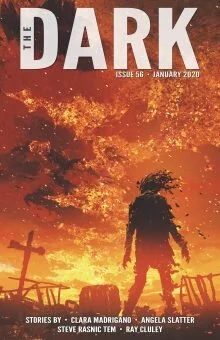
Sunday Shorts: Two From The Dark #56

Sunday Shorts is a series where I blog about short fiction – from flash to novellas. For the time being, I’m sticking to prose, although it’s been suggested I could expand this feature to include single episodes of anthology television series like The Twilight Zone or individual stories/issues of anthology comics (like the 1970s DC horror or war anthology titles). So anything is possible. But for now, the focus is on short stories.


The-Dark-Issue-56-220x340.jpg


Each issue of The Dark features two original stories and two reprints. In the January 2020 issue, edited by Silvia Moreno-Garcia and Sean Wallace, the two new stories both center on childhood trauma infecting and affecting adult life.

Clara Madrigano’s “Mother Love” features a writer processing her fractured relationship with the woman who raised her. The first-person narrative allows Madrigano to slowly morph the story from a standard “cold mother with childhood issues of her own that affected her ability to raise her indigent sister’s child” to something more horrific as the mother’s secrets are revealed. A passive father and a missing childhood friend add to the main character’s insecurity as an adult about why her mother chose others to fill a role rather than her own daughter. I don’t want to spoil the mother’s secret here, because the slow reveal of it – and the dread that built as I started to suspect what was really going on – is so well-crafted you need to experience it for yourself.

The main character in Steve Rasnic Tem’s “Forwarded” is not a writer but a former actor of some repute, struggling with trauma in his own childhood mostly based around an abandoning mother and a drunk, angry father. This time, there’s a slightly-estranged sibling in the mix. Tom, the actor, is drawn back to his childhood hometown by the twin impetuses of weird scrawled messages that have been forwarded to him from previous places he’s lived and wanting to attend his brother’s retirement from the police force. Tom’s angry past and his mistreatment (intentional or not) of his brother seem to be something he’s put behind him, but has he really? Tem balances the potential supernatural horror element and the more human terror superbly through the story. He leaves the reader with questions about what will happen next, but it still makes for a satisfactory and intriguing look at childhood trauma and what motivates us to behave poorly towards those we love.

Sunday Shorts: The Eight People Who Murdered Me (Excerpt from Lucy Westenra’s Diary)


Sunday Shorts is a series where I blog about short fiction – from flash to novellas. For the time being, I’m sticking to prose, although it’s been suggested I could expand this feature to include single episodes of anthology television series like The Twilight Zone or individual stories/issues of anthology comics (like the 1970s DC horror or war anthology titles). So anything is possible. But for now, the focus is on short stories.

nightmare-magazine-issue-86-november-2019.jpg


As a fan of Bram Stoker in general and his most famous novel specifically (some would say “fanatic” is the more accurate term), I’m always curious about works that expand, expound upon, or deconstruct, Dracula. Even works I don’t enjoy will give me some new insight into my favorite novel, or at least insight into how other people regard it. And if I do like the work, even better!

Gwendolyn Kiste’s “The Eight People Who Murdered Me (Excerpt from Lucy Westenra’s Diary)”, from Nightmare Magazine #86 (November 2019), fair fully blew me away. It’s a wonderful deconstruction/reconstruction of a part of the novel that often gets ignored or conflated/downplayed by media adaptations: the life and death(s) of Lucy Westenra. Thanks to movie and television focus on independent, poor-but-plucky Mina Murray and her eventual marriage to damaged hero Jonathan Harker, people tend to forget that the novel features two female leads and that one of them doesn’t fare quite so well as the other. (And with the recent penchant for making Mina Dracula’s reincarnated soulmate or current lover, poor Lucy gets even less attention. But that’s a post for another time.)

Stoker gives us some of his original story in Lucy’s POV mostly via letters to Mina about Lucy’s courtship by three dashing young men of very different backgrounds – but you have to squint hard to see past the flighty exterior presented. What little else we know of Lucy we know from Mina’s own journal entries. Stoker never quite gives Lucy the introspective moments Mina experiences, especially once Lucy suffers her first death and we lose her POV.

Kiste gives us what is missing from the original work: Lucy’s inner self, conflicted over how she had to act to survive in high society and fulfill her mother’s expectations. The entire story is narrated by Lucy post-death, listing out how each of her friends, would-be-saviors, Dracula, and even society itself contributed to the end we see her receive in the novel. It starts out feeling like we’re just going to get a litany of blame – but as the diary entries go on, the story becomes so much more. Kiste doesn’t reveal anything regarding Lucy’s final death in the novel that many authors haven’t also revealed about Dracula (and Sheridan LeFanu’s Carmilla, and other such creatures); the twist is what Lucy will do next.

The key to the story is the voice Kiste gives Lucy – there are glimmers of the flightiness and flirtiness we see in the original novel, but Kiste builds off of the few more serious moments Stoker gives to reveal a Lucy who knows exactly what her place in British society is and rails against it – and who discovers the power to do something about it.

2019 By The Numbers

Earlier than previous years, here’s my media round-up for 2019: what I wrote, what was published, and what I read, listened to, and watched.

WRITING

Not much to report on this front. 2019 was not a good year for creating new content. I didn’t track what little writing I actually managed to do – but I know there were more days where I didn’t write than there were days I wrote, by far. I’m considering it a “recharging” year, as I consumed and processed a lot of wonderful (and not-so-wonderful) books, television, movies, live theatre and music events. The writing I did manage was mostly work on previous unfinished short stories.

PUBLISHING

2019 saw the publication of one short story:

  • “Regardless of How Lost You Are Returning From, Regardless of How Far” appeared in Kaleidotrope magazine, edited by Fred Coppersmith

I also wrote a six paid book reviews for Strange Horizons magazine, and one for Out In Print (non-paid):

·         So You Want To Be A Robot: 21 Stories by A. Merc Rustad

·         Friday Black: Stories by Nana Kwame Adjei-Brenyah

·         Forget The Sleepless Shore: Stories by Sonya Taaffe

·         The Hidden Witch by Molly Ostertag

·         Sealed by Naomi Booth

·         The History of Soul 2065 by Barbara Krasnoff

·         Of Echoes Born by ‘Nathan Burgoine (Out in Print)


READING

I set myself a variety of reading challenges in 2019. I managed to complete a few of them.

Goodreads Challenge:

I challenged myself to read 125 books. I read 144 books from approximately 73 different publishers.

Here’s the breakdown of what I read:

  • Fiction: 140 books

    • 6 anthologies

      • 1 crime

      • 1 horror

      • 1 romance

      • 1 fantasy

      • 1 science fiction

      • 1 mixed-genre

    • 12 single-author collections

      • 3 science fiction

      • 3 horror

      • 2 fantasy

      • 2 crime/mystery

      • 2 poetry

    • 33 graphic novels

      • 8 super-hero

      • 4 horror

      • 12 fantasy

      • 1 crime

      • 2 pulp adventure

      • 2 romance

    • 12 magazines (all issues of Lightspeed magazine)

    • 40 novels

      • 8 crime

      • 3 horror

      • 1 thriller

      • 1 mystery

      • 6  Fantasy

      • 8 science fiction

      • 3 paranormal romance

      • 4 urban fantasy

      • 1 romance

      • 3 pulp adventure

      • 1 suspense

      • 1 mythology

      • 1 Christmas

    • 34 novellas

      • 11 horror

      • 5 fantasy

      • 4 romance

      • 7 literary

      • 4 pulp adventure

      • 1 science fiction

      • 1 crime

      • 1 Christmas

    • 2 novelettes

      • 1 fantasy

      • 1 horror

  • Non-Fiction: 8 books

    • 2 Memoir

    • 1 History

    • 1 literary analysis

Other Book Stats:

# of Authors/Editors: approximately 136 (including graphic novel artists; I need to be better at listing all of the creators of graphic novels somehow). The following breakdown is estimated because not every author shares their personal information online, but roughly:

·         39 female creators

·         5 Trans/Non-Binary

·         29 LGBTQIA+

·         10 Persons of Color

Shortest Book Read: 25 pages (Christmas with the Dead by Joe Lansdale)

Longest Book Read: 669 (Upon A Burning Throne by Ashok K.Banker)

Total # of pages read: 25,513

Average # of pages per book: 205

# of Rereads: 6 (including annual rereads of Roger Zelazny’s A Night in the Lonesome October and Charles Dickens’ A Christmas Carol)

Monthly Breakdown:

·         January: 11

·         February: 18 (most read in a month)

·         March: 14

·         April: 7 (fewest read in a month)

·         May: 11

·         June: 10

·         July: 8

·         August: 14

·         September: 11

·         October: 15

·         November: 13

·         December: 13

Review-wise on Goodreads I gave 2 two-star reviews, 21 three-stars, 86 four-stars, and 35 five-star reviews.

Format Summary:

  • 17 audiobooks

  • 31 ebooks

  • 96 print

    • 25 hardcovers

    • 71 softcovers

365 Short Stories Challenge:

Each year, I challenge myself to read one short story per day. I read 401 stories in 2019, beating the goal handily. The shortest was approximately 7 pages and the longest approximately 61. Those 401 stories appeared in:

  • 12 Magazines

    • Nightmare

    • Lightspeed

    • The Dark

    • One Story

    • Analog

    • The Strand

    • Interzone

    • Lamplight

    • Black Static

    • Abyss & Apex

    • One Teen Story

    • Uncanny

  • 9 Anthologies

    • Resist Fascism

    • From Sea to Stormy Sea

    • If This Goes On

    • A Secret Guide to Fighting Elder Godds

    • The Many Tortures of Anthony Cardno

    • Fool For Love

    • F is for Fairy

    • At Home in the Dark

    • Devil Take Me

  • 15 Single-Author Collections

    • The Assimilated Cuban’s Guide to Quantum Physics by Carlos Hernandez

    • The Time Machine and Other Stories by H.G. Wells

    • Three Blind Mice and Other Stories by Agatha Christie

    • Beyond the Farthest Star by Edgar Rice Burroughs

    • Untranslatable by Alma Alexander

    • Hunt the Avenger by Win Scott Eckert

    • Trans Space Octopus Convention by Bogi Takacs

    • Oriental Ghost Stories by Lafcadio Hearn

    • Spinning Around A Sun by Everett Maroon

    • A History of Soul 2065 by Barbara Krasnoff

    • Acres of Perhaps by Will Ludwigsen

    • Under the Sunset by Bram Stoker

    • Two Todd Tales by Joseph Pittman

    • In Re: Sherlock Holmes by August Derleth

    • Forget the Sleepless Shores by Sonya Taaffe

  • 5 published as “back-matter” in the following novels

    • If Dragon’s Mass Eve Be Cold and Clear

    • Ms. Tree: One Mean Mother

    • Rosemary and Rue 10th Anniversary Hardcover Edition

    • That Ain’t Witchcraft

    • The Unkindest Tide

  • 16 Stand-alone (self-pubbed or publisher-pubbed in e-format)

    • Seanan McGuire (Patreon)

    • Lucy Snyder (Patreon)

    • Sabrina Vourvoulias (Cast of Wonders audio podcast)

    • Lydia M. Hawke (author website)

    • Jim Butcher (Evil Hat website)

Those 401 stories were written by 232 different authors. The following breakdown is estimated because not every author shares their personal information online, but roughly:

·         104 female creators

·         6 Trans/Non-Binary

·         33 LGBTQIA+

·         32 Persons of Color

I gave 13 two-star ratings, 208 three-star, 157 four-star, and 23 five-star ratings. The shortest story was 7 pages long and the longest 61.

Graphic Novel Challenge:

Because I own so many, I challenged myself to read one graphic novel per week. I didn’t make it, reading a total of 33 from 11 different publishers:

·         DC Comics: 7

·         Marvel Comics: 8

·         BOOM! Box: 8

·         Dynamite Comics: 2

·         Image Comics: 2

·         Hard Case Crime: 1

·         TO Comix: 1

·         Scholastic Books: 1

·         Panic Button Comics: 1

·         Dark Horse: 1

·         Self-Pubbed: 1

Non-Fiction Challenge: I didn’t do as well on this one. I challenged myself to read 24 non-fiction books in 2019, and I only read 4.

Read the Book, Watch the Movie Challenge: Completely bombed this one. Planned to do at least 10 of these and did 0.

Complete the Series Challenge: Bombed this one too. Planned to read 3 complete series, totally 16 books, and read 0 of 16, completing 0 series.


VIEWING

I tried tracking the movies, TV and live events I watched this year. Here’s how that went:

Movies: Apparently, I only watched 17 movies this year. (I suspect I forgot to enter a few things into the database.)

·         9 on DVD

·         2 on Netflix

·         6 in the theater


Live Events: I attended 15 live events this year.

·         10 plays

  • 6 straight plays (4 on Broadway, 2 high school, one attended twice)

  • 4 musicals (1 Broadway, 1 regional, 2 high school)

·         4 concerts (Dennis DeYoung, Greyson Chance, Blue Alien Mystic, and the Mahopac High School Pacapellas)

Television: I watched approximately 162 hours of episodic television:

·         Arrow (20 episodes)

·         Batwoman (9 episodes)

·         Beyond Stranger Things (7 episodes)

·         Black Mirror (2 episodes)

·         Doctor Who (1 episode)

·         The Flash (21 episodes)

·         Game of Thrones (1 episode)

·         Good Omens (6 episodes)

·         Great Performances (1 episode)

·         DC’s Legends of Tomorrow (9 episodes)

·         Planet of the Apes (14 episodes)

·         Stranger Things (25 episodes)

·         Supergirl (22 episodes)

·         The Big Bang Theory (2 episodes)

·         Vera (1 episode)

·         Vicious (14 episodes)

·         Watchmen (6 episodes)

·         Young Sheldon (1 episode)


So there you have it: my writing, publishing, reading, and viewing by the numbers, for 2019.

Earlier this week, I posted about my reading challenges for 2020. I plan to post about my writing plans, and possibly viewing plans, next week.

Reading Challenges For 2020

I always set myself more than one reading challenge per year. Some carry over from year to year, and some are new. Some are broad and some are themed. And in many cases, books read will help me meet more than one challenge. Here’s this year’s list.


TO BE READ CHALLENGE

In past years, the wonderful Roofbeam Reader has hosted a “To Be Read Challenge” with specific rules about posting, etc. He’s not hosting one this year, but I’m going to do a version of the challenge for myself without making it a separate post this year. The idea is to pick 12 books (plus 2 alternates in case you find yourself unable to finish a couple of your main choices) that have sat unread on your bookshelf for a year or more. Thus, books published in 2019 wouldn’t be eligible, nor would re-reads. I plan to come back to this post and add “date completed” for each book individually and for each series as a whole. Here are my 14 for 2020 (not listed in intended reading order):

1.       Tales of the City by Armistead Maupin

2.       No Longer at Ease by Chinua Achebe

3.       Logan’s Run by William F. Nolan and George Clayton Johnson

4.       A Diet of Treacle by Lawrence Block

5.       Shadowhouse Falls by Daniel Jose Older

6.       Greatheart Silver by Philip Jose Farmer - finished September 23, 2020

7.       Pirates of Venus by Edgar Rice Burroughs - finished January 22, 2020

8.      The Bad Seed by William March - finished October 30, 2020

9.    The Parable of the Sower by Octavia E. Butler - finished February 19, 2020

10.   Choke Hold by Christa Faust - finished March 29, 2020

11.   Trail of Lightning by Rebecca Roanhorse

12.   The Complete Persepolis by Marjane Satrapi

Alternate #1: The Mystery of the Sea by Bram Stoker

Alternate #2: Excalibur! by Gil Kane and John Jakes


366 SHORT STORIES CHALLENGE

Every year, I challenge myself to read one short story per day. Some years I keep the pace pretty well, and some years I fall behind and then scramble to catch up (and some years, I catch up and fall behind again). I used to post thoughts on each individual story over on my now-largely-defunct Livejournal; this year I plan to review a story or two in-depth each Sunday and then do a monthly “round-up” of all stories read that month. I’m defining “short story” as anything from flash fiction to novella-length. If a story/novella is published as a stand-alone book (ebook or otherwise), that story will also count towards my annual Goodreads “Books Read Challenge.” 2020 being a leap-year, the goal is 366 instead of the usual 365.


GOODREADS CHALLENGE

Goodreads allows members to set a challenge. In 2019, I set a goal of 125 books and actually read 144. For 2020, I’m setting the same goal of 125 to start with, and we’ll see what happens. Goodreads counts magazines and individually-published short stories as “books,” so I count them for this challenge as well. Of course, any book read for the TBR Challenge, or the other challenges mentioned in this post count towards this one.


GRAPHIC NOVEL CHALLENGE

I own far more graphic novels and trade paperback collections of classic comics than I’ve read. In 2017 I started trying to turn that around, and I’m again setting a goal in 2020 of reading one graphic novel per week, so 52 for the year, tracking them in the monthly Reading Round-Up Posts.


NON-FICTION CHALLENGE

As with graphic novels, I tend to get intrigued by and purchase far more non-fiction books than I actually end up reading. In an effort to clear some shelf-space, justify the money spent, and increase my knowledge a bit, I’m setting myself a new challenge this year to read two (2) non-fiction books per month, or 24 for the year, also tracked via the monthly Reading Round-Up posts.


READ THE BOOK / WATCH THE MOVIE CHALLENGE

I have so many books in my collection that are the basis for classic (and sometimes not-so-classic) movies that I thought it would be fun to read some of them and then see how the movies compare. In 2019, I didn’t do so well on this challenge, but I’m game to try again, and of course track them in the monthly Reading Round-Up posts.


COMPLETE THE SERIES CHALLENGE

In previous years I’ve challenged myself to come “up to date” on series I’d started but fallen behind on. Last year, I challenged myself to also read one series that I own but have not read. Titles that I have read in each series are indicated with (read). Last year, I blew this completely, so I’m repeating two of the challenges from last year, adding two (one that will be audio rather than print) for 2020.  I plan to come back to this post and add “date completed” for each book individually and for each series as a whole. If I complete any other series on my shelves, I’ll come back and add that series to this entry.


THE VELVETEEN SERIES by Seanan McGuire

1.       Velveteen Vs. The Junior Super-Patriots

2.       Velveteen Vs. The Multiverse

3.       Velveteen Vs. The Seasons


THE AFRICA TRILOGY BY Chinua Achebe

1.       Things Fall Apart – read in 2018

2.       Arrow of God - read in February 2020

3.       No Longer At Ease


CARSON OF VENUS by Edgar Rice Burroughs

1.       Pirates of Venus - read in January 2020

2.       Lost on Venus

3.       Carson of Venus

4.       Escape on Venus

5.       The Wizard of Venus


THE PHILIP MARLOWE SERIES (audiobook versions)

1.       The Big Sleep – listened to in November 2019

2.       Farewell, My Lovely – listened to in November 2019

3.       The High Window - listened to in January 2020

4.       The Lady in the Lake - listened to in January 2020

5.       The Little Sister - listened to in January 2020

6.       The Long Goodbye - listened to in April 2020

7.       Playback

8.       Poodle Springs (started by Chandler, completed by Robert B. Parker)


MONTHLY MINI-CHALLENGES

In 2019 for the first time I set myself some monthly mini-challenges based on various factors. I’m going to do it again in 2020, but list those challenges here as well:

January: No specific challenge (because I want to catch up on stuff from late 2019)

February: Authors from Africa or of African descent (for Black History Month)

March: Women Authors (for Women’s History Month)

April: Poetry (for National Poetry Month)

May:  Asian/Pacifican Authors (for Asian Pacific / South Asian Heritage Month)

June: Queer Authors (for Pride Month)

July: US and World History (because of Independence Day)

August: Classic and New Pulp Authors (because Pulpfest/Farmercon is held this month)

September: Hispanic authors (Hispanic Heritage Month)

October: Horror! Horror! Horror! (because Halloween, obviously)

November: Noir (because “Noirvember”)

December: Winter Holiday-related Fiction (Christmas, Hannukah, etc.)

Sunday Shorts: At The Bay

Sunday Shorts is a series where I blog about short fiction – from flash to novellas. For the time being, I’m sticking to prose, although it’s been suggested I could expand this feature to include single episodes of anthology television series like The Twilight Zone or individual stories/issues of anthology comics (like the 1970s DC horror or war anthology titles). So anything is possible. But for now, the focus is on short stories.


at the bay cover.jpg


TITLE: At the Bay
AUTHOR: Katherine Mansfield
56 pages, Melville House Publishing, ISBN 9781612195834 (softcover)


DESCRIPTION: (from Goodreads): Told in thirteen parts, beginning early in the morning and ending at dusk, At the Bay captures both the Burnell family's intricate web of relatives and friends, and the dreamy, unassuming natural beauty of Crescent Bay.

MY RATING: 3 out of 5 stars

MY THOUGHTS: Yet another classic novella that I don’t remember being assigned to read. Mansfield packs a lot of characterization and social commentary into 56 or so pages. The focus is on the women in the Burnell family, both adults and children, and a small cross-section of their neighbors. How they interact, how they empower and disempower each other in everyday moments. There is no grand event the story builds toward, no community-threatening or -destroying big moment that ties everything together. We’re experiencing a day-in-the-life of a very specific group of women and girls at a specific moment in time (1922), but much of what the author relates, in terms of what is deemed appropriate behavior and the like, is still true today. The moments among the children (three girls and their two boy cousins) mirror the moments among the adult women.


Because the story is set on a week-day the men in the family are fairly peripheral, acting on the women mostly from afar rather than in-scene. The men clearly think they are the center of the universe (one, near the story’s end, is highly concerned that his wife’s day was totally ruined because he rushed out to work without saying goodbye.), and are pretty much oblivious (willfully, I think) to the details of how the women spend their day. Interestingly, Mansfield starts and ends the story with the men: the opening scene focuses on two men going for a swim as well as the movements of a local shepherd. The shepherd retraces his route near the end of the story, overlapping with one of the few moments where a man’s effect on one of the Burnell women is direct and in-scene rather than from afar.


Mansfield’s descriptions of the weather and the natural setting are just beautiful. The weather isn’t the focus of the story, so one might be tempted to take these descriptions as window-dressing and choose not to linger over the language. I also found it interesting that she personifies some of the animals (a cat, and the shepherd’s dog, have distinct personalities), and also that the one infant in the story is described the way the animals are – he’s given a bit of personality but remains nameless unlike the older children. Even nameless and speechless, the baby still comes across as as much of a burden/inconvenience to his mother as his father is.


I wasn’t as enamored of the vignette-style telling of the story as I was of what it had to say about culture and the treatment of women (both by men and by other women). It felt more disjointed than cohesive.