Reading Round-Up: August 2019

Continuing the monthly summaries of what I’ve been reading and writing.


BOOKS

To keep my numbers consistent with what I have listed on Goodreads, I count completed magazine issues and stand-alone short stories in e-book format as “books.” I read or listened to 14 books in August: 11 in print, 2 in e-book format, and 1 in audio. They were:

1.       Lightspeed Magazine #111 (August 2019 issue), edited by John Joseph Adams. The usual fine assortment of sf and fantasy short stories. This month’s favorites for me were Carlos Hernandez’s “The Macrobe Conservation Project,” Rhajan Khanna’s “Card Sharp,” Sam J. Miller’s “Calved,” and Domenica Phettleplace’s “Robot Country.”

2.       Desdemona and the Deep by CSE Cooney. CSE Cooney gives readers a wonderful new fantasy world to explore in this novella with overlapping layers of human, faerie and goblin realms linked by a mysterious house and an ancient pact. Full review coming soon.

3.       In The Shadow of Spindrift House by Mira Grant. When Seanan McGuire writes as “Mira Grant,” I expect the work to fall in to the “science-horror” realm (things like fungal/epidemiological end-of-world scenarios, or killer mermaids, or computer/AI-based horror). This one is a mash-up: part Scooby Doo pastiche, part haunted town, part Lovecraft … but the parts add up to a fun, genre-blending whole I found really enjoyable and scary.

4.       The Other Log of Phileas Fogg, by Philip Jose Farmer. This was my third, or possibly fourth re-read of Farmer’s classic “story behind the story” take on Jules Verne’s Around the World in 80 Days. Farmer adds science fiction and world conspiracy flavors to Verne’s already fun adventure story, along with his classic penchant for sly (and sometimes not-so-sly) literary references. This book is one of the cornerstones of Farmer’s Wold Newton Family world.

5.       Hunt the Avenger by Win Scott Eckert. When you think of classic Pulp Magazine adventurers, you think Doc Savage, the Shadow, and Richard Benson, The Avenger. This “fix-up”/mosaic novel pulls together several of Eckert’s previously published Avenger short stories and adds two new chapters to the mix to tell a complete story about Justice Inc.’s battles with The Countess and The Iron Skull alongside pulp heroine The Domino Lady. A fun romp full of Farmerian winks and nods to other classic characters. Full review for this one also coming soon.

6.       Phileas Fogg and the War of Shadows by Joshua Reynolds. Meteor House is the official publisher of all authorized continuations of Philip Jose Farmer’s works. This novella picks up a few decades after The Other Log of Phileas Fogg and continues the story of Fogg, Passpartout, Nemo and the remaining Eridanean and Capellian agents on Earth. It’s a fast-paced adventure romp and of course has nods to other classic literature, as does….

7.       Phileas Fogg and the Heart of Osra by Josh Reynolds. Reynold’s second Fogg novella picks right up where War of Shadows left off, moving Fogg further across Europe, this time visiting the nation of Ruritania and revealing more folks we never knew were connected to the Eridanean/Capellian conflict. Just as fast and fun as the first book. Sadly, Meteor House has to date not continued this series (although I believe Reynolds planned five novellas total).

8.       The Shadow: Midnight in Moscow by Howard Chaykin. The art is classic Chaykin, the story a nice mix of Chaykin and the feel of the pulps. There’s lots of gunplay, lots of mind-control, and plenty of blood around cutting edge technology and the Cold War. (Kudos to Chaykin for including a short scene featuring The Shadow having dinner with his Wold Newton lineage cousins, with a shot of the Wold Cottage Meteor Monument in the background.)

9.       Lumberjanes Volume 12: Jackalope Springs Eternal by Shannon Watters, Noelle Stevenson, Brooklyn Allen, and others. Another fun Lumberjanes adventure, with a twist. This time it’s their counselor Jen urging them to go out and do something potentially dangerous (search for the legendary Jackalope!) instead of the girls heading into trouble while Jen tries to keep them in their cabins and safe. There’s lots of character growth in this one stemming out of the events in the previous volume.

10.   Tarzan and the Valley of Gold by Fritz Leiber. Leiber was the first writer officially authorized by the Burroughs estate to write a new Tarzan novel, based on the script for the movie of the same name. Leiber doesn’t just deliver a novelization, he delivers a fully-realized, totally Burroughsian take on the story. It’s easy to see why this one is considered by the Burroughs estate to be a part of the Tarzan canon. I intend to get around to watching the movie and then writing a blog post comparing book to movie.

11.   Books of Magic Volume 1: Moveable Type By Kat Howard, Tom Fowler and others. I was a fan of the tossle-haired, bespectacled British boy wizard Tim Hunter long before Harry Potter came along, and I followed the character in his original Vertigo series(s) from adolescence to adulthood. Part of me wanted to be skeptical when DC Comics announced that their “new” Sandman Universe would include a Books of Magic series that returned Tim Hunter to his starting point – but then I saw that Kat Howard was writing the book and I knew our boy Tim was in good hands. And I was correct. This is a great new take on the character, a slow-boil version of Tim coming into his magic and the forces trying to stop him. And Tim Fowler’s art is expressive in a slightly cartoony way that further sets this new iteration apart from the source material, in a good way.

12.   The Quest of Frankenstein by Frank Schildiner. Like Win Scott Eckert, Frank Shildiner is one the current masters of “new pulp,” especially the type with a classic horror bent. This is the first in his new series of novels following up on the French “Frankenstein” novels which were in their turn sequels to the Mary Shelley original. This is a bloodier, more coherent-minded Monster than fans of the Universal movies of the 30s and 40s might be comfortable with, but I enjoyed the book. Oh, it also features a lot of classic vampires and weird scientists.

13.   Untranslatable by Alma Alexander. The theme of this short story collection is words from other languages that are not directly and simply translated into English. Some of the stories are reprints and some are new, and all are intriguing and excellent. I’m planning a longer review, but speculative fiction short story lovers should be picking this one up.

14.   Justice, Inc. by Michael E. Uslan, Giovanni Timpano and others. A graphic novel that gives us an alternate original for Richard Benson, the Avenger, and his ties to Doc Savage and The Shadow. Uslan tells a fun, high-stakes story, and the art is solid throughout. There are beautiful covers painted by Alex Ross as well.


STORIES

I have a goal of reading 365 short stories (1 per day, essentially, although it doesn’t always work out that way) each year. Here’s what I read this month and where you can find them if you’re interested in reading them too. If no source is noted, the story is from the same magazine or book as the story(ies) that precede(s) it:

1.       “Robot Country” by Domenica Phettleplace, from Lightspeed Magazine #111 (August 2019 issue), edited by John Joseph Adams.

2.       “Calved” by Sam J. Miller

3.       “No Matter” by Kendra Fortmeyer

4.       “The Macrobe Conservation Project” by Carlos Hernandez

5.       “The Rock Eaters” by Brenda Paynado

6.       “The Final Blow” by Scott Sigler

7.       “Card Sharp” by Rajan Khanna

8.       “A Leash of Foxes, Their Stories Like Barter” by Cassandra Khaw

9.       “Dreams and Sighs” by Seanan McGuire, on the author’s Patreon page.

10.   “Death and the Countess” by Win Scott Eckert, from his mosaic/fix-up novel Hunt The Avenger.

11.   “Happy Death Men” by Win Scott Eckert

12.   “According to Plan of a One-Eyed Trickster” by Win Scott Eckert

13.   “The Glass Lady” by Win Scott Eckert

14.   “Toil and Trouble” by Win Scott Eckert

15.   “Black Wings of Kjellmar” by Alma Alexander, from her collection Untranslatable.

16.   “Dreamshare” by Alma Alexander

17.   “The Bucket List” by Alma Alexander

18.   “Equinox” by Alma Alexander

19.   “To Remember Riobarre” by Alma Alexander

20.   “Color” by Alma Alexander

21.   “Go Through” by Alma Alexander

22.   “Leaving Via Callia” by Alma Alexander

23.   “Night Train” by Alma Alexander

24.   “She Wore Yellow” by Alma Alexander

25.   “Something That Would Shine” by Alma Alexander

26.   “The Flying Dutchman” by Alma Alexander

27.   “The Painting” by Alma Alexander

28.   “The Bones of Our Ancestors, the Blood of Our Flowers” by Alma Alexander

So that’s 28 short stories in August, keeping me way ahead for the year so far. (August 31th was the 243th day of 2019.)


Summary of Reading Challenges:

“To Be Read” Challenge: This month: 0 read; YTD: 3 of 14 read.

365 Short Stories Challenge: This month:  28 read; YTD: 319 of 365 read.

Graphic Novels Challenge:  This month: 4 read; YTD: 21 of 52 read.

Goodreads Challenge: This month: 14 read; YTD: 92 of 125 read.

Non-Fiction Challenge: This month: 0; YTD: 5 of 24 read.

Read the Book / Watch the Movie Challenge: This month: 0; YTD: 0 of 10 read/watched.

Complete the Series Challenge: This month: 0 books read; YTD: 0 of 16 read.

                                                                Series fully completed: 0 of 3 planned

Monthly Special Challenge: I may not do something like this every month but August’s monthly special challenge was in honor of PulpFest and FarmerCon, the annual overlapping conventions that celebrate the fiction of the Pulp magazine era and the work of author Philip Jose Farmer. By my count, I read 8 books towards this mini-challenge. One by Philip Jose Farmer, two directly inspired by and involving his creations with his estate’s approval, and 5 featuring pulp characters like The Avenger, The Shadow, Domino Lady, Tarzan, and the French pulp version of Frankenstein’s Monster, Gouroull.

September is Hispanic Heritage Month, so I’m setting a goal to read as much stuff by Hispanic/Latinx authors as possible.

Reading Round-Up: July 2019

Continuing the monthly summaries of what I’ve been reading and writing. (This one’s a bit overdue!)


BOOKS

To keep my numbers consistent with what I have listed on Goodreads, I count completed magazine issues and stand-alone short stories in e-book format as “books.” I read or listened to 7 books in July: 2 in print, 5 in e-book format, and 0 in audio. They were:

1.       Lightspeed Magazine #110 (July 2019 issue), edited by John Joseph Adams. The usual fine assortment of sf and fantasy short stories. This month’s favorites for me were Andrew Penn Romine’s “Miles and Miles and Miles,” Indrapramit Das’s “The Moon Is Not a Battlefield,” J. Anderson Coats’ “Mother Carey’s Table,” and Senaa Ahmad’s “Ahura Yazda, The Great Extraordinary.”

2.       Ormeshadow by Priya Sharma. You would think that as an English major in college, I’d have read something, anything, by Willa Cather. But if I did, I don’t recall it at all (please forgive me, Professor Malcolm Marsden!). So I’m counting this as my first Cather work. I’d like to read more by her eventually. I found this one an interesting character study. Full Review HERE.

3.       Sealed by Naomi Booth. An interesting combination of near-future environmental horror, graphic body horror, and a potentially unreliable narrator. Not for the easily squeamish, for sure. Full review appeared at Strange Horizons on August 30th.  http://strangehorizons.com/non-fiction/reviews/sealed-by-naomi-booth/

4.       Treasure Trail, by Morgan Brice. This is the first M/M urban fantasy/paranormal romance by Gail Z. Martin’s pen name that I have read, and it won’t be the last. This, the first in a new series, takes place in very haunted Cape May, NJ and introduces us to an antique shop owner with “the touch” (the ability to sense an object’s supernatural history) and a former cop turned rental property manager who sees ghosts. There’s also present- and past-day Mafia connections, because NJ.

5.       A Secret Guide to Fighting Elder Gods edited by Jennifer Brozek. A really fun anthology of Lovecraftian Young Adult stories. The stories hit all the requisite Lovecraft themes and monsters, but with settings mostly in the present day focusing on teens – and often, on teens seeing what the adults can’t or won’t see.

6.       The Trans Space Octopus Congregation by Bogi Takács. Bogi’s newest short story collection, due out from Lethe Press in October, has a wonderful mix of science fiction and fantasy, including a few stories set in a shared future setting. Eir stories touch on many present day issues, including the immigrant, transgender, and “alternate sexuality” experiences. A great read.

7.       The Triumph of the Spider-Monkey by Joyce Carol Oates. Not going to lie, this was a very difficult read for me. Long out of print and brought back by Hard Case Crime, this is a very disturbing look inside the head of a serial killer.


STORIES

I have a goal of reading 365 short stories (1 per day, essentially, although it doesn’t always work out that way) each year. Here’s what I read this month and where you can find them if you’re interested in reading them too. If no source is noted, the story is from the same magazine or book as the story(ies) that precede(s) it:

1.       “The Null Space Conundrum” by Violet Allen, from Lightspeed Magazine #110 (July 2019 issue), edited by John Joseph Adams.

2.       “The Mysteries” by Karen Lord

3.       “Miles and Miles and Miles” by Andrew Penn Romine

4.       “The Moon Is Not A Battlefield” by Indrapramit Das

5.       “Mother Carey’s Table” by J. Anderson Coats

6.       “Sand Castles” by Adam-Troy Castro

7.       “Song Beneath the City” by Micah Dean Hicks

8.       “Ahura Yazda, The Great Extraordinary” by Senaa Ahmad

9.       “Face Your Furs” by Seanan McGuire, on the author’s Patreon page.

10.   “The Good Girl” by Lucy Snyder, on the author’s Patreon page.

11.   “Freak Corner” by John Rolfe Gardiner, from One Story #254, edited by Patrick Ryan

12.   “The Story of O-Tei” by Lafcadio Hearn, from Oriental Ghost Stories, edited by David Stuart Davies

13.   “Green Glass: A Love Story” by E. Lily Yu, from If This Goes On: The Science Fiction Future of Today’s Politics, edited by Cat Rambo

14.   “The Last Adventure of Jack Laff: The Dayveil Gambit” by Steven Barnes

15.   “King Harvest (Will Surely Come)” by Nisi Shawl

16.   “Away Game” by Seanan McGuire, from A Secret Guide To Fighting Elder Gods, edited by Jennifer Brozek

17.   “The Icarus Club” by Weston Ochse

18.   “Stormy Monday” by Chesya Burke

19.   “Pickman’s Daughter” by J.C. Koch

20.   “Us and Ours” by Premee Mohamed

21.   “The Art of Dreaming” by Josh Vogt

22.   “Visions of the Dream Witch” by Lucy A. Snyder

23.   “The Tall Ones” by Stephen Ross

24.   “Just Imagine” by Tim Waggoner

25.   “Holding Back” by Lisa Morton

26.   “The Mouth of the Merrimack” by Douglas Wynne

27.   “The Geometry of Dreams” by Wendy N. Wagner

28.   “Being Emily-Claire” by Jonathan Maberry

29.   “This Shall Serve As A Demarcation” by Bogi Takács, from The Trans Space Octopus Congregation, edited by Steve Berman

30.   “Some Remarks on the Reproductive Strategies of the Common Octopus” by Bogi Takács

31.   “A Superordinate Set of Principles” by Bogi Takács

32.   “Forestspirit, Forestspirit” by Bogi Takács

33.   “Given Sufficient Desperation” by Bogi Takács

34.   “Changing Body Templates” by Bogi Takács

35.   “For Your Optimal Hookboarding Experience” by Bogi Takács

36.   “Increasing Police Visibility” by Bogi Takács

37.   “Good People in a Small Space” by Bogi Takács

38.   “Records of a More Personal Nature” by Bogi Takács

39.   “This Secular Technology” by Bogi Takács

40.   “Three Partitions” by Bogi Takács

41.   “Unifications” by Bogi Takács

42.   “The Size of A Barleycorn, Encased in Lead” by Bogi Takács

43.   “To Rebalance the Body” by Bogi Takács

44.   “Shovelware” by Bogi Takács

45.   “The Oracle of DARPA” by Bogi Takács

46.   “Toward the Luminous Towers” by Bogi Takács

47.   “Wind-lashed Vehicles of Bone” by Bogi Takács

48.   “The Need for Overwhelming Sensation” by Bogi Takács

49.   “Spirit Forms of the Sea” by Bogi Takács

50.   “All Talk of Common Sense” by Bogi Takács

51.   “Standing on the Floodbanks” by Bogi Takács

So that’s 51 short stories in July, keeping me way ahead for the year so far. (July 30th was the 212th day of 2019.)


Summary of Reading Challenges:

“To Be Read” Challenge: This month: 0 read; YTD: 3 of 14 read.

365 Short Stories Challenge: This month:  51 read; YTD: 291 of 365 read.

Graphic Novels Challenge:  This month: 0 read; YTD: 17 of 52 read.

Goodreads Challenge: This month: 7 read; YTD: 78 of 125 read.

Non-Fiction Challenge: This month: 0; YTD: 5 of 24 read.

Read the Book / Watch the Movie Challenge: This month: 0; YTD: 0 of 10 read/watched.

Complete the Series Challenge: This month: 0 books read; YTD: 0 of 16 read.

                                                                Series fully completed: 0 of 3 planned

Monthly Special Challenge: I may not do something like this every month. Having checked several different websites, it seems like July is not a month that lends itself to any specific reading goal (it’s the National Month of several foods, though: National Baked Bean Month, Culinary Arts Month, Grilling Month, Horseradish Month, Hot Dog Month, Ice Cream Month, Blueberries Month, and Picnic Month!) So my mini-challenge to myself was to make July Series Month, to help me catch up on one of my year-long challenges (The “Complete the Series” Challenge).

Friends, I completely bombed this self-challenge. I brought two series on a three-week business trip (Seanan McGuire’s Velveteen series, and one of the two remaining books I need to read in Chinua Achebe’s Africa Trilogy) and read precisely none of them. (In fact, I discovered on the trip that I’d brought the wrong Achebe with me, so stopped reading….)

August’s monthly special challenge is/was in honor of PulpFest and FarmerCon, the annual overlapping conventions that celebrate the fiction of the Pulp magazine era and the work of author Philip Jose Farmer. Tune into my next post to see how I did with that!

Sunday Shorts: Three From IF THIS GOES ON

Sunday Shorts is a series where I blog about short fiction – from flash to novellas. For the time being, I’m sticking to prose, although it’s been suggested I could expand this feature to include single episodes of anthology television series like The Twilight Zone or individual stories/issues of anthology comics (like the 1970s DC horror or war anthology titles). So anything is possible. But for now, the focus is on short stories.


Today I’d like to talk about three very different stories from the Parvus Press anthology If This Goes On: The Science Fiction Future of Today’s Politics, edited by Cat Rambo. I intend to read this whole anthology eventually, but figured I’d take a random sampling just to get me started.

“Green Glass: A Love Story” by E. Lily Yu. This one starts out as a classic SF love story: a man literally sends a probe to the moon to get a birthday/engagement present for his fiancée. But Yu does remarkable things with the story progression from there, revealing both the past and present (and a glimpse at the future) of the theoretically-happy couple. Yu gives us a future where the world has been largely despoiled and the working class are increasingly sicker because of it while the rich just get richer and healthier; everything this couple does to prepare for their wedding is expensive and wasteful just to make an impression. But there’s also the undercurrent that some things may never change: in an age of pre-nups that even designate how many children a couple will have, the woman still gets taken advantage of, gaslit and blindsided. I started out thinking the main characters were a bit unlikeable, grew to despise them for their excesses, and then actually felt a little sorry for the main female character by the story’s end. I think Yu manages to show us that while short fiction usually focuses on one aspect of a dystopian (or utopian, or whatever) society, the reality is that no facet of a society exists on its own and ignoring the bigger picture for the details that benefit you the most will almost always backfire.

“The Last Adventure of Jack Laff: The Dayveil Gambit” transcribed by Steven Barnes. It’s no secret that I love noir in all its forms – hard crime to SF. So it was probably a guarantee I’d love this story by one of the pioneers of Afrofuturism. The voice of the narrator/title character is gruff, macho, take-no-prisoners, and yet Barnes also imbues him with more honor and a bit less misogyny than the classic 40s-50s originals of this type. Still, a trope of noir is that the hero gets suckered, at least for a little while, by a beautiful client while ignoring his faithful and loving secretary … and Barnes leans into the trope with skill and subtlety, subverting it by staying true to it almost all the way through the story. All the classic types are here: the femme fatale, the hard-pressed secretary, the questionable businessman, and the links to an earlier case that turn out to be more important than the narrator at first realizes. Culturally, Barnes shows us a future where movements like #MeToo result in every business and personal interaction being filmed by bodycams and the footage securely stored in case of future litigation. The story takes several twists that I don’t want to spoil here.


“The Harvest King (Will Surely Come) by Nisi Shawl. One of the many things that impresses me about Nisi Shawl is her world-building when it comes to alternate (her novel Everfair) or future histories, and the voices she uses to reveal that world-building to the reader. Here, we get the religio-fascist future of a portion of the former United States called “Heartland” shown to us through two very different, equally sycophantic voices. The first voice is that of an American “king,” who has inherited his place from his the previous ruler (who ruled for twenty-one years), and who is now making plans to pass that throne on to the husband of his daughter (whose name happens to be Tiffany) … because in this future even the hereditary throne can’t possibly go to a woman. I’m not sure just how far in the future this part of the story is set. At first, I thought it was very near-future (a daughter/granddaughter named Tiffany), but the other voice Shawl uses – the pages of a Bible section called “Letters to the Oligarchs” makes me think that our present is a dim memory to the “king” who is about to leave his throne. The characters, all unlikeable, refer to slaves and “mud people,” and to ritual sacrifice of living “effigies” to appease the earth and guarantee a good harvest. Shawl wonderfully co-mingles pagan rituals (writ large via monster trucks and harvesters) with the racial purity ethics of a subset of our current population to posit a future where America has turned from democracy to theocracy.

Reading Round-Up: June, 2019

Continuing the monthly summaries of what I’ve been reading and writing.


BOOKS

To keep my numbers consistent with what I have listed on Goodreads, I count completed magazine issues and stand-alone short stories in e-book format as “books.” I read or listened to 11 books in May: 4 in print, 2 in e-book format, and 5 in audio. They were:

1.       Lightspeed Magazine #109 (June 2019 issue), edited by John Joseph Adams. The usual fine assortment of sf and fantasy short stories and novellas. This month’s favorites for me were Ellen Kushner’s “When Two Swordsmen Meet,” Caspain Gray’s “Unpublished Gay Cancer Survivor Memoir,” Isabel Canas’ “The Weight of A Thousand Needles,” and Karen Joy Fowler’s “The Last Worders.”

2.       Alexander’s Bridge by Willa Cather. You would think that as an English major in college, I’d have read something, anything, by Willa Cather. But if I did, I don’t recall it at all (please forgive me, Professor Malcolm Marsden!). So I’m counting this as my first Cather work. I’d like to read more by her eventually. I found this one an interesting character study. Full Review HERE.

3.       The History of Soul 2065 by Barbara Krasnoff. I’d previously read only three of the twenty short stories that comprise this mosaic novel that covers fifteen decades in the lives of two families. Subtle magic, strong women, strong LGB representation, strong ties to the Jewish Diaspora.

4.       Spinning Around A Sun: Stories, by Everett Maroon. Flash fiction with sometimes horrific twists, these early stories by Maroon show hints of the style he works so well in his novel.

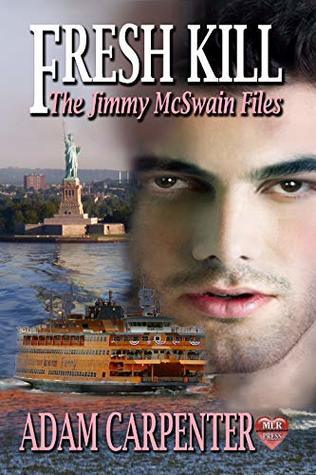
5.       Fresh Kill (Jimmy McSwain Files, Book 6) by Adam Carpenter. Jimmy McSwain is back for another round of mysteries, and Carpenter returns to the character and his New York City setting with style. Full Review HERE.

6.       Lumberjanes Volume 11: Time After Crime by Shannon Watters, Kat Leyh, and others. The latest Lumberjanes collection gets a bit timey-whimey, but in a very different way from Doctor Who. I was happy to see the focus this time is largely on Molly, with lots of character growth stemming out of her stressful family interactions.

7.       Shout Out edited by Andrew Wheeler. This is a wonderful YA graphic novel anthology of short stories featuring pretty much the entire range of LGBTQIA+ characters across genres from science fiction and fantasy to romance (and often intermingling several genres at once). I can’t praise this one enough.

8.       Synchronicity by Keira Andrews.  I am notoriously under-read when it comes to gay romance (as opposed to gay sf/fantasy/horror with romance or erotica elements). For some reason, much of the gay romance I have read falls into the sports romance realm, and this short about a synchronized diving team at the Olympics is no exception. Nicely written with likeable characters.

9.       From A Whisper to A Riot: The Gay Writers Who Crafted An American Literary Tradition by Adam W. Burgess. I’ve really not been doing well on the whole “read more non-fiction” thing, largely because I read non-fiction much slower than I read fiction. This work by Adam Burgess is a nicely-detailed look at a critically under-represented period in gay fiction, and it is worth your time seeking out. My full review is HERE.

10.   The Drowning Girl by Caitlin R. Kiernan, narrated by Suzy Jackson. A first-person narration ghost story high on eeriness but not gore, featuring a narrator who is lesbian and “crazy” (by her own words). I love narrators who tell you right at the start that they are not necessarily reliable, and IMP is one of those narrators. This is a really great listen. Suzy Jackson captures the main character’s innocence and slow fraying as she goes off her meds while relating her tale.


STORIES

I have a goal of reading 365 short stories (1 per day, essentially, although it doesn’t always work out that way) each year. Here’s what I did read and where you can find them if you’re interested in reading them too (with some short notes for stories that really stood out to me). If no source is noted, the story is from the same magazine or book as the story(ies) that precede(s) it:

1.       “Between The Dark and the Dark” by Deji Bryce Olukotun, from Lightspeed Magazine #109 (June 2019 issue), edited by John Joseph Adams.

2.       “An Advanced Readers’ Picture Book of Comparative Cognition” by Ken Liu

3.       “The Harvest of a Half-Known Life” by G.V. Anderson

4.       “Warhosts” by Yoon Ha Lee

5.       “The Last Worders” by Karen Joy Fowler

6.       “The Weight of A Thousand Needles” by Isabel Canas

7.       “When Two Swordsmen Meet” by Ellen Kushner

8.       “Unpublished Gay Cancer Survivor Memoir” by Caspian Gray

9.       “Dust to Dust” by Tochi Onyebuchi

10.   “Sun Sets Weeping” by Seanan McGuire, on the author’s Patreon page.

11.   “The Clearing In the Autumn,” by Barbara Krasnoff, from her collection The History of Soul 2065.

12.   “Sabbath Wine” by Barbara Krasnoff

13.   “Lost Connections” by Barbara Krasnoff

14.   “Hearts and Minds” by Barbara Krasnoff

15.   “Cancer God” by Barbara Krasnoff

16.   “In The Loop” by Barbara Krasnoff

17.   “The Ladder-Back Chair” by Barbara Krasnoff

18.   “The Sad Old Lady” by Barbara Krasnoff

19.   “The Red Dybbuk” by Barbara Krasnoff

20.   “Waiting For Jakie” by Barbara Krasnoff

21.   “The Gingerbread House” by Barbara Krasnoff

22.   “Time and the Parakeet” By Barbara Krasnoff

23.   “Under the Bay Court Tree” by Barbara Krasnoff

24.   “An Awfully Big Adventure” by Barbara Krasnoff

25.   “Rosemary, That’s For Remembrance” by Barbara Krasnoff

26.   “Stoop Ladies” by Barbara Krasnoff

27.   “Escape Route” by Barbara Krasnoff

28.   “Sophia’s Legacy” by Barbara Krasnoff

29.   “The Clearing in the Spring” by Barbara Krasnoff

30.   “The History of Soul 2065” by Barbara Krasnoff

31.   “Chamber Speed” by Everett Maroon, from his collection Spinning Around A Sun.

32.   “Crazy Making” by Everett Maroon

33.   “Connaissieur” by Everett Maroon

34.   “Dead Martha” by Everett Maroon

35.   “Lost Boy” by Everett Maroon

36.   “Conception” by Everett Maroon

37.   “Mummy” by Everett Maroon

38.   “Desperados” by Everett Maroon

39.   “The Seamstress” by Everett Maroon

40.   “Cold Statues” by Jay Lake, from The Many Tortures of Anthony Cardno, a charity anthology.

So that’s 40 short stories in June, keeping me way ahead for the year so far. (June 30th was the 181st day of 2019.)


Summary of Reading Challenges:

“To Be Read” Challenge: This month: 0 read; YTD: 3 of 14 read.

365 Short Stories Challenge: This month:  40 read; YTD: 240 of 365 read.

Graphic Novels Challenge:  This month: 2 read; YTD: 17 of 52 read.

Goodreads Challenge: This month: 10 read; YTD: 71 of 125 read.

Non-Fiction Challenge: This month: 1; YTD: 5 of 24 read.

Read the Book / Watch the Movie Challenge: This month: 0; YTD: 0 of 10 read/watched.

Complete the Series Challenge: This month: 0 books read; YTD: 0 of 16 read.

                                                                Series fully completed: 0 of 3 planned

Monthly Special Challenge: I may not do something like this every month, but I set a June goal to try to read primarily work by Queer authors or centering Queer characters, since June was Pride Month.

I think I was pretty successful with this one. I’m unsure how many of the writers in the June issue of Lightspeed Magazine identify somewhere on the Queer spectrum. But Will Cather was a lesbian, Everett Maroon and Caitlin R. Kiernan are transgender, and Adam Carpenter and Adam W. Burgess are gay. Many of the creators of the Lumberjanes series and most, if not all, of the creators of the stories in the Shout Out graphic novel anthology are Queer-identifying as well. And while Barbara Krasnoff is straight, The History of Soul 2065 heavily centers two queer couples with a third couple mentioned.

Having checked several different websites, it seems like July is not a month that lends itself to any specific reading goal (it’s the National Month of several foods, though: National Baked Bean Month, Culinary Arts Month, Grilling Month, Horseradish Month, Hot Dog Month, Ice Cream Month, Blueberries Month, and Picnic Month!) So my mini-challenge to myself is going to be making July Series Month, to help me catch up on one of my year-long challenges (The “Complete The Series” Challenge).

Sunday Shorts: Snyder, Gardiner and Hearn

Sunday Shorts is a series where I blog about short fiction – from flash to novellas. For the time being, I’m sticking to prose, although it’s been suggested I could expand this feature to include single episodes of anthology television series like The Twilight Zone or individual stories/issues of anthology comics (like the 1970s DC horror or war anthology titles). So anything is possible. But for now, the focus is on short stories.


Every now and then, these posts end up being a mish-mash of recent reads that have no obvious connection. This is one of those posts.

“The Good Girl” by Lucy V. Snyder (from her collection Soft Apocalypses but also June’s selection on the author’s Patreon). This is not the first time I’ve read “The Good Girl,” and it probably won’t be the last. But I have to say that between readings, I’d sort of forgotten just how wonderfully sly Snyder is at easing the supernatural aspect into a story whose premise is already horrific: a young woman having to return home to the father who abused her and the mother who let it happen, for one last chance at a goodbye to a sister she’d abandoned to her fate. There are so many directions the story could go on that description alone, and Snyder keeps you guessing as to exactly which direction she’s leading you in. The narrator struggles with her own guilt and her own justifications on the drive to the family homestead; the characterization is deep and nuanced, the narrator unsure of whether she qualifies as the “good girl” of the title either now or in the past. There’s also a delightful secondary character who provides a little light humor in an otherwise dark story, because we all need a good chuckle before the final scare.

“Freak Corner” by John Rolfe Gardiner (from One Story #254, June 20 2019). Abuse, or at least neglect, of a different kind confronts the narrator of this story. It is 1953, and while the narrator’s small town neighborhood is in an uproar about how Alfie Kipps is now Margaret Kipps, the narrator has a more immediate concern: his deaf sister’s education. The story shines a light on just how recently American Sign Language was considered a fake language, a cheat for deaf people to avoid learning to speak properly, at the same time that transgender issues were just starting to come to the public conscious thanks to Christine Jorgensen. It also shines a light on how far we have, and haven’t come: ASL is a recognized language after a long-fought battle; transgender people are still ridiculed, shamed, and threatened just for existing. Gardiner’s story is less about trans-acceptance than it is about ASL-acceptance, but the narrator’s sister, Gayle, is bolstered by the support of this other social outcast even while her brother falters between supporting her and toeing the parentally-set line of “speak, don’t sign.” There’s also an undercurrent of “false nostalgia,” the narrator saying, without saying, that “the good old days” weren’t so good for a lot of people.


The Story of O-Tei by Lafcadio Hearn (from Oriental Ghost Stories, Wordsworth Tales of Mystery & The Supernatural edition). I’ve been trying (with varying success) to read at least one short story by an author on their birthday, mixing authors I’ve long loved with those I’ve never read. This is the first Lafcadio Hearn story I think I’ve ever read, despite owning both the Wordsworth Edition paperback collection sampling stories from Hearn’s several books as well as the hardcover compendium the Library of America recently issued. I maybe should have chosen a longer story to sample, but even this short simple tale I think captures Hearn’s tone. In “The Story of O-Tei,” the titular woman is betrothed to a man she really wants to marry but she falls ill before the wedding can be performed. She promises him that if he waits, she’ll return to him. He asks for a sign, and she says it’s not in her power to give, but he’ll know her. In the hands of a more modern author, the misfortunes that befall the man when he marries another woman under family pressure would probably be the focal point of the story; Hearn glosses over them except to show that they are not really road-blocks to the fated reunion. Is that reunion happy or horrific? I won’t spoil that for the potential reader. But I loved the way Hearn tells the story: not full of the heavy detail of his Victorian peers, but full of heart and acceptance that the supernatural is part of life.

Series Saturday: VICIOUS

Series Saturday is a series about … well, series. I do so love stories that continue across volumes, in whatever form: linked short stories, novels, novellas, television, movies. I’ve already got a list of series I’ve recently read, re-read, watched, or re-watched that I plan to blog about. I might even, down the line, open myself up to letting other people suggest titles I should read/watch and then comment on.

Vicious DVD covers.png

Warning: Mild Spoilers Ahead (Yes, for a sitcom.)

Vicious didn’t last long, but I think it’s possibly in my Top 5 favorite sit-coms. Had it had more episodes per season or lasted longer, my opinion might have changed. But the short, sweet run it had (14 episodes over a three-year span, including the extra-long Finale) was I think just enough to fall in love with these bitter, snarking characters and not grow tired of them.

Created by Gary Janetti and Mark Ravenhill, Vicious originally aired in the UK before making its way to the United States on PBS, which is where I saw the first season and bits of the second. I bought the DVDs to watch the episodes my DVR had somehow failed to record (including the Finale). Because of course I did. The series focuses on Freddie (Sir Ian McKellan) and Stuart (Sir Derek Jacobi), a couple who have been together for forty-eight years at the start of the first season. In short order, they (and we) meet their new, cute-as-a-button, young upstairs neighbor Ash (Iwan Rheon) and the speculation starts as to whether the young man is “family” or not (Spoiler: he’s not.). Freddie and Stuart’s lifelong friend Violet (Frances de la Tour) also takes a shine to Ash, although the couple’s other close friends, absent-minded Penelope (Marcia Warren) and acerbic Mason (Philip Voss) don’t seem quite so enamored of Ash at first.

The first season feels the freshest and most tightly written, perhaps because the writers are so invested in getting us to understand the characters and their relationships that they wrote seven mostly stand-alone episodes. Other than Ash being drawn more completely into the older characters’ circle, there’s no real “season arc” to speak of. Each episode sets up a situation, hits certain expected moments, and resolves by episode’s end. The running joke of Stuart constantly reintroducing Ash to Violet (“You remember our friend Violet,” often delivered as though the two have never met before) is the closest the writers come to a situation that lasts several episodes and then is resolved in the season finale. Season Two’s more structured lead-up to Freddie and Stuart’s wedding after fifty years together, coupled with a change in episode structure (every episode of season one started with Stuart on the phone with his mother and some Freddie-Stuart ribbing; season two’s episodes start with the two conversing as they walk down the street and something about the on-location filming feels out of place to me) makes the season feel less improvised and thus less fresh. There are still wonderful moments of comedy and character development, but there’s a lot of run-of-the-mill dialogue and situational slapstick as well (I’m looking at you, Mason, Penelope and the wedding cake!).

Both leads deliver their quips with just enough of a wink that the viewers understand these are two men who have developed a verbal shorthand where almost everything they say means “I love you and I wouldn’t change you for the world.” Relationship-wise, it’s clear that Freddie is a bit more dominant, Stuart a bit more submissive – and when the writers reverse the relationship (for instance, in the season two opener, when Freddie has to play subservient butler to a “straight, macho” Stuart to help Violet during a visit from her condescending sister), the writing is at its best. It helps that Sir Ian and Sir Derek obviously enjoy feeding off of each other’s energy, and one has to wonder how much of their banter was ad-libbed. (I also think it’s interesting that Sir Ian says they each had crushes on the other during early acting school days, but neither ever confessed to the other. I wonder what having them as the First Gay Couple of British Theater in real life would have been like.)

The characters’ styles are very different as well. In both dress and personality, Freddie is a bit haughty, Stuart more demure. Stuart wants to be liked/loved, while Freddie just assumes he is. They are both capable of delivering a cutting bon-mot towards their friends, however, and sometimes seem gleeful in inflicting pain. I do wish we’d seen more of what brought these five people together and just a hint more of the love they feel for each other; it’s the one true negative about the lead characters. Sure, in the season two wedding episode, they show some affection – but there’s a lot of dismissiveness and derision before that point. One starts to wonder why Violet, Penelope and Mason have hung around for so long. (Frances de la Tour has a great moment of honesty with Ash in the Finale on this very topic, but it reads as a bit too little too late despite how very good she is in the scene.) Every so often, one of the three scores some equally cutting points on the two leads (Penelope in particular).

And while Violet is pretty well developed over the course the two seasons (de la Tour’s boozier and more lascivious line reads and sub-plots made me wish this show had done a crossover with Absolutely Fabulous), Penelope and Mason fare less well. In the second season we get a bit more of a sense of Penelope’s life and the brave face she’s putting on (Marcia Warren is brilliant in those scenes, most particularly in the ballroom dancing episode and the Finale), but the reveal that Mason is actually Freddie’s younger brother is the definition of a throw-away line for shock’s sake, as is the line about Mason also being gay. Philip Voss does the best with what he’s given, but he’s given the least of the series regulars to work with until the Finale when he has a poignant exchange with Penelope about being there for her to the end, and an almost-poignant moment with Freddie over a good memory from their apparently otherwise horrific childhood.

Then there’s Ash, the young innocent thrust into this biting, sarcastic, awkward family unit. I think it’s a credit to Iwan Rheon and the writers that the character never loses than innocence, never really takes on Freddie and Stuart’s way of interacting with others (except in one episode, with disastrous results). Even though Ash is straight, this consistency in his character points up a generational difference: the biting humor of the old queens doesn’t quite work in younger relationships. Unfortunately, there are a few episodes where the writers decide that innocent = goofy/stupid, especially in season two and the early parts of the Finale. It’s a tendency lots of sitcoms fall into, making the innocence or good-nature of a character too broad. In another example the show subverting expected tropes, it’s not the old gay men who slobber over Ash (or, more common, old straight men making lewd suggestive comments to a beautiful young woman), but their friend Violet. The Violet-Ash dynamic is the second most interesting relationship in the show, but the writers show a remarkable restraint in just how far they let it go before resolving the tension.

In the end, for me it really comes down to my enjoyment of watching three great older actors (McKellan, Jacobi, and de la Tour) work their craft, and watch an at the time relative newcomer hold his own with them.

Check out Vicious on DVD or streaming if you like: sitcoms that center gay characters; snarky humor with an undercurrent of love; watching a group of old professionals knock it out of the park; Iwan Rheon not playing a Bastard (yes, that’s a Game of Thrones reference).