PRIDE 2020 INTERVIEWS: Seanan McGuire

Today’s Pride Month interview is with author Seanan McGuire (who also publishes as Mira Grant, and soon as A. Deborah Baker).

Seanan-McGuire.jpg


Hi Seanan! First off, how is the McGuire household doing during the pandemic shutdown? How are you staying motivated creatively during these times?

I like paying my bills.  It gives me the warm, fuzzy feeling of not having my power cut off for non-payment.  I know that sounds a little flippant, but it’s true, and the need to keep writing in order to make those payments is highly motivational for me.  To be completely honest, it’s the people who have other jobs but are still producing creatively during this time who really impress me—I don’t understand how they’re managing to convince themselves that the job we share matters when the world is on fire.


Since June is Pride Month, I have to ask: how does being pansexual/demisexual influence or inform your craft, if at all?

I identify mainly as bisexual and demisexual these days, after some serious conversations with a pansexual rights activist who noted that I will exclude some partners on basis of gender identity, which did not fit my personal definition of the term.  The line between bi and pan is both flexible and mobile, and three people will get you five opinions.  I’ve never been anything other than what I am, even if the name has changed, so I don’t know how it informs my craft.  You’re asking the fish what the water’s like, and the fish doesn’t know.


Belated congratulations on the multiple Hugo Award nominations for Best Novel (Middlegame), Best Novella (In an Absent Dream), and Best Series (InCryptid), AND your (newly-announced as I’m typing this!) Locus Award nominations for Best Fantasy Novel (Middlegame) and Best Novelette (“Phantoms of the Midway”). All well-deserved! It’s a shame those events are only happening virtually this year.

Thank you so much!  It does suck that everything has to happen online this year, but it also makes it easier for me to lose with dignity, so there’s that.  (I desperately want to win, Best Series and Best Novel especially.  Middlegame is my strongest work to date, and I feel like if the name on the cover were George R R Martin or Neil Gaiman, there would be no discussion; I’d already be the community accepted winner.  And urban fantasy is really one of the genres Best Series was made for.)  Being nominated for Hugos as many times as I have in a short period really just means you get the constant opportunity to lose.


You announced on Twitter just a couple of days ago that you’ve completed work on the next InCryptid novel, Calculated Risks. One of the many things I love about this series is the way you rotate first-person protagonists, something I’m not sure I’ve seen in other urban fantasy series. How do you decide who’s going to narrate each upcoming book? And, if it’s not too spoilery, are there any narrators coming up who haven’t helmed their own installment yet?

I’m moving the overall family plot forward with each book, and each character has their own way of dealing with problems.  Present Alex with a snake god and he brings it home, he doesn’t fight it on national television, for example.  So as the plot progresses, the correct narrators for the situation naturally present themselves.  Our narrator after Sarah will be Alice, which has been coming for quite some time now.


I can’t tell you how excited I am that present-day Alice will get to narrate, after seeing younger Alice in so many short stories on your website and Patreon. On a different but similar note: you have a trio of interconnected stories coming up in John Joseph Adams and Hugh Howey’s Dystopia Triptych anthologies. Can you tell us a bit about the inspiration and world-building for “Opt-In,” “Conscription,” and “Recovery”?

Sometimes we encounter ethical arguments where the shallow end of the slippery slope is completely reasonable and fine.  If we can pay for plasma, why can’t we pay for kidneys?  And then as we get deeper and deeper, the reasons that this was an ethical argument in the first place start to make themselves known.  I wanted to poke at one of the underlying arguments of modern medical ethics.


I have to tell you: you and Saladin Ahmed are the reasons I’m reading Spider-Man books again on a monthly basis for the first time in over a decade. Now that you’re pretty firmly into the Ghost Spider on-going, what have been the hurdles or differences in creative process that you’ve had to become accustomed to compared to writing novels? Outside of the obvious that you’re writing someone else’s property, of course.

A couple of times now, I’ve reached the point of getting a plotline fully approved and started drafting, only to have it pulled out from under me by developments elsewhere in the company, or someone else wanting to do a better focus on one of the same characters, or, or, or.  And that’s been hard to adjust to.  Otherwise, it’s been fun and a wonderful challenge.  I love comic books so, so much.  I love Gwen.  This has been just a dream.


Finally, since you always have so many things going on: what’s coming out in the near future? What are you working on now? And where can interested folks find you and your work online?

I mean, right now, I’m working on email and interviews and all the other administrative fluff that builds up when I’m deep in book-mode and not raising my head to deal with the world outside it.  But I’ll be starting the edits on Calculated Risks sooner than later, and my next book, A Killing Frost (October Daye #14) will be out in September.  Then, in October, I’m launching a new pseudonym, as A. Deborah Baker’s first book, Over the Woodward Wall, reaches shelves.


Seanan McGuire is the author of the Hugo, Nebula, Alex, and Locus Award-winning Wayward Children series, the October Daye series, the InCryptid series, and other works, including the ongoing Spider-Gwen: Ghost Spider for Marvel Comics. She also writes darker fiction as Mira Grant. Seanan lives in Seattle with her cats, a vast collection of creepy dolls, horror movies, and sufficient books to qualify her as a fire hazard. She won the 2010 John W. Campbell Award for Best New Writer, and in 2013 became the first person to appear five times on the same Hugo ballot.
PRIDE 2020 INTERVIEWS: Steve Cummings

Today’s PRIDE 2020 Interview is with artist Steve Cummings.

101134821_2876119592499280_4989098869334736896_n.jpg


Hi Steve! Hope you’re staying well during the current pandemic lockdown. What are you doing to stay creatively motivated during these unusual times? 

There are definitely pros to social distancing during this pandemic if you are a creative person.  I am immersing myself in several TV shows that have been on my radar to check out, most notably ‘The Marvelous Mrs. Maisel,’ whose period decor and Beatnik bar inspired my newest art piece. Lately I’ve been drawn to watching classic or ‘cult’ melodramas from the 1950s-1970s that were aimed primarily for women (or gay men), as well as 1970s horror films with an occult slant. For music I’ve been listening to a lot of West Coast Jazz, 1960s Bossa Nova and lounge music.  Curiously, as usual, the work of current exhibiting fine artists has had no influence.  Recently I’ve been drawn to some of David Hockney’s paintings, and Edward Hopper always inspires me, yet music and films have sparked ideas and themes more than the work of other visual artists.


Since June is Pride Month, I have to ask: how does being gay influence or inform your work?

Being gay has definitely informed my work over the years in several ways.  In addition to identifying as gay I also identify as ‘two-spirit’ and ‘Queer.’  As a two-spirit I believe you can look at all of the characters I’ve portrayed in my images and you’ll see me in all of them, both the males and the females - my complicated sexuality, my repressed desires, and my identification with being (at times) victimized, misunderstood, oppressed or liberated through rebellion. People say that the eyes of my characters say so much, and I agree.  There are equal amounts of vulnerability, fragility and perseverance in those eyes.  I believe that having a Queer sensibility ultimately gives you an enormous capacity for empathy and identification with the journeys of marginalized people (either due to race, class or sexual orientation).  In my art my characters are repeatedly in the process of being ‘caught’ in a moment - and that moment is often one of self-reflection or enlightenment.


I’m always interested in hearing about creative people’s processes. Can you walk us through the inspiration and process for your latest work?

Most of my inspiration for my images come from the journeys and experiences of individuals I refer to as ‘The Other,’ people who exist on the margins or fringes of conventional society. Many of my creations will show one or two characters in their perceived feelings of isolation or panic amid their surroundings.  Many of my environments evoke the past.  I’m drawn to Bohemian culture (and counter-culture), Mid-Century modern America in the 1950s through the 1970s, the hedonistic Disco era, carnival life, the Occult and the Great Depression. I also love vintage photos showing LGBT couples pre-1970s, when their lives were closeted from general society.  Over the past two years, I’ve been much more interested in portraying what I call ‘women on the verge’ - ladies (or transgender individuals) who are either heading toward a nervous breakdown, a psychic transformation, or a personal liberation.  I usually get a preliminary image in my head as to what the finished artwork will look like, and of course, this visual model will be tweaked and reworked and changed when I actually do the creating.  I’m primarily inspired by books, music, and films - especially those with a prevalent and bold visual language and a dynamic sense of color. In my latest piece, ‘Bossa Nova Beatnik,’ I married two passions of mine - Brazilian jazz and rebellious women from mid-century America - into a personal ‘snapshot’ of a gal (either alone in her house or hosting a party) dancing to one of her Stan Getz samba records.  Her eyes express vulnerability and a wide open hunger to seize her life on her own terms; her dress and body language express a defiance and possibly a future LGBT / Women’s Rights advocate.

Steve Cummings art.jpg


Do you work on multiple projects at a time, or do you concentrate on one piece to completion?

Usually I concentrate on one piece to completion.  I work digitally now, on my Apple iPad, using the Procreate APP with my Apple Pencil.  It normally take me several weeks to complete a new work.


Where can interested people find your work online/what are your social media accounts? 

My artwork can be seen on my website: www.s-cummingsart.com, on Facebook under Stevie Artiste or Art For the Wild At Heart, and on Instagram under auteur4489 or stevecummingsart.


Steve Cummings was born in Orange, NJ in 1968 and raised in West Orange.  In 2001 he moved to Keyport, NJ where he currently resides. He’s been drawing and painting since Kindergarten and studied art throughout high school, attended college at Montclair State College and received a BA in Fine Arts in 1992.  Two years later he returned to Montclair State (University) and earned a Post BA degree in Art Education. Since the early 1990s Steve has exhibited in various galleries throughout NJ, including (most recently) La Vie Galerie in Livingston, the QSpot LGBT Center in Ocean Grove, Kiss My Art Gallery in Asbury Park, Gallery U in Westfield, Trinity in Keyport, Rockpaperscissors in Asbury Park, and various exhibits at the Mitchell Sanborn Gallery in Keyport, and Lena DiGangi Gallery and Studio in Totowa.

PRIDE 2020 INTERVIEWS: Joseph Pittman / Adam Carpenter


Today’s Pride 2020 Interview is with author Joseph Pittman, who also publishes under the pen name “Adam Carpenter.”

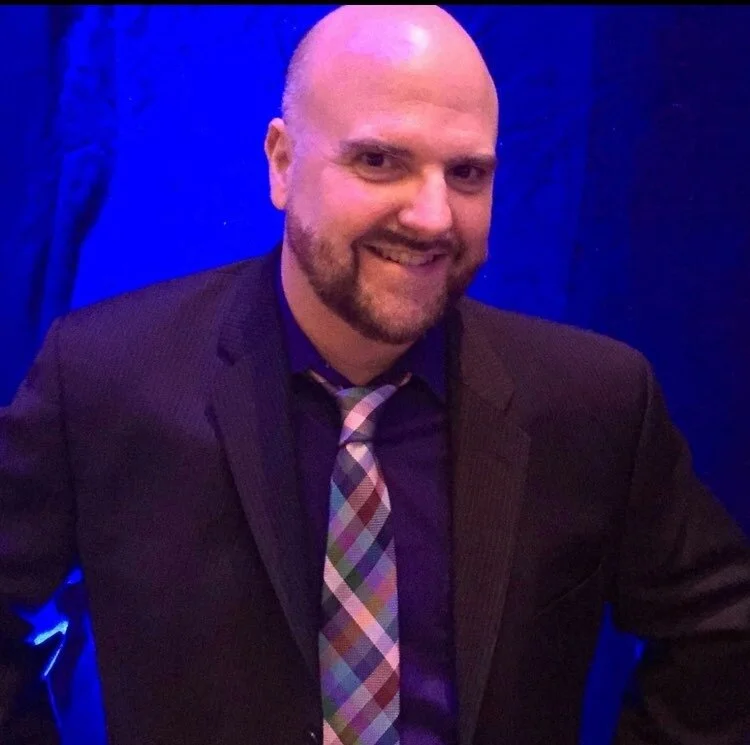
Joseph_Pittman author photo.jpg


Hi, Joe! I hope you’re staying safe and healthy during the current pandemic lockdowns. What are you doing to stay creatively motivated in these unusual times?

Everything I can. It’s important to keep your mind engaged. I have read over a dozen books since March, and it’s knowing that these authors have kept at their creative process reminds me that I too can do it. Some days I get a lot done, some days I get caught up in a novel that I want to finish. It’s all about resolution: knowing what’s possible, and that endings lead to future adventures.


Since June is Pride Month, I have to ask: how has being gay influenced or informed your art/craft?

I struggled for years with my identity. When I published the sweet, romantic TILTING AT WINDMILLS, one of the reviews called it “sentimental slop.” Someone else said, a man writing a romance? What, is he gay? Brutal words from anonymous people. But you are who you are. You feel what you feel. Finally recognizing my dual life helped make me whole. It led to Adam Carpenter.


You’re one of the most versatile writers I know, published in a variety of genres from mystery to erotica. Is there any genre you haven’t been published in that you’d like to try your hand at?

I think I’ve covered all my interests. I’ve done mystery, crime, caper, saga, erotica, romance, I even did a sort-of western (DUDE RANCH!). Literary fiction is a questionable category, as it expects a certain level of writing I’m not sure I have in me. My closest example of that would be WHEN THE WORLD WAS SMALL, inspiration after having read a John Irving novel. Otherwise, I’m content mostly with the mystery genre.


I think the last time I interviewed you, I wasn’t aware that you also publish under the pen name Adam Carpenter. Many writers publish under different names in different genres, and I’m always curious why and how the pen name was developed.

I was approached by a new online eBook publisher to write erotica. But given that Joseph Pittman is known for his Linden Corners books, I couldn’t publish DESPERATE HUSBANDS under my own name. It’s a marketing decision. Know your audience. And so Adam Carpenter was born. The name is ironic. Adam is biblically the first man. Carpenter was the profession of Jesus’s stepfather, for whom I’m named after. It was meant to mean we have all origins.


Has there ever been a story idea that you thought could just as easily be a Pittman book as a Carpenter, or vice versa? And does your writing process vary at all between pen names?

Actually, Jimmy McSwain was originally straight. I developed the idea in the early 2000s. He had a girlfriend, but the backstory of his father’s death remained the same. I sold it to an audio publisher for an original series, but it ended up not panning out. When Adam was created, I recreated Jimmy as gay. But otherwise, Joseph and Adam maintain separate identities and separate audiences. But each of my characters, Brian Duncan, Todd Gleason, and Jimmy McSwain make one person: me.


What’s next from Joseph Pittman and from Adam Carpenter?

Joseph is currently writing THE CASE OF THE CON IN CANNES, a Todd Gleason novella. There’s also a partial draft of THE WINDMILL’S PROMISE and a stand-alone, THE SILVER MOON. Adam’s busy too. SECOND SHOT, #7 in the Jimmy McSwain Files, plus #8 and a new series set in Provincetown, more of a “Murder, He Wrote” cozy style.

The big news though is THE SHADOW DIARIES. A year-long blog written (sort-of) by our dog SHADOW. It’s the story of how he was rescued and came to be loved by his two daddies. It’s actually the perfect combination of Joseph and Adam…and Steve.  It will be published this summer, with beautiful artwork by Steve Cummings. (Editor’s Note: Joseph’s husband, artist Steve Cummings, is tomorrow’s interviewee.)


Where can people find you and your work online?

All of my books are available at Amazon, Barnes & Noble.com, Kobo, iTunes, Audible.


JOSEPH PITTMAN is the author of the beloved Linden Corners series: TILTING AT WINDMILLS, A CHRISTMAS WISH, A CHRISTMAS HOPE, THE MEMORY TREE, and CHASING WINDMILLS. Other novels include WHEN THE WORLD WAS SMALL, BEYOND THE STORM, and LEGEND'S END. His crime fiction includes the Todd Gleason novels, LONDON FROG and CALIFORNIA SCHEMING, and novellas "The Perils of Penelope Pittston," "The Antics of Anton Ardno," "The Mystery of Marilyn and Her Men," and "The Business with the Bumbling Blind Man." Also available is the three-part serial suspense novel, THE ORIGINAL CRIME, in eBook and audio: PART ONE: REMEMBRANCE; PART TWO: RETRIBUTION; PART THREE: REDEMPTION. Under the Adam Carpenter name, he is the author of the Jimmy McSwain Files, a detective series set in NYC, which includes HIDDEN IDENTITY, CRIME WAVE, STAGE FRIGHT, GUARDIAN ANGEL, FOREVER HAUNT, FRESH KILL and the forthcoming SECOND SHOT. Other series include the Cane's Inlet Mystery: SCANDALOUS LIES, SINISTER MOTIVES, and SUSPICIOUS TRUTHS; The Wonderland Scandal: DESPERATE HUSBANDS, DESPERATE LOVERS, and DESPERATE ENEMIES; the Edenwood Saga, EDEN'S PAST, EDEN'S PRESENT, and EDEN'S FUTURE.