BART LEIB, Editor - Interview

This week, I chat with editor/publisher Bart Lieb about Crossed Genres.
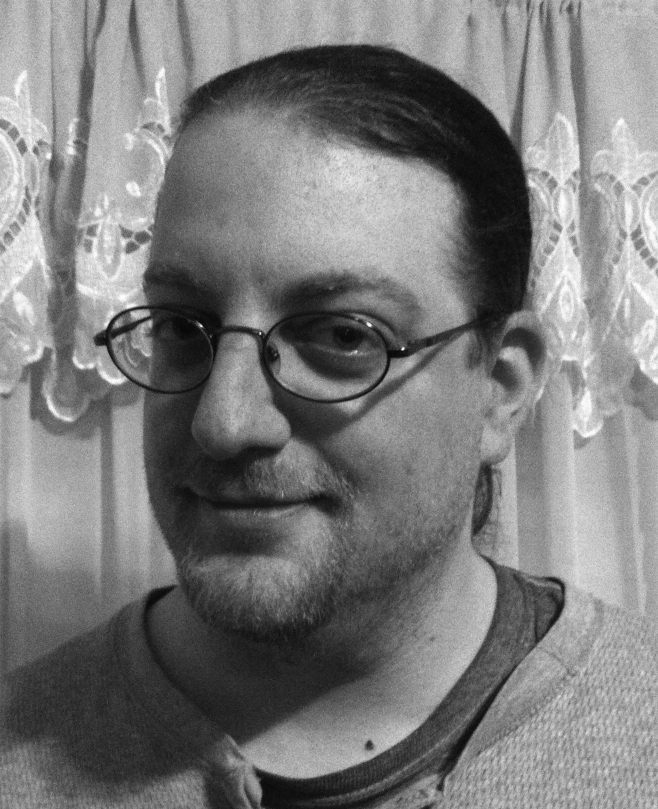
Bart Leib

Bart Leib

Bart R. Leib is co-publisher and founder of Crossed Genre Publications. Bart’s fiction has been published in M-Brane SF Magazine and the anthology Beauty Has Her Way from Dark Quest Books (2011). His nonfiction has been published by Fantasy Magazine. He is a regular article contributor to Science in My Fiction.

Bart lives in Somerville, MA with his wife Kay and their son Bastian. When he’s not writing, editing or playing with his son, Bart is… sleeping. That’s all he has time for.

ANTHONY:  Bart, thanks for taking the time to chat! Let’s start out with a quick description of Crossed Genres for my readers. What is the imprint’s goal? What sets it apart from other genre anthology publishers?

BART:  Crossed Genres started out as a magazine; each issue crossed science fiction & fantasy with another genre or theme. Our first issue was published in December 2008. We retired the magazine in December after the 36th issue.

We retired the magazine so that we could focus on the publication of novels and anthologies. We’ve released two novels in the past 14 months (A Festival of Skeletons by RJ Astruc, and Broken Slate by Kelly Jennings), as well as anthologies and quarterlies of stories from the magazine. Our schedule now includes 4-6 novels/anthologies per year.

From the very beginning Crossed Genres has worked to support and promote underrepresented people in our publications. The magazine had issues dedicated to LGBTQ characters, characters of color, and the big final issue’s theme was DIFFERENT. Our upcoming anthology Fat Girl in a Strange Land has fat women as the protagonists, something almost never seen in literature. Giving voice to underrepresented authors and characters is a trend that will continue in CG’s future.

ANTHONY:  After several years of magazine publishing, Crossed Genre’s first anthology is Subversion, which became available in December. I’ve included a description of the book at the top of the post. What was the submission process like? Was it invite-only, open submission, or both? Were there any authors you specifically pursued?

Subversion by Bart Leib

Subversion by Bart Leib

BART: Subversion was our first invitation-only anthology. After a couple of years of publishing, we had worked with a number of very talented authors, and I felt comfortable that we could get an excellent body of work from invitations. 44 authors were invited to submit, and I received 36 submissions, from which I chose the 16 in the antho.

I will say that, while I was extremely pleased with the submissions I got – I had to turn down some good stories because the anthology was too full – I did miss the process of open submissions somewhat. We’ve always loved getting submissions from unknown authors, & getting to publish talented people for the first time – it’s been one of the best things about being a publisher! In the future I think most if not all of our publications will be at least partly filled with open submissions. (Our upcoming anthology Fat Girl in a Strange Land was open submissions.)

ANTHONY:  I know I asked you this in the #sffwrtcht on Twitter when you were the featured guest, but I’m hoping you can elaborate a bit now that you have more than 140 characters: what differences are there in the submission and selection process for the anthologies you have coming out versus the magazine issues?

BART:    Well the magazine was always open submissions, which as I mentioned before wasn’t true for Subversion. The big difference was that the magazine had a much quicker turnaround time. We would accept submissions for an issue one month, then the following month we’d have to make our selections & edit the stories for release the first day of the following month. That breakneck pace made the process kind of harrowing from our perspective. By comparison, the same part of the process for an anthology is spread out over 6-8 months. How we select stories is basically the same: We pick what we feel are the best written stories that best represent the genre or theme.

There were a very few times during the magazine’s run where we rejected stories which we felt had enormous potential because they were too rough and needed a lot of rewriting – because of the magazine’s turnaround we simply didn’t have the time to wait for the author to do the rewrites. I’ve regretted that, and fortunately with anthologies and novels we can take the time to work with authors on improvements more. It was one of the reasons we decided to retire the magazine.

ANTHONY:  I think editors hate when I ask this question, but what is your procedure for determining story sequence (in a magazine issue and an anthology if the process differs from one format to another)?

BART: Haha, story sequence is hard to explain. Most importantly, you need a big hook in the first story, to grab the reader; a good follow-up second story to prove the first wasn’t a fluke; and a closing story that really represents the theme perfectly. It’s an extremely subjective process and it’s a bit different for each anthology or issue. Plus, if an issue only has 5 or 6 stories, that can be very different to put together than something like an anthology with 14-20 stories.

I highly recommend reading Jennifer Brozek’s blog about the subject.

ANTHONY:  Subversion is just the first anthology from Crossed Genres. What’s coming in the rest of 2012?

FAT GIRL IN A STRANGE LAND

FAT GIRL IN A STRANGE LAND

BART:  February 17, 2012, we release our next anthology, Fat Girl in a Strange Land. The release coincides with the Boston-area convention Boskone.

In mid-July, we’re releasing a collection of short stories by Brooklyn writer Daniel José Older. The release coincides with another Boston-area convention, ReaderCon.

(Crossed Genres will be represented at both conventions mentioned above.)

In early September, we’re releasing our next novel, INK by Sabrina Vourvoulias.

Our next release after that will be MENIAL: Skilled Labor in SF  in Jan/Feb 2013, which I’ll talk about in the next question…

ANTHONY:  How can writers submit for upcoming anthologies?

BART:  We’re currently only open for novel submissions. However, we’re now open to submissions for MENIAL: Skilled Labor in SFSubmission guidelines can be found HERE.

ANTHONY:  For novels, do you have an open slush pile policy or a specific reading period?

BART:  Novel submissions are generally open all the time. If we get too overwhelmed – if our publication schedule fills up too far out – we may close novel subs for a while, but at the moment that doesn’t look likely. Send us your novels!

ANTHONY:  And for my usual closing question: What is your favorite book, and what would you say to someone who has never read it to convince them that they should?

If I had to pick one, I’d say Flowers For Algernon by Daniel Keyes. The gradual unfolding of the main character’s intellect, and the triumphs and pain the process brings, creates one of the finest and most sympathetic characters I’ve ever read.

You can follow Bart on Twitter as @MetaFrantic for the latest on Crossed Genre.

LYNN BENNETT-MACKENZIE, Artist - Interview

In honor of Saint Andrew’s Day, my interview this week is with Scottish artist Lynn Bennett-Mackenzie.

Lynn Bennett-Mackenzie

Lynn Bennett-Mackenzie

Born in 1967, Lynn Bennett-Mackenzie is an established artist living and working in north west Scotland. She was brought up in the remote rural areas of the Highlands of Scotland. Lynn studied at Gray’s School of Art graduating in 1990 and now has a workshop/studio on a picturesque croft, from where she also operates a thriving framing business She works in various media – oils, mixed media, watercolour & pen & ink. Her work is evocative of the Highlands and is inspired by the light, colours & stories of the area as is particularly evident in her pen & ink drawings. She has shown work in various exhibitions and taken part in community and international projects including The Big Picture, Wild Wood , Landfill art, and was recently invited to attend an International Art Symposium in Russia. Her work is innovative, original and versatile and she aims to capture an essence of emotion in her work, drawing the viewer in to the story that unfolds. Her work is intuitive and comes from within, drawing on her experiences from where she lives and from places and people she meets & visits. Her latest works focus on the invisible connections between us and the world at large. She is fascinated by the notion of what is around us that cannot be seen but often felt by some, faith, and the way people interpret consciousness & reality. Her work has been described as having a gentle beauty, softness and light and dynamism. Lynn hopes that her work will make people more aware of their own internal power and our ability to adapt and change.

ANTHONY: Hi, Lynn, welcome! Thanks for the chance to chat!

LYNN: Hi Anthony, thanks for asking me.

ANTHONY: Let’s start with some of the basics: what were some of your earliest creative influences?

LYNN: I suppose the places where I grew up, most of them remote and rural – I had a free, happy childhood with lots of open space in beautiful areas, and my art teacher in later high school, he was the one who really encouraged me and suggested I go to art college.

ANTHONY: You work in a number of different mediums. When approaching a new project, how do you decide what medium to work in?

LYNN: I actually don’t think about it too much, what I am doing tends to dictate the medium, although I go through phases of using certain mediums.

ANTHONY: Have you ever started a project in one medium, then decided it would work better in a different form? For instance, I’ve often started writing a short story only to realize the story is better suited to a one-act play or poem or even novel.

LYNN: Often I might start a work in pen & ink say, and then carry the work through into watercolour, charcoal and oil. Some don’t make it past the drawing stage, it really depends on how strongly I feel about the piece and theme.

ANTHONY: Is there a medium you’re most comfortable working in? Any medium you avoid or feel uncomfortable in?

LYNN: Pen & ink is my “comfort food”, I always return to that. I avoid pastels, I used them at college and never felt at ease with them, so have not gone back to them at all.

ANTHONY: For each medium, what are your most consistent tools? Favorite brands or “old reliables?”

LYNN: A definite favourite is my Rotring 0.25mm Isograph, tried other sizes of nibs, but this is the one I have used since I was 15. Pink Pig sketch books, made in Huddersfield, also palette knives rather than a brush. Other than that I tend to chop and change a bit, try out different brands.

ANTHONY: What is your most creative time during the day? For me, writing early in the morning is virtually impossible (unless I’ve been up all night).

LYNN: I usually try to get out for a walk in the morning, tho that doesn’t always happen! It can take me a while pottering about in the studio doing other things and then ideas will start, so probably late morning/early afternoon I would say is the best for me.

ANTHONY: In your bio, you mention “focus[ing] on the invisible connections between us and the world at large.” How has this focus influenced your creative process?

LYNN: I think very much so, I am very aware that every action has a reaction, so it often fascinates me how something that might have happened to me, maybe some time ago, can find it’s way into my work. Often others see this more than I do, which I enjoy, most of the time!

ANTHONY: Has the move to this new focus been a natural progression in your growth as an artist, or was it a sudden change in direction, and if the latter, what brought it about?

LYNN: I would say it has been a natural progression, as I have worked more, my confidence has grown, and that obviously has a direct impact on my work. I used to worry more about what my work appeared like to others, whether they would like it or not, now I am more inclined to trust my instincts. If it feels right to me, then I am happy.

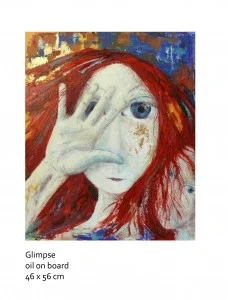
Glimpse

Glimpse

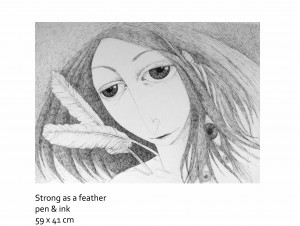
ANTHONY: Most of the art posted on your website seems to be linked not just thematically, but in terms of the “characters” in the pieces. Is this because you’re more comfortable with certain facial structures, or is it a choice to feature the same woman in each piece?

LYNN: The face is one that re-occurs, no idea why – I have tried to change it a few times, but it persists!

Strong As a Feather

Strong As a Feather

ANTHONY: Your oil & acrylic, water-colour and ink drawings all seem linked by that common theme, but your mixed media work feels like an almost totally different creature. The mixed media pieces seem less fantastic and more … eerie, perhaps is the word I’m looking for. Like the piece in the photo named disp5, which puts me in mind of a hand congealing out of water vapor and feels a bit nefarious. Talk to me about the differences between the more traditional mediums and mixed media in terms of creative process.

LYNN: When I was at college, I struggled to decide between taking painting & sculpture, and now I find myself being drawn back to 3D works again and exploring these a bit further. It is more of a challenge to work in this way, but with the works I have done so far, I have not planned it too much and let the works evolve as I go along. I find if I consider things too much, the work will be more rigid, so although it might take a bit of playing about at first, at some point, the switch will click and I will get good results.

Regarding this work in the photo, the reactions are either they love it and are fascinated by it, or it freaks them out, always good to get a reaction!

ANTHONY: You’ve done some exhibitions, but your site also mentions the possibility of purchasing prints of your work. I do have some readers in the UK, but I’m curious about someone from the States purchasing a print. At this time, are you able to sell and ship your work overseas?

LYNN: I can ship prints and originals if necessary.

ANTHONY: Do you have a current project you’re working on?

LYNN: I am working on a personal project, Displacement. The work in this will be quite different to that which has gone before.

L1070721-225x300.jpg

Also I am working in collaboration with Indian artist, Somu Desai, on Ceangal, a project to hold international artists residencies in NW Scotland in September 2012- a totally new and exciting venture!

ANTHONY: Any events coming up with your work that you’d like folks to know about?

LYNN: I am travelling to India in Jan 2012 to meet artists, experience indian culture and see some residencies in progress there, so will be blogging about that, and looking forwards to seeing how it affects my work on my return.

ANTHONY: And my usual final question: What is your favorite book, and what would you say to someone who has not read it to convince them that they should?

LYNN: That is a tricky one! I don’t know that I have a particular favourite, but two that I have read recently twice (unusual for me) are Nine Lives by William Dalrymple, an amazing insight into what people will do for their beliefs, and Invisible by Hugues de Montalembert, an amazing but honest memoir by the artist who was blinded by burglars who threw acid in his eyes – inspiring!

ANTHONY: Thanks again, Lynn!

You can follow Lynn on Twitter as @lynnbmackartist, you can visit her webpage to see more of her work, find her on Facebook, read her blog, join her on linkedin, and follow the Caengal project.

HOLLYWOOD ENDING, Singers - Interview

This special Thanksgiving Day interview is with the guys from Hollywood Ending. You’ll see why I’m posting on a special day near the end.

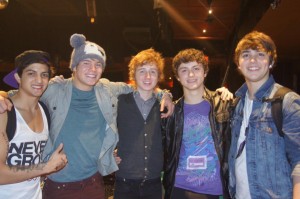
Hollywood Ending

Hollywood Ending

Watching them perform, it’s hard to believe the five guys in Hollywood Ending have only been performing together a few months. On stage, they’re in synch with each other in a way some bands that have been together for 10 years don’t manage. And they obviously enjoy performing and touring. Tyler Wilson sings lead with Cameron Byrd, who also plays guitar. Mike Montalbano is on drums, Chris Bourne is on the bass and backing vocals, and Dan Geraghty is on guitar and backing vocals.

I interviewed the band before the final concert on Action Item’s The Stronger The Love Tour. The venue is crowded and a total of eight bands were playing, so space was at a premium. I ended up interviewing the guys in their tour van and using my brand new digital recorder. As you’ll see, it was an hysterical experience. I’d gladly interview these guys again, any time.

Anthony: I do all my interviews by email so hopefully this thing is going to work. I’m just going to try to hold it flat. So the first question I wanted to ask you is one you probably always get…

Mike: Is the heater going to mess with the recorder?

Anthony: Oh, yeah, it might. I didn’t think of that. Thanks, Mike.

[Dan attempts to turn the heater off, but can’t find the right knob.]

TYLER, CAMERON, MIKE, CHRIS: No, to the left! The left! THE LEFT! Your other left! The other knob!

Anthony [pointing]: This one over here. [Dan turns a different knob and the heat goes off.] Okay, that one works too. [Everyone laughs] This is going to be fun to listen back to tomorrow, and be like ‘what was all of that?’

Dan: Sooooo stupid.

Anthony: Well, you didn’t manage to lock yourself into the front of the van, or out of the van, so we’re okay with that. Although I have to say, MY most embarrassing moment on tour … well, not on tour, but I travel for work … leaving the wireless microphone on when I went to the bathroom.

Band: Nooooo!

Anthony: Yeah, in front of like 60 people. Coworker came running in while I was at the urinal to tell me it was on. So Dan, I’ve out-done you.

Cameron: So one day one of us will top that.

Anthony: And then you’ll have to make sure you tell me about it. Okay, since I know we’re tight on time: You guys have been together for how many months now?

Band [almost in unison]: Four.

Anthony: How did the band come together? You’ve probably answered this question like ninety million times.

Tyler and Mike: [laughing] Yeah…

Cameron: Well, basically, we all knew each other from other bands and then our manager set us up with Chris here.

Chris: Through Skype.

Anthony: Through Skype? Cool.

Cameron: and it kind of started from there, and then NBT started…

Tyler: We got a slot on NBT and we decided that it was amazing exposure and it had to be, it had to work out. We all got along really well, we’re brothers, and it just really worked out really perfectly. A lot of luck.

Anthony: So: first time on tour for … any of you?

Tyler: Me and Cameron.

Chris: My first time on tour.

Dan: Mike and I have toured before.


Anthony: So what’s the toughest part about being on tour, for you guys who are new to it.

Cameron: Being sick.

Chris: Trying to sleep. Sleeping on tour is hard.

Tyler: I wish I could eat better, but there’s just a lot … you know, it’s tough.

Cameron: [coughs] I got sick after two weeks, and I’m still sick. So I’ve been sick for almost two weeks.

Mike: It’s all the things that you think would be hard.

Anthony: Yeah, the same stuff I have traveling around the country for my company, it’s just being in the van you’re in a tighter space dealing with it. So NBT, you’ve made it through to…

Mike: Third round right now.

Anthony: When does the voting end?

Everyone: Tomorrow [which was Monday, November 21st]

hollywood-ending-2-300x118.jpg


Anthony: Alright, good, because I did just tweet right before the interview, “you’ve got to make sure you vote for these guys,” not that I have a huge number of followers…

Dan: Thanks so much!

Tyler: Every little bit helps.

Anthony: I’d like to see you guys go through. Okay, the songs. Who are the song-writers in the group? Is it everybody?

Tyler: Everyone really writes.

Cameron: Everyone has their own thoughts on it.

Dan: Yeah, everyone really contributes.

Cameron: Like someone will come up with an idea then we’ll build off of it and we’ll all throw in our opinions so it’s like a big song-writing session.

Chris: Most songwriting sessions like sometimes Tyler and Dan will pair off and then me and Cameron will pair off and then Mike comes and checks out what’s going on and gives his input.

Cameron: And then we’ll go back in the end and we’ll edit stuff, so we all usually help.

Anthony: So it’s really a group effort, not like some groups that have just one or two members that write all the songs and everybody else just fills in with their instruments.

Cameron: And everybody is different, different approaches to writing, too, like everyone has their own ideas.

Mike: And everyone brings it together.

Anthony: A real group collaboration, that’s awesome. You’ve got the two singles out on itunes now, right?

Tyler: Yeah. “You Got Me” and “I’m So Over You.”

Anthony: More music coming soon?

Everyone: Absolutely.

Cameron: We’ve got a couple of songs that were recorded and are being recorded soon. We are very busy with tour as you can see, and we’re about to go on another one with All-Star Weekend soon. It’s hard on the road you don’t have the time to write or obviously record but as soon as that’s over with… Until then, we hope to write and record new songs.

Anthony: Those are the usual questions I think you guys probably get asked all the time.

Everyone: [laughing] Yeah.

Anthony: So I’m going to ask the one that I end my email interviews with and you can take a minute to think about it: because I’m a writer, I always ask everyone what your favorite book is, and what would you say to someone who hasn’t read it to convince them that they should?

Dan: “HOP ON POP!”

Anthony: How did I know you were going to come up with a Dr. Suess book? I don’t even know you and I somehow knew you’d be the one to answer Dr. Suess.

Dan: Dr. Suess is a legend! Oh, “Green Eggs And Ham,” too!

Mike: Do you know the book “Hi, My Name Is David and I’m an Alcoholic?”

Anthony: Yeah!

Mike: That book is great, I dunno, I read it in like 9th grade…

Anthony: And it stuck with you.

Mike: Yeah.

Anthony: So there you go.

Cameron: A book I’ve always loved, and the reason why I would tell people to read it is because I’m not a huge reader, I’ve never been a big reader, but I’ve always loved “Holes.” I’ve been able to read it like four or five times, and even when I was younger and I hated reading … I like reading now but I don’t do it that much, but when I was younger I hated it, but I would still read “Holes” over and over, so…

Tyler: I’m a huge, huge “Harry Potter” fan, and I think most people have read “Harry Potter,” but if you haven’t, please go do that because it’s an amazing book.

Anthony: I always love it when Potter gets the shout-out. All three Burnham brothers named the Potter series, too.

Chris: I’m kind of in the same boat as Cameron, I don’t really read, but I’ve made the effort to read some biographies of famous people that I’m really inspired by. Michael Jackson, titled “Moonwalker,” it’s a great biography, I’ve read that, incredible insight into his life, you know, and yeah, it’s just a great book.

Anthony: Yeah, you know, it’s funny, I ask that question and a lot of people will say, ‘well, I don’t really read any fiction so I don’t think I can answer the question,” and I’m like ‘no, it doesn’t matter if it’s biography, fiction, whatever … you’re reading.

Everyone: Yeah, true, right.

Anthony: Alright, well, I think that’s all the questions. I knew you guys were going to be strapped for time, so I didn’t come up with a million questions to ask, and I’m sure I’m forgetting a few of the ones I wanted to ask.

Cameron: Well, thanks a lot man.

Chris: Yeah, thanks.

Anthony: You know what, let’s just make sure this worked… [plays back interview] Yep! Great. Alright, well, I’m coming into the show to see how you guys do, and to visit with the Burnham family.

Mike: Really, cool!

Tyler: Thanks for sticking around.

Anthony: I’m sure a lot of interviewers don’t. I’ll be near the back, though. Let all the screaming teenage girls get up close.

Dan: [laughs] You mean you’re not going to be screaming?

Anthony: I will clap and yell, but I’ll cut down on the screaming. Thanks again, guys! I’d say break a leg, but the last time I said that to my nephews, they took me seriously. One broke his arm running after his sister, and the other did it during football practice.

Dan: How … ironic.

Anthony: I get the feeling Dan always gets the last word!

* * * * * * *

One of the several things I forgot to ask the guys during the interview was about an upcoming benefit concert they’re playing in NJ. So here’s the details: in association with School of Rock, Hollywood Ending will be performing at the Rockin’ Strong for #34 benefit on November 28th, 2011 at Saddle Brook High School. Doors open at 7:00pm and tickets are $10.00. Tickets can be purchased at the Saddle Brook or Waldwick NJ School of Rock locations. All proceeds go to help Tyler Vitiello, a Saddle River HS football player who suffered a severe neck injury during his team’s last regular season game in early November.

You can check out the band on Facebook, and follow everyone on Twitter: the bandCameronTylerMikeDan and Chris. They also post videos on their Youtube channel.

EVELYN LAFONT, Author - Interview

Tonight I’d like to welcome author Evelyn Lafont to RAMBLING ON.

Evelyn LaFont

Evelyn LaFont

In her own words, Evelyn is an author and freelance writer with an addiction to Xanax and a predilection for snark. Her debut novella, The Vampire Relationship Guide Volume 1: Meeting and Mating is available on AmazonBarnes and Noble and Smashwords.

First off, as you know from my review, I enjoyed THE VAMPIRE RELATIONSHIP GUIDE, VOL. 1. It’s just an all-around fun read. What’s the general reception to the book been like?

Thanks Anthony! So far, it’s been great. Most people are really picking up on the humor, but also finding a fun romance in there along with the satire. I am finding it interesting how many people wish the book were longer though!

Let’s talk genre for a moment. How much exposure did you have to the whole “paranormal romance” (and specifically “vampire romance”) field before you started writing VRG? Was it always a favorite genre of yours, or were you reacting mainly to the fact that we can’t walk into a bookstore without being hit with a paranormal romance these days?

I love the paranormal romance genre and I read over 100 books in the genre before writing the story. I would say it’s a combination of me showing my love for the innate silliness of the genre and making fun of its popularity right now, so it’s a good read whether you love the genre or hate it.

You’re not the first author to show us a world where vampires are an acknowledged (and in your case openly accepted) subset of society. There are laws that protect vampires and force businesses to be open 24 hours a day to accommodate them, and yet Josie, the main character, knows almost nothing about their habits despite her obsession with them. How much of the detail of that “coming out” have you worked out, and will we get more details of the timeline in later books?

I’ve worked out most of the details, and you are going to get them in about the same way you did in book 1—through Josie’s penchant for mixing pop culture myth with the occasional Nightline episode’s information.

Urban fantasy with first-person narration creates a unique challenge: how much does your main character know about the world around them, and how do you get that information across to the reader without it feeling like an “info-dump?”

My goal with this book was to help the reader see the world through Josie’s eyes. I try to avoid info dump by handling information through a combination of magazine and book excerpts (which Josie herself may or may not have read), conversation, and narration.

Josie initially comes across as a somewhat jaded, almost world-weary, 30-something but it became apparent that she really doesn’t know much about the vampire culture. It makes her seem a bit … how do I put this politely … ignorant of the world around her compared to the other human characters. Was this a conscious decision in creating the character? Or did you try other methods of working in vampire lore before deciding to have Josie learn along with the reader?

Like a real woman, Josie has a combination of personality traits. She is jaded in some respects, but I wouldn’t call her world-weary. She also isn’t the type of person who is going to methodically study anything with reference books. She’s a bit of a dreamer and one of those people that just go along with the stream of things to an extent, though she’s not afraid to take control of her life if the stream starts heading in a bad direction. Josie is matter-of-fact but not methodical or analytical so when vampires “came out” she assumed that the pop culture books she read were like an instruction manual. Sure she catches the occasional factual article in VampLure or on Nightline…but that’s not exactly a well-rounded education.
If you look at the real world, you can find many instances of this type of behavior. As an example, how many late night TV segments have you seen in which adults—old adults, even—are asked questions about current events or the workings of the government and they have no clue how to answer them correctly? Our society is filled with people who assume they understand things that they really don’t.

Now for the question I alluded to in my review. Once the “damsel in distress” portion of the plot takes over, I felt like there were some pretty large plot-holes, and a “villainous plan” that just didn’t make sense. So, the hardball question: why is the villain’s ultimate plot so poorly-thought-out?

I don’t think the plan is poorly thought out, though I agree it was poorly executed. On that point, it’s the typical villain’s trip up—hubris and greed. The villain in this book resents the hoops he must jump through to get what he wants and that resentment mixed with his greed and over-confidence work out to…well, not the best executed plan.

I picture it as a Dr. Evil sort of scenario: Threaten the White House with a powerful laser when you don’t even have said laser.

It seems to be an accepted trope that vampire romance series eventually bring in other supernatural creatures, usually starting with werewolves. Can we expect to see Josie’s world expand to include shape-shifters, witches, etc?

Oh yes, we can!

And my official Last Question for everyone I interview: What is your favorite book, and what would you say to recommend it to someone who hasn’t read it yet?

This has got to be an impossible question…single favorite? Yikes. I love Tess of the D’Urbervilles, she’s my old standby, so yeah–Tess. To recommend it I would tell the person that it is the quintissential and most perfect romance novel ever.

Thanks again for agreeing to “sit down” for this email interview, Evelyn! Best of luck with the book and the series.

In addition to the purchasing information at the top of the page, you can also interact with Evelyn on Twitter, @KeyBoardHussy. And check out her website, www.keyboardhussy.com

CHIP SKELTON, Webcomics - Interview

Today we welcome Chip Skelton, the creator of the webcomics-turned-print-comics BROKEN and TERRAN SANDZ. In his own words, Chip has “drawn my whole life. Discovered comics in my early teens and found I loved ‘em, but was too chicken to pursue a career in them. Eventually my passion for storytelling overcame my fear and, bam!, I created two graphic novels.”

Broken, Chip Skelton

Broken, Chip Skelton

BROKEN is a southern gothic, coming-of-age tale about the monumental battles that happen closer to home. It is about the things that live and die within us, that leave us either broken or better for the experience. A teenager in western Kentucky faces family, high school, and a mass murderer. A mystery that is not what it seems.

terransandz-200x300.jpg

TERRAN SANDZ: ONE BAD DAY focuses on one day in the life of Terran Sandz, an alien who has drawn the short straw for most of his long life. Unfortunately, the day in question is a really crappy one. Terran Sandz must fight an entire planet, his own people, the two greatest warriors to ever exist, and his own god. It’s an all-out, nonstop slugfest that still manages to explore ideas of faith and individuality. Or maybe it’s just a brainless, all out slugfest.

Anthony: Chip, thanks for agreeing to the interview.

Chip: It’s cool to be interviewed by you. Hopefully I’ll make more sense than normal.

A: Haha. No worries. You’ve recently released two short graphic novels: BROKEN Book One and TERRAN SANDZ Book One. Both were originally serialized on the Drunk Duck webcomics site. What made you decide now was the right time to go from webcomic to print for each of these projects?

C: Basically, my lovely wife said it was time to crap or get off the pot. She suggested I really commit to seeing if I can make something of this passion of mine by not only printing my books, but attending conventions and promoting myself as well. I raised the money by creating and selling sketch cards, as well as selling a few other odds and ends, on ebay.

A: How long was the process of going from web to print?

C: Really it was pretty easy. It took me a few nights to size the pages to the printing template, make a few edits, and compile the guest art. All in all, it was surprising easy.

A: BROKEN and TERRAN SANDZ are two very different stories, not just in genre and plot but also in tone and execution. You have a great ability to suit style to story without losing what makes you you. How did you decide on the art style for each story?

C: At least for me, EVERYTHING serves the story. Since I seem to be able to alter my style, I make that a slave to the story as well. TERRAN SANDZ is intended to be a big-production action flick, so I chose a more frenetic art style as well as dynamic page layouts (I was aiming for Kirbyesque) to help me achieve the desired effect. I also wanted an 80’s feel to the first mini-series, so I created the zippatone-like effect for the shading.

BROKEN, on the other hand is the exact opposite of TS. BROKEN is my homage to Koike and Kojima’s LONE WOLF AND CUB, perhaps one of the best series of graphic novels EVER. I wanted the storytelling in BROKEN to be as stripped down as I could make it. I sought to focus on the quiet, poignant moments that seem too trivial but are in the truth often the most impactful.

I didn’t always achieve my goals, but overall, I’m happy with the outcome of both books.

A: The one thing both stories have in common (and I think this is true of your unfinished story DEAD as well) is a deep background mystery. Is mystery/crime fiction a genre you particularly enjoy, and if it is, what authors/works have influenced the way you’re developing the background mysteries in each story?

I’m not really a mystery guy. I read horror and fantasy for the most part. From my perspective, a good story always has aspects of the unknown. I love when a story, be it prose or cinematic, intimates that I’m only seeing a small part of a bigger mosaic. I love to be teased that I have much more to learn if I turn the next page or don’t turn away from the screen. So I guess I include that in my storytelling.

A: TERRAN SANDZ is, as I think I once put in a comment to you, “balls-to-the-wall action that still manages to include a plot and characterization and raise questions about faith and loyalty.” The pace of Book One is absolutely brutal. Did you ever look at a sequence and think, “man, I need to cut this guy a break, give him a chance to breathe,” or did you pretty much know from the get-go that he was going to take a non-stop beating? I guess I’m asking for a little insight into the way you put the story together, and used the action to deliver character and plot and hints at the greater mystery of the story.

C: Never thought of giving the poor guy a break. His story will never be an easy one. In fact, should I ever get to tell the story I intend to tell, things get far, FAR worse for him. I’m not a big fan of “happy” characters. I like the complexity of troubled individuals. Plus, I think that’s more realistic.

As far as how I plot a story, there I take a more organic approach. I sorta know where I want a story to go, but I let the characters have varying degrees of control, plus I like to sometimes go in the exact opposite direction of what I intended. If I can catch myself off guard, then I’m likely to do the same with the reader.

Whether its TERRAN SANDZ, BROKEN, or a short graphic story, I tend to plot as I thumbnail a page. I block out a page as though it were a movie. The arrangement of the panels, flow of the images within the panels, and how they relate to the pages before and set up those to follow are all considered with a cinematic sensibility. How would Leone, Wu, Lean, the Coen brothers, Miyazaki, or Tarantino not only direct, but write this scene? Sometimes I don’t even have any dialogue until I’ve finished illustrating the page, but I do have all the emotion I want for the page.

Geez, long answer. Hope I answered the question.

A: Definitely. Speaking of similarity to film: right now, TERRAN SANDZ is printed in black-and-white. Given the opportunity, would you go to a full-color format? Or was the decision to do it in black-and-white for the web and in print a permanent decision? This harks back to the age-old question: to colorize or not to colorize. (Personally, I’m a believer in not colorizing old movies – films shot in black-and-white involve decisions about lighting that don’t translate to a color presentation without losing some sense of reality, in my humble opinion.)

C: Naw, it’ll stay black and white. I’ve always seen TERRAN SANDZ as a black and white movie. Not saying it’ll never be in color, but I’ll burn that bridge when I get to it.

A: I don’t think I’m the only person who has described BROKEN as “Southern Gothic.” Compared to TS, the pace is almost languid, and even the fight sequences are a study in pacing. A lot happens in this first book, but it doesn’t feel rushed. Again, is the pacing a conscious decision or something that’s grown organically as you’ve worked on the story?

C: The pacing in BROKEN is 100% intentional. I don’t know if I always succeed, but I consciously aim for an emotional impact for every scene and page. I’m interested in distilling the emotional core of a scene, whether its action, solitude, or drama. I want to go “ooh” and “aah”. I aim for the reader to have the same experience. Again, I don’t know how well I succeed, but that is my goal.

A: I find it hard to ask specific character questions because I don’t want to spoil anything about BROKEN for potential readers, but I have point something out that I didn’t notice reading the story a page at a time on the web but which stands out in the print version – and you can plead the Fifth if you’d like to this one – It almost seems like you’re working in two different time-frames. The graveyard sequences where Dan talks to his mother’s grave feel like they are at a remove from all of the other action (school, home, mall, etc). Are there really two different stories going on here? Or am I just reading way too much into the layout of the story?

What a prescient question.

And feel free to ask any character questions you’d like. I enjoy taking about them.

A: Nice non-answer, haha. I think I’ll save character questions for a follow-up interview. BROKEN is in black-and-white, but rather differently from TERRAN SANDZ. You work in little drops of red throughout the book. Was it always intentional, or did it start out as an artistic device that then became a larger part of the story? And without spoiling anything, can you tell us whether that red will continue to be important after the strong cliff-hanger ending of book one?

The red was intentional from the start. It IS, and will remain an important symbol within the story.

A: Both books have very cinematic art-styles. TS is full-on block-buster; BROKEN is very indie-film, with lingering shots of rain, stars and fireflies in the natural world, and close-ups of broken lockers and nasty bathrooms in the school setting. How hard do you work on that aspect in the plotting stage, and how much of it comes as you’re drawing?

C: I see a scene in my head, and I play it out mentally, moving the camera, editing the pacing, and setting the characters on different marks until I find the blocking that I think achieves the result I imagine for that particular moment. Though it sounds like I work hard, all of what I described happens within seconds. I seldom do more than one set of thumbnails for a page, and hardly ever redraw a panel more than once. Maybe I could create better pages if I spent more time noodling them, but I’ve never believed it would be worth the time.

A: Both titles are “Book One,” and both end with cliff-hangers. Obviously, the intention is to continue both stories. I know as you were working on BROKEN, occasionally scenes grew beyond what you’d originally plotted as characters interacted, so obviously your creative process is not completely static. So how far out are things plotted in both cases? And in what level of detail?

BROKEN will be three books. I know the high beats I really want to hit, but my characters will have a great deal to say about that. Still, I know the whole story. The details will reveal themselves as the characters interact.

TERRAN SANDZ has the same structure as HELLBOY. It’s intended to be a series of tightly-related mini-series. Should I ever get around to the second mini, it will be called “The Good, the Bad, and the Alien”, and will be 100% a Leone western. I know what I want to do for the following ten or so minis, but heaven only know if I’ll ever get the chance. We’ll see.

A: Chip, thanks again for being here. You know I’m looking forward to the continuation of both stories. My final question, as it is with every interview, is this: What is your favorite book, and what would you say to recommend it to someone who hasn’t read it yet?

C: Gee, not really sure. I don’t have one favorite. And my favorites shift depending on my mood and circumstances. I love Steven Boyett’s “Ariel” and “Architect of Sleep” because the characters and bizarre worlds they find themselves in are just around the next corner. Koontz’s “Watcher” is the only book to ever scare me. Tanith Lee’s “Kill the Dead” is a morbid character study of shameful regret. “Planetary”, the graphic novel by Ellis and Cassaday not only breaks down the clichéd superhero genre, but tells you how to write it. I could keep going, but that should do.

Thanks a ton for this opportunity, Anthony. These were fun questions.

* * * * * * * *
While Chip’s eponymous website is still under construction, you can see more of his work on the Chip Skelton SketchCards Facebook page, as well as finding Broken and Terran Sandz on DrunkDuck. If you’d like to order copies of either (or both!) graphic novels, you can contact Chip at cs.ink@verizon.net

BRANDON TYLER RUSSELL, Actor - Interview

Today, I ramble on a bit with up-and-coming actor Brandon Tyler Russell. I have to say, in the short time I’ve known him, Brandon (or, “the real BTR” as his fans call him) has impressed me with his work ethic and his concern for the charitable causes we talk about below.

Brandon Tyler Russell

Brandon Tyler Russell

Brandon Tyler Russell was raised in Lake Forest IL and did a lot of local stage work with the Lyric Opera of Chicago and other groups before relocating to California to pursue acting and modeling full time. He’s done a number of short films and stars in SMITTY (with Lou Gossett Jr, Peter Fonda and Mira Sorvino), which will be released in 2012.

ANTHONY: You’ve been acting and modeling almost your entire life. How are you balancing career and school? When you’re not on a set, are you attending regular school or are you home-schooled?

BRANDON: It’s not difficult to balance because I am home-schooled. When I am onset, a studio teacher works with me for 3 hours a day. On days when I have auditions or coaching, I just do my school work at another time during the day. I only meet with my teacher 2x a week for 1 hour to take tests & turn in my work. I have been home-schooled since 8th grade. Before that, I was always enrolled in a public school.

ANTHONY: Do you work with an acting coach, and if so how does he or she help you prepare for each individual audition?

BRANDON: Yes, I take acting classes regularly. But, I also work with a private coach for the bigger auditions and they help pick apart certain spots that need more attention. So, I think it really helps to work with a coach for larger roles because the coaches seem to think of things that you don’t sometimes & can see things from a different perspective.

ANTHONY: You’ve done live theater in Chicago, you’ve done television guest appearances, short films and a feature film. If you had to choose one type of performing art to spend the rest of your career in, which would it be?

BRANDON: Feature films….HANDS DOWN! Working on feature films, you spend more time building relationships with people and it becomes like a family-which makes it easier to work! It is fun to travel to new places and be different characters each and every time.

ANTHONY: Okay, let’s talk a little bit about that feature film, SMITTY. What was the experience like, working with Peter Fonda, Mira Sorvino, and Louis Gossett, Jr? That’s a heck of a cast to be at the center of!

BRANDON: It was a lot of fun! I learned a great deal from each and every one of them. I have a special relationship with each of them and still talk to all of them today. The experience of working with Academy Award nominated actors is one that is hard to come by & I will forever remember working with all of them!

ANTHONY: How long did you spend filming the movie? Any favorite moments you’d like to share?

BRANDON: I was in Iowa for 5 weeks, but only spent 4 weeks filming. The first week there I spent getting settled in and training with the dog. All of the moments I had were special, but some of my favorite moments were spent with the dog. His name is Freddy James. We had a special bond and I enjoyed learning tricks to get him to focus on camera!

ANTHONY: According to the movie’s Facebook page, a release date still hasn’t been announced but it sounds like a decision might be made soon. When the movie comes out, will you be doing press appearances for it?

BRANDON: Actually, we have been told a distribution deal was signed and it is slated for release in April 2012. That is really all I know at this point. But, I should be doing some press for it…I think it’s in my contract. HAHA

ANTHONY: You’ve done a few short films, most recently playing the title role in THE EXEMPTION OF HUNTER RILEY. Tell us a little about the experience of working on a short film like this, and how it’s different from working on a feature film.

BRANDON: I actually filmed The Exemption of Hunter Riley a while ago, but it took a while to finish up. I actually worked on the film for a while, as I spent 3 weeks doing fight and stunt training. But, I only filmed for 7 days total and then had 2 days in post for ADR work. Most short films, you only work on for 2-10 days. So, that is the main difference between a feature and a short. Another difference is that there is usually less crew (not as many grips, camera operators, pa’s, etc…). And lastly, most of the time – you work on short films for the experience and not for the pay or exposure. Most short films are used for students studying the craft and have minimal exposure. I did The Exemption of Hunter Riley because bullying is an important topic & the film has a very powerful message. It was a GREAT film to work on!!

ANTHONY: Tell us a bit more about the message of The Exemption of Hunter Riley.

BRANDON: Well, the story is about bullying and how much words can hurt people. The message is that bullying needs to stop because it can have serious consequences. In the film, Hunter is so angry and hurt that no one seems to care about the constant bullying he faces daily (even his mom ignores him), that he takes his own life. My message to others is: If you are being bullied, tell an adult before it’s too late. Bullying can happen to anyone…it’s happened to me, too. You are not alone. Know that you are beautiful no matter what anyone says.

ANTHONY: Where can people interested in seeing your short films find them?

BRANDON: Well, most of them you wouldn’t be able to see unless you came over my house. HAHA But, some of them have trailers available on their websites or on YouTube. A few of them will be showing at film festivals soon—so you could always check them out there.

ANTHONY: I know your favorite actor is Johnny Depp. If you could work with him, what would your dream project be?

BRANDON: I would love to play his son in a new Pirates of the Caribbean movie! I LOVE Johnny Depp and it would be so amazing to work with him! Any role alongside him would be my dream job!!

ANTHONY: Do you have any projects coming up that you can tell us about?

BRANDON: I am currently the voice of the new EA SPORTS Madden 2012 Holiday Face commercial. But, other than that….just plugging away with auditions right now.

ANTHONY: You recently took part in the Keep A Breast cancer awareness campaign. As a cancer survivor and fundraiser myself, thank you for that! What causes/charities are most important to you?

BRANDON: My grandparents are cancer survivors, so I love to raise awareness about Cancer charities! But, the causes closest to my heart involve animals. I love all animals and I am a speaker for the LA Animal Alliance. I have done PSA’s for the American Humane Society, as well as the LA Animal Alliance. If anyone is wanting to adopt a pet–please adopt from you local shelter! There are so many animals in need of homes!

ANTHONY: How can your fans help with those causes?

BRANDON: ADOPT a new pet from a local shelter or volunteer your time working at a shelter!! These animals need your help. 

ANTHONY: Speaking of animals: your resume lists “elephant” as a special skill, with the note “ask me.” So I’m asking!

BRANDON: I can make an elephant noise with my mouth and it sounds real.

ANTHONY: Very cool! And now my usual closing question: What is your favorite book, and what would you say to recommend it to someone who had never read it?

BRANDON: The Secret World of Johnny Depp–which is an intimate biography about him. I have read the book over 30 times!! If you are a Depp fan….BEST BOOK EVER! Lots of interesting facts about him. My favorite and most interesting fact is that he never intended to be an actor. He was playing a gig at a club & someone thought he had a cool look and asked him to be an extra on 21 Jump Street. Then, once he arrived on set-they asked him to do a few lines and the rest is history!

ANTHONY: Thanks again, Brandon! Good luck, and keep us posted on your projects!

BRANDON: Thank You so much! And be sure to check me out on IMDB or follow me on TWITTER at @IllinoisActor.

And don’t forget, you can also check out Brandon’s own web-page or his Facebook fan page for more information on his career.

And here’s the trailer for SMITTY:

VALENTINE'S DAY SCROOGE - Anthony Cardno

Reposting, as is my tradition. It always makes me laugh.

patrick-stewart-scrooge.jpg

I am the self-proclaimed Scrooge of Valentine’s Day, and in that spirit I imagine the following someday happening:

Anthonius Scrooge is hard at work in his office when his nephew enters with a large cardboard heart filled with chocolates.

Nephew: Happy Valentine’s Day, Uncle!
Scrooge: Bah! Humbug!
Nephew: Valentine’s Day a humbug, Uncle? Surely you don’t mean that.
Scrooge: I do mean it. It’s a poor excuse for picking a man’s pocket every 14th of February .. chocolates, hearts, cards, gifts.  I’ll say it again: Bah!  Humbug!!
Nephew: Well I don’t think it’s a humbug at all.  I think it’s a day when human caring is at its strongest, and we show our love for our family and friends.
Scrooge: Then keep the day in your own way, and let me keep it in mine.
Nephew: But Uncle, you DON’T keep it at all!
Scrooge: Then let me leave it alone! Good afternoon.
Nephew: Happy Valentine’s Day!
Scrooge: Good afternoon!

JESS FARADAY, Author - Interview

Join me this week to ramble on with author Jess Faraday.

Jess Faraday

Jess Faraday

Jess Faraday is the author of one novel, three book translations, a handful of short stories, and numerous nonfiction articles. She is a graduate of the University of Arizona (B.A.) and UCLA (M.A.). Since then, she has earned her daily bread in a number of questionable ways, including translation, lexicography, copyediting, teaching high school Russian, and hawking shoes to the overprivileged offspring of Los Angeles-area B-listers. She enjoys martial arts, the outdoors, strong coffee and a robust Pinot Noir. She also receives a trickle of income from Faraday Bags, her line of data shielding handbags and clothing. She is also a reviewer at Speak Its Name.

porcelain-dog-cover.jpg


ANTHONY: Hi, Jess! Thanks for joining us.

JESS: Hi! ::waves::

ANTHONY: Let’s start with THE AFFAIR OF THE PORCELAIN DOG’s genre. What drew you to writing historical mysteries featuring LGBT characters, rather than working in a different genre or more current time-frame?

JESS: The Affair of the Porcelain Dog began as an exercise for my writing group. The challenge was to take a character from a WIP and put her/him in a different setting. I’m a longtime Holmes fan and have always had a thing for Victorian London, so I took a magician’s apprentice from a swords and sorcery novel I was working on and dropped him into a Holmes story. As I worked on the story, the characters grew beyond the boundaries of Doyle’s world and took on a life of their own. Four years later, the little 700-word fic had become its own 77,000 word novel.

I didn’t start out intending to be a Writer Of Historicals, but research kept turning up these nuggets that just screamed to become their own stories. My current WIP, for instance, arose from research about the history of Scotland Yard. The Yard has its roots in the Sûreté, the Paris Police. The original Sûreté was a network of informants and reformed criminals, quite a few of whom were women–in the early 19th century. Who’d’a thunk it? At that point, I knew I *had* to write a story about one of those women.

And now I’m just Hooked on History.

Why work with LGBT characters? Oh so many reasons. But as regards Porcelain Dog, while researching, I came across the 1885 Labouchere Amendment. This piece of…legislation expanded the law against criminal sodomy (rarely prosecuted as it required physical evidence to prove) to include any act–or attempted act–of “indecency” between men, as reported by a single witness. The justification for enacting what amounted to a blackmailer’s charter was to protect women and children from exploitation (yeah, think about that for a moment). The parallels with the current arguments against full civil rights for LGBT people were too great to ignore. I knew it had to be part of the story.

ANTHONY: I’ve been describing AFFAIR to everyone I meet as “Sherlockian,” (a term that is becoming more popular thanks to the book by that name), and almost gleefully so. The book is stuffed with allusions to Conan Doyle’s works. Aside from the time and place (late 1800s London), your main character’s name is Ira Adler, a nod to The Woman of the Holmes canon, Irene Adler. I’m sure that was purposeful, but can you talk a bit about the connections, literally and figuratively, between Ira and Irene?

JESS: Hee hee! I’m tickled that you saw that. If anyone else has, they haven’t mentioned it =)

Ira began as Moriarty’s Watson. As the story expanded and evolved to include the Labouchere Amendment, it became clear that he was more than just the crime lord’s assistant. And if the Great Detective’s Lost Love was Irene Adler, what would be a fitting name for the Crime Lord’s man?

ANTHONY: You also have two characters who served in Afghanistan, just like Doyle’s Doctor John Watson and Colonel Sebastian Moran. Your doctors seem to split Watson’s traits (and in at least one case, Moran’s) between them. Was that a conscious decision or did it just progress naturally as you introduced each character?

JESS: Dr. Lazarus’s backstory, and subsequently Dr. Acton’s character, developed out of the need to explain Lazarus’s stake in the opium plot. Lazarus isn’t stupid. He might have been sentimental about Ira, but he wasn’t going to put himself in danger over it. He needed to have a compelling personal reason to become involved in such a dangerous case.

While researching the history of the opium trade, I came across the story of the massacre of Elphinstone’s army and camp followers. After being promised safe passage from Kabul to Jalalabad, the 4,500 soldiers and 12,000 camp followers were massacred by tribesmen–everyone, save for a single British surgeon and a handful of Indian soldiers in service to the British. Originally, I thought to give Dr. Lazarus that bit of heroism in his past, but it didn’t fit the timeline. Then I thought what a tough SOB someone would become who survived something like that, and I gave it to Dr. Acton.

I really didn’t have Colonel Moran in mind at all. Although I may think about it in the next installment! =)

ANTHONY: Interestingly, you opt to “sideline” the characters most like Holmes and Moriarty at first glance, and concentrate on “the sidekicks.” Was there ever a point where you thought about giving more screen-time to the would-be Great Detective and Master Criminal?

JESS: No.

Ira sprang to life and stole the show. It was always his story, no question.

I’ve always been more interested in the sidekicks than the “stars”. If you want to dig deeper, I identify with them. I’m definitely a second-in-command type person, and it annoys me to see the sidekick get short shrift. Some of my favorite stories, like Without a Clue, are told from the point of view of the assistant, the sidekick, the junior, the secretary or housekeeper. So this was the kind of story I set out to write.

ANTHONY: I could go on with the Holmes comparisons forever, but let’s move on. There is a somewhat complex web of inter-relationships between the “heroes” and “villains” of the piece. Did you map all of that out before beginning the book, or did it come together as you progressed?

JESS: Some things I outline ahead of times, and other things develop while I’m writing the scenes in the outline. The nest of snakes that is the MCs relationships developed as I went along.

ANTHONY: I’m always interested in process, so that question leads somewhat logically to these: how heavily did you plot/outline the book and how far did you deviate, if at all, from the original plan?

JESS: This was the book that taught me to outline.

I wrote the first half of the book “organically”, and then realized if Ira was going to get himself out of the hole he’d dug, and explain how circumstances conspired to get him there, there would have to be a plan. I rewrote the book four times before I made that discovery, and wow, was that a lot of time wasted.
For my current WIP, I had to submit an outline to my publisher before they’d OK the project, and I’m glad. It’s a lot easier to work the plot kinks out of 20 pages of outline than out of 400 pages of text!

I don’t outline in great detail–just enough to figure out what happens and why. A lot of ideas come to light as I’m writing. But it’s important for me to have the main plot points already decided and set up in a logical cause-and-effect manner.

ANTHONY: How much research did you do in the period the book is set in, especially in regards to society’s view of homosexuality and male prostitution?

JESS: A LOT.

I read a ton of primary source material, and even double-checked the etymology of most words to make sure that they were appropriate to the time and place. I researched medicine and medical superstition. Entertainment. Lighting. Food. Personal grooming. Transportation. Law. Underwear. I even consulted a few Real Live English People regarding phrasing and word choice. BSB made me change the spelling back to American standard, but yes, I wanted that to be authentic as well.

Doing history right is a lot of work. I did a lot of work, and I hope most readers will think that I did the history right.

ANTHONY: I know I’d really love to see more of Ira Adler and Timothy Lazarus and the rest of the cast. Will you be writing a sequel? You left your main characters in a very good place for further adventures.

JESS: There are two more books planned. The next one will give Lazarus a bigger role, and may even include some sections told from his POV. The third will be set abroad, and will be full of surprises for all of the characters. But first I have to finish the current WIP.

I’m trying to alternate books with female protagonists with the Ira Adler books. So after the current WIP (female detective, 1827 Paris), there will be Adler’s second book. Then a noir story (female detective, 1943 Los Angeles), then Adler’s third. All of this depends, of course upon whether my publisher agrees.

ANTHONY: What else are you working on at the moment?

JESS: Right now I’m working on a mystery set in 1827 Paris. The heroine is a Sûreté agent and former criminal, and, in the course of a kidnapping investigation, her crimes come back to bite her in the…dossier.

I also have a short story coming out in an anthology called Women of the Dark Streets (Bold Strokes Books, Spring 2012). It’s set in 1943 Los Angeles, and features a mouthy female detective and a mangy mutt that’s quite a bit more than it appears.

ANTHONY: Well, as much as I now love Ira and Timothy, I’m intrigued by your 1943 female gumshoe as well. Can’t wait to read her adventures. Now, for my usual final question: What is your favorite book, and what would you say to someone who hasn’t read it to convince them to read it?

JESS: That’s a tough one. And it changes. Right now, I would have to say it’s “The Historian” by Elizabeth Kostova. Why is this book so great? Let me count the reasons. First, it makes 700+ pages fly by as if they were 70–and that’s a magic trick if you ask me. Second, because it’s everything that a great supernatural story should be: a well-constructed story, don’t-read-at-night creepy–but in a subtle way, and without gore–with a plot that transcends genre. It’s also an incredibly well-researched historical that spans dizzying expanses of time and space. And it’s a lovely story about different kinds of relationships–none of them romantic. I’ve read that the author received a two million dollar advance. In my opinion, she earned every penny of it.

ANTHONY: Thank you, Jess!

JESS: Thank you!

You can find more about Jess’ doings on her website, and by following @jessfaraday on Twitter.

BURNHAM, Singers - Interview

Today I’m very happy to be able to ramble on with the brothers Burnham.

Burnham

Burnham

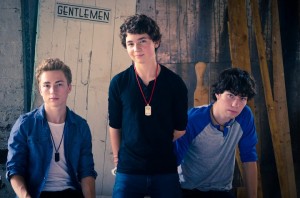
They’ve been performing together for half their lives, but after meeting producers Freddy Shehadi and Andy Marvel of Headspinners, things moved to a whole new level. A demo with Headspinners led to a meeting with Island Def Jam CEO Antonio “LA” Reid. Reid refused to let the brothers leave without being signed. The fact that youngest brother and lead singer Forrest beat Reid at pool before signing is bound to become one of those classic music industry stories. They’ve since worked with a number of well-known producers and songwriters on their debut, including OneRepublic’s Ryan Tedder (on the track “Catch Me If You Can”). They’ve also weathered Forrest’s voice change with the help of expert vocal coaches. In October, Burnham will open for All-Star Weekend at the Topsfield Fair in Topsfield, MA, and then go on a several month, multi-city tour sharing the stage with Action Item and Hollywood Ending.

Andre, Forrest and Alex Burnham, photo credit Timothy Peters

Andre, Forrest and Alex Burnham, photo credit Timothy Peters

ANTHONY: I’ve been waiting months to be able to type this. Ladies and Gentlemen, please welcome brothers Forrest, Alex and Andre, better known as … BURNHAM! Hi, guys!

BURNHAM: Hey. How’s it going?

A: It’s going well, thanks. The best place to start this is probably with a question about influences. Who do each of you count as your primary musical influences / heroes?

B: You probably heard this before but Coldplay, The Beatles, and Led Zeppelin, The Who and currently Bruno Mars, OneRepublic, Kings Of Leon, etc.

A: As a three-piece “band of brothers,” you’ve been compared to Hanson, the Jonas Brothers, and fellow up-and-comers Kropp Circle. We know what you have in common with those bands … what sets you apart?

B: Well, there are many brother bands even ones like Kings of Leon and Van Halen so it isn’t that uncommon. But every band is set apart by their uniqueness of sound. When you hear Kings of Leon you know it’s them. When you hear Hanson you definitely know it’s them. We hope to bring that to our audience.

A: Good point about KoL and VH. I first became familiar with you through the covers you were posting on Youtube. What goes into deciding which songs you’ll cover and what format you’ll use (acoustic vs. electric, etc)?

B: Usually, we decide to cover songs that we love and songs that the audience already knows and loves.

A: How much effort goes into making a version that is uniquely “Burnham” while still retaining what is loved and recognizable about the original?

B: We love playing acoustic. It’s how we got signed— with a couple of guitars and three voices. We think our front man brings uniqueness with his voice. A lot of effort goes into each song but after we learn it we hope that it becomes our own.

A: Will you be doing the “12 Covers of Christmas” project again this year, or will your upcoming tour with Action Item and Hollywood Ending interfere with that?

B: Well, we did that after the Bieber tour and it was “let’s learn this song quickly today so we can get it on Youtube for our fans.” We had to learn a song a day if we didn’t know it already. Forrest is a quick study. We might do it again. It was pretty fun.

A: I think it was fun for the fans as well. Okay: last, and possibly the most important, question about cover songs: When are you going to cover “Come On, Eileen” by Dexy’s Midnight Runners? Your mother wants to hear you do that almost as much as I do!

B: Ha ha. We joke about the 80’s to our mother. It is a cool song but we might try another 80’s song at some point. We mostly like to cover current songs though.

A: In other words, “Anthony, Stop Tweeting about ‘Come On, Eileen!’” haha Okay, now, let’s talk about your original songs. We’ve seen Youtube footage of Forrest working on a song at the keyboards, but what’s the full-band creative process like? How do you decide who writes lyrics, who writes melody, etc?

B: We don’t decide who writes what. Sometimes it’s Forrest or Alex or me, Andre. When you have a song idea you just start working on it. Sometimes it’s just the melody. Sometimes it’s making a track in our home studio. Sometimes one might come up with lyrics and then someone else has a better idea. Any original we have is all of ours together. It’s really an amazing feeling when you finish an original song.

A: When you’re starting to develop a song idea, do you ever think far ahead to how the song will fit into an EP or full album, or do you let each song tell its own story in its own way?

B: No. We never think ahead. A lot of songs get put to the side. You have to be able to say goodbye to a song that just doesn’t work or maybe you will use that idea later.

A: As a writer, you can imagine I’m not a fan of the “where do you get your ideas” question. But I do like hearing about tactics and tools. When you’re stuck for a lyric or idea, where do you turn for inspiration? What do you do to break a creative block?

B: It kind of just comes for all of us. Sometimes we get an idea for a song and it get recorded and sits there for months and then we go back and come up with a new lyric idea for it. We usually write words that just pop into our heads.

A: Have you collaborated with anyone on songwriting chores? And if you could collaborate with anyone, who would it be?

B: We have collaborated with many people and in the beginning before we ever got signed we collaborated with our two producers. We have collaborated with Ryan Tedder of One Republic, James Bourne of Busted, and many producers in the business that have collaborated with Katy Perry, Justin Bieber, and artists like that.


A: I know I have a trunk of story fragments that didn’t work out but might find a home in a story someday. Have you ever abandoned a song idea because it just wasn’t “clicking?”

B: Like we said before we abandon song ideas a lot. We even abandon whole songs. Well, not really abandon it’s more like put them away. We never throw them out.

A: Andre, you’re building amplifiers these days, right? How’s that going?

B: No. It’s me Alex building cabs. It’s going amazing. I am working on custom orders right now for Burnham Custom Amplifications and already made a cab and head to bring on The Stronger The Love Tour.

A: I’m going to just pretend it’s all the “A” names confusing me to explain why I aimed that question at the wrong brother. Forrest, I’d get in trouble with my nieces if I didn’t ask this question: when is your episode of BIG TIME RUSH going to air, and what was it like working on the show?

B: We are not supposed to say the date but I can tell you that it is in October sometime.

A: Alex, rumor has it (okay, it was actually Andre on Twitter) that Forrest recently dropped a motorcycle on your head. What was that all about? And will there be retaliation?

B: Funny. Yeah, Forrest was on our uncle’s dirt bike and it was in the garage. I was working on one of my cabs and Forrest lost his balance and the bike kind of fell on me. I had a headache for two days. I already retaliated but I can’t say what I did haha.

A: It’ll all come out in the Unofficial Biography someone will publish about you guys in a year or two. One of the many things that impresses me about you is your commitment to your fans. Your weekly ustream sessions have gone without missing a week for how long now? Tell my readers when and where they can find the live chats.

B: Yeah, we started the ustream in October of 2010 and we haven’t missed a Wednesday since then. You can catch the livechat here on Wednesdays at 7 pm EST/ 4pm PT

A: You’re about to head out on tour, as we mentioned earlier. What’s the most exciting part of touring, and what’s the most grueling?

B: The most exciting part about tour is performing and meeting the audience. We like the meet and greets before the performance because we can recognize the people in the audience that we just met. It was pretty cool. The grueling part is the long miles in between shows and getting up when you really just want to sleep in. Packing up in hotels is tiring too. You don’t want to leave anything in a hotel room because you can’t go back and get anything because the schedule is just that tight.

A: Since I travel about one-third of the year for my day job, I can relate to the “leaving things behind in a hotel room” problem. I don’t know how many power cords I’ve lost. Right now, three of your songs are available as an EP on itunes. When can we expect a full album to appear?

B: That’s the big question everyone wants to hear the answer to. As you know, Forrest went through a voice change so we had to rerecord some songs and it even inspired us to come up with a lot of new ones. We don’t know when we will release more songs or a full album. We just wanna release it at the perfect moment.

A: Well, I know your fans, including me, will be ready for it whenever it drops! I always wrap things up with this question: What is your favorite book, and what would you say to recommend it to someone who has never read it?

B: We argued back and forth about this one but we all agree the Harry Potter series!

A: Alright, well, good luck with everything and thanks for the chance to chat, boys!

B: You are welcome.

FIRESIDE MAGAZINE'S BRIAN WHITE - Interview

In this special weekend interview post, I’m chatting with Brian White, the founder of the soon-to-debut FIRESIDE fiction magazine. Brian is hosting a Kickstarter project to raise money to publish the first of what will hopefully be many issues.

Brian White

Brian White

ANTHONY: Hi Brian! Thanks for sitting down to ramble on for a few! What inspired you to start Fireside magazine?

BRIAN: A lot of the people who I follow on Twitter are creative types: writers, artists, journalists (yes many of us are creative), musicians. Which means that there is a lot of shop talk, which these days means thinking about all the different tools there are for creative people to promote and support their careers. Things like crowdfunding and self-publishing. A lot of this stuff was bubbling at a low simmer in a stew in the back of my brain, and one night I just thought, “Hey, I could publish a magazine. And with something like Kickstarter, I wouldn’t be taking a huge financial risk.”

As soon as I had that idea, I knew I wanted to do a fiction magazine. I am a big sci-fi reader, and I also like crime, fantasy, horror, and a lot of other genres. So when I was thinking about what shape I’d like the magazine to take, I thought of the anthology “Stories” edited by Neil Gaiman and Al Sarrantonio that came out last year. There is a great passage in the introduction, in which Gaiman writes of his response to a question about what quote he would want inscribed on the wall of the kids’ section in a public library. He captured the reason why we love good stories:

I’m not sure I’d put a quote up, if it was me, and I had a library wall to deface. I think I’d just remind people of the power of stories, of why they exist in the first place. I’d put up the four words that anyone telling a story wants to hear. The ones that show it’s working, and that pages will be turned:

“… and then what happened?”

That’s the spirit of Fireside magazine. Good stories, no matter what the genre.

ANTHONY: I love that quote from Neil, and really enjoyed the whole Stories anthology. When you say “all genres” are welcome — what can readers expect not just from the first issue, but from any issues that may come along after?

BRIAN: I have a feeling that the first issue will have a sci-fi slant, but I really don’t know, because I told the short story writers — Tobias Buckell, Ken Liu, Chuck Wendig, and Christie Yant — they could really do whatever they wanted. The same goes for the comic that D.J. Kirkbride and Adam P. Knave are working on.

As for art, Amy Houser will be doing the cover for issue one. Ahe has kind of a whimsical, colorful style that I think matches up really well with the spirit of stories that spark the imagination.

For the future, I’d love to mix things up as much as possible. Maybe one issue will be crime and fantasy and mystery. Or steampunk and noir. Or … well, anything. I’m truly trying to keep an open mind and look for good stories anywhere they might grow. I’m not much for romance novels, but if I found a really great romance story, I’d run with it.

And there will be a comic in every issue. I only have started reading comics in the past few years, but I am really in love with them now and want them to be a core part of Fireside.

ANTHONY: The fiction magazine market is a notoriously difficult one these days, especially in print form. So why start a magazine now? Why not just post stories to your personal website?

BRIAN: Hopeless optimism? I’m 28 and I work at a newspaper, which is facing a lot of the same problems that fiction magazines do, or at least the problems share some roots. But I love the paper, and I love short stories. I want them both to live and grow and thrive in one form or another, and I figure if I want that to happen, I have to do what I can to make it happen.

And part of that is paying the creative people, the writers and artists, fairly and in a way that helps them make a living being creative. To do that, I have to raise a lot of money on Kickstarter, and I didn’t think I’d be able to do that just with a website, since Kickstarter is all rewards-driven. By actually creating an electronic and print magazine, I’m able to offer a bunch of different rewards, especially with the print magazine, which opens up the option of paying a higher price to get an issue autographed by one of the writers or cover artist.

ANTHONY: Let’s talk Kickstarter for a moment. Tell my readers a bit about how Kickstarter works and what the rewards are for donating to Fireside magazine.

BRIAN: I’ve been explaining Kickstarter by saying that it is a lot like a PBS or NPR pledge drive. You ask people to contribute, and based on how much they give you, they can pick from any of the various rewards at that dollar level or lower. In Fireside’s case, this means electronic or print editions of the magazine, and at higher levels, autographs and even having a character in a story named after you or getting drawn into a special illustration.

But the big difference from PBS or NPR is that Kickstarter only turns over the money if the campaign reaches its stated goal, in Fireside’s case $6,500. And that is great because it really removes the risk for everyone. I only had to spend a relatively small amount out of pocket to lay the groundwork, so if it doesn’t succeed, I’m not out a lot of money. The backers’ credit cards don’t get charged unless the campaign is successful, so again, if it fails, they don’t lose their money. And the writers and artist for the Fireside don’t have to turn anything in until a month after the Kickstarter is funded, so they don’t lose all that time on something that ends up not paying.

ANTHONY: The Kickstarter is mostly based around getting that first issue out and into the public’s hands. What are your plans for funding future issues?

BRIAN: My Kickstarter goal, $6,500, covers pretty much to the penny just the costs of the first issue. I hope to raise more than that to sink into future issues. But if this succeeds, I do plan on Kickstarting the second issue as well. I will also be selling single copies, and hopefully that will generate some money to help it become a self-sustaining thing. And I also plan to offer subscriptions if we get beyond a first issue, which would help wean us from Kickstarter.

ANTHONY: The line-up for the first issue is already set. For future issues, will you be having open submitting and a slush pile, or will you will continue “invitation only?”

BRIAN: I definitely plan on holding at least one slot in future issues open for submissions, but having a lineup is important with the Kickstarter funding model because it means there is a group to collaborate with on the campaign, which has been a great help to me, and that group is committed to the success of the issue, which means a lot of promotion from both the creators and their networks, which is really key to a successful Kickstarter.

ANTHONY: Any other information you’d like to share about Fireside?

BRIAN: Just that I am really grateful for all the support we have already received and for all the people out there who seem to be as interested in finding good stories as I am.

Thanks so much, Anthony.

ANTHONY: You’re welcome, Brian! I hope the Kickstarter is successful. I already made my donation.

You can follow Brian’s progress on Twitter @FiresideMag, you can visit the magazine’s website and you can donate by visiting the Kickstarter page.