JAY LAKE, Author - Interview

This week, I welcome author Jay Lake. In addition to loving his work, Jay is a constant source of inspiration to me as he blogs openly and honestly about his ongoing fight with cancer.

Jay Lake

Jay Lake

Jay Lake lives in Portland, Oregon, where he works on numerous writing and editing projects. His short fiction appears regularly in literary and genre markets worldwide. Jay is a winner of the John W. Campbell Award for Best New Writer, and a multiple nominee for the Hugo and World Fantasy Awards. His new novel ENDURANCE is out from Tor Books on November 8th, 2011.

Endurance by Jay Lake

Endurance by Jay Lake

ANTHONY: Thanks for taking the time to join me, Jay. So, The 2011 Hugo Awards were presented in Reno, Nevada on August 20th. You were tapped as MC this year. How did that come about, and what hijinks did you have planned? Did you channel the spirit of Neil Patrick Harris and do a downscale but hysterical musical number?

JAY: I was asked by the Reno con com. Given that they are largely drawn from Pacific Northwest fandom, this isn’t too surprising — it’s folks who’ve known and worked with me for years in various capacities. As you know, Worldcon having come and gone since you asked me this question, we were sort of the Smothers Brothers on Quaaludes. Which was a lot of fun, and a heck of a lot of work. My only regret is that we didn’t have a teleprompter, as our need to rely on the script was pretty obvious from the audience. I do my best work improv, but the Hugos are far too structured for that sort of technique to be successful.

ANTHONY: As a previous Hugo nominee, give us an idea of what the awards ceremony is like, and how it feels waiting for your category to be announced.

JAY: Well, the awards ceremony is very different for the nominees that is for the rest of the audience. (Also, this just in, sun rises in east.) All those categories before yours? Time wasting piffle for the main event. All those categories after yours? What categories? One becomes very focused on trying not to look like a total prat when someone else’s name is called out from the podium. Truly, it is a very intense experience, waiting to hear. The habits of certain presenters make this experience even more questionable than otherwise, trust me.

ANTHONY: You’re one of the most prolific writers I know. It feels like every time I go to a book store, I find another anthology with one of your short stories. Where can we expect to see your short fiction in the coming months?

JAY: Not a whole lot, given my cancer adventures. My writing time has been cut by more than half for the year these past two years, and I’ve really had to focus on getting novels done and out the door. So I’ve been badly neglecting my shorter work. There is a pretty big novella coming up at SUBTERRANEAN which is a prequel to the SUNSPIN novel sequence, “The Weight of History, the Lightness of the Future”. That’s probably my most significant piece of forthcoming short fiction right now.

ANTHONY: Short stories, novellas, novels of varying lengths … you’ve talked in the past about predicting a work’s appropriate length and the “span of control” a writer has. For my readers unfamiliar with the concept, can you summarize it and talk about how it affects your own work?

JAY: “Span of control” refers to how much of a story a writer can keep in their head at once. Work that falls within the span of control can be addressed organically, by following the headlights and essentially making it up as the writer goes along. Work that falls outside the span of control requires a lot more deliberate attention to craft. My personal experience is that for the most part, my work within my span of control feels much smoother and more crisp to me.

For reference, when I was first publishing at a pro level, my span of control was in the low thousands — two or three thousand words. These days I can hold an entire novel in my head, up to about 200,000 words. However, when I’m doing that, I have to work pretty continuously, day in and day out, to keep the voice and continuity intact.

ANTHONY: Do you find that your “span of control” has been influenced (positively or negatively) by your on-going surgical and chemical battle with cancer?

JAY: Yeah, it has suffered. Not so much from the surgeries, which are unpleasant but fundamentally acute events. But the chemotherapies really fry my brain, especially as they progress further along, which blunts a lot of my cognitive skills. Span of control lessens, I have to work a lot more from notes or at shorter lengths, et cetera.

ANTHONY: The work of yours that has moved me the most, as a fellow cancer patient, is the limited edition short literary novel THE SPECIFIC GRAVITY OF GRIEF. As your fight continues, is there any chance the book will be re-released in a broader print run so that more people can experience it?

JAY: We plan to put out a low-priced trade paperback at some point in the hopefully not too distant future, yes. I want the book to be read more widely, especially by people who don’t have cancer but may have someone in their family or social circle who is battling the disease.

ANTHONY: That’s great to hear. I’ll be looking forward to the release. In terms of novels, you seem to have become quite comfortable working in trilogies (with associated short stories): The Clockwork Earth series has run three books (MAINSPRING, ESCAPEMENT and PINION), ENDURANCE, the second book in your Green trilogy (preceded by GREEN and followed by KALIMPURA) is due out in November, 2011, and you’re currently working on a hard-sf trilogy. Are you crafting them as trilogies because that’s your current “span of control,” or because our popular culture seems obsessed with trilogies lately?

JAY: MAINSPRING was an accidental trilogy, market-driven. Likewise GREEN, which was absolutely written as a standalone. So SUNSPIN, the space opera trilogy, is the first time I’ve sat down and deliberately worked in the form from word one.

I think trilogies work for readers because they mimic the three-act structure on a larger scale. Three is a magic numbers in Indo-European cultures, pace Georges Dumezil’s work on tripartite religious structures. Beginning, middle, end. Red, yellow, blue. Father, son, Holy Ghost. Cheeseburger, fries and a Coke. GREEN, ENDURANCE, KALIMPURA. How could I not hop on a five thousand year old cultural bandwagon?

ANTHONY: Good point, and I for one am glad you did. Steampunk. Hard SF. Fantasy. Horror. Literary fiction. Is there any genre you’re not comfortable working in? Can we perhaps expect to see a cozy mystery in the future?

JAY: Probably not any cozy mysteries coming up, but I am seriously discussing squeezing a collaborative urban fantasy into the schedule of writing over the next year or so. I like to stretch. 

ANTHONY: Every writer has those “trunk stories” that will never see the light of day. With over 250 short stories and close to a dozen novels in print, I have to ask: is there anything in your trunk?

JAY: Oh, god yes. My first novel, THE JANUARY MACHINE. Any number of finished-but-trunked short stories. Quite a few novel outlines. My trunk is legion, for it is many. Heinlein notwithstanding, I don’t see how it could be otherwise.

ANTHONY: And my usual last question: What is your favorite book, and what would you say to recommend it to someone who has never read it?

JAY: SHADOW OF THE TORTURER by Gene Wolfe. That’s almost my perfect book, rivalled perhaps only by Wolfe’s THE FIFTH HEAD OF CERBERUS. It is an exquisite work of language, thought and storytelling merged into a unitary whole, that drives the reader to deep consideration of the words on the page. If you’re simply reading to escape and be entertained, it’s quite likely not your cup of tea. If you’re reading to expand the borders of your mind, I cannot recommend it highly enough.

Thanks for the interview.

ANTHONY: Thanks again, Jay! Stop back any time!

You can follow Jay on Twitter as Jay_Lake, find him on Facebook, and read his blog on his website.

EJ FLYNN, Author - Interview

This week, we’re Rambling On with author EJ Flynn.

EJ Flynn

EJ Flynn

EJ Flynn is a mom and a wife first, then an author and business owner. She spends most of her time trying to improve her and her family’s life, always striving for more and better. She loves spending time with her daughter Abigail, hanging with her husband John, playing poker, playing rock band (expert guitar!) and of course writing. She’s a singer, actress, dancer and pianist although she doesn’t get to do much of that anymore.
Her company is In Like Flynn Marketing (www.inlikeflynnmarketing.com), geared towards helping people and businesses find success through strong comprehensive marketing campaigns. She also offers the Be Dynamic Intensive which is designed to help empower women to know that they CAN have it all and give them the tools they need to achieve it.

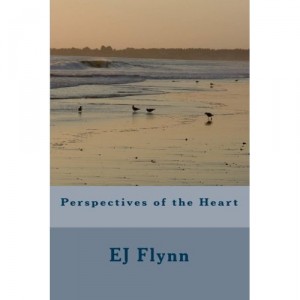
Perspectives of the Heart, EJ Flynn

Perspectives of the Heart, EJ Flynn

EJ’s new novel is PERSPECTIVES OF THE HEART, which focuses on teacher Alex Forrester and the various men in her life. “When Alex decides to post a flyer on a public bulletin board one rainy San Francisco morning saying that she has a room for rent, everything changes. She runs into Casey Morelli, gorgeous soccer player and cousin of the ex-boyfriend that she had feared all those years ago. The two fall for each other quickly, but when Alex’s new roommate, handsome lawyer Garson Reed, admits his feelings for her, her life becomes even more complicated than when she was alone. And when a string of devastating events take place that rock her life to the core, Alex discovers that happiness doesn’t come from the hand you’ve been dealt or how lucky you are, it all depends on how you look at things.”

Anthony: Welcome to Rambling On, EJ! Let’s start with where the book came from. What inspired it, what made you decide now was the time to take a shot at publishing it? How long have you been working on it?

EJ: I’m embarrassed to say that I’ve been working on this book for most of my life. I actually started the book when I was fifteen because I wanted to imagine what mine and my best friends, Nikki and Tricia’s, lives would be like if we were grown up. I do realize I’m going to need to turn books around a lot faster than that.
I didn’t actually write non stop since I was fifteen. I dropped it and picked it up over the years which I think lends to Alex’s growth really well. She grew up with me. I never really intended to get it published because I thought that was so far fetched of an idea. I picked it up for the last time in 2008 when I took part in a Writer’s Intensive Weekend with Laura Banks, author of Embracing Your Big Fat Ass and Breaking the Rules (both co-written with author Janette Barber), and decided that it was time to get serious. It was tough to get through it and stay focused with life happening. With the help of people close to me I was able to stay motivated. And then this past December I learned about the Amazon Breakthrough Novel Contest which had a deadline of February 6th and decided to make that my completion goal. I didn’t actually get to enter the contest, entries filled up before the deadline. I did, however, make my deadline. Then I figured, hey it’s done, let’s publish it. I wasn’t exactly sure how to go about it when a friend of mine, Adam Weissman also a self published author, told me about CreateSpace.com. Shortly after that, I attended a “how to get published” webinar where I learned that the romance genre is the most downloaded genre for ebooks on Kindle and Nook. I used to have a bit of a chip on my shoulder saying that PERSPECTIVES was “literary fiction” not a romance novel but when I heard that about Kindle and Nook, I quickly dropped the chip and embraced the romance genre.

A: You’re a wife, a mother, and you hold down a steady job. Tell us a bit about your writing process. How do you fit the time in?

EJ: Once I committed to finishing it, most of my writing was done in bed, on my dell mini, late at night after my little one was asleep, and it still does. My husband works nights and doesn’t usually get home until after 1AM so I have a lot of uninterrupted time at night. I also started a writer’s circle which we fondly called a writer’s rhombus because there were only four of us. That was essential in gaining motivation and confidence and we always had fun. It’s now shrunk to a “writer’s line”, just two of us, myself and an amazing writer Patricia Faulkner. We motivate each other and encourage each other. Set goals and hold each other accountable. It’s really essential in my process to have someone pushing me and to have someone to read my stuff and tell me if it sucks or not.

A: Writers groups of any size are vital, I think. I’m involved in a couple. Back to PERSPECTIVES: the story centers on Alexandra, but shifts frequently to the internal thoughts of other major characters. It’s a bit of an unusual structure in that these shifts happen mid-scene rather than at chapter breaks. Was this a structure you decided on before you started, or something you noticed happening once you’d begun writing and then decided to keep doing?

The book was actually written in first person when I first started it. Then I realized that it handcuffed me to only Alex’s thoughts and feelings. When I changed it to third person it enabled me to delve into the other characters’ minds and feelings to give the story more depth and roundness. The structure then just happened organically. I didn’t plan to do it a certain way, I just went with what made sense to me and didn’t really think about it. When I tested it I did ask the readers if they found it at all confusing and not a single one said it did so, I kept it.

A: I have to admit, I’m not a modern romance/tragedy fan. I’ve never read anything by Nicholas Sparks or Jodi Picoult, authors this type of story seem to be connected to. So what seemed to be “heaping one problem after another on the main character” to me might be the conventions of the genre. I felt like poor Alexandra couldn’t catch a break — one disaster after another befalls her and her loved ones. Did you ever feel, as you were writing the next horrible thing to happen to her, that perhaps you were throwing too much on Alexandra and wanted to cut her a break? Or was the intent always to prove how resilient she is by hitting her with one punch after another?

AJ: I have to confess, the book is somewhat autobiographical so I never thought I was giving her too much. I didn’t give her everything that has happened to me because I was afraid it wouldn’t be believable and one major tragedy that happens to her didn’t happen to me but I felt it important to where I wanted the story to start. There is much happiness in between the tragedies for her and it was meant to show that no matter what life threw at her, as long as she kept the right perspective on things, she could get through it just like I have.

A: Speaking of other authors: we all draw from the authors we love, intentionally or not. When I spoke to Evelyn LaFont a few weeks back about her paranormal romance book, she said that it was a genre she loved and also a genre she wanted to poke fun at because of its popularity. What authors do you see PERSPECTIVES OF THE HEART sitting alongside of on the bookshelves? Who influenced you as you wrote?

EJ: That’s an easy one. Danielle Steel. I have read most of her books. The first book I remember reading in its entirety, that wasn’t for school, was Danielle Steel’s Daddy (later made into a movie starring Patrick Duffy, Linda Carter and a very young Ben Affleck!) Anytime anyone asks me what kind of a book Perspectives is, I always say it’s a very Danielle Steel-esque type novel.

A: Without giving too much of the plot away, I think I can safely say: everyone in this book falls in love at first sight, and most of those relationships aren’t very successful. Was that an intentional theme of the book, the idea that rushing in doesn’t often lead to solid long-term relationships?

No that was not intended at all, the intention was more to follow your heart despite the risk, enjoy things to the fullest while they last and you’ll have no regrets.

A: PERSPECTIVES OF THE HEART is obviously a labor of love. What would you say to someone who doesn’t normally read this type of book (like me!) to convince them to give it a shot?

EJ: I would tell them that it’s not just chick-lit, it’s a story that most people can relate to on some level. It will hopefully evoke emotions good and bad and maybe change the way you look at things by the time you finish it.

A: So, what’s next for EJ Flynn in the writing realm? Working on anything currently?

I just started the actual writing of my next book. It’s a complete departure from PERSPECTIVES. I said earlier that the first book I ever read in its entirety was Daddy by Danielle Steel. The second book was Pet Sematary by Stephen King. Other than those two, my favorite authors to read are John Saul, Douglas Preston and Lincoln Child and John Grisham. I can’t imagine only writing romance when there’s so much beauty in other genres too. My next book is a much darker, intense psychological thriller called TWELVE DAYS. I’ve also got a nonfiction in the works that’s called THE GRASS IS ALWAYS GREENER, UNTIL YOU HAVE tO CUT IT YOURSELF, a real and funny look at relationships and dating, marriage and divorce.

A: Looking forward to both of those! Now for my usual last question: What is your favorite book, and what would you say to recommend it to someone who hasn’t read it yet?

This is such a tough question. If I could pick by genre it would be easier. The Cabinet of Curiosities by Douglas Preston and Lincoln Child. It’s a very intense, very intelligent, science driven, supernatural story with amazing characters that you will admire and root for. I think though that for many people and definitely for myself, what’s happening around you when you’re reading a book affects the impact of that book on you. I read Cabinet of Curiosities while on a girls’ weekend in New Orleans for my 30th birthday. So really awesome memories surround it. When I reread it I think of that awesome time.

A: Thanks, EJ, for agreeing to be interviewed!

EJ: Thanks Anthony!! This was fun!!!

You can find PERSPECTIVES OF THE HEART in both print and ebook formats on Amazon. You can also find her on her own website.

SAM MCPHERSON, Author - Interview

Trying something a little bit different this week, rambling on with fellow pop culture rambler Sam McPherson!

Sam McPherson

Sam McPherson

Sam McPherson is a contributing editor for the entertainment news website TVOvermind. He’s also an administrator for the fansite Lostpedia, and considers Fringe, Game of Thrones, and Doctor Who to be his areas of expertise. Sam also created the fansite Knowing Lost, which is the home to several original fan fictions and works of fan art related to the television show Lost. You can follow Sam on Twitter, where he is known as the McPhersonator.

ANTHONY: Hi, Sam, thanks for taking the time to chat!

SAM: No problem. Thanks for helping out my ego!

A: I’m primarily familiar with you as a reviewer/commentator on TV Overmind. How did you get started with the site?

S: I discovered the site a few months after it started up, and filled out the little application. A little while later, Jon Lachonis, who owns the site, dropped me an email back and said that he’d love to have me on the staff. That was back in July 2009, and I’ve been writing for the site ever since.

A: I first became aware of you through your LOST posts, and now I follow your Game of Thrones posts as well. Do you and the other writers for TV Overmind have specific “beats” you work, or is it pretty much “write about what you want to write about?”

S: Well, we cover the news on a first-come-first serve basis. More in-depth pieces, though, are usually written by the folks who are experts on the show. That’s not to say that a show can’t have several experts — we have four people on the staff who are very knowledgeable about Fringe, for instance.

A: You are also a Lostpedia Administrator. How did that come about?

S: I started editing the site as a normal user in February 2007, right around the time the second half of season three started up. I really loved the community and worked to become a part of it over a few years. Around late 2008, I was part of a small group of users who did “Lostpedia Interviews” with various members of the cast and crew. I got to interview Rebecca Mader, Francois Chau, and a lot of background extras/guest actors. I was ‘promoted’ to administrator in March 2009.

A: I’ll admit I don’t tend to visit Lostpedia as much now that the show is over. I find that as much as I say I want to go back and watch the whole series from start to end again, I seem to be reticent to do it and a number of my friends who loved the show feel the same way. Do you think there’s a kind of “post-series letdown” that genre fans feel after a series ends?

S: Well, with LOST at least, certainly. The finale was hugely polarizing, and I don’t think a lot of people really wanted a lot to do with the show for a while after that. There are a little bit of a surge in interest with the one year anniversary of the finale a few months ago, but I think for the most part, there won’t be a lot of interest in LOST again for a few years until we hit the five- or ten-year anniversary.

A: We could talk about LOST for hours, so I’m going to play a little word-association. How did you feel about the following topics that Lost fans seem to be pretty divided on:

The Finale?

S: Loved it. There are a few seeds of disappointment because it wasn’t what I’d expected through my long time of watching the show — but the same can be said for the entirety of season six, really.

A: The whole “Flash-Sideways” concept?

S: Again, it was a bit of a letdown because it felt like a giant red herring since they drew it out across the entire season. If they’d only had it pop up sporadically, I think it would have had greater effect.

A: The tie-in paperback novels?

S: Have them, but haven’t read them. I’m more of a fan of the unofficial analysis books, like Sarah Clarke-Stuart’s Literary LOST.

A: Last LOST question: you started an online “fan-fic” that places fans of the tv show into the action of the show, with full knowledge of what is going to happen to the characters — how has that been received? Any feedback from the Lost creators on the concept or execution?

S: Knowing Lost started off well, with lots of readers. Then, as it became more and more of a chore to have a ten-page episode out every week, I started to get exhausted and just stopped for a while. I mishandled it and lost a lot of readers, but I’ve now started it back up. I’m currently working on an idea that will make the site the base for LOST fan-fiction and fan-art.

A: Okay, on to Game of Thrones. I had a conversation recently with a friend who has never read the Harry Potter books nor George RR Martin’s A Song of Ice and Fire, and yet he loves (and has managed to avoid being spoiled on plot points for) the movie franchise and the tv series adapted from those books. As someone who is reporting on the GoT tv series but who has also read the source material, do you ever find yourself having to back up and reword things because you know stuff some of your readers may not know?

S: Oh yes. A lot of my articles over this hiatus are referencing the second book, from which season two will be adapted. I’m working on a series of articles now that reveal my fantasy casting for key new characters, and I’ve finally taken to putting a mild spoiler warning at the top of every article, because I’m so afraid I’ll spoil someone who accidentally clicks on to the article.

A: There’s been a lot of hate mail directed at George RR Martin by readers who feel betrayed that he’s not churning out ASOIAF books faster. Neil Gaiman famously weighed in a while back saying that essentially authors (and other creative types) don’t owe their fans anything on a set time-line (what people have paraphrased as “George RR Martin is not your bitch.”) I think the truth is somewhere in the middle: if you promise a series with a continuing storyline that will eventually conclude, you should commit to finishing it (leaving aside for now issues of writer’s block and other such roadblocks) or don’t write series fiction. As an obvious fan of series-type storytelling, what’s your take on this?

S: Well, I didn’t start reading the books until a few months ago, so I don’t know anything about the long, agonizing wait that fans have been put through recently. What I do know, though, is that Martin’s put himself on a very short time frame by having the HBO series premiere in 2011. He’s going to have to finish the series before the show catches up to him. So saying that “George RR Martin is not your bitch” is entirely accurate. He’s playing to HBO’s timeline now.

A: Do you think, if push came to shove, HBO would go ahead and create a series ending for GoT if Martin falls behind their production schedule? Or do you think they’ll space out production on future seasons to accommodate his slower writing habits?

S: I’ve thought about it, but I don’t know how that would turn out. I’m thinking that Martin will just narrowly meet the deadline, but if he doesn’t, we’ll probably be looking at some postponed seasons while HBO puts pressure on him to get it done. I don’t think that there will be an ending created only for the TV show. Martin’s pretty meticulous, and I think the story’s all going in one very specific direction.

A: On a somewhat related topic (in terms of delayed story continuations): what’s your feeling about the “split season” for Doctor Who this year? Do the producers of shows like LOST and Doctor Who owe it to viewers to tell a complete story straight through rather than splitting the season up to build tension?

S: The split season doesn’t bother me. The first half of the series ended on a pretty good cliffhanger, and I’m willing to wait to see where it goes. What does bother me, though, is the discrepancy in scheduling between the UK and the US. That sort of thing results in a lot of people getting spoiled. BBC America was doing great with same-day airings until they skipped Memorial Day, screwing it all up and putting the US a week behind the UK. I was spoiled for River Song’s identity because of that break. It’s even worse this summer for British Torchwood fans, who have to wait six days after the US to see what started out as their show, all because Starz got world premiere rights to the series. I expect that’ll cause a plummet in viewership.

A: I still don’t know River Song’s identity, so thanks for not spoiling that here! Do you think Torchwood will survive this switch to Starz having primacy over BBC, or could this move spell the end for the show?

S: I don’t know if it’ll survive or not. I’m afraid it’s going to be a lose-lose situation, to be honest. I’m not sure that Starz has enough subscribers who would watch the show, and over the six day wait I’m pretty sure UK fans will get the show through other means. I think the fact that Starz through in a “world premiere rights” clause in their contract might hurt the show where it counts.

A: You’re on Twitter, you’re a regular on TV Overmind, you’ve got your own occasional blog, and you recently graduated from high school. So what’s in the future for Sam McPherson?

S: I’m heading off to college next month, but for my online presence I hope it’ll be like nothing’s changed. I’ll keep writing for TVOvermind when I’m not living the college life. You guys aren’t getting rid of me that easily!

A: And my usual last question: What is your favorite book, and what would you say to recommend it to someone who has never read it?

S: House of Leaves by Mark Z. Danielewski. Absolutely brilliant book that’s been begging for me to read it again as soon as I get through my ever lengthening to-read list. It’s perhaps the only book I’ve ever read that can never work in any other medium, because it’s so brilliant in this one. It’s the most rewarding book experience I’ve ever had.

A: Thanks, Sam!

NEIL OSTROFF, Author - Interview

This week we sit down to ramble on with author Neil Ostroff.

Neil Ostroff

Neil Ostroff

In Neil’s own words: “I’m an author of dark, noir thrillers, romance thrillers, and middle grade sci/fi and paranormal novels. I was raised in a rural town outside of Philadelphia and have been a published author for more than twenty years. My science fiction and fantasy stories have appeared in numerous presses, zines, and websites. I have several published novels available at all online booksellers under the name N.D. Ostroff or Neil Ostroff. I am an avid boater, gardener, and poker player when not working on my novels.

After, a YA fantasy novel

After, a YA fantasy novel

ANTHONY: Hi, Neil. Thanks for stopping by to ramble on with us for a bit. In the interests of “full disclosure” I suppose we should start out talking about what we have in common: our years at Elmira College. I was an English Literature major, you were a Psychology major. I know how the EC English department influenced my writing — how did the Psychology department influence yours.

NEIL: Hi, Anthony. Yes it’s been a long time since those days. Learning psychology and how the mind works and how we interact with others is a huge help when creating characters. My serial killer character Cody Larson from FROSTPROOF was literally born out of my abnormal psychology classes. I also interned at social services so I got to see a lot of crazy personalities and behaviors that also helps when I decide on the personality traits of some of my strangest characters. Like the clairvoyant, psycho-killer prostitute in my novel, PULP.

A: Great, now I’ll be picturing Professor Rick Wesp when I read FROSTPROOF. Moving on … you’re one of those writers who can’t be pigeon-holed into a single genre. You’ve got several Young Adult sci-fi/fantasy novels, but you also write gritty pulp/noir thrillers and have at least one book that I would call “mainstream/literary fiction.” Does your writing process differ from one audience/genre to another? And if so, how significantly and how intentionally?

N: I don’t like to stick to one particular genre and usually write what I want to write. This drove one of my former agents, Gary Heidt at Signature Lit. crazy. He first tried to sell me as thriller writer, than a YA sci/fi writer, and then the literary novel finally drove him over the edge. My audiences do differ with my books but I think this draws more diverse readers. Emotions play a large part in what project I’m going to start next. For instance, my literary novel, DROP OUT was written after a friend died of cancer only eight days after his diagnosis. That was a powerful event that shaped the novel to be.

A: Lots of authors feel that they need to fall into one camp (YA) or the other (adults). Rick Riordan, for instance, has completely stopped writing murder mysteries to concentrate on his mythology-based YA series. Do you ever feel the pull to fully commit to one or the other?

N: Yes. My first novel FROSTPROOF is a noir thriller and I wrote two more noir thrillers following that one. DEGENERATES and PULP. Like I said before, my agent really pushed for me to continue with this genre, but I also had YA sci/fi fantasy stories that I wanted to tell. I wrote a three book middle grade sci/fi series after the noir thrillers and committed to that genre for a while. Then, of course, my friend’s illness happened and I changed genres again.

Frostproof, a noir thriller

Frostproof, a noir thriller

A: I am always fascinated by how each writer I talk to starts the process of a book, story, etc. What do you find most often kicks off a new work? Do you start with an image, a piece of dialogue, a specific character?

N: Most of my books start with ideas I’ve had for years in my head. Usually, I get an idea for a novel and let it fester in my brain. I start to jot down notes of how I want the story to go. Eventually I have enough notes to actually formulate an entire novel. Then I write a few chapters and see if the story takes off. If it doesn’t, I scratch it and move to my next idea. For every three novels I start I usually complete one. The maturation process takes another few years or so. I’ll let the first draft sit for a month and then give it a re-read. Then I’ll let it sit again and then do another. Eventually I read it through and find that I have nothing more to add. That is when the book is complete.

A: Your most recent adult novel, DROP OUT, has its roots in the September 11th, 2001 attacks on the World Trade Center, and the iconic image of smoke billowing from the Towers is a part of the cover art. Did you set out planning to write a 9/11 novel for the 10th anniversary? What has reaction to the book been like?

N: As I said, DROP OUT was written in response to my friend’s death. I incorporated the trauma of 9/11 to make the story universal in its theme. I started researching what others experienced during that event and became fascinated with tales of survival. The initial escape scene in the beginning of the book is a culmination of these stories. The reaction to the book has been pretty intense. I’ve received emails from total strangers saying that the book had a deep impact on how they see the world and gives them a greater appreciation for their time in it. The first draft was written four years ago, so its release was not really planned specifically for the tenth anniversary of 9/11. It just happened that way.

A: The proliferation of e-readers has been decried as “the end of the publishing industry as we know it.” As an author whose books are primarily available in that format, what effect has e-publishing had on self-publishing?

N: It’s only the death of the big publishing conglomerates. I believe this is the most amazing time in history for writers who want their work available for world purchase. The internet and ereaders have made possible for any writer to make a living at their craft. Personally, I hope every person in the world buys an ereader. When else in history can an author like me, from nowhere Pennsylvania, sell books in London, France, and Australia, which I have done? Or sell books all over the country, which I have done? Selling books these days is all about market and promotion. Find a couple of good websites and social network and you can sell thousands from sitting at your desk.

A: You recently blogged about “voice recognition software” turning everyone into a writer but not necessarily an artist. As technology makes it easier to write/create, what challenges do you see for yourself as a creative person getting your books to the largest possible audience, and what do you think the pitfalls will be for readers?

N: I received a lot of responses when I posted that. Most people agree that voice recognition will not make writers out of everyday people. A good story takes thinking, and plotting, and pacing, all which are very hard to get right the first time. Perhaps, voice recognition is a good way to write a very raw first draft, but it takes countless hours of staring at the page to get things right. The only pitfalls I see to readers are that there is probably going to be a lot of junk out there and readers will have to sift through it to find the gem novels.

A: It looks like you have two YA titles coming out soon: DREAM TRAVELER and INSECTLAND. Tell us a bit about each of those and when we can expect to see them.

N: INSECTLAND is due out in about two weeks. It is the second book in the middle grade series I mentioned earlier. Here is the back cover copy:

Be frightened! Be very, very frightened! Tiny, dragon-like creatures hidden in our homes will harm us. They will shrink us to the size of rice, enslave us, and turn our world into their own lethal military base. But there is hope. Legions of robotic insects intent on stopping them have recruited high school student Dan Larson to help. Thrust into danger on an alien planet, Dan risks everything in a desperate attempt to prevent an epic battle that could change the balance of power in the galaxy forever.

DREAM TRAVELER is the last book in the series. That should be out sometime early next year. Here is a quick summary:

200,000 years in the future. After centuries of conflict, human spirits called Phelastians, who live on a magnificent floating city in the clouds, are finally making peace with Dwellers, ape-like creatures who live on the decimated planet Earth. Formalities require that a twenty-first century human be present as a witness to the treaty. A Phelastian travels backward in time and recruits Jamie Richards, a geeky, everyday teenager. Core, a Dweller overlord, is pro-war and sabotages the celestial link connecting Jamie to her own world. She vanishes from the signing, crumbling the negotiations, and sending her on a series of mind-bending, alternate-reality adventures that shatter the boundaries of possibility.

A: And now my usual final question: What is your favorite book, and what would you say to convince someone who hasn’t read it that they should read it?

N: I actually have two favorite books that influenced my writing career the most. The first is LESS THAN ZERO by Brett Easton Ellis. It’s old, and dated now, but that novel greatly influenced my noir style. The second is THE STAND by Steven King. I love the way King has multiple characters and stories and weaves them all together into one mega plot. My book DEGENERATES is styled after that one. I also believe that every wannabe author should read Steven King’s ON WRITING. It is simply the best book on the craft ever written in my opinion.

A: Thanks, Neil!

N: Thanks, Anthony.

Neil’s work can be found on his website, through Smashwords, at Author Den, and through the usual e-reader suspects like BN and Amazon. Neil himself can be found on his own website, on Goodreads, on his blog and occasionally on Twitter.

JOSEPH PITTMAN, Author - Interview

This week, we get a bit shady with crime fiction author Joseph Pittman.

Joseph Pittman

Joseph Pittman

JOSEPH PITTMAN was born in the borough of Queens and lived there for the first seven years of his life, before his family moved to Upstate New York. A graduate of Fayetteville-Manlius High School, he then went on to get his Bachelor of Science at SUNY Brockport, where he majored in communication, with a concentration in journalism. While attending Brockport, he was an editor for “The Stylus,” the school newspaper, where he had a weekly book review column.

Upon graduation, he returned to New York City, where he began his publishing career. After short stints at Putnam Children’s Books and at Viking Penguin, he landed his first editorial job at Bantam Books, where he assisted with such authors as Jonathan Kellerman, Michael Palmer, Rita Mae Brown, actress Ali MacGraw and General Norman H. Schwarzkopf. He moved to NAL as an editor and worked with authors such as Max Allan Collins, Lawrence Block, Stephen King, Martha Grimes, Jeff Abbott, Joan Collins, Judith Gould, and many other best-selling and acclaimed names. His career has also taken him to the world book clubs (Doubleday Book Club), and small presses (Alyson Books). He is currently Editorial Director of the new Vantage Point imprint.

His novels include TILTING AT WINDMILLS, WHEN THE WORLD WAS SMALL, LEGEND’S END, and A CHRISTMAS WISH. His crime novels featuring Todd Gleason are LONDON FROG and CALIFORNIA SCHEMING. He’s at work on several other projects.

London Frog, Joseph Pittman

London Frog, Joseph Pittman

ANTHONY: LONDON FROG is the first Todd Gleason crime novel. Todd is not a crime kingpin, but he’s also not completely on the side of the angels. He feels a bit Robin Hood or Bernie Rhodenbarr. Give us a little insight into his character and his moral code.

JOSEPH: Todd is complex. Yes, he feels the world owes him something, but he’s willing to work for it. Even if the work is slightly on the wrong side of the law. He never takes from those who would suffer greatly from his schemes. He’s a petty thief with champagnes tastes. Big crimes like murder he would never be involved in—unless it’s stopping them. Like in “Frog,” he stumbles upon the murder plot and does all he can to stop it—but he also wants to make his money, too. So he’s always playing both sides, working them to his advantage. Don’t call him a crook. He likes sneaky opportunist. I suppose Bernie Rhodenbarr was a bit of an inspiration. I was Lawrence Block’s editor for those books and perhaps some of Bernie rubbed off on me. The ninth book in that series, THE BURGLAR IN THE RYE, was dedicated to me—an honor I would love to pay it backward.

A: What makes the reader root for Todd despite the fact that he’s a criminal?

J: I think it’s those damn dimples. No, seriously, Todd is just trying to make his way in the world and if he’s got some warped view of achieving that, well, that’s the fun of writing such a character. When it comes to describing the Gleason series, I always say that while Todd is a con man, he’s also the nicest guy in the book. Trust no one is my motto when it comes to the crime novels. But Todd is always handy with a smart-ass remark, and that helps endear him to readers. They laugh with him, not at him.

A: LONDON FROG was originally released in 2007. If I remember correctly, it got good press and was a Mystery Guild monthly selection. Vantage Point has brought it back in trade paperback format in anticipation of the sequel, CALIFORNIA SCHEMING, due out in 2012. Can you give us a hint at what to expect in the new book?

Yes, good reviews in hardcover and a Mystery Guild “editor’s choice.” That was a cool honor. As for “Scheming,” it picks up about six months after the action in “Frog.” Todd is relaxing (hiding out?) On the island of Bermuda when he is approached by an old flame, Cindy Scanlon, asking for his help. How she knew to find him there is but one mystery. It all revolves around Fast Cash, a notorious L.A. bank robber. Three million dollars is missing, so is Fast Cash, and if Todd finds the money he can help his friend…and pocket some cold hard cash. It comes out mid-January from Vantage Point Books, with the same great cover look as LONDON FROG. Pre-order it now! (the author asks nicely…)

California Scheming, Joseph Pittman

California Scheming, Joseph Pittman

A: Unlike the fantasy and SF genres, crime and mystery fiction series don’t seem to favor the “long arc,” where characters age and grow and change, concentrating instead on stand-alone mysteries in long-running series. Where do Todd’s adventures fall, and how far ahead have you plotted/planned?

J: Oh, Todd will age. He won’t like it, either. I figure each book takes place six months after the last. I’ve got solid ideas for books three and four, but we won’t be any closer to finding out what makes Todd tick. He’s got a past, for sure, as indicated at the end of LONDON FROG. Not all is as it seems. Perhaps book five will explore the whole issue of Todd’s father—the guy who left to buy cigarettes when Todd was five. There’s a backstory there, and it also helps explain why the pet frog. Toad is the keeper of many secrets.

A: And when, after CALIFORNIA SCHEMING, can we expect to see him again?

J: You’ll see Todd again in his very first short story, “The Perils of Penelope Pittson,” to be published in a volume called CRIME SQUARE, edited by Robert J. Randisi, the founder of the Private Eye Writers of America. It comes out in March 2012. The story finds Todd imaging himself as a 50s gumshoe, coming to the aid of the imperiled Penelope. The next full-length novel, THE CANNES CON will appear early 2013…but I have to finish it first. Setting is the south of France, and truthfully, I didn’t mind the research for that one at all. It all begins, though, at the Vroadway opening of a revival of ‘Can-Can’.

A: LONDON FROG. CALIFORNIA SCHEMING. THE CANNES CON. How long can you keep up these city-inspired puns?

J: You’d be surprised. I have seven titles, even if I don’t have the plots for all of them. As long as I’m having fun with the series, I’m sure the titles will come to me. I had interest from a Japanese publisher and as a way to entice them I said I would write a Gleason story set in their country. Tokyo Ruse was the title. It didn’t sell. But I’d love to write it.

A: I’m always curious about process. How do you approach a Todd Gleason adventure? Do you outline fully before starting the work?

J: I hate working from outlines—I find them very limiting. I have a general synopsis that I work from, with characters specified, but the plot unfolds as I write it. You can’t plan twists and turns, they happen as you write. And that’s the fun of it all. Once I’m into the story, I may plan the next two or three chapters ahead, just to give me a sense of where I’m going. But no, I never have a full outline. It’s all structured in my head.

A: Do you approach the Todd Gleason books differently than your other books, which are not crime fiction?

J: Same approach, in terms of outlines/synopsis/characters. But the writing of a book like TILTING AT WINDMILLS takes more time. The language is different—the tone, the energy. Those books are more poetic, while the crime fiction is very…well, snarky. There’s a looseness to the Todd Gleason series that is not present in the general fiction. But I love switching the voice—whether first person or third, sweet and heartfelt, or suspenseful and sarcastic. It’s all about getting into the main characters’ head, and then trusting your instinct.

A: Speaking of those other works: Your Linden Corners books are back. TILTING AT WINDMILLS is back in print from Kensington Books, and you’ve heavily revised the sequel, A CHRISTMAS WISH. Tell us a little about those books.

J: TILTING AT WINDMILLS was my first published book, done by Pocket Books. It didn’t so terribly well on first publication—at least, not the U.S. version. It was a hit in Italy! Some readers though wondered what happened after that book ended, so I wrote A WISH UPON THE WIND, a Christmas-themed sequel. Both a re set in Linden Corners, which is located in the Hudson River valley. Both revolve around this old-style windmill, which inspires the people of the town. “Windmills” is back in print with a beautiful new cover.

A Christmas Wish, Joseph Pittman

A Christmas Wish, Joseph Pittman

A: Why “completely revise” WISH for its official commercial release? How long did that process take?

J: The publisher asked me to revise it. The original version was only 45,000 words. The published version is now closer to 70,000. I’ve added new scenes, expanded existing scenes with new descriptions and dialogue, and then also added to some of the subplots. But I think it’s pretty seamless; it’s hard to tell what’s been added. It was only about a month of rewriting to get the book into its final shape. We also agreed on a title change. So A WISH UPON THE WIND became A CHRISTMAS WISH. Booksellers do better with books when the word Christmas is in the title.

A: Are there any future Linden Corners novels planned? Or does WISH conclude Brian and Janey’s story?

J: We will revisit Linden Corners next year. Brian and Janey have had their big moment, so it’s time for some other characters in the town to take center stage. I am under contract with Kensington for another Christmas-themed book to be set in Linden Corners. Brian and Janey will play supporting roles in the book—the main character is Nora Connors Rainer, one of Gerta’s daughters. And a man named Thomas van Diver, whose family originally owned the windmill decades ago. They have both returned to Linden Corners just in time to help the town prepare for another holiday. It’s called A CHRISTMAS HOPE. Then Kensington will publish the stand-alone novel BEYOND THE STORM—new town, new characters, same dramatic tension as “Windmills.” But I think they plan to publish the next Christmas book first. That’s their decision. Fortunately, BEYOND THE STORM is already written. A CHRISTMAS HOPE is on my computer now, I’m just now getting into the writing. Not sure what comes first, finishing it…or Christmas itself.

A: And my standard final question: What is your favorite book, and what would you say to someone who hasn’t read it to convince them to read it?

J: You want me to choose my favorite child? Haha. Actually, the two books of mine we haven’t discussed are WHEN THE WORLD WAS SMALL and LEGEND’S END. “Legend’s” is a family favorite, especially my mom. She always mentions “Legend’s” as her favorite. But I think WHEN THE WORLD WAS SMALL is my personal favorite. It’s the book that took me by surprise, in terms of the writing, its themes, and the fact that it spans twenty years. Usually I like a more concentrated timeline, like with “Frog,” which takes place in a matter of weeks. “World” was a big challenge to me, and I just love the symbolism through the story. Both “World” and “Legends” are new to Kindle—and at a 2.99 price, it’s hard to beat. Sorry to play salesman at the end of this interview. But I hope readers will give me a shot—whether they like mysteries or family drama or heartfelt tales of love, my books have something for everyone.

A: They really do. I can say that, having read pretty much all of them. And you know, I’ve never known Rosemary Pittman to be wrong. (Yes, I am bucking for an invite to Christmas dinner, haha)

You can most easily find Joseph Pittman, and all of his books, on his website.

CHRISTIE YANT, Author - Interview

This week, I sit down to chat with author and blogger Christie Yant.

Christie Yant

Christie Yant

Christie Yant is a science fiction and fantasy writer, Assistant Editor for Lightspeed Magazine, occasional narrator for StarShipSofa, and co-blogger at Inkpunks.com, a website for new, nearly new, and newly-pro writers. Her fiction can be found in the magazine Crossed Genres and the anthologies The Way of the Wizard and Year’s Best Science Fiction & Fantasy 2011, both from Prime Books. She lives on the central coast of California with her two amazing daughters, her husband, and assorted four-legged nuisances.

ANTHONY: Hi, Christie! Thanks for dropping by!

CHRISTIE: Thank you for having me!

ANTHONY: So your short story “The Magician and the Maid and Other Stories” has appeared in two major anthologies, THE WAY OF THE WIZARD and YEAR’S BEST SCIENCE FICTION AND FANTASY 2011, and it was honorably mentioned in YEAR’S BEST SCIENCE FICTION: TWENTY-EIGHTH ANNUAL COLLECTION. When you were writing it, did you envision such a fantastic year for the story?

CHRISTIE: Never. The thing about that story that still blows my mind is that it was my first sale ever. I mean, to even sell something to an editor of JJA’s caliber (he was just an editor to me then, albeit one I minioned for—now he’s also my husband!) was more than I ever expected. I thought it would sit in the slush pile for a month and then get a nice rejection back, and then figure out who to send it to next—the same thing I’d been doing for seven straight years at that point. Instead I clicked “send,” went to sleep, and found the acceptance in my inbox when I woke up. For it to be picked up for Horton’s Year’s Best later in the year was unbelievable, and that Dozois even noticed it–and for extra geek cred, it was even run on io9! No, I couldn’t possibly have even hoped for any of that.

ANTHONY: You’ve talked in other interviews about the origins of the story concept. Talk to me a bit about story execution — how long did it take to go from concept to a draft you were ready to submit to an editor?

CHRISTIE: I started it in July of 2009. I wrote that opening scene, not really knowing where it was going, but I liked the voice of it a lot. Over the next few months I pushed myself to get it done as part of an application for Clarion, but it was a very difficult story for me to write. Initially I only wrote the part of the story set in our world in the present day; it just wasn’t coming together, so as an exercise I decided to write the fairy tale part as back story. It took a while for me to realize that the fairy tale actually belonged in the story itself. Then it took even longer for me to figure out how to combine the two pieces into an effective whole.

I sent it both to Clarion and to JJA’s slush pile at the same time, the moment it was done, on February 21, 2010. So from concept to submission, it was seven months! It was time well spent, though. I learned so much while writing that story about voice, structure, and tension. (P.S.—I didn’t get into Clarion! Its success since has taken the sting out of that particular rejection.)

ANTHONY: I recently had an early-draft reader point out my tendency to digress within a short story, introducing little bits that don’t advance the plot and often slow the pace. Since short stories usually rely on fast and steady progression, did you ever feel with “The Magician” that you were moving down the wrong track or that you were introducing tangents that were diluting the story?

CHRISTIE: In this particular case it was a story that I needed to grow, rather than prune. The big breakthrough for me was in writing that back story and realizing that it needed to be part of the whole. Also the warehouse scene, which brings the Magic Mirror more fully into place, didn’t exist until the final draft. I think in recent years I’ve ended up underwriting rather than overwriting—this particular story would have been totally hollow if I hadn’t expanded it, and it wouldn’t have succeeded.

ANTHONY: Jay Lake often talks about an author’s “sphere of control” in terms of story length. Where would you say your “sphere” lies? Do you feel more comfortable in short story length, or are they a stepping stone to novels?

CHRISTIE: You have asked the question I have been wrestling with for a couple of years now. I have concluded that I am not—at least right now—a novelist. I love the short form. I have novels written, I have others plotted, but when it comes down to it I don’t feel that I can do the same thing with novels that I can do with short stories. I just don’t get excited about my novel-length tales as I do about my shorts. That may change as I grow as a writer and (I hope) get more stories out there. But for right now, under 10,000 words is where it’s at for me.

ANTHONY: You recently wrote on the Inkpunks website about structure and how that affects the telling of a story. I don’t want you to repeat the whole theory when readers can follow the link to that post, but can you summarize it for us, and talk a bit about how that idea influenced “The Magician?”

CHRISTIE: I’m not entirely sure where I got the idea to apply structure the way that I do. I looked back at some of the books on my shelf and I can’t find examples of anyone doing it quite this way. I may have picked it up in a workshop or something in years past, or possibly it came from my own brain. The approach that I take is to visualize the shape of the story, and establish the patterns in it. I apply a visualized shape/pattern to both the narrative structure (length of story and scenes, for instance) and the thematic structure (what the story is about).

Where that really came into play in the “Magician and the Maid” was in making the two parts of the story work together. I had to alternate them, but I had to find the natural beats to leave one and go to the other, and I had to balance them in a particular way. I created a pattern or rhythm that kept the reader in our world longer than in the fairy tale. You can see the visual example I gave over at the Inkpunks site. A lot of people seemed interested in this approach, so I’ll probably do a follow-up post soon.

ANTHONY: Who would you say are currently the biggest influences on your writing?

CHRISTIE: Gaiman–always and forever Gaiman. I like to credit Douglas Adams with making me a reader and Neil Gaiman with making me a writer. His work in comics and his short stories have spoken to me in ways that no other author’s work has—though at one point I nearly quit writing because of something he wrote!

Inspired by the work I was seeing come out of DC’s Vertigo line, I initially set out to write comics. I love the way that the comics medium merges storytelling and visual art, and combined they have the potential to have such a magnified impact on the reader. I wanted to be a part of that, so I put my time into learning to write comics scripts, with the goal of some day writing for DC.

That was my plan right up until I read Gaiman and McKean’s graphic novel Signal to Noise. I read the book, closed it, set it down, and thought, “Well, never mind, it’s already been done.” I decided that I would not write comics because the pinnacle had already been reached–there was nothing I could ever do that could even approach what they had done in that book.

My spectacularly irrational response to being confronted with great art was to spend a week feeling empty, directionless and sad, casting injured glances at the book and sniffling. At the end of that week, though, I knew I couldn’t really stop writing. So I picked myself up and started learning how to write short stories instead.

ANTHONY: You’re a part of the Inkpunks group. Can you tell me about the group’s genesis and goals?

CHRISTIE: Inkpunks was Sandra Wickham’s brain child. We were just a bunch of friends who had met at various conventions and on Twitter. When we first met we were all right on the cusp of making our first sale, going to Clarion, getting internships with editors, etc. Writing is such a tough gig—the rejections just go on for long, and there’s always more to learn. It can be really discouraging. Sandra pointed out to us that we were really lucky to have each other to get us through the rough spots and keep us going, and she suggested that we share that spirit with other writers in the form of a group blog.

I’ll admit that I was skeptical at first! I wasn’t sure that we, collectively, had the kind of experience and knowledge yet that we would need for such a project. Well, I’ve been eating crow since about the third month! The blog has really reached a lot of people, and many writers and editors more experienced than we are have contributed guest posts. It’s been an astonishing success, and I can’t express how grateful I am to be a part of such a thoughtful and good-spirited group of people.

ANTHONY: Will we be seeing any more of your fiction popping up in the near future?

CHRISTIE: I just sold a story to Daily Science Fiction called “This Rough Magic.” I’m not sure yet when it will be arriving in inboxes or appearing on their website, but I’ll let you know as soon as I hear!

ANTHONY: Back to that “structure idea” for a moment — have you ever started to write a story to a specific structure and then realized it wasn’t working? If so, did you abandon the idea of structure completely, pick out a different structure, or abandon the story?

CHRISTIE: I haven’t abandoned a story in a long time—I would much rather just try to find a new approach and make it work. The story I’m working on right now has gone through a couple of different permutations, and I like the structure I’m working in now, but the story itself still isn’t quite coming together. I’ll have to find some other exercise to make it work.

ANTHONY: How do your stories most often start? Do you start with an image, a piece of dialogue, a character?

CHRISTIE: For the past couple of years I’ve started with a vague idea (a story about a person forced out of her fairy tale and into our world, for instance) and then a line or two of inner monologue from the POV character.

ANTHONY: My usual final question: What is your favorite book, and what would you say to someone who hasn’t read it to convince them that they should?

CHRISTIE: I only get one? Oh man, that’s hard. I’d say probably “Dirk Gently’s Holistic Detective Agency,” by Douglas Adams. Adams is of course known for the Hitchhiker’s Guide to the Galaxy series, which is a totally absurd romp. Dirk Gently is just as funny, just as good-natured, but much more cohesive. I’ve lost track of the number of times I’ve read it.

However I’m also going to chime in with a non-fiction book as well, also by Adams, and that’s “Last Chance to See.” Because it’s a big, absurd world, and we need to remember that it doesn’t belong only to us.

You can follow Christie on Twitter as Inkhaven, find her on her own website, and check out the Inkpunks website as well.

3 COMMENTS

NEAL BAILEY and DEXTER WEE, Webcomics - Interview

This weekend, instead of blogging about my inexorably slow NaNoWriMo progress (and aren’t you all glad I’m skipping thattopic!), I’m welcoming back my buddy Neal Bailey to talk more about the wonderful webcomic Cura Te Ipsum. This time, he’s brought along artist Dexter Wee, too!

Neal Bailey

Neal Bailey

CURA TE IPSUM is the story of Charlie Everett. Well, several Charlies, as it turns out. In most universes, Charlie Everett gets sick of his life (where he’s most often a guidance counselor who tells other people how to live their lives, while not knowing how to live his own). After a certain point, he’s fired, and he goes home and sticks a pistol in his mouth and blows his brains out. Charlie Prime, our hero, is stopped by another character, Leo, who introduces him to the concept of the multiverse, and tells him that there’s a whole team of Charlies, Cura Te Ipsum, fighting to stop him from committing suicide across multiple universes. The story has grown and deepened, new Charlies (both good and evil) have been introduced, and a world has been destroyed. Let’s see if Neal and Dexter will tell us what’s in store for Volume Two and beyond….

Cura Te Ipsum volume 1

Cura Te Ipsum volume 1

ANTHONY: I know there’s a synopsis of Cura Te Ipsum as a whole leading off this interview, but give us an idea of what Volume 2 is all about, and how it is different from volume one.

DEXTER: Volume two opens with a bang, introduces new characters to the team and ends with a killer cliffhanger.

NEAL: Volume one was definitely much more about laying the ground rules for the story, and volume two is all about running with that world, now that it’s established. Charlie tries to come to terms with the first (of many) things that drove him toward suicide in the first place, and the Dark Everett moves to take the advantage by kidnapping Hank, Charlie’s childhood best friend. Charlie’s role as a leader starts to come into more prominence, and the Dark Everett solidifies his place as Charlie’s nemesis, where before he was more of a mystery to the team.

ANTHONY: Last time I interviewed Neal, we talked a little about the collaborative process between the two of you. Several months later, has that process changed at all? Have you guys settled into a comfortable rhythm or are there still surprises that pop up in the partnership?

DEXTER: The process is still the same. I read the script then send Neal the draft layouts for approval. Then once it is approved I tighten the pencils, scan, then email the pages to Neal for lettering. It’s been a smooth partnership. Neal is very easy to work with and the communication is great. It’s been a fun and enjoyable ride so far and will continue to do so.

NEAL: I would say the process itself hasn’t changed too much, but I do see a definite comfortable rhythm that has developed, at least with me. Dex has become very much a friend over the months that we’ve grinded away at this thing, and there’s a kind of sixth sense I feel now, where he’ll see something missing in the script or something that’s too much, and he’ll add a panel, remove a panel, or give something a little touch that it was missing in a way that makes me feel like I haven’t before… like I have a back up editor for one of my own stories. With a novel, it’s very much EVERYTHING I screw up, I see later and regret (even if it’s small). In a collaboration, I’ve learned that Dex has my back, that two minds are better than one, and it just keeps getting better and better for me.

ANTHONY: Neal, has your scripting style changed as you’ve developed a better feel for Dexter’s strengths as an artist?

NEAL: Absolutely. As I got to know Dex and learn what he liked to draw, and where his strengths lie, I started tailoring the broader script toward his work. Now, to be fair, I had the first year in the can before we got through the first trade, so much of that adaptation occurs in year two, which is an even higher compliment to Dex, because the first year is not directly tailored, and yet he’s still, consistently, CONSTANTLY knocking it out of the park.

ANTHONY: Dexter, what is your process like once you receive a script from Neal? Do you charge right in, or do you read it over and let it soak in for a while?

DEXTER: I read it over then soak it for a while. Just visualizing the story and getting the feel of it. But sometimes I just draw right in, read one or two pages then draw, but most of the time it’s reading a chapter first, and then I get one printed page and place it on the drawing table and read it again while drawing the page.

ANTHONY: Have you ever read over a script, started to draw, and then thought there might be a better camera angle or page layout for what Neal’s words are trying to convey? And if it happens, how do you guys work through disagreements like that?

DEXTER: Yeah. Sometimes scenes sounds good or easy in the script but looks different visually. So If I encounter something like that I usually draw a sample first then send it to Neal. Glad to say there isn’t much of a disagreement. Sometimes I just miss the point and once Neal explains it to me, I’m all good. There are times also when I completely mess up by forgetting to draw some characters in certain scenes. Good thing I don’t ink the pencil pages, so it’s much easier to correct once Neal will inform me about it.

NEAL: I should pop in and, in Dex’s defense, say that most miscommunications are mine. Like when I put Squirt in a bar! Duh! But yeah, usually the thumbnails catch anything that might be funky… and Dex is always, ALWAYS improving my pacing with his awesome layouts.

ANTHONY: Dexter has an interesting challenge with this series: even though each main character has an overall unique visual, they are still all variations on Charlie Everett. So what do you do to make sure they look like the same person while making sure they stand apart?

DEXTER: I have a picture of my head of what Charlie looks like from the eyes to the chin so that when I draw the Charlies they will look the same but still have those unique look.

ANTHONY: Cura has a distinct look. How do you create it? What tools do you use as you move from initial roughs to the final uploaded pages?

DEXTER: My tools are just pencils 3H, 2B and 4B. After scanning the pencilled page I just adjust the contrast in Photoshop. I don’t ink my work due to time constrain but hopefully in the future we’ll do one.

NEAL: I use an ancient version of Adobe Illustrator to letter. I take Dex’s final pages, place them, do my layers and all, and then I save a version for the site, which is typically much less detailed so it doesn’t take forever to load, but it’s still clear on the screen. Illustrator seems to leave less blur on a file than Photoshop, so I use Illustrator for most everything I can.

ANTHONY: Are there pages you are particularly proud of?

DEXTER: Ah, let met me think. I like the recent pages of volume three. The first page of Cura is also memorable to me. I also like the first time I drew Dark Everett in page 35 splash and Undertaker Charlie in page 49. The massacre splash of page 47. The doomsday scenes from page 76 to 78 as well as pages 89-91 where Hank slide down from the exterior of the building. I also like the Titanic scenes, it might look easy but it took me time to check the Titanic ship design and copy it. I also like the cameo scenes of pages 118, 119 and 149.

NEAL: I echo Dex for favorite pages. I remember seeing that first page and going “Holy crap, this is actually going to work.” I realized in Dex I was working with real talent, someone who could make this comic soar. My personal favorite page is when Charlie throws the gun into the water, the no copy page. I also like little things, mainly. Panels really make me smile on their own, as part of a whole. When Hank is being called Lucky in caption in the middle of the falling ash from the nuclear weaponry. There’s a page coming up that has the pyramids again (I won’t spoil it), and that page really makes me smile in a ghoulish, moribund kinda way.

I really, really love the pages with Henry V. Dex really killed those pages.

ANTHONY: Certain pages still jump immediately to mind for me with very little bidding. For instance, the buildings collapsing during the nuclear attack, where we first meet Hank. Did you intentionally draw on September 11th imagery for those pages? It resonated that way for me.

DEXTER: No. Neal wrote the script clearly for me to visualize it. Actually the picture that I think went into my mind while doing the page is the apocalyptic scene in Terminator two movie.

NEAL: I actually overloaded Dex with references for those pages, doing the math, seeing how high and how far you’d have to be to survive a nuke placed right behind the Eiffel Tower, seeing what you’d have to do to survive. That building is actually the Tour Gan, which I believe is a government building, across the water, but at just the right height and distance to survive that kind of nuclear explosion. And for all that reference, all that thinking, Dex still outdid me in that page. It was so awesome. I think the only thing we changed, if I recall, was added that waterfall in the building. Oh! I also (like a dunce) added a redundant panel at the top, so we deleted that, because that page on its own… oh man. Can you imagine it with a small panel at the top? I have learned to let Dex do his thing, because he does it so well, and stop cluttering.

ANTHONY: Neal’s starting to feel left out by now, I’m sure. So, a plot question: As you know, I’ve really come to like the character of Billy, the version of Charlie who has cancer and has obviously been through chemo. Was he a planned part of the story all along? He seems to really be merging well with the main crew, although I notice he hasn’t been added to the cast page or the team picture…

NEAL: I would feel left out if I didn’t keep jumping in on Dex’s questions! Heh. Apologies, Dex.

Billie is an interesting story, actually. He’ll be added to the cast page and team picture shortly, actually, and he’s around for the long haul. He was planned to be around, but the cancer element I added as I was writing. When I’m creating a story, there are fixed things which can change, but often don’t. For example, the destruction of the Anchor Universe was ALWAYS the end of issue four, back when this was planned out as a monthly. The intro of Headquarters was the end of the first issue. The destruction the end of the second. Charlie’s second survival was the end of three, and then the death of the world. Explosion, implosion, life, death.

Once that settled into the regular story, the longform tale, Charlie would have to explore who he was in the past, and he’s not done with that at all. We still have to meet Cindy, we still have to learn about what happened in Paris, and on and on… I won’t spoil, but Charlie has a lot of life to unpack. The first thing, however, the thing which ate him up and spat him back out, was the fact that he believed if he had just had the courage of his convictions to go to New York, he’d not have been sad. He would have succeeded. He was weak, and selfish (in his head, not to me), and so he had to go and talk to his younger self and see if he actually was these things he believed he was.

And so the scene where Billie is brought in (it shall be explained how, toward the middle of year two you’ll understand) was important as hell, because of his naivety in comparison to Prime. I was writing this scene I’d had in my head forever, where Billie says something about having no future that sets Charlie off, and instead of realizing it’s a teenager being a teenager, he shakes the kid. The initial construction was that Charlie would think about what his dad did to him, then we’d meet Billie, and then Charlie would shake Billie and realize he was like his father. A real Luke looking at the glove moment. But then I realized that if Charlie thought he was like his father, like, ever, he’d blow his own brains out right after doing such a thing. I couldn’t shake the scene, though, I knew it had to play like that no matter what (fixed point), and so I wrote it anyway thinking I’d delete it or take a break if I had to, but then, as Charlie’s shaking Billie, the wig came off, and I realized… ah. Billie has cancer. That’s what my mind was trying to tell me.

Charlie is trying to confront death, and it’s VOLUNTARY death. My subconscious was telling me that I needed a character to help him confront inevitable death, because he’s looking at all the facets of why he should live or die, and the inevitability (or avoidance) of death, too.

That’s not to say Billie is doomed to fail with his chemo, or that he’s going to survive, note. Just that his character is an important part of the larger picture, and is, beautifully, not a fixed point. I will let Billie’s story tell itself to me, and given what’s coming, I think he’ll have a great potentiality in several worlds.

ANTHONY: By the time the print version of volume 2 hits, the webcomic will have moved on. So what teasers can you share with us about where the story is headed in the next few months?

DEXTER: Oh, it will be big year. Lots of exciting stuff happening. I already did some visual teasers for the next chapter. It will be posted soon so I hope you’ll dig it. I’ll give the floor to Neal to share his thoughts on whats coming next.

N: Well, like Dex said, we have some teasers. We’re going to release them in our first week after the trade (in five straight days of pics!), and here’s two of the six:

CURA-Page-161b-194x300.jpg

The Charlene pic is a hint at a little bit of what’s going to happen in the first few months. The peril of Central Park is… well, I can’t spoil it, but it’s pretty damned crazy. It’s a scene I’ve had since early in year one, and it’ll shake out over a few months.

Then there are other promos you’ll see, starting on the 11th of November, celebrating our one year anniversary. For a hint, you’ll get a look at the terror lightning, a familiar face will return, an origin will be hinted at, and a new Charlie will debut.

Year two is going to be CRAZY. Flat out nuts. There’s all kinds of great stuff going on now that the core team is in place. They have to rebuild Cura. They have to find a new source of cash. They have to cope with Billie’s health. We learn more about the Dark Everett and his creepy buddies. We see what happens when you open a portal to a place you shouldn’t, really. Plus, as promised, a return to the dystopian Anchor Universe! Stick with us! I promise a great time.

ANTHONY: Thanks for the hints and teases! I’m honored to be debuting some of Dex’s artwork here for the first time. Neal, any final words to add?

NEAL: On a more nuts and bolts level, buy a trade if you can, folks. It’ll help keep the lights on, and they flicker sometimes around here. I’ll gladly operate at a loss until my brain explodes (that’s one of the great curses of being a writer, you love what you do even if it’s eating at your pocketbook), and it’s totally worth it even if we never turn a profit. However, if you can, we’d love any help you can provide in this down economy to help alleviate production costs. And if you have already bought one, MANY THANKS! You’re a saint, and you give us the faith we need to do this thing.

More important than any of that, however, is if you can tell a friend. I may be being shameless here, but I want this comic to succeed, and if you can get one more reader for us, that’s one more person who can tell one more person, and we won’t need the apparatus to make this book work, we’ll just have a great, DIY, dedicated crowd of folks supporting independent art.

Either way, you all rock and have made Cura the best artistic experience of my life so far. Thank you. Thanks, Anthony, as ever, for this place to yak about what we love to do!

ANTHONY: You’re welcome, guys. I plan on inviting you back as long as there’s new CURA to talk about!

Don’t forget, folks, you can follow Neal on Twitter as NealBailey, and of course you can find the comic by clicking this link: CURA TE IPSUM.

BRYAN THOMAS SCHMIDT, Author - Interview

Tonight, we’re joined by author, editor, and #sffwrtcht (that’s Science Fiction/Fantasy Writers Chat) moderator on Twitter Bryan Thomas Schmidt. This is the first of two interviews with Bryan. He’ll be back in October as part of the “blog tour” promoting THE WORKER PRINCE.

Bryan Thomas Schmidt

Bryan Thomas Schmidt

Born and raised in Central Kansas, Bryan Thomas Schmidt received a Bachelor of Arts in Communications-Radio-TV-Film in 1992 from California State University at Fullerton. He then spent five years working in the television and film industry on such shows as Biography, The Real West, Civil War Journal, and Brute Force: The History of Weapons At War as well as the Emmy award winning Discovery Channel documentary Titanic: The Legend Lives On.

Bryan released his first CD of original music, “Stand,” on his own label in 1998 and spent the next two years touring in support of that album.

Desiring to be more informed about theology and other topics which might help infuse his music with more depth, Bryan enrolled in seminary for the Fall of 1999. He graduated in 2002 with a Master of Arts in Theological Studies from Covenant Theological Seminary in Saint Louis, Missouri.

During his time in seminary, Bryan continued to write songs, stories and articles, releasing his second CD, “Glorious: Worship,” in 2003. He also founded Anchored Music Ministries, Inc. , a 501(-c) 3 non-profit organization devoted to providing leadership development training in worship arts around the world. Since the year 2000, they have worked in 6 countries on 4 continents, including Ghana, Brazil and Mexico.

Bryan’s first devotionals were published in Secret Place magazine in 2009. His first devotions for Upper Room magazine appeared in 2010. His first published science fiction story, “Mars Base Alpha,” was published at www.sffstories.com in January 2010. His first science fiction novel, The Worker Prince, is forthcoming in October 2011. The first novel in an epic fantasy, Sandman, is currently undergoing revisions, while Bryan works on a novella and sequels to The Worker Prince.

Bryan currently resides in El Paso, Texas, with a cat, Doce, and two dogs, Louie and Amélie. His third CD, “Love Like No Other,” was released in May 2009.

The North Star Serial, Part One

The North Star Serial, Part One

ANTHONY: Hi Bryan! Thanks for agreeing to ramble with us for a little while.

BRIAN : My pleasure. Thanks for inviting me.

A: Your first book, THE NORTH STAR SERIAL PART ONE, is a compilation of the short stories you’ve written for Digital Dragon magazine. Tell us a little about the history of that project and how it moved from web to print.

B: It was suggested that my space opera style might be a good fit for Digital Dragon, which is family friendly, and hearing they were open to submissions, I decided to try and write them something. I had never written anything that short but Jay Lake advised me one of the best ways to improve your writing was to set word limits and try to meet them so I thought this was a good opportunity to put that into practice. I want a form that would be familiar to audiences, so I chose a star ship and her crew. However, wanting to avoid cliches and my own tendencies being a Star Trek fan, I made the Captain a woman, named her after my friend Mike Resnick, and decided to have her be just joining the crew so as to create a setting ripe with conflict. I also decided her crew would be international and that that would play into the story if possible. The first story was really a one off thing, but the editors liked it so much they asked me to write more. That’s how it became a serial.

A: What do you think the challenges are in writing serialized fiction of such short lengths? What did you do to deal with those challenges/restrictions?

B: Well, for one thing, I didn’t get into as much description and detail as I might in most of the NSS stories. Some were exceptions but since this was space opera, I focused instead on action and pacing, created with short descriptive bursts mixed with tense dialogue. Telling a story this short you really don’t have time to create a lot of twists and turns or subplots. You pretty much have to say this is what it is and here’s the core events and stick to that. But I challenged myself by still trying to add character development to grow and develop and even introduce characters over the series. That’s why you’ll find that in the first 13, all but two of the main crew get their subplot-like moments where they shine and we learn about their past, who they are and why they are there. In addition, I did a lot of trimming after getting the basic story down to keep it tight and fit to word length. The editors weren’t overly strict so some were slightly longer, some slightly shorter. The other challenge in writing a serial was figuring out how to make the pieces contain enough backstory but not too much that new readers could pick up what’s going on without feeling like they had to go back and reread everything that came before. You hope the story’s good enough they’d want to do that, but I wanted them to connect immediately. It helped that the first story I wrote ended up becoming episode 11, I think. I later went back and revised it though to add new stuff to tie it in closer with the other stories, including a couple crew members.

A: How much of the North Star universe do you have mapped out, and how do you work those details into the short pieces you’re writing?

B: None of it. I made it up as I went. So now, as I prepare to go back and write 12 more stories to finish the cycle, I have to reread all that and remember what I did. It was really an off the cuff thing, not at all how I’d do a novel, but I had never done a serial story before, and my typical method is let the story unfold as it comes, so that’s how the worldbuilding for this world came about.

A: What’s in store for the crew of The North Star?

B: We’re going to get to know the crew members we haven’t met yet and more about the others. Someone important will be killed and that will motivate the others as they continue the fight to its conclusion. The new crew member replacement will also have a hard time being accepted. Kryk will take over the Koreleans and bring a new ruthlessness to their tactics as well.

A: Your next book is THE WORKER PRINCE. Tell us what it’s about, and when we can expect to see it available for purchase.

B: The Worker Prince is my debut novel and book one of the Saga Of Davi Rhii, a story I dreamed up in my teens. I wanted to do the Moses story in the vein of Star Wars, essentially, with the big space opera, battles, interpersonal conflict, etc. all plaid out on a galactic stage. I dreamed up a planet with two suns and one group enslaving the other. I knew the hero’s father would be called Sol and the bad guy was his uncle, named Xalivar. I knew there would be some sort of Exodus but I also knew I wanted to vary from the biblical story as well, because I’m not trying to sell religion here. Ironically, when I finally sat down to write it 25 years later, the cultural context had made conflict about religion an important part of daily life in the U.S. and all of a sudden Christians found themselves being looked at with new scrutiny, often biased and assumptive in ways which I thought lent themselves to make the story’s milieu interesting and dynamic so I incorporated all that.

The book debuts at Conclave in Detroit in early October, street date Tuesday October 4, 2011. I should have preorders up on my website in mid-August though. It will be available in all ebook formats as well as trade paperback.

A: You’ve posted bits of THE WORKER PRINCE on your website. Speaking for myself, I’m intrigued by what I’ve read. From a marketing standpoint, do you think it’s been effective in building interest in the book?

B: Well, thanks, I am glad you’re intrigued. I have not gotten a lot of feedback so it’s been hard to assess the impact except that each of the excerpts got over 100 hits in less time than the previous excerpt and they continue to get hits every week. The first excerpt took a few months to reach 100. The second took a month. The third took less than two weeks. And they have all surpassed 100 now. I think that shows people like what they see and are coming back for more. And I think it also shows word of mouth. So I believe it’s been quite effective. I’ll be releasing a new excerpt this coming week introducing Xalivar finally. We’ve just seen the hero Davi, his father Sol, and a few others in previous excerpts. We’ll introduce Xalivar, then Davi’s love interest Tela as well in future excerpts. Hopefully people will enjoy those as well.

A: You also run the weekly #sffwrtcht (Science Fiction / Fantasy Writers Chat) thread on Twitter. How did that get started?

B: I was sitting around bemoaning the fact that I’ve had employment issues and, thus, money issues, and missed out on workshops and cons with authors I respect and admire. But then I noticed many of those people were on Twitter, and I was like ‘how can people like me get the chance to learn from these talented people if we can’t get to cons?’ And the idea of a 1 hour craft-focused interview thing came up and it went from there. I started with friends I knew like Sam Sykes, Blake Charlton and Mike Resnick. John Joseph Adams was dating a friend of mine (they’re now engaged) so I also asked him. Everyone I asked said yes and it just took off. It took a couple times to get the format and build up regulars but now it consistently gets a lot of hits and we get ARCS from publishers, people contact us to be on, etc. It’s a real blessing how accepted and successful it’s been and I really love doing it.

A: Dare I ask who has been your favorite guest on #sffwrtcht so far?

B: That’s probably not wise to answer. I have enjoyed all the guests for different reasons. But in particular, I will say, the chats with Lou Anders, Blake Charlton, Mike Resnick, Paul Kemp and Kevin J. Anderson were highlights for me because they are so easy to talk to and we just really relaxed and had a lot of fun.

A: Who are the upcoming guests?

B: Well the list is on the website. We’ve recently had Maurice Broaddus, Jennifer Brozek, Ken Scholes, Peter Orullian, Tim Akers, Howard Andrew Jones and John Pitts. Upcoming are Patty Jansen (8/17), Dayton Ward (8/24), Kat Richardson (8/31), Greg Van Eehouk (9/7), Daniel Polansky (0/14), Moses Siregar (9/21), Shaun Farrell of the AISFP Podcast (9/28) and Are Marmell (10/5). I’ve also discussed with Beth Meacham of TOR, who said she’d love to do it and some others like her whom I need to get scheduled.

A: And finally on that subject, where can people who missed previous chats go to read the threads?

B: Transcripts can be found via the #sffwrtcht website at: http://bryanthomasschmidt.net/sffwrtcht/ or you can read them in my column at www.graspingforthewind.com. Links to those cleaned up interviews are on the Column tab on the #sffwrtcht website.

A: Now for my usual last question: What is your favorite book, and what would you say to recommend it to someone who hasn’t read it yet?

B: It’s hard to pick one but “Lord Valentine’s Castle” is one I’ll mention. It’s Robert Silverberg’s 80s come back novel. My sister bought it for me and I’d never heard of it or Silverberg. I was like “What is this? This wasn’t on my gift list.” She said: “Just read it. The bookstore raved about it. I think you’ll like it.” That book blew me away. Silverberg’s world building continues to be a model for me. Other than Tolkein, I’d never seen world building like that. He got into horticulture, geography, etc. and really created every aspect of his world in depth. And he used it in the story. It was really influential on me. It carried me away. The book also has a theme that comes out in my own work a lot of characters finding out who they are and where they belong in the world through quests. “The Worker Prince” has that as a theme and so does my epic fantasy “Sandman” which even borrows the amnesia element from “LVC.” I have read all the Majipoor books and stories I can get ahold of, and was impressed with them all, but “LVC” is a true masterpiece, not to be missed.

A: Thanks again, Bryan, for sitting down to chat with us! I’m looking forward to our second interview, when THE WORKER PRINCE hits the stands in October.

* * * * * *

Don’t forget, you can find Bryan and #sffwrtcht on FacebookTwitter, and Bryan’s own website.

THE FIRFLAKE, Review on Amazon - Book Reviews

There’s a new reader review of THE FIRFLAKE up on Amazon today: Thomas P. Ryan Jr says: Anthony has done a marvelous job creating an original and clever Christmas story that remains true to the essential meaning of Christmas. Very highly recommended!

A short but sweet review. Check out the rest of the customer reviews on the book’s Amazon page: http://www.amazon.com/Firflake-Christmas-Story-Anthony-Cardno/dp/0595524680/ref=sr_1_1?s=books&ie=UTF8&qid=1284776874&sr=1-1