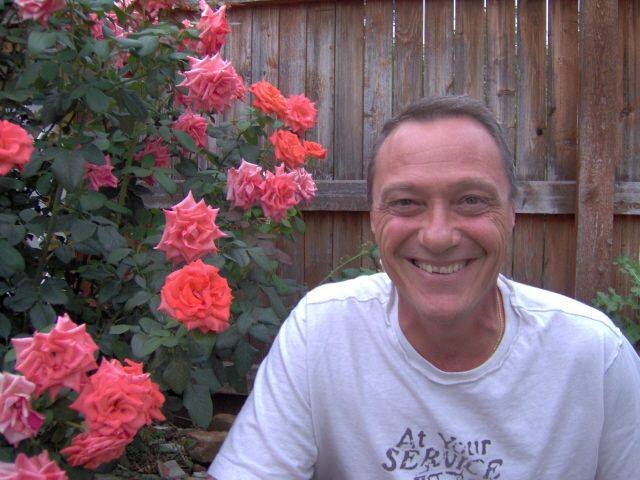
PRIDE 2020 INTERVIEW: AW Burgess

Today’s Pride Month Interview is with author and educator AW Burgess:

AW Burgess.jpg


Hi, A.W.! I hope you’re staying safe and healthy during current events. What are you doing to stay creatively motivated in these unusual times?

What a great and terrible question, in the same way that OZ is the great and terrible. I feel like I almost need to distract your dear readers with some fanciful magic that would have them believe I’ve been muddling through just swell! The truth is, the pandemic and other issues, like what is happening with the Black Lives Matter movement, have done a toll on me, emotionally and physically. It has been very difficult to be creative. I’m not the kind of thinker or writer who does my best work in times of strife; I know that a lot of writers thrive on turmoil and uncertainty, but I find that it is when I’m most at peace that I am able to focus and to put out my best (and greatest amount) of work. That said, since my output has been low, I have increased my input. I’ve been reading a lot; fiction, nonfiction, and poetry. I’ve been finding inspiration in the bodies and voices of people on the front lines, and I’ve been trying my best to avoid social media so that I can actually and effectively take in all that is happening, all that I’m thinking about, and all that I’m feeling about it. This has always been a cycle of mine, though; a year of furious output followed by a year of immersion in others’ works. So, perhaps I’m just on that particular swing. I do have a complete draft of a novel that I need to get to work revising (beta reader feedback has begun to come in!) and I’ve been writing and submitting some poetry. I may turn my attention more to poetry in the coming year, to be honest, which is new and unsettling, but also wild. Speaking of which, I was interviewed in a 5-part series at Poetry Mini-Interviews, if anyone is interested: http://poetryminiinterviews.blogspot.com/search/label/Adam%20W.%20Burgess.


Since June is Pride Month, I have to ask: how has being gay influenced or informed your writing and blogging?

Well, being gay has turned out to be a rather important part of my academic and creative life. Much of my graduate work focused on LGBTQ history, particularly literature, and I wrote my dissertation on gay literature in the United States before Stonewall. Similarly, my creative work has been inspired by what I learned as a student, both in terms of being a student in dozens of classes where gay issues never came up, and feeling so very alone; but also in terms of my work, which very much came of those lonely experiences and the curiosity it generated. Did gay people not exist before the 1960s? Does it not matter that these writers, male, female, and other, were not heterosexual? Why do all my professors avoid these issues, these questions? I did not want to be that person, that kind of professor. And that commitment has overflowed into my creative writing, insofar as I try to write the stories that I wish I would have found when I was a kid. The ones I needed desperately, sometimes.


In 2019, you published From a Whisper to a Riot: The Gay Writers Who Crafted an American Literary Tradition, covering a period in the development of gay literature that has been under-represented in other histories. Tell us a bit about the inspiration for the book, and about your research.

Thank you for mentioning my book and for reading it. Your review was absolutely wonderful, and I’m very grateful to you for it. That book came directly out of my doctoral work mentioned above. It was an interesting journey, really. I chose a specific PhD program because the University was ranked highly for LGBT+ inclusion and because it offered a graduate certificate in LGBT Studies (which I pursued and earned). It was my time in that certificate program more than my time in the literature classroom that influenced me, really, because even in graduate courses, I was getting very little from my professors as far as diverse representation in the required reading. Ultimately, I created my own course of study, which meant I had to come up with a list of 100+ texts to read, a course to take with a faculty advisor, and then an exam based on that extensive reading and study (supplemented by my certificate program in LGBT Studies). When I managed to complete all of that, I was allowed to propose a dissertation topic. That topic? Openly gay writing by openly gay writers before Stonewall. Gay history is so long, has so much depth, but nobody knows about it. Everyone knows Stonewall. Everyone knows what has happened since Stonewall. But the reality is, so much was happening before the 1960s. Before the 1900s, even! I thought it was important to get this information collected and put out there into the world, if only so we can have a healthy rebuttal to that dismissive attitude we sometimes face, that gay/trans issues are just “too new.” They’re not. They’re a human constant.


You’re an English Professor, specializing in LGBT Studies and American Literature among other things. I’d love to hear about the process, and challenges, of developing an LGBT Studies curriculum, especially with the boom in LGBT fiction (and especially genre fiction) in the past decade or so.

Yes, it has been a blessing and a curse! You want to teach all the things, particularly when there’s such a new interest in this field. College is the time that a lot of people are coming of age, which means, for many, coming out. I want to do justice to everyone who might be in my classroom, whether they signal anything personal about themselves. One of best ways I know to do that is to diversify my reading lists in every course. A colleague recently commented, after a review of my last three years’ syllabi, that I always have more women than men on my reading lists. That’s true. And I also have writers of color, queer writers, translated writers, writers with disabilities, etc. The toughest part is still the debate about who and what to include, especially now that I know how long and rich our history is. My goal right now is to offer as much of a historical and contextual experience as I can for my students, which means regardless of the class topic, I try to include readings that cover a broad timeline, many places, and multiple perspectives. Something I hear repeatedly from students is that they have seen themselves represented for the first time in something they’ve read from my class, whether that be a text by a Latinx writer, or about a transgender experience, or a translated text from a Filipinx native. This is the most rewarding comment I can ever hope to receive, because I know how valuable it is to see ourselves represented in what we are expected to study. When a professor elevates your experience to something worthy of scholarly consideration, it is beyond validating.


What has “distance learning” looked like for you and your students over the past few months?

Fortunately, I have taught some of my courses online and in hybrid formats for many years. To be honest, though, this has been a challenge. It is not just the fact that all classes moved online, but that combined with the circumstances that required it, which have everyone feeling stressed, confused, and sometimes defeated. When we moved online mid-semester in the Spring, I did everything I could to keep my students motivated and encouraged, from allowing extra time on assignments to incorporating “mental health break” activities, like visiting a virtual zoo or going “star-gazing” online. The funny thing is, I think these challenges, these experiences, have added an entirely new and welcomed perspective to my pedagogy, things I will keep in mind and keep adapting even when (if?) we return to a more traditional environment.


You’re also a well-published essayist and book reviewer, and you’ve talked about working on short stories and a novel. So what are you working on now? Do you have anything coming out in the near future?

Ah, did I give away the game already? I have two major projects right now. The first is revising my young adult novel (it is so queer!) based on feedback from beta readers. I hope to then send that off to publishers and agents for consideration. I had received two full manuscripts on it already, but the work simply wasn’t finished. The other thing I’m working on is my poetry. Poetry is something I’ve been reading and teaching for years, but I hadn’t really tried writing much of it. But in the last year or so, it has been calling to me. The worst thing a writer can do is ignore whatever is calling to them. So, if anything comes out soon, and I hope it will, it will be either my very first novel, or some poetry. I’ll be sure to share any updates to my blog and on social media.


And finally, the usual: where can people find you and your work online?

The best place to keep up with me will be my blog, Roof Beam Reader. I have a love-hate relationship with social media, so while I do have a few accounts, my impulse is not to use them very much. Thanks so much for having me, Anthony, and happy pride!


A. W. Burgess is a southern Nevada writer whose works of fiction and non-fiction have appeared in various creative and academic publications, such as Towers Magazine, Brave Voices Magazine, America’s Emerging Writers, and Watermark Journal. Among his greatest inspirations are Kurt Vonnegut, Joan Didion, Ocean Vuong, and James Baldwin. Currently, he lives with his husband in Las Vegas, where he is an Instructor of English and a frequent explorer of Clark County’s trails, mountains, and wetlands. In 2019, Burgess began work on his first novel. More information can be found on his website, http://www.roofbeamreader.com.

PRIDE 2020 INTERVIEW: Daniel Rhyder

Today’s Pride Month interview is with actor Daniel Rhyder:

Daniel Rhyder headshot 4 .jpg

Hi, Daniel! I hope you’re staying safe and healthy during current events. What are you doing to stay creatively motivated in these unusual times?

Thank God definitely staying safe and healthy during these crazy times! At first I was kind of numb and didn’t have any kind of creative spark.  I actually got scared for the future of the entertainment Industry and was worried that we might never get back to work.  After a few panic attacks, and many glasses of wine, I decided to start painting again.  It was never meant to be more than a hobby, it was always there to calm my nerves and keep my creative juices flowing.  I had abandoned it, probably because of a brunch invite or a fun date night. Literally being stuck at home I was forced to find a way to not go crazy and a quick visit to Amazon.com got all of my supplies to me!  My main inspiration has been rainbows (this was before I knew we’d still be in lockdown during Pride month!) Needless to say I have MANY rainbow paintings throughout my apartment.


Since June is Pride Month, I have to ask: how has being gay influenced or informed your acting?

I started acting when I was 9 years old and basically have never stopped.  In my teens, as most of us are discovering our sexuality, I became hyper aware of my “lightness.”  I had an agent insist I get vocal lessons to help with my “voice, and speech.” I was terrified for people to find out I was gay. I thought it would ruin my career.  You have to remember I was a teen in the late 90’s, it was a very different time.  When I entered my 20’s something clicked. I didn’t want to hide. I wanted to be authentic in every area of my life so I decided to come out professionally.  I booked my first gay role on an MTV show called “Undressed” and I never looked back. And I’ve had the pleasure of playing some very interesting roles regardless of their sexual orientation through the years. Truthfully if I only ever play gay characters again, I would be thrilled.  A character’s sexual orientation is only one part of the whole person.  


Once you’ve booked a role, what’s your process for understanding or enhancing your character?

I’m really big on character development and the creative process.  The human condition is also extremely fascinating to me.  I’ve had a lot of great acting coaches through the years and everyone has reminded me that no matter what character you are playing you need to make them human.  Not necessarily likable, but HUMAN, without judgement.  So that’s always my goal to create a real life person from these words on paper.


What are you working on now, and what do you have coming out soon?

My last film, Façade, was actually released on Amazon Prime during the quarantine! I’ve been virtually auditioning as much as possible and as things start to open up I will hopefully book something else soon!  In the meantime I might start a rainbow Etsy store.  Just kidding, but actually might not be bad idea!


Where can interested people find you and your work online?

I have a number of projects that are available on Amazon Prime so search my name, Daniel Rhyder, and they should pop up. I am also on all social media platforms as Daniel Rhyder.   And finally, I have a YouTube channel where you can view my reel and music video parodies I have written and starred in as well. More content to come soon! And my website is www.danielrhyder.com.


Daniel Rhyder is a Santa Monica, CA native, and has studied the Stanislavsky Method of acting for over 20 years.  He has been in several independent films, most notably “Façade”, “Savage”,“Outcasts” , “Hatchetman”, “Far Flung Star” and “3 -Day Weekend.”  Daniel started his career as a recurring character on the popular MTV scripted series “Undressed” which received a GLAAD Media Award for his episodes.  Aside from starring in the critically acclaimed two-character feature film, “Layover,” Daniel can be seen in a Guest Starring role on the season two finale of ABC’s "Happy Endings.” He had a lead role in the popular web series “ The Cavanaughs,” which ran for four seasons, and had a recurring role on the outTV series “Boystown.”  Recent press includes a feature story in "Hollywood Covered" where Daniel was listed as "one to watch". 

PRIDE 2020 INTERVIEW: Jeffrey Ricker

Today’s Pride Month Interview is with author Jeffrey Ricker:

Ricker_J.jpeg


Hi, Jeff! I hope you’re staying safe and healthy during current events. What are you doing to stay creatively motivated in these unusual times?

Thanks, Anthony. I hope you're staying safe as well. I’m privileged in that my day job is such that I’ve been able to work from home, and I can afford to have things like groceries delivered. As a result, I’ve stayed home for about 99% of the past… how many months has it been, three? Four?

Creative motivation is another thing, though. I have not had as much luck in that department during this plague year. I try to cut myself some slack—there’s the day job, and up until the middle of May I was also teaching a class, so time has been short for a while. Besides, discipline and focus are a challenge for me at the best of times, anyway.

So I’ve focused on trying to finish things I’ve already started: short stories, a novel revision, that sort of thing. I’ve also been taking part as often as I can in a monthly flash fiction challenge that writer Cait Gordon organizes. She posts a prompt on the first Monday of the month based on some random playing card draws—one card for genre, one for setting, and one for an object to be included in the story. You’ve got a week to write a thousand words inspired by those elements and post it somewhere online. It’s been good fun, and I’m a big fan of prompts as a way to get the creative wheels turning. I use them a lot when I teach.

Recently, I think the dam may have broken when it comes to creating new work. I started developing characters for what will hopefully be my next book. It’s not the one I thought I’d work on next (I’ve had a few ideas floating around for a while), but sometimes the project chooses you rather than the other way around.


Since June is Pride Month, I have to ask: how has being queer influenced or informed your writing?

Honestly, I don’t think anything about the way I look at the world (i.e., highly suspicious and slightly terrified) would be the same if I wasn’t queer. I’d be hard pressed to pinpoint a part of my life that being queer hasn’t influenced. It’s kind of like the water a fish swims in—the fish takes it for granted.

I don’t think I should make too big a deal about feeling like queerness has given me an outsider’s perspective, because other than that, my identity (white cis male) is pretty much packed with privilege. Still, I feel like it made me an observer—partly as a survival instinct, I guess. But being observant also comes in handy as a writer.

Suffice it to say I have a hard time writing anything that doesn’t have queer characters in it—and besides, there’s more than enough non-queer books being written as it is, I think.


Whenever I interview someone for the first time, I always have to ask: what does your creative process look like?

I’m totally a process nerd, too. Right now, my own is a bit of a mess. I used to be a “go-upstairs-and-write-until-midnight” person, but the older I get, the more the midnight oil burns out around nine-thirty. I became a “get-up-early-and-write” person, but that was before my most recent day job (so, four years ago). Now, I get to write for maybe a half hour before work and an hour in the evening, if I’m lucky. I try to cram in as much as possible on the weekends. Since my social life is nil at the moment (it wasn’t all that before quarantine, either), that’s a bit easier to do.


What are you working on now and what do you have coming out soon?

In addition to the novel revision, the new novel, and the short stories I’m trying to finish up, I’m going through edits for a science fiction novella, The Final Decree, that I’m going to put out myself. The guy who’s doing the cover design, Matthew Bright, pretty much works magic. I can’t wait to show it off.

Other than that, I’m really perfecting my skills as a sourdough bread baker.


And finally, where can people find you and your work online?

The best place is probably jeffrey-ricker.com, where you can find out more about my books and how to read excerpts from them (try before you buy!), and there are also links to a lot of my stories, including many that can be read online.


Jeffrey Ricker is the author of Detours (2011) and the YA fantasy The Unwanted (2014). His stories and essays have appeared in Foglifter, Phoebe, Little Fiction, The Citron Review, The Saturday Evening Post, and others. A 2014 Lambda Literary Fellow and recipient of a 2015 Vermont Studio Center residency, he has an MFA in creative writing from the University of British Columbia and teaches creative writing at Webster University.

PRIDE 2020 INTERVIEW: Casey Stratton

Today’s interview is with musician Casey Stratton:

YNPN-51.jpg

Hi, Casey! I hope youre staying safe and healthy during current events. What are you doing to stay creatively motivated in these unusual times?

I don’t know that I am actually all that motivated, to be honest. I have been struggling with motivation for a long while, even before COVID-19 hit the states. I often wonder if it’s my medications for my heart. After having two heart attacks in 2017 I have lost a lot of motivation. I did get a little spike over the last weekend and started the first song I’ve written since August of 2019. I am hopeful this well of inspiration will continue. One thing that is really inspiring me is Brené Brown’s new podcast, Unlocking Us.


Since June is Pride Month, I have to ask: how has being gay influenced or informed your music?

It’s interesting that my first thought was about pronouns. In my teens I used “he” but then I entered the music business in 1995 and it quickly became clear that I should not reveal my sexuality so everything turned to “you.” I never lied and said I was straight and it was pretty obvious I wasn’t but I wouldn’t talk about it to the media. I am somewhat conflicted about that now but at the time my motivation was that I wanted to be known as a musician, not as a gay man. And then, and probably still now, that adjective will always be there. “Gay musician.” I just thought it would be a distraction and labels were pretty clearly rejecting me for it. The music was “too sensitive.” Coded language. Then Sony famously asked me not to come out then got lazy with marketing and outed me to the media without my permission! I was furious. So for years gay media tried to trick me into disclosing. I had a reporter openly admit his editor told him to trap me. It was a very uncomfortable time. Now - being gay is something that I feel I have worked out in my songs over the years. I have processed all my relationships through music and I think being gay does bring a sensibility to things, knowing what it’s like to be “other.” Many people say my songs say the things we think but don’t admit. Maybe that is part of it.


Im always interested: what does your creative process look like? Has it changed at all since you started writing music?

My creative process is slower than it used to be. When I was young I sometimes wrote two songs a day! Now I can go months or years without writing anything. I’m less compelled to do it. Every once in a while I get an idea from a thought or dream, or another song will inspire me. But on a regular day I start with the keyboard, guitar or harp. I start playing, sometimes with a sound I like or the piano. My brain starts deciding what chords to put together, what the instrumental structure should be. I will get the main idea and play it over and over, then start deciding what the production should be like. The song kind of knows what it wants and I have to translate that as best I can. Along the way I usually start singing nonsense to get a sense of the melody and rhythm for the vocal. I put the whole track together and then I write the words, generally about 3 hours into the process. This is usually done quickly. I sit with my feet on the piano bench when I write words. I always use card stock and a black, ultra-fine Sharpie. It’s like a ritual that I have been doing since 1998.


You recently made a series of posts on Facebook celebrating the anniversary of your album Standing at the Edge. What inspired you to talk about the writing of each song on the album? Did the writing of those essays get you thinking about the songs in a different light?

Standing at the Edge is my most listened to work, mostly because it was my only major label release. I had an uneasy relationship with it for a really long time so it was bittersweet that it was so many people’s favorite. I was not happy with the compromises I made and felt it was my least authentic work. But my relationship with it has softened over the past few years. While it may be the “least me” it was also the most collaborative thing I’ve ever done. So now I feel all the people in it. It’s not just about me like the rest of my catalog. I leaned in and decided to reflect on each song, mostly as something to engage in during the quarantine. “Normal” shifted for so many of us and I wanted to put something out there. Because it’s such a listener favorite I thought it would be fun to talk about the songs but also the recording process. It was such an amazing experience and a time of my life that I look back on with great affection. I loved being in a professional studio 6 days a week and working with an amazing team of creative people. So I enjoyed taking the trip down memory lane and hearing from people about how the songs affected them as well. I love hearing how people interpret my work or how it has influenced them or helped them process things.


You’ve launched a new weekly podcast. Tell us about it!

With a wink to the audience it’s called Standing at the Edge. Season one is going to be 12 episodes focusing on the theme of identity. The first 4 episodes will be me talking to the audience but eventually I will have a weekly guest as well. People in my life who inspire me. We’ll talk about the various identities we inhabit and how that affects our lives. I wanted to do something new and different and engage with people through the podcast medium. I listen to podcasts every day on my 3 mile walks so that inspired me to come back to podcasting since I ended my last podcast in 2011.


Other than the podcast, what are you working on now and what do you have coming out soon?

I have just finally started my 30th album. I feel the pressure! It’s been 3 years since I made a record which is the longest I have ever gone since 1995 when I made my first record. 25 years! Time has flown. This one feels huge not only because it’s my 30th but because I have had two heart attacks, a spinal surgery, lost a job, gotten a new job and met my husband and got married during those 3 years! Quite a lot to process. The theme is going to be  resilience. I have learned how much I can survive, quite literally. I have seen how strong I can be. It’s very eye opening when you face death. I’m going to be exploring that and approaching things with the lens of survival and tenacity.


And finally, where can people find you and your work online?

I’m on most of the social media platforms except Tik Tok. I feel too old for that. I am @caseystratton on Twitter and Instagram and @caseystrattonmusic on Facebook. My website is caseystratton.com and my Bandcamp store is at store.caseystratton.com - My work is also on Apple Music, Spotify and Tidal although there are more titles to stream on Bandcamp than anywhere else.


Casey Stratton is a singer/songwriter/producer who has recorded 29 albums and has released even more EPs and B-side collections over the past 24 years. He graduated from Interlochen Arts Academy in 1994 and began his professional music career in Los Angeles in 1995. In 2002 he signed to Sony Music Entertainment and released his debut major label album, Standing at the Edge, in 2004. In 2005 he returned to being independent after realizing the corporate music world was not a good fit for him and his process. He continues to write and record from his home in Grand Rapids, MI. He is also a non-non-profit professional and serves as the Y-Achievers Director at the YMCA of Greater Grand Rapids which provides free programming for middle and high school students.


PRIDE 2020 INTERVIEW: Sina Grace

Today’s Pride Month interview is with comics writer/artist Sina Grace:

sina grace.jpg

Hi, Sina! I hope you’re staying safe and healthy during current events. What are you doing to stay creatively motivated in these unusual times?

Hey, thanks for "having me," hah!

Staying creatively motivated has been an ongoing process, and different from month-to-month. I've been all over the place. In the beginning, it was really easy to just escape into drawing. Also, a few of my favorite musicians sent me some new music to vibe to, and that helped inspire me- I always need the reminder that art saves! Some days, it's been drugs. I repeat: I've been all over the place. Right now, I'm slowly getting back to drawing after a hard stop during the Black Lives Matter protests, and Persona 5 has been a great escape that inspires me to draw when I'm done playing for a few hours. The main rule I've adopted in all of (waves around the room) *this* is that I just have to be okay with where I am at in any given moment.


Since June is Pride Month, I have to ask: how has being queer influenced or informed your writing and art? (I use “queer” whenever I’m unsure of exactly how someone identifies.)

Queer is a great word for my identity, but I'm also just plain ol' gay. There are the obvious ways my sexual identity plays into informing my writing- making sure that members of my community are responsibly portrayed and given compelling storylines, but I'd say it's also challenged me to be a better writer/ artist who can basically kick ass on any job assigned to me. Folks tend to be more judgmental about my output as a writer, so I work extra hard on projects like Go Go Power Rangers or anything with DC Comics for any potential haters to see what I'm about when there's not a gay protagonist front and center. I came to make friends AND be the best at my job, sorry not sorry.

Whether it's being gay or just Me, I'd say that my work is informed a lot by pop culture, fashion, history, current events, politics, issues surrounding intersectionalism, etc. Like, you could say that has to do with being queer, but does it have to do with being Middle Eastern? Does it have to do with being raised in Los Angeles and being exposed to Tinseltown at a young age? I have no clue. But I'm happy with the results.


You write, you illustrate, you collaborate. This might be too broad a question: what does your creative process look like?

My creative process always begins from the same place geographically and emotionally: from my sketchbook... from a sense of having fun. Back when we were allowed to go to restaurants and sit at the bar during happy hour, my favorite thing to do would be to take whatever my task was for the day/ week/ month, and mess around in my sketchbook while sipping lemon drops and scarfing French fries... just writing key lines of dialog, or doodling out iconic moments. I feel like my most successful and fulfilling work has always come from a place of feeling like I was having fun at that birthing moment in the process. You can't ever escape that work is WORK, but when you're smiling, or trying to find one person in your text messages you can share this crazy idea you came up with and not feel like a self-absorbed prick? That's how my creative process looks. From there, it's a matter of forcing the beast out of me... usually it happens at my dining table on my iPad, but sometimes I mix things up and work on my couch or- back in the good ol' days of BC- at a cafe.


I thought your run on Iceman expertly captured what if feels like to come out “later in life” after having several girlfriends, and I really want to thank you for that. It’s the first time I’ve felt like I’ve seen my experience in a comic or book. The book’s cancellation, revival, and cancellation again was … rocky might be the best way to put it. I asked Steve Orlando this and it feels right to ask you as well: why do you think there just doesn’t seem to be an audience for a successful ongoing title featuring LGBTQIA super-heroes?

Firstly, I appreciate your words about Iceman! That book is so special to me, and I'm grateful whenever anyone tells me they connected with the material. Thanks!!

Secondly, I do want to correct the phrasing of your sentence... Iceman's return was planned as a five-issue series and actually had so much value with readers and editorial that we had to continue the story to a 30 page special in the Uncanny X-Men: Winter's End Special. So it wasn't cancelled again and actually low key thrived! But, I get what you're saying. I think comic book titles featuring LGBTQIA heroes have a tough go at Marvel and DC because they require a specific kind of editor, and a specific kind of marketing. Notice how specific I am with my words. First Second had NO problem making Laura Dean Keeps Breaking Up With Me and Bloom into bestsellers. Both of those books were way more expensive to produce than Iceman or Midnighter and they didn't have the benefit of being released first as serial issues with paid advertisements, but they were backed by a team that believed in the stories, and were marketed to an audience that was craving to read said stories. I love my mainstream comic companies, but I don't think I'll get blacklisted saying they don't necessarily think outside of the box when it comes to marketing and promotion.

Whenever I complain about my experience at Marvel, I usually focus on the fact that I didn't feel supported. My editor for the majority of the series didn't quite "get" me and was just trying to do his best to make me fit with the vibe over there. They needed to pair me with someone who understood that getting written up in the New York Times TWICE meant that what I was doing had a little more nuance than your typical action book and was meant for a different audience than an action book.


What are you working on now and what do you have coming out soon?

Tonight I'm wrapping up some illustrations for the band Phantom Planet. Their new album DEVASTATOR should be out by the time people read this, and we're sorting out how to utilize my drawings... either way it's a major feather in my cap 'cuz I've loved that band for ages. After this, I'm jumping back onto an upcoming Image Comics series I'm doing with some friends called Getting it Together. The book was supposed to be out this month, but we had to move it to October 'cuz of coronavirus. It's basically the TV show Friends, but with a cast that reflects our actual factual lives... y'know: queer folks. Brown folks. Plus it's just hilarious and dramatic. I can't wait for people to read it. Please pre-order!

We're wrapping up the final two issues of Ghosted in LA at Boom Studios. I love that book so much. It's Melrose Place, but with ghosts! The next issue, number 11, has the living cast at a queer prom and my little heart melted so hard when I saw the final art. Additionally, it looks like the final issue of the Read Only Memories series I'm writing at IDW will be out in August. That's based off the video game of the same name, but my story follows cool-ass lesbian P.I. Lexi Rivers as she goes down the rabbit hole of a missing persons case that involves a robot-human love story.

Oh! I'm done with my work on it, but the Haunted Mansion graphic novel I wrote will be coming out in August. It's a special project, and I really want people to pick it up 'cuz I think it's a bit of a heart warmer... also it includes so many deep cuts for the hardcore fans of the attraction at Disneyland.


And finally, where can people find you and your work online?

I'm pretty much @SinaGrace anywhere I want to be.


Sina Grace is a writer and artist living in Los Angeles, California. He is best known for his work on the GLAAD award nominated series Iceman at Marvel comics, where he depicted founding X-Man Bobby Drake's journey out of the closet, and into the world as a gay man... complete with mutant drag queens and social issues aplenty. Having worked in comics since his teen years (as an editorial intern at Top Cow Productions), Grace has made had the great privilege to work for every major publisher under the sun, including DC, Archie, Image, Dark Horse, IDW Comics and Boom Studios. He's also worked for all of his favorite bands, including Jenny Lewis, Childish Gambino, Tegan & Sara, and Metric. Oh, and somewhere in all of this he also was Editorial Director for Robert Kirkman's Skybound Imprint at Image Comics.


PRIDE 2020 INTERVIEW: Teena Touch

Today’s Pride Month interview is with public relations expert Teena Touch:

TT.png


What are you doing to stay creatively motivated in these unusual times?

Isolation is certainly not an obvious conduit to creativity. As both a writer and professional communicator, I’m accustomed to sparks of creativity coming from words I see or hear. Since the pandemic lockdown, I’ve turned to new forms of inspiration instead of my typical diet of cable news, magazines and political talk shows.

I’ve been cooking since my grandmother started teaching me when I was 10, but the coronavirus has propelled me to get more creative with my flavors. Having to cook 3 meals a day for weeks at a time will make your normal menu seems boring and lifeless. I’ve incorporated new foods, new flavors and new recipes into my daily and weekly repertoire. New ways of eating can lead to creative ways of thinking.

Another creative outlet for me has been musical livestreams from various artists. I grew up with a former DJ and music producer father, so I’ve always been in tune with how music makes me feel. During lockdown, I’ve enjoyed several livestreams of concerts or live performances that have inspired my creative thinking.


Since June is Pride Month, I have to ask: how has being lesbian influenced or informed your career path?

Lesbian visibility has come a very long way in the PR industry. When I started my career in 1998, I didn’t know any lesbians in public relations, let alone in the tech industry. Many of my initial jobs were with big firms like Ogilvy, and I was always considered unique because I specialized in technology when most PR people focused on consumer or healthcare communications. I have been out and visible as a lesbian since I came out in my university’s newspaper in 1996, so my sexual orientation has been a strong part of my identity and that translated into the workplace. But being queer AND into nerdy technology? Well, that was just unheard of.

Another unexpected but useful part of being a lesbian in the technology industry is the comradery with the notorious ‘tech bros.’ With the many men wearing fleece vests and Allbirds in the tech field, my being considered ‘one of the guys’ has often worked very well for me in terms of inclusion. I’ve been invited to the table many times because I was considered different than all the other women in my field. Turns out being a nerdy, techie lesbian worked in my favor in this regard.


You do freelance public relations work. Tell us a bit about how you became interested in PR and your history in the field.

I landed in public relations completely by accident. I was a tech reporter for Computer Technology Review, and then a production assistant for Zoog Disney before I was recruited by prominent PR firm Bender Helper Impact in Los Angeles. I didn’t know much about PR, other than the terrible pitches I had received as a reporter usually went into the trash. It turned out that I was much better on the other side of the phone, and I had serious passion for earned media coverage. I still do 22 years later.

I’ve been honored to work both in B2B and B2C tech PR, and I got started by working on unknown startups including Netflix, Napster and Yahoo. I’ve also had the pleasure to work with big tech brands like IBM, Oracle and Microsoft. I’ve had experience working in PR agencies of all sizes, as well as in-house corporate communications. In 2009, I decided that the PR industry was broken, and started Teena Touch PR. I wanted to give smaller tech companies the opportunity to use PR to grow their businesses, but without the big agency price tag. My vision was clear and well-received, and my PR firm was acquired in 2012. Since then, I’ve been working with technology brands to define their messaging, determine a bulletproof strategy and execute measurable results that move their businesses forward. I’m very lucky to love my job as much as I do.


On your website, you describe public relations as a form of storytelling. How do you work with your clients to craft the best narrative for them?

Helping companies articulate themselves in a way that accelerates their business is one of the most rewarding parts of my job. Quite frequently, I will have 5 different C-suite executives in the same room who all have a different way of describing the same company. It’s also challenging when your executives are very successful engineers but can’t articulately describe a piece of cheese let alone a complicated software platform.

My process is simple: I ask the head of sales to conduct a demo of the product or service as if I am a potential customer or end user. This way I can learn about the company, the product and the sales process all at the same time. And I can learn how the company describes who they are and what they do to the outside world. The next step is to get the key stakeholders to describe the company and product in their own words. It is then that I sit down and compose a messaging framework that best articulates the company and their technology, all while incorporating what I’ve gleaned during these initial sessions. Storytelling in a corporate setting is just as sexy as any other literature.


What do you consider the most effective tools currently in the public relations tool belt? And what do you see coming down the line as the next big thing?

I think the two most important tools in the public relations field are intellectual curiosity and tenacity. These aren’t tools you can find online, but they can be acquired with the right training and support. Aside from these human tools, a solid media database is key. Many in my industry might disagree but having access to every type of media around the globe takes your public relations to the next level.

With media entities and conglomerates mostly operating on a revenue model, the earned-owned-paid media ecosystem has been a bit bastardized in the past 5 years. Many executives have blurred the lines between traditionally earned media coverage, and content marketed by the company. PR professionals in 2020 would be smart to understand how to navigate this media ecosystem to enable client success in all areas of communication.


In general, what inspires you?

Doing the right thing, even when no one is looking. Placing good media coverage. My dog’s smile. When the message is on point and reaches the right audience. A good bassline. Happy clients. A difficult challenge. Strong coffee.


And finally, where can people find you and your work online?

I’m pretty easy to find on the interwebs, Facebook, Twitter, LinkedIn and Instagram.


Teena Touch is a technology public relations consultant based in New York City. Teena began her career as a reporter for Computer Technology Review and then evolved through pivotal roles at worldwide PR firms, and via corporate communications roles at Internet and public software companies. With deep experience in both B2B and B2C technology, she started her own firm Teena Touch PR in 2009 and was acquired in 2012. Today, she works with technology brands to elevate their media share of voice.

PRIDE 2020 INTERVIEW: Jerry Wheeler

Today’s Pride Month interview is with author, editor and book reviewer Jerry Wheeler:

103522229_333766827617523_3685562404585135774_n.jpg

Hi, Jerry! I hope you’re staying safe and healthy during the current pandemic lockdowns. What are you doing to stay creatively motivated in these unusual times?

I take early morning walks, listening to old sci-fi radio broadcasts and other spoken word recordings – not audiobooks or podcasts, though. I tend to stick to decades when radio drama and comedy was popular.


Since June is Pride Month, I have to ask: how has being gay influenced or informed your writing and editing?

I think it’s responsible for my writing and editing. Ever since high school, I’d written for various publications, had newspaper internships during college, was a wire service stringer for a while – all journalistic experience. I never received much fulfillment or found any direction writing fiction until I stopped trying to write ‘straight’ and changed a story I’d been shopping around to reflect that difference. And that was my first short story sale.


You run the excellent Out In Print website, reviewing gay literature across the spectrum from science fiction to mysteries to stage plays. I’m not aware of any other review sites that focus on gay lit without also keeping a narrow focus on specific genres. Why is it important to you to cast such a broad net?

For the same reason you also won’t see any major publishers appearing in Out in Print. My goal is to create a space for the independent publisher and the unreviewed author—the books that don’t fit easily definable categories. That’s not to say my reviewers and I don’t read genre lit. We do. But we also read drama, poetry, biographies, and non-fiction. And I see no difference between gay lit and genre lit other than formula. A good story is a good story. The only thing I don’t usually review is M/M romance because those books already have a number of exclusive review outlets.


You’ve edited a number of anthologies centered on gay themes, and were shortlisted for a Lambda Literary Award for Tented: Gay Erotic Tales From Under the Big Top. What’s your process like for bringing an anthology together, from concept to final ToC?

It depends. If it’s a closed call for submissions, I’ll contact the authors on my closed call list and see how much interest they have. If it’s an open call, I’ll put the specs out and wait for the stories to come in. For a recent anthology that didn’t come off, I got over 100 stories and only had at most 15 slots to fill. Then, you have to read. And read. And read. Stuff that fits the specs. Stuff that doesn’t. Stuff that isn’t even close. Alternate fonts. Little margins. Formatting from hell. Once you’ve made your choices, you send the letters, get the contracts signed, edit the stories, put them in order and get the final manuscript to the publisher. It’s as easy as that.


You’ve also recently re-released your Lamda-nominated story collection Strawberries and Other Erotic Fruits (with a stunning new cover by Matt Bright). Tell us about the book and why it was time to bring it back into print.

Well, had it not been for a dispute with Steve Berman at Lethe Press, it’d still be in print. It was an unfortunate casualty of my firing him. Since I retained the rights, I decided to update it with four new stories (more on that later) and self-publish it. To be fair, Matt Bright’s terrific cover was actually on the last version of the book as published on Lethe’s Unzipped imprint, so Steve paid for it (he’d want everyone to know that). It never got a push from Lethe, but that’s not a surprise. However, I did update the cover with the Lambda nominee medal, and it looks spiffy indeed.


Erotica tends to get a bad rap and a sneering reaction. As editor and author of multiple erotic short stories and anthologies, do think we’re slowly seeing a shift towards acceptance/”legitimacy” of erotica as a genre?

I hope not. Erotica should be ground-breaking and should always, always push the envelope. The closer it comes to telling its truth rather than an “acceptable” version of its truth, the closer it should be to the edge. The more acceptance it gets, the more mainstream and homogenized it becomes—and life is way too short to have the same kind of sex everyone else does.


What are you working on now and what do you have coming out soon?

Right now, I’m working on a novel about vampires who subsist on musical talent instead of blood. It’s called “Pangs,” and it’s an expansion of the novella with which I ended my short story collection. That novella is actually the first part of the book. I took it out of the short story collection and substituted four new stories (“T-Bone, Medium Rare,” an essay about a blind date, “Discodemius,” a time-traveling tale of a demon from the 1970s, “Necessary Elvis,” about Elvis’s return to glory, and “Wings,” my very first short short). I’m about 10K from finishing the novel, so I hope to have it out soon.


And finally, where can people find you and your work online?

I’m on Facebook (Jerry L. Wheeler), Twitter (@jw_den), and Instagram (wheeler_jerry). People can also visit my website at Write and Shine (https://jerrywheelerblog.wordpress.com/) for information about my editing services and where to buy my books. For the best in queer lit reviews, join me at Out in Print (https://outinprintblog.wordpress.com/)


Jerry L. Wheeler is the editor of the Lambda Literary Award finalist Tented: Gay Erotic Tales from Under the Big Top (Lethe Press, 2010) as well as Riding the Rails: Locomotive Lust and Carnal Cabooses, The Dirty Diner: Gay Erotica on the Menu, and is the author of Strawberries and Other Erotic Fruits (Lethe Press, 2012), also a Lambda Literary Award finalist.

PRIDE 2020 INTERVIEW: Delia Sherman

Tonight’s Pride Month interview is with author Delia Sherman. Today is also Delia’s birthday!

Delia Sherman photo.jpg


Hi, Delia! I hope you’re staying safe and healthy during current events. What are you doing to stay creatively motivated in these unusual times?

Since the book I’m currently working on is about war, regime change, revolt, hunger, and desperation, I’m having less trouble than I would have expected staying focused. When I first started this book four years ago, I wanted to write a historical novel, not about the kings and nobles and generals who make history, but about the people history happens to when they’re just trying to live their lives. Before, it was more of a thought experiment; now it’s our reality.


Since June is Pride Month, I have to ask: how has being lesbian influenced or informed your art/craft?

 It has certainly had some influence on the stories I choose to tell, but even more on who I choose to tell them about. My tendency to write about finding community and creating family comes, I think, primarily from my being adopted. But my characters, and the kinds of communities and families they create, were born of my experience of being in my 20’s, closeted, shy, and looking for a context in an age of Women’s Liberation and Gay Pride and AIDS. I didn’t realize that at the time, of course—this is 20/20 hindsight. These days, I’m a little more deliberate in my choices. My current novel is very much focused on women’s lives and loves, with men in secondary roles. I’m also exploring gender-neutral and gender-fluid characters, and how they fit in historical periods where men were supposed to be men and women were supposed to be subservient.


You co-authored The Fall of the Kings with your wife Ellen Kushner. As you know, the book made a huge impression on me. It was, I think, the first fantasy novel I was able to see “myself” in after I started my coming-out process. So thanks again for that. Can you talk a bit about how collaborating on a book with your spouse differs, if at all, from collaborating with other writers (for instance, your work on the Serial Box series Whitehall, which sadly did not get a second season)?

For me, writing is kind of like tightrope walking. I’ve got to get from here (my premise) to there (my conclusion) in an entertaining and suspenseful way, without either boring the audience or falling off and breaking my neck. Collaboration is working with a net. Not only do I have someone who can come up with ideas for tricks that would never cross my mind, but if one of us falters, the other can help steady them. Of course, there have to be rules. For The Fall of the Kings, Ellen and I divided the writing. She was responsible for the Society Plot; I came up with the Academic Plot; she was Queen of Worldbuilding, because it was her world. Early on, we decided that the only way this was going to work was to agree that the book was more important than our egos, and then it was all horse-trading and compromise and discussion. We shared our strengths. If I got stuck on dialogue, Ellen wrote it; if she needed description, I added it.


The Freedom Maze and The Evil Wizard Smallbone were among my favorite books in the years they were published and remain high on my recommendations lists. Any chance you’ll return to either of those worlds for further adventures?

Probably not. I’m not, by nature, a series writer. I’ve always liked books that had felt like an episode in the characters’ lives, with a before and after that we might guess or imagine, but aren’t told. Also, they’re middle-grade books, and I’m looking at three long adult historicals that have been circling the runway for something like 15 years. If I get those done (I’m a slow writer, and they’re all pretty research-heavy), then we’ll see. <laughs like a pack of coyotes on holiday>


What are you working on now and what do you have coming out soon?

I am currently enmeshed in a big historical covering (among other things) the eight months between July of 1870 and May of 1871, during which Paris lived through a war, a regime change, a winter siege, a humiliating defeat and brief occupation, a revolution, and a savage repression of that revolution. My main characters are prostitutes, who tended to turn to each other for love and true intimacy. It’s kind of Dickens meets Victor Hugo and they take Baudelaire and Sarah Waters out for dinner. It’s called The Absinthe Drinker, and it’s giving my brain a real workout.  


Finally, where can people find you and your work online?

They can find me at www.deliasherman.com, my ancient and out of date website about which I really must do something real soon now.

There are two novellas that are going to form part of the book I’ll be writing when I finish The Absinthe Drinker.

 “The Ghost of Cwmlech Manor” is at https://www.tor.com/2011/10/07/the-ghost-of-cwmlech-manor/

“The Great Detective” is at https://www.tor.com/2016/02/17/the-great-detective-delia-sherman/

I haven’t been able to find any of my short stories for free on-line, but there’s an excerpt from “Walpurgis Afternoon,” my lesbian witches in the suburbs story, at https://www.tor.com/2014/10/09/young-woman-in-a-garden-excerpt-walpurgis-afternoon-delia-sherman/


Delia Sherman writes short stories and novels for adults and young readers. Several of her short stories have been nominated for the Nebula and World Fantasy Awards. The Freedom Maze received the Andre Norton Award, the Mythopoeic Award, and the Prometheus Award. Young Woman in a Garden, a collection of short stories, came out in 20014 from Small Beer Press.  Her most recent projects are MG novel The Evil Wizard Smallbone and 3 episodes in the Serial Box series Whitehall in collaboration with Liz Duffy Adams. She has taught several writing workshops, including Clarion, the Hollins University Program in Children's Literature, and Odyssey. She can write almost anywhere, but prefers cafes and comfy sofas near a source of tea. She lives in New York City with her wife Ellen Kushner and many books, most of which at least one of them has read.  Besides writing and reading other people's manuscripts, favorite occupations are travel, knitting, cooking, and having fun adventures, as long as they don't involve zombies or long-leggedy beasties.

PRIDE 2020 INTERVIEW: SA Hunt

Today’s Pride Month interview is with author SA Hunt:

SA Hunt photo.jpg

Hi, Samara! I hope you’re staying safe and healthy during the current events. What are you doing to stay creatively motivated in these unusual times?

Self-care, self-care, self-care. Love, both for myself and from my friends. Really, you can read all the books you want, or watch all the TV, play all the games, but if you feel bad, you’re not gonna produce anything. Take care of yourself so the words can come out.


Since June is Pride Month, I have to ask: how has being transgender influenced or informed your writing?

First, it has made me profoundly more aware of the trials and tribulations of being transgender. It has introduced me to a whole new world of terror and paranoia that I’d never experienced before, not even during my year in Afghanistan, and a level of wonder and confidence I never could have dreamed of.

Second, it’s nothing short of astonishing watching my body and face change under the effects of the estrogen. I would almost say it’s sort of a form of body-modification. Six months in, the shape and texture of my face have changed to become more rounder and softer. All of the fat gain in my body has redistributed itself to a more feminine shape.

I say both of those things because I am a huge believer in the adage “Write what you know.”

Most people don’t understand what WWYK actually means, they think it means that you can only write things that you’re familiar with, or that you do for a living. They think WWYK means that plumber authors can only write plumber characters, or that they can’t write about exotic things that no one can experience, like meeting an alien disguised as a human, crashing a hovercraft into a cyberpunk city, or having your body torn apart by a monster. I’ve seen people reply with, “No! Write what you don’t know!” and I’m like, “But that’s what it really means! Use what you do know to write what you don’t.”

Write What You Know means to use the emotions and sensations you’ve experienced throughout your life to inform your writing, and infuse it with more authenticity, more depth, more tactility. Take your own pain, your own joy, your sorrow, your anger, and feed it to your characters. Let your characters feel it, and through them, your readers.

You don’t know what it’s like to crash a hovercraft into a cyberpunk skyscraper? Maybe not, but you’ve crashed a real car.

You remember the screech of the bumper ripping into the guardrail. You remember the flash as the reflection of your headlights gleamed on steel. The BOOM of the impact rippling through the entire car, rattling your bones, slamming the oxygen out of your lungs. The cold rush as the windshield smashed, letting in a gust of night air, and the feeling of being peppered with broken glass. You can translate all those sensations into the context of a hovercraft crashing into a futuristic skyscraper.

And the unique experience of being transgender has given me very valuable life experience that I can now use in my writing.

The creeping paranoia of walking around public spaces in a dress and makeup, feeling vulnerable, wondering who around me hates me and is currently fantasizing about hurting me—that could very well be used to inform a body-snatchers-style alien takeover scenario, or an espionage thriller where anybody could be a spy, or an action-drama involving racial violence, where any one of the hundreds of people I see every day might be a violent racist.

Or I could just go back to the source and write a transwoman protagonist.

And then: I’ve found sheer joy and amazement in watching my excruciatingly slow transformation into a woman and realizing my new body and confidence effect the people around me—seeing men feel attracted to me, having women say they love my dress, or that they’re jealous of my eyeshadow. I think it could translate to the feeling of, for example, psychically inhabiting an advanced android body, or realizing I’m developing incredible superpowers, or slowly becoming a werewolf, or something.

Something. Part of writing what you know is knowing and feeling where and when to use your memories to fill in your narrative. And in being transgender, I’ve collected some truly unique memories and advantages when it comes to WWYK.


You were in the military, both as military police and as a transportation coordinator in the Afghanistan theatre. Thank you for your service. Transgender folks serving in the military has obviously been a controversial topic under the current administration, but there’s a long history of anti-trans sentiment within and outside of the military (as I’m typing these questions, author JK Rowling has once again tweeted trans-exclusionary opinions on social media, for instance). I don’t seem to have a real question here, but I’d love to hear your thoughts on the state of trans-visibility and acceptance and what needs to happen to improve the situation.

Well, as I’m typing this, Trump’s administration has just stripped transgender people of protections in healthcare, potentially crippling our ability to find medical care without being prejudiced against. I feel like there are two extremes: people that just outright hate our guts—sometimes literally—and people that accept us and to a certain extent love us.

Honestly I don’t know how to improve public perception and acceptance of transgender people other than to keep normalizing positive acceptance.

Normalize the hell out of it. Keep encouraging people—especially young people—to explore their own gender expression, give them safe environments to do so in, and help them find the resources they need to express their chosen gender adequately. Keep encouraging cisgender people to treat us with respect and compassion, and reward them for their efforts with love and acknowledgement. The more mundane and everyday that trans acceptance becomes, the harder it will be to antagonize and oppose it.


Switching back to your writing: what inspires you, and what does your creative process look like?

I’m inspired by all kinds of things, really: conversations with friends, dreams, daydreams. Mostly daydreams. It helps to be bored—we have some of our best ideas when we’re bored. Which is why our minds go into overdrive when we’re in the shower, or sitting on the toilet, or lying in the bed trying to fall asleep. That’s the creative side of our brain trying to get cranked up.

My creative process: when I’m drafting, I get up and shower and shave, put on some clothes, then putter around and eat breakfast until it’s time to start work. Then I turn off the internet, open my project, and get to work.

I’ll work until my timer goes off, several hours, then put it away for the day and I don’t touch it until it’s time to work again. I’ve found that holding myself to the rules only work during worktime, and do not work during downtime helps keep me from getting burned out, and maintains a certain level of anticipation and excitement for the craft. Also, I try to stop working mid-sentence so I have something to get me going when I come back.

The absolute biggest thing is eliminating distractions. Eat, poop, do all the chores on your downtime. If you have self-control issues, set parental controls on your internet router that kick you offline for a certain period of time every day. Put your smartphone in the mailbox so you won’t pick it up and start messing with it.

Editing is another matter entirely. Usually I don’t bother turning the internet off, I just sit and read the manuscript and listen to music. It’s the Chill Phase.


What are you working on now and what do you have coming out soon?

Outlaw King 4, Malus Domestica 4, and a scifi John Carpenter homage that takes place in a nuclear winter caused by a war in the 1980s, so everything is technologically congruent with that era. As for what I have coming out soon, Malus 2 (“I Come With Knives”) and Malus 3 (“The Hellion”) release in mid-July and mid-September, respectively.


And finally, where can people find you and your work online?

The best place is probably sahuntbooks.com.


S. A. Hunt is the author of the Malus Domestica horror-action series from Tor Books, beginning with BURN THE DARK (Jan 2020). In 2014, Samara won Reddit's /r/Fantasy "Independent Novel of the Year" Stabby Award for her Outlaw King fantasy gunslinger series. She is an Afghanistan veteran (OEF 2010), a coffee enthusiast, a fervent bicyclist, and she currently lives in Petoskey, Michigan.


PRIDE 2020 INTERVIEW: Matthew Bright

Today’s Pride Month interview is with author, editor and book designer Matthew Bright:

Matthew Bright photo.jpg


Hi, Matt! I hope you’re staying safe and healthy during the current pandemic lockdowns. What are you doing to stay creatively motivated in these unusual times?

Initially: nothing! The first month or so of all this craziness I managed to write precisely zero, through a combination of gloom and a sudden boom in day-job work as a result of the virus. But the gay men's writing group I belong to made the switch to Zoom and so I clawed my way through a few thousand words as a result of deadline panic for one of their sessions, and something clicked—the few thousand words has turned into the first thirty thousand of a novel that I've been mulling on for years. I think it's very much happening despite the times though!


Since June is Pride Month, I have to ask: how has being gay influenced or informed your writing, editing, and design work?

I studied writing at university and although it was a great course, study killed my desire to read and write (especially genre, the love of which had been stamped out of me a bit) for about three or four years after I finished, and I ended up coming back to it through discovering the Wilde Stories collection of gay speculative fiction, and when I started writing I was writing gay characters because they were what I knew. And mercifully I've caught the edge of the boom: the opportunity to write stories that include queer characters and be able to be published in high-profile magazines is huge. But to be honest I didn't really realise until putting together my collection last year how often I end up explicitly using spec-fic to explore parts of queer experience and history.

As for editing and design: for much of this it has been about professional opportunity, and over the many projects I've worked on I've found my way to what amounts to an ideology—which is pretty much: erotica is as valid a form of literature as anything else and I'm equally proud of my editing work on erotica anthologies as I am on my spec-fic ones—but I will never design a book that is just a naked torso on the cover!


You wear a number of different creative hats.  Let’s talk about your writing first. Your collection Stories to Sing in the Dark was released last year by Lethe Press. What’s your writing process like? Are you a plotter, a pantser, somewhere in between?

I'm a muller! I guess it's somewhere in between – I tend to have ideas in my head (and they can be a start-to-finish story) that will suddenly collide. Nearly every story I've written has come from two things that I had half-fleshed out suddenly striking off each other in the right way and realising together they now make a complete story. I don't always know quite how it'll all fit together when I start writing—so I guess I'm a pantser in that regard—but if I've managed to actually keep myself writing to the end of a story it's probably because I had some kind of idea of where I was going. (Whether I end up there is a whole different matter. I don't believe any writer actually ends up with what they thought they were going to write, it's the weirdness of writing that you can end up both disappointed and pleasantly surprised by your finished article at exactly the same time.)


I’m always a bit curious as to how authors decide the order of stories in a collection, especially when the stories were originally published over a span of years and the collection includes new work as well. What was that process like for this collection?

This is one of my favourite games! For both the collection and my anthologies before this I put insane amounts of thought into them (and post it notes to shuffle around help too.) Stories starts with 'The Library of Lost Things', a story that was originally published in Tor so it's both a practical decision (if you've heard of me, it's likely because of that story) and because it is an accessible story that completely sets out the stall for the kind of thing I write—a bit queer, a bit ironic, a bit meta, a bit sad and a bit hopeful. Also it has talking rats that only speak in forgotten words. You should always start with a story that is exactly on the nose of what the reader expects for a collection. Second most important to pick is the last story – in an anthology it's good to end on one that fits the theme to a tee but is also a barnstormer of a story; for my collection I actually went with No Sleep In Bethlehem because it's the longest story of the collection, practically a novella. I'll let readers decide if it’s a barnstormer, but I was pretty proud of it. And then for the rest, it's a case of balancing so you don't have similar stories back to back, so that if you have stories that are a change in tone or content (in stories that's my noir version of Wind in the Willows called 'Croak Toad' and a pulp romp set in Egypt called 'Antonia and Cleopatra'). A good collection makes sure the next story is always different, without being so different it gives you whiplash.

As alluded to previously though, it was strange putting together work from across so many years of writing, but more so in that I realised they had somehow become a unified piece of writing when I had only ever thought of them as individual things. (There was also one story in particular – “Nothing To Worry About” that was over ten years old and was essentially rewritten completely, though that's the only one I edited from its original form. It remains perhaps the oddest fit for the collection still.)


You’ve edited a number of anthologies centered on gay themes, and were nominated for a Lambda Literary Award for Gents. What’s your process like for bringing an anthology of other authors’ work together, from concept to final ToC?

Be very clear on what you want—that's been the key with anthologies: and don't be afraid to spell it out in the call for submissions! For both erotica anthologies I've edited I was clear that I wanted stories that had characters. Yes, there would be sex, but I wasn't interested in just a who-put-what-where-and-how-hard story—I wasn't interested in, pun intended, nothing more than a blow-by-blow. With Gents I also knew I wanted to make sure that the historical setting was more than just set-dressing; the history of queers through that period is bizarre and fascinating, so I was looking for things that showed those. I rejected quite a number of good stories on the basis that they could have been set at any time in any place.

You've also  got to have variety with anthologies—with Gents and Threesome before it I made my final selections on the basis of having a mix of genres and tone – they both run the gamut from serious to frivolous, and that's intentional. You have to be prepared to cut good stories that are just too close to others. And if you're missing something—if there's a gap in the collection you need filling—go looking for it. Ask someone to write it. They usually say yes.


You’re also a book designer (Inkspiral Design). I’ve never interviewed a book designer before, so this may be too broad a question, but: what goes into designing a book? What’s that process like?

A shedload of luck and a lot of experimentation.

If I'm dealing with someone on a freelance basis for the first time what I normally do is ask them to show me five covers they like that are similar to what they want me to achieve. It's not copying—it's just that despite their many gifts I find most authors and publishers are hopeless at communicating something they want to be visual. That shortcuts a vast amount of work.

But when it's actually just me and my screen trying to figure something out, I start with a rough idea of what genre and market I want to hit, and then I experiment until I have something in front of me that I can imagine on a bookshelf; I start with either a colour scheme or a central image and build out. Most times, it works. Sometimes I end up binning the whole thing and having to start again.

Despite everything I've just said there though, my favourite pieces of work I've created have been the ones that just wildly ignore the rules of the genre and what would probably be considered marketable and produced something totally different. But I've only been able to do that thanks to having worked with a couple of publishers for years enough that they trust me to let me do that. I'm grateful for that.


What are you working on now and what do you have coming out soon?

For the first: a novel, though it's a long, long way from done. It's a little different from my usual—the story of a group of found-family queers starting as a coming-of-age tale with them as teenagers, then told in five more sections, each five years on from the last, and each a different genre. The last section is an apocalypse novel of a sort, so I'm trying not to think about writing that one at the moment.

And as for 'coming out soon'... tragically, nothing! The Lambda nomination for Stories To Sing In The Dark would have absolutely been the perfect time to ride the momentum and be submitting and publishing, but procrastination and the world got the better of me, unfortunately. I'll never learn!


And finally, where can people find you and your work online?

You can find me at matthew-bright.com or @mbrightwriter on twitter, and if you fancy a gander at my design work you can find that at inkspiraldesign.co.uk.


Matthew Bright is a writer, editor and designer who's never too sure what order those go in. His short fiction has appeared in Tor.com, Nightmare's Queers Destroy Horror, Lightspeed, Glittership, Harlot Magazine, Clockwork Iris, Queen Mob's Teahouse and others, and can be found collected in the Lambda Literary Award Finalist Stories To Sing In The Dark (Lethe Press, 2019). He is also the editor of several anthologies, including The Myriad Carnival, Threesome, Clockwork Cairo: Steampunk Tales of Egypt and Lambda Literary Award Finalist  Gents. He also works as a book designer as Inkspiral Design.